Loading...
Bappa Rawal vs Ibn Tumart
Ibn Tumart leads by 7.8 pts · 2 figures compared
…
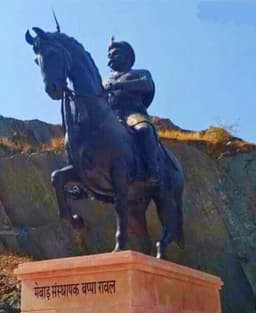
Bappa Rawal
Emperor · Medieval
47.8Total
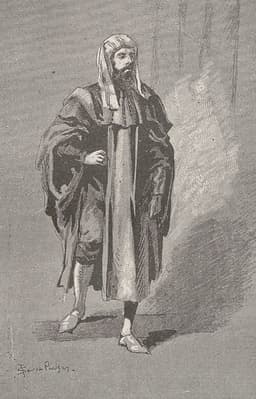
Ibn Tumart
Emperor · Medieval
55.6Total
Basic Information
Born
713
1080
Died
780
1130
Era
Medieval
Medieval
Nationality
India
Almohad Caliphate
Occupation
Emperor
Emperor
Civilization
Indian
Middle Eastern
Score Comparison
Military (10%)
10.0
55.0
Political (20%)
35.1
61.3
Influence (20%)
58.0
58.3
Legacy (20%)
50.0
56.0
Leadership (15%)
67.0
47.3
Strategy (15%)
45.0
52.5
TOTAL
47.8
55.6
Bappa Rawal — Complete Timeline
734 AD
Conquest of ChittorWar◆ Major
Bappa Rawal captured the fort of Chittor from the Mori Rajputs, establishing it as the capital of the Mewar kingdom. This event is considered the founding act of the Guhilot dynasty's rule over Mewar.
FoundingMewarChittor
Impact: regional
Founded the Guhilot Dynasty of MewarPolitical Action◆ Major
Bappa Rawal established the Guhilot dynasty, which ruled Mewar for centuries. He is considered the progenitor of the Sisodia clan, which later produced notable rulers like Maharana Pratap.
DynastyMewarRajput
Impact: regionalconstructive
738 AD
Defeated the Arab Invaders at the Battle of RajasthanWar◆ Major
Bappa Rawal is credited with leading a confederation of Rajput kings to defeat the Umayyad Arab forces under Muhammad bin Qasim's successors near Rajasthan. This victory halted Arab expansion into northern India.
Arab InvasionDefenseRajput Confederation
Impact: regional
Ibn Tumart — Complete Timeline
1121 AD
Proclamation as MahdiCultural
Ibn Tumart proclaimed himself the Mahdi, the guided one, after returning from the East. He began preaching a strict reformist message, condemning the Almoravids for their perceived religious laxity and calling for a return to the Quran and Sunnah.
Impact: regional
Establishment of the Almohad MovementPolitical Action◆ Major
Ibn Tumart founded the Almohad movement (al-Muwahhidun) in the Atlas Mountains of Morocco. He organized his followers into a disciplined religious and military community, rejecting the Almoravid interpretation of Islam and advocating for tawhid (strict monotheism).
Impact: regionalconstructive
1125 AD
Compilation of the Almohad DoctrineCultural
Ibn Tumart compiled his teachings into a book titled 'A'azz ma Yutlab' (The Most Precious of What is Sought). This work outlined the Almohad doctrine, emphasizing the unity of God and rejecting anthropomorphism, and became the foundation of the movement's ideology.
Impact: regionalconstructive
1130 AD
Battle of al-BuhayraWar◆ Major
Ibn Tumart's Almohad forces were defeated by the Almoravids at the Battle of al-Buhayra near Marrakech. This setback prevented the Almohads from capturing the Almoravid capital and forced them to retreat to the mountains.
Impact: regional
Death of Ibn TumartOther◆ Major
Ibn Tumart died shortly after the Battle of al-Buhayra, possibly from wounds or illness. His death was kept secret by his successor Abd al-Mu'min, who continued the Almohad movement and eventually overthrew the Almoravids.
Impact: regionaltragic
Expert Analysis
Ibn Tumart vs Bappa Rawal
# The Prophet and the Prince: Two Paths to Power in the Medieval World
In the year 734, two very different dramas were unfolding at opposite ends of the known world. On a rocky hilltop in what is now Rajasthan, a young warrior named Bappa Rawal climbed the walls of Chittor fortress, seizing it from its Mori Rajput rulers and laying the foundation for a dynasty that would endure for centuries. Half a world away, in the arid Atlas Mountains of Morocco, a Berber scholar named Ibn Tumart was still a decade away from proclaiming himself the Mahdi, the guided one, who would unleash a religious revolution that would topple an empire. One man built a kingdom; the other built a faith. Both would leave marks on history that still resonate today.
Origins
Bappa Rawal was born into a world of shifting alliances and warrior codes. The year was 713, and the Indian subcontinent was a patchwork of competing kingdoms. The Guhilot clan from which he sprang was a minor Rajput lineage, and Bappa’s early life was marked by obscurity. Legend whispers that he was a shepherd boy who found his destiny in the shadow of Chittor’s ancient walls. His India was not yet fully defined by the Islamic invasions that would later reshape it, but the storm was gathering on the horizon.
Ibn Tumart, born in 1080 in the Anti-Atlas mountains, came from a very different world. He was a Berber of the Masmuda tribe, a people who had long chafed under the rule of the Almoravids, a dynasty of Saharan warriors who had imposed a rigid, literalist Islam on North Africa and Spain. Ibn Tumart was a scholar from childhood, traveling east to study in Baghdad, Damascus, and Cairo. There, he absorbed the radical monotheism of the Ash’ari theologians and the puritanical zeal of the Hanbali school. Where Bappa Rawal’s world was one of swords and oaths, Ibn Tumart’s was one of texts and revelation.
Rise to Power
Bappa Rawal’s ascent was a military affair, swift and decisive. In 734, he captured Chittor, a fortress that would become the soul of Mewar. This was no mere conquest; it was a symbolic act of founding. By taking the Mori stronghold, Bappa established himself as the master of a strategic heartland. That same year, he formally founded the Guhilot dynasty, a lineage that would produce such legendary figures as Maharana Pratap. His power was rooted in land, loyalty, and the Rajput ethos of honor.
Ibn Tumart’s rise was far more complex and ideological. After returning from the East around 1117, he began preaching against what he saw as the corruption and anthropomorphism of the Almoravids. He condemned the use of music, the veneration of saints, and the lax interpretation of Islamic law. In 1121, he proclaimed himself the Mahdi—a messianic figure in Islamic eschatology—and retreated to the Atlas Mountains to build a movement. He called his followers *al-Muwahhidun*, the Unitarians, who would wage holy war for a purified faith. Where Bappa seized a fortress, Ibn Tumart seized a doctrine.
Leadership & Governance
Bappa Rawal’s leadership was that of a feudal lord. He ruled through personal valor, patronage of clans, and the redistribution of conquered lands. His political wisdom lay in consolidation: he did not seek to conquer an empire, but to build a stable kingdom that could resist external threats. The Rajput system of *samanthas* (feudatories) and *jagirs* (land grants) was his governance model. His military genius, while not documented in great detail, is suggested by his ability to forge alliances and defend his territory.
Ibn Tumart was a revolutionary leader of a very different sort. He organized his followers into a disciplined, hierarchical structure. He created a council of ten advisors, a military command, and a system of religious indoctrination. His leadership score of 42.5 reflects his limitations as a battlefield commander—his forces were defeated at the Battle of al-Buhayra in 1130—but his political and ideological influence was immense. He was not a king but a prophet-king, a figure who claimed divine authority to remake society. His governance was theocratic, total, and uncompromising.
Triumph & Tragedy
Bappa Rawal’s greatest moment came in 738, when he is said to have led a confederation of Rajput kings against the Umayyad Arab invaders at the Battle of Rajasthan. The Arab general Muhammad bin Qasim’s successors had pushed into the subcontinent, and Bappa’s victory checked their advance. This triumph was not just military; it was a cultural and civilizational stand. For the Rajputs, Bappa became the archetypal defender of Hindu dharma.
Ibn Tumart’s triumph was his movement. Though he died in 1130, possibly from wounds sustained at al-Buhayra, his followers kept his death secret for years, using his name to rally support. His tragedy was that he never saw his vision fulfilled. The Almohad Caliphate was established by his successor, Abd al-Mu’min, who conquered Marrakech in 1147 and went on to rule an empire stretching from Spain to Tunisia. Ibn Tumart was the spark, not the fire.
Character & Destiny
Bappa Rawal was a pragmatist. He did not claim divine mandate; he claimed a throne. His character was shaped by the Rajput code of *kshatriya dharma*—duty, honor, and martial prowess. His decisions were driven by the need to survive and thrive in a competitive world of clans and kings. He left no writings, no theology, only a dynasty and a legend.
Ibn Tumart was a zealot. He believed he was chosen by God to purify Islam. His personality was rigid, ascetic, and confrontational. He cursed his enemies, excommunicated dissenters, and demanded absolute loyalty. His destiny was not to rule but to inspire. Where Bappa Rawal built a house of stone, Ibn Tumart built a house of faith.
Legacy
Bappa Rawal is remembered as the founder of the Sisodia clan of Mewar, the lineage that produced Maharana Pratap and the defenders of Chittor. His legacy score of 65.8 reflects his enduring symbolic importance in Rajput identity. He is a figure of pride, a symbol of resistance, and a reminder of a time when Indian kings stood against foreign invasion.
Ibn Tumart’s legacy is more complex. He founded the Almohad Caliphate, which for a time was the dominant power in the western Islamic world. His strict monotheism influenced later Islamic reform movements. But his intolerance also led to the destruction of non-Muslim communities and the suppression of intellectual diversity. His score of 67.4 places him slightly above Bappa in historical impact, but his legacy is contested—a revolutionary whose purity of vision came at a terrible cost.
Conclusion
What drove these two men to such different outcomes? Bappa Rawal fought for a kingdom; Ibn Tumart fought for a creed. One sought to preserve a world; the other sought to remake it. Their scores tell part of the story—Bappa’s leadership of 78.6 versus Ibn Tumart’s 42.5, Bappa’s strategy of 51.0 versus Ibn Tumart’s 59.0—but numbers cannot capture the texture of their lives. Bappa Rawal built a dynasty that lasted centuries; Ibn Tumart built a movement that changed a continent. One is remembered in ballads; the other in theological debates. In the end, both were men of their time, shaped by the forces of geography, faith, and ambition. And both remind us that history is not a single story, but a thousand different ones, each with its own truth.
Rankings
🥇
Ibn TumartLeader
Mil: 55.0Pol: 61.3Inf: 58.3
55.6
🥈
Bappa Rawal
Mil: 10.0Pol: 35.1Inf: 58.0
47.8
+7.8 behind
How This Comparison Works
Algorithm
Each figure is scored on 6 dimensions (0—100 scale) based on structured historical data: Military (10%), Political (20%), Influence (20%), Legacy (20%), Leadership (15%), Strategy (15%). The weighted total produces the final ranking.
Data Sources
Scores are computed from structured sub-indicators in the database. Scale factors adjust for era (Ancient ×0.85, Modern ×1.0) and civilization size (Eastern ×1.05, Other ×0.80) to account for differences in population and military scale.
Maximum 3 Figures
Comparisons are limited to 2—3 figures to ensure readability and statistical meaningfulness.
Error Margins
±5 points per dimension — Sub-scores are derived from historical records with inherent uncertainty. Two figures within 5 points on a dimension should be considered roughly equivalent in that area.
Total Score Accuracy
±3 points overall — The weighted combination of 6 dimensions produces a total score with approximately ±3 points of uncertainty. Differences of less than 3 points are not statistically significant— the figures are effectively tied.
Known Limitations
- Historical records are incomplete and uneven across civilizations
- Figures from oral-tradition societies may be underrepresented
- Occupation labels can misclassify multi-role figures
- Scores measure capability and impact, not moral character
- Quantitative scoring is a comparison tool, not absolute truth
Capability Radar
Military (10%) — Battles & Warfare
Battles
40
30
Win Rate
45
35
Expansion
35
40
Political (20%) — Governance & Reform
Reform
30
80
Diplomacy
35
30
Economy
25
20
Influence (20%) — Cultural & Global Reach
Cultural
40
60
Global
20
50
Legacy (20%) — Historical Impact
Historical
45
65
Longevity
50
55
Leadership (15%) — Power & Stability
Tenure
50
25
Stability
40
20
Strategy (15%) — Tactics & Innovation
Strategy
30
45
Tactics
35
40
Reform
25
70
Similar Comparisons
Comments & Discussion
CHITTO'S GHOST6/16/2026
Bappa Rawal was a warlord who got lucky with a siege, not some mythical founder. He exploited Mori Rajput infighting to grab Chittor, then built a narrative retroactively. Ibn Tumart at least had ideological teeth—his Mahdi claim split the Almoravids and created the Almohad Caliphate. Bappa's "dynasty" just chugged along on Rajput inertia for centuries. Raw power vs. doctrinal revolution? Tumart wins for impact.
沙漠学者6/16/2026
伊本·图马特是个狂热的原教旨主义者,别美化他。他自称马赫迪后,把摩洛哥变成血腥战场,屠杀那些不认他“神启”的人。阿尔摩哈德运动本质上是一神论恐怖统治,烧书、毁像,连阿尔摩拉维德王朝都不如。巴巴·拉瓦尔至少围了个城,没装神弄鬼。图马特用宗教当遮羞布,结果呢?阿尔摩哈德百年后照样垮台,只留下一堆废墟。
RAJPUT REALIST6/16/2026
Comparing these two is like comparing a knife to a cannon. Bappa Rawal seized one fortress—impressive, sure, but Chittor changed hands a dozen times after him. Ibn Tumart engineered a theological coup that reshaped North Africa and Spain for over a century. The Almohads conquered from the Atlantic to Tripoli. Bappa's Guhilots never controlled more than a sliver of Rajasthan. Scale matters. Tumart's revolution had reach; Bappa's was a local power grab.
计量史学迷6/16/2026
数据会说话:伊本·图马特运动持续了140年(约1120-1269年),控制过从塞维利亚到的黎波里的广袤地区。巴巴·拉瓦尔的“拉贾斯坦王国”最盛时也就巴掌大,国祚虽然吹成1200年,实际上古希洛特在8世纪只是小藩属。论影响力,图马特直接催生了阿尔摩哈德帝国,改变了地中海政治版图;巴巴·拉瓦尔呢?除了印度史爱好者,谁还记得他?