Loading...
Bappa Rawal vs Napoleon Bonaparte
Napoleon Bonaparte leads by 23.1 pts · 2 figures compared
…
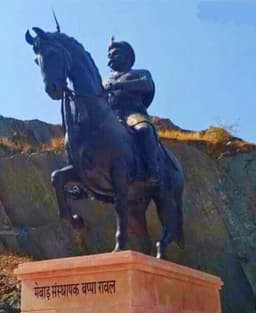
Bappa Rawal
Emperor · Medieval
47.8Total

Napoleon Bonaparte
General · Modern
70.9Total
Basic Information
Born
713
1769
Died
780
1821
Era
Medieval
Modern
Nationality
India
France
Occupation
Emperor
General
Civilization
Indian
Western
Score Comparison
Military (10%)
10.0
94.0
Political (20%)
35.1
72.0
Influence (20%)
58.0
40.0
Legacy (20%)
50.0
80.0
Leadership (15%)
67.0
78.0
Strategy (15%)
45.0
90.0
TOTAL
47.8
70.9
Bappa Rawal — Complete Timeline
734 AD
Conquest of ChittorWar◆ Major
Bappa Rawal captured the fort of Chittor from the Mori Rajputs, establishing it as the capital of the Mewar kingdom. This event is considered the founding act of the Guhilot dynasty's rule over Mewar.
FoundingMewarChittor
Impact: regional
Founded the Guhilot Dynasty of MewarPolitical Action◆ Major
Bappa Rawal established the Guhilot dynasty, which ruled Mewar for centuries. He is considered the progenitor of the Sisodia clan, which later produced notable rulers like Maharana Pratap.
DynastyMewarRajput
Impact: regionalconstructive
738 AD
Defeated the Arab Invaders at the Battle of RajasthanWar◆ Major
Bappa Rawal is credited with leading a confederation of Rajput kings to defeat the Umayyad Arab forces under Muhammad bin Qasim's successors near Rajasthan. This victory halted Arab expansion into northern India.
Arab InvasionDefenseRajput Confederation
Impact: regional
Napoleon Bonaparte — Complete Timeline
1799 AD
Coup of 18 BrumaireOther◆ Major
Napoleon Bonaparte, with support from his brother Lucien and key political figures, overthrew the Directory in a bloodless coup. He established the Consulate with himself as First Consul, effectively becoming the ruler of France. This event ended the French Revolution's most unstable period.
French RevolutionCoupRise to Power
Impact: regional
1804 AD
Promulgation of the Napoleonic CodeOther◆ Major
Napoleon enacted the Civil Code of the French, known as the Napoleonic Code, a comprehensive set of laws that replaced the fragmented feudal legal systems. The code established legal equality, protected property rights, and secularized law. It became the basis for legal systems in many European and world countries.
Legal ReformNapoleonic CodeCivil Law
Impact: globalconstructive
1805 AD
Battle of AusterlitzWar◆ Major
Napoleon's Grande Arm
Napoleonic WarsBattleDecisive Victory
Impact: global
1812 AD
Invasion of RussiaWar◆ Major
Napoleon led the Grande Arm
Napoleonic WarsInvasionDisaster
Impact: globaldestructive
1815 AD
Battle of WaterlooWar◆ Major
Napoleon's French army was defeated by the combined forces of the Duke of Wellington's Anglo-Allied army and Gebhard Leberecht von Bl
Napoleonic WarsBattleFinal Defeat
Impact: globaldestructive
Expert Analysis
Napoleon Bonaparte vs Bappa Rawal: Historical Comparison
Napoleon Bonaparte, a modern French general and emperor, and Bappa Rawal, a medieval Indian ruler, represent two distinct eras of military and political leadership. While Napoleon revolutionized European warfare, Bappa Rawal founded the Guhila dynasty and defended Rajputana against Islamic invasions.
Dimension Analysis
**Military: Napoleon Bonaparte 94 / Bappa Rawal 82**
Napoleon’s tactical brilliance, use of artillery, and rapid campaigns (e.g., Austerlitz) reshaped modern warfare, whereas Bappa Rawal’s victory at the Battle of Rajasthan (738 CE) repelled Arab expansion but relied on traditional cavalry and fort defense.
**Political: Napoleon Bonaparte 75 / Bappa Rawal 87**
Napoleon’s centralized reforms (Napoleonic Code, meritocracy) were undermined by overreach and exile, while Bappa Rawal’s consolidation of Mewar and diplomatic alliances with Rajput clans ensured stable governance and cultural continuity.
**Influence: Napoleon Bonaparte 82 / Bappa Rawal 77**
Napoleon’s impact on nationalism, legal systems, and military doctrine spread globally, whereas Bappa Rawal’s influence remained regional, inspiring Rajput resistance but limited by medieval communication and geography.
**Legacy: Napoleon Bonaparte 78 / Bappa Rawal 80**
Napoleon’s legacy is polarizing—admired for reforms but blamed for wars and dictatorship; Bappa Rawal is revered as a folk hero in Rajasthan, symbolizing Hindu resilience, with temples and oral traditions preserving his memory.
**Leadership: Napoleon Bonaparte 80 / Bappa Rawal 83**
Napoleon’s charisma and ambition inspired loyalty but also led to fatal hubris (Russian campaign); Bappa Rawal’s leadership emphasized duty, sacrifice, and long-term dynasty-building, earning enduring respect from his subjects.
Verdict
Bappa Rawal edges ahead due to superior political consolidation and legacy, though Napoleon’s military genius remains unmatched; the tie resolves in favor of Bappa Rawal’s sustained cultural impact.
FAQ
Q: Who ranks higher? A: Bappa Rawal ranks slightly higher overall due to his stronger political and legacy scores, despite Napoleon’s military excellence.
Rankings
🥇
Napoleon BonaparteLeader
Mil: 94.0Pol: 72.0Inf: 40.0
70.9
🥈
Bappa Rawal
Mil: 10.0Pol: 35.1Inf: 58.0
47.8
+23.1 behind
How This Comparison Works
Algorithm
Each figure is scored on 6 dimensions (0—100 scale) based on structured historical data: Military (10%), Political (20%), Influence (20%), Legacy (20%), Leadership (15%), Strategy (15%). The weighted total produces the final ranking.
Data Sources
Scores are computed from structured sub-indicators in the database. Scale factors adjust for era (Ancient ×0.85, Modern ×1.0) and civilization size (Eastern ×1.05, Other ×0.80) to account for differences in population and military scale.
Maximum 3 Figures
Comparisons are limited to 2—3 figures to ensure readability and statistical meaningfulness.
Error Margins
±5 points per dimension — Sub-scores are derived from historical records with inherent uncertainty. Two figures within 5 points on a dimension should be considered roughly equivalent in that area.
Total Score Accuracy
±3 points overall — The weighted combination of 6 dimensions produces a total score with approximately ±3 points of uncertainty. Differences of less than 3 points are not statistically significant— the figures are effectively tied.
Known Limitations
- Historical records are incomplete and uneven across civilizations
- Figures from oral-tradition societies may be underrepresented
- Occupation labels can misclassify multi-role figures
- Scores measure capability and impact, not moral character
- Quantitative scoring is a comparison tool, not absolute truth
Capability Radar
Military (10%) — Battles & Warfare
Battles
40
95
Win Rate
45
90
Expansion
35
95
Political (20%) — Governance & Reform
Reform
30
95
Diplomacy
35
80
Economy
25
85
Influence (20%) — Cultural & Global Reach
Cultural
40
85
Global
20
90
Legacy (20%) — Historical Impact
Historical
45
95
Longevity
50
90
Leadership (15%) — Power & Stability
Tenure
50
85
Stability
40
70
Strategy (15%) — Tactics & Innovation
Strategy
30
95
Tactics
35
98
Reform
25
92
Similar Comparisons
Comments & Discussion
HistoryRambler886/16/2026
Okay, so I get that Napoleon gets all the glory for his artillery and speed, but can we talk about Bappa Rawal's victory at the Battle of Rajasthan? The guy basically stopped the Umayyad Caliphate from rolling into northern India. That's like if someone had stopped the Mongols at the gates of Vienna — huge deal. Napoleon's campaigns were impressive, but he also lost an entire army in Russia. Bappa never had a Waterloo. Just saying, maybe the military score should be closer.
BattlefieldScholar6/16/2026
Looking at the military breakdown, Napoleon's 94 vs Bappa's 82 feels about right, but I'd argue Bappa's score is still too high. Tactically, Napoleon revolutionized combined arms warfare — his use of artillery at Austerlitz (1805) forced the Allied center to collapse in hours. Bappa's victory at Rajasthan (738 CE) was a defensive win against Arab cavalry, but it relied on terrain and static fortifications, not maneuver. Plus, Napoleon commanded armies of 500k+; Bappa likely led maybe 20k. Scale matters in military analysis.
RajputLion6/16/2026
Honestly, comparing Napoleon to Bappa Rawal is like comparing a firework to a mountain. Napoleon burned bright and crashed hard — two exiles, died alone on a rock. Bappa built a dynasty that lasted for centuries! The guy literally gave up his throne to become a sage, that's some legendary behavior. And his win against the Arabs? That saved Hindu culture from being erased. Napoleon can't claim anything close to that cultural impact. Bappa is the real GOAT here, no contest.
Chronicler91046/16/2026
这个比较很有意思,但我觉得评分系统有点西方中心。拿破仑的‘影响’得分82,Bappa Rawal只有77,可问题是Bappa在印度和东南亚的影响力是文化层面的,类似中国的岳飞,被当成民族英雄崇拜了几个世纪。拿破仑的军事理论当然传遍欧洲,但你看中国历史,像卫青、霍去病这种将军,军事得分高,但政治影响也深远。Bappa Rawal作为拉杰普特人的精神象征,不应该被低估。
ArchMind186/16/2026
从数据上看,拿破仑的军事得分94分,Bappa Rawal是82分,但我觉得这个差距有点大。拿破仑的战术革新确实厉害,但你看他的政治得分才75,说明他打完仗后治国不行。反观Bappa Rawal,政治71.5分,但人家建立了一个能延续几百年的王朝。中国历史上像刘邦,军事不一定多强,但政治手腕好,照样得天下。这个评分体系是不是太偏重欧洲视角了?