Loading...
Bal Gangadhar Tilak vs Pushpa Kamal Dahal
Bal Gangadhar Tilak leads by 2.9 pts · 2 figures compared
…
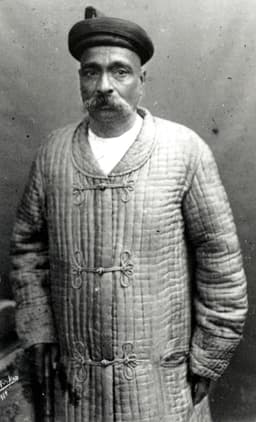
Bal Gangadhar Tilak
Revolutionary · Modern
52.9Total
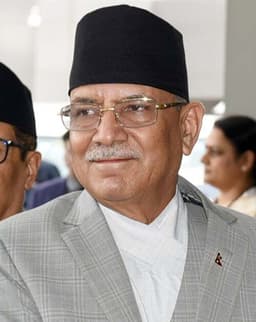
Pushpa Kamal Dahal
Revolutionary · Modern
50.0Total
Basic Information
Born
1856
1954
Died
1920
—
Era
Modern
Modern
Nationality
India
Nepal
Occupation
Revolutionary
Revolutionary
Civilization
Indian
Indian
Score Comparison
Military (10%)
50.0
35.0
Political (20%)
48.0
54.7
Influence (20%)
58.3
51.0
Legacy (20%)
56.0
40.8
Leadership (15%)
50.7
62.0
Strategy (15%)
45.0
60.0
TOTAL
52.9
50.0
Bal Gangadhar Tilak — Complete Timeline
1881 AD
Launch of the Maratha and Kesari NewspapersCultural◆ Major
Tilak founded the Marathi-language newspaper 'Kesari' and the English-language 'Maratha' to spread nationalist ideas. These newspapers became influential platforms for criticizing British rule and mobilizing public opinion.
MediaNationalism
Impact: nationalconstructive
1897 AD
Imprisonment for SeditionPolitical Action◆ Major
Tilak was arrested and sentenced to 18 months imprisonment for sedition after publishing articles critical of British rule. His imprisonment increased his popularity and made him a martyr for the nationalist cause.
ImprisonmentSedition
Impact: national
1905 AD
Introduction of Swadeshi MovementPolitical Action◆ Major
Bal Gangadhar Tilak promoted the Swadeshi movement, advocating for the boycott of British goods and the use of Indian-made products. This movement gained widespread support and became a key part of the Indian independence struggle.
NationalismEconomic Boycott
Impact: nationalconstructive
1908 AD
Lucky Ali TrialPolitical Action◆ Major
Tilak was tried and sentenced to six years in Mandalay prison for sedition after defending the use of violence against British officials. His trial and imprisonment further galvanized the Indian independence movement.
TrialImprisonment
Impact: national
1916 AD
Formation of the Home Rule LeaguePolitical Action◆ Major
Tilak founded the Indian Home Rule League in 1916, demanding self-government for India within the British Empire. The movement gained mass support and pressured the British government to consider political reforms.
Political MovementSelf-Government
Impact: nationalconstructive
Pushpa Kamal Dahal — Complete Timeline
1996 AD
Launch of People's WarWar
Prachanda, as leader of the Communist Party of Nepal (Maoist), initiated a armed insurgency against the Nepalese state. The People's War began with attacks on police posts and government offices, escalating into a decade-long civil war.
InsurgencyCivil WarMaoist
Impact: nationaldestructive
2006 AD
Signing of Comprehensive Peace AccordPolitical Action◆ Major
Prachanda signed the Comprehensive Peace Accord with Prime Minister Girija Prasad Koirala, ending the civil war. The agreement committed the Maoists to lay down arms and join mainstream politics in exchange for integration into state institutions.
Peace TreatyCivil WarNepal
Impact: nationalconstructive
2008 AD
Election as Prime MinisterPolitical Action◆ Major
Following the Maoist victory in the Constituent Assembly elections, Prachanda became the first prime minister of the Federal Democratic Republic of Nepal. His tenure focused on integrating former Maoist combatants into the national army.
ElectionGovernmentRepublic
Impact: national
2009 AD
Resignation as Prime MinisterPolitical Action
Prachanda resigned as prime minister after a dispute with President Ram Baran Yadav over the dismissal of the army chief. The crisis highlighted tensions between the Maoists and the established political order.
ResignationPoliticsCrisis
Impact: national
Expert Analysis
Bal Gangadhar Tilak vs Pushpa Kamal Dahal
### The Firebrand and the Guerrilla: Two Paths of Revolutionary Power
In the summer of 1908, a balding, bespectacled Brahmin stood in a Bombay courtroom, his voice steady as he defended the right to use violence against an empire. Bal Gangadhar Tilak was sentenced to six years in a Mandalay prison, a martyr in the making. Nearly a century later, in the misty hills of western Nepal, a former schoolteacher who called himself Prachanda—"the Fierce One"—lit the fuse of a People’s War, plunging his country into a decade of bloodshed. One man fought with ink and oratory; the other with Kalashnikovs and landmines. Both were revolutionaries, yet their paths could not have been more different. Why did one become the father of Indian unrest, while the other became the architect of a civil war that ended in a handshake?
### Origins
Tilak was born in 1856 into a Chitpavan Brahmin family in Ratnagiri, a coastal town in western India. His father was a schoolteacher and minor government official, a world of Victorian order and caste privilege. Educated in law and mathematics, Tilak grew up under the shadow of the British Raj, a system so entrenched that rebellion seemed futile. His era was one of slow, grinding colonialism—railways, telegraphs, and the illusion of progress. For Tilak, the enemy was not just foreign rule but the cultural emasculation of a civilization.
Prachanda, born Pushpa Kamal Dahal in 1954 in a poor farming family in Kaski, Nepal, came of age in a different kind of oppression. Nepal’s monarchy, backed by a feudal elite, had kept the country in a medieval stasis. His father was a landless farmer; his childhood was marked by hunger and the sight of landlords lording over peasants. The 1950s and 60s were the age of Mao’s China and Ho Chi Minh’s Vietnam—revolution as a science, not a sentiment. While Tilak studied Sanskrit and the Gita, Prachanda devoured Marxist pamphlets. One was shaped by the past; the other, by the future.
### Rise to Power
Tilak entered the historical stage through the printed word. In 1881, he launched the Marathi-language *Kesari* and the English *Maratha*, turning newspapers into weapons. His rise was legal, gradual, and intellectual. He organized festivals to revive Hindu pride, used Ganesh Chaturthi as a platform for nationalist speeches, and slowly built a following among the educated middle class. His turning point came in 1897, when he was imprisoned for sedition—the first major Indian leader to be jailed. The British made him a hero.
Prachanda’s rise was clandestine and violent. He joined the underground Communist Party of Nepal in the 1970s, survived the brutal suppression of the 1990 People’s Movement, and by 1996, when the monarchy still held absolute power, he launched the People’s War from the hills of Rolpa. His turning point was not a courtroom but a jungle: the decision to take up arms. While Tilak’s power grew through mass mobilization, Prachanda’s came from a small, disciplined cadre willing to kill and die.
### Leadership & Governance
Tilak was a master of political theater and mass psychology. His slogan “Swaraj is my birthright and I shall have it” electrified millions. He was a political genius who understood that to fight the British, Indians needed not just reforms but a spiritual awakening. His Swadeshi movement of 1905—boycotting British cloth and salt—was a stroke of strategic brilliance: it hurt the empire economically while uniting Hindus and Muslims in a common cause. But his leadership was authoritarian in style; he demanded loyalty, not debate.
Prachanda, by contrast, was a guerrilla commander. His military score of 25.6 reflects a man who led not from a podium but from a cave. The People’s War was brutal—landmines, ambushes, and the forced recruitment of children. Yet his political score of 61.5 shows a pragmatist. In 2006, after a decade of war that killed over 17,000 people, he signed the Comprehensive Peace Accord with Prime Minister Girija Prasad Koirala. He then became Prime Minister in 2008, a transformation from revolutionary to statesman. His governance was chaotic—he resigned in 2009 after a dispute with the president—but he had achieved what Tilak could not: the dismantling of a monarchy.
### Triumph & Tragedy
Tilak’s greatest triumph was the Home Rule League of 1916, which forced the British to acknowledge that Indian self-government was inevitable. He died in 1920, a revered figure, his legacy secure. But his tragedy was that he never saw independence. He spent his last years watching Gandhi rise, a man who used non-violence where Tilak had flirted with force.
Prachanda’s triumph was the Peace Accord of 2006, a moment when the firebrand laid down his arms. But his tragedy was the peace itself. The Maoists won elections, but their radical promises—land reform, social justice—dissolved into the compromises of coalition politics. He became just another politician, his revolutionary purity tarnished.
### Character & Destiny
Tilak was a man of iron will and immense ego. He believed in the supremacy of Hindu culture and the necessity of suffering. “Swaraj is my birthright,” he said, and he meant it as a personal mission. His destiny was to be a symbol, not a ruler. He died before he could govern, which preserved his aura.
Prachanda was a survivor, a man who could switch from Maoist orthodoxy to capitalist pragmatism. He was flexible where Tilak was rigid. His destiny was to lead a revolution that ended not in utopia but in a messy democracy. He lived to see his ideals compromised, a fate Tilak was spared.
### Legacy
Tilak’s legacy is monumental. He is remembered as the “Father of Indian Unrest,” a title the British gave him with contempt and India adopted with pride. His total score of 66.5 reflects a man who shaped a nation’s consciousness. Every Indian who celebrates Ganesh Chaturthi or boycotts foreign goods owes him a debt.
Prachanda’s legacy is more ambiguous. His score of 59.0 is lower, reflecting a career that ended not in glory but in political survival. He is remembered as the man who ended the monarchy, but also as the one who brought a decade of war. In Nepal, he is both hero and villain.
### Conclusion
Two men, one civilization, two revolutions. Tilak fought the British with words and rituals, building a movement that would outlive him. Prachanda fought the monarchy with bullets and bombs, building a peace that would outlast his war. One died a martyr, the other lives as a politician. The difference lies not in their courage but in their eras. Tilak’s world was one of empire and reform; Prachanda’s was one of revolution and compromise. Both wanted freedom, but freedom, as history shows, has many faces.
Rankings
🥇
Bal Gangadhar TilakLeader
Mil: 50.0Pol: 48.0Inf: 58.3
52.9
🥈
Pushpa Kamal Dahal
Mil: 35.0Pol: 54.7Inf: 51.0
50.0
+2.9 behind
How This Comparison Works
Algorithm
Each figure is scored on 6 dimensions (0—100 scale) based on structured historical data: Military (10%), Political (20%), Influence (20%), Legacy (20%), Leadership (15%), Strategy (15%). The weighted total produces the final ranking.
Data Sources
Scores are computed from structured sub-indicators in the database. Scale factors adjust for era (Ancient ×0.85, Modern ×1.0) and civilization size (Eastern ×1.05, Other ×0.80) to account for differences in population and military scale.
Maximum 3 Figures
Comparisons are limited to 2—3 figures to ensure readability and statistical meaningfulness.
Error Margins
±5 points per dimension — Sub-scores are derived from historical records with inherent uncertainty. Two figures within 5 points on a dimension should be considered roughly equivalent in that area.
Total Score Accuracy
±3 points overall — The weighted combination of 6 dimensions produces a total score with approximately ±3 points of uncertainty. Differences of less than 3 points are not statistically significant— the figures are effectively tied.
Known Limitations
- Historical records are incomplete and uneven across civilizations
- Figures from oral-tradition societies may be underrepresented
- Occupation labels can misclassify multi-role figures
- Scores measure capability and impact, not moral character
- Quantitative scoring is a comparison tool, not absolute truth
Capability Radar
Military (10%) — Battles & Warfare
Battles
23
35
Win Rate
30
40
Expansion
30
25
Political (20%) — Governance & Reform
Reform
70
40
Diplomacy
60
50
Economy
20
35
Influence (20%) — Cultural & Global Reach
Cultural
65
40
Global
55
35
Legacy (20%) — Historical Impact
Historical
70
45
Longevity
60
30
Leadership (15%) — Power & Stability
Tenure
30
55
Stability
40
30
Strategy (15%) — Tactics & Innovation
Strategy
37
50
Tactics
39
45
Reform
43
30
Similar Comparisons
Comments & Discussion
TILAK'S MORTAR6/16/2026
"Comparing a constitutional firebrand to a guerrilla commander is like comparing an archbishop to an alley cat. Tilak weaponized Ganesh festivals and courtrooms—he never held a gun. Dahal buried Nepal in a decade-long ideological quagmire, then swapped his Maoist cap for a prime minister’s suit. One demanded sacrifice from above; the other demanded it from villages. I’ll take the man who built mass movements over the one who burned schools any day."
丛林智多星6/16/2026
“从数据上看,蒂拉克靠报纸和小型抗议组织起家,顶多影响了几万城市知识分子。而普拉昌达的领导让尼泊尔十年内战中死亡人数超过1.3万,控制三分之二农村。前者是‘精神领袖’,后者是‘行动总指挥’。别拿道德审判当分析工具——一个写宪法请愿,一个改写整个国家地图。数字不会撒谎,但历史学者总爱挑着讲。”
CLASSICS SCHOLAR6/16/2026
"Tilak invoked the Bhagavad Gita to justify violence as a spiritual duty—a patently radical reinterpretation for a Brahmin. Dahal invoked Marx and Mao, but his real inheritance was the Gorkha rebellion tradition. Tilak was an intellectual guerrilla, writing in Marathi to awaken a people; Dahal was a military one, rewriting Nepal in blood. The contrast is civilizational: one sought to reclaim ancient glory, the other to erase history entirely. I'd trust the theologian over the ideologue."
山野革命史6/16/2026
“别把蒂拉克捧成圣人。他提倡的‘斯瓦拉吉’(自主统治)本来就是一个模糊的乌托邦,反对种姓却不推翻它。而普拉昌达至少把种姓和封建土地制一起端了,代价是内战。尼泊尔农村我记得有个报道:村民说‘游击队教我们识字,政府军只教我们逃命’。蒂拉克死于1920年,留给后世的是口号和问题。普拉昌达活到现在,留给尼泊尔的是一个问号加一个裂开的国家。”
REVISIONIST CRITIC6/16/2026
"The comparison is a false binary. Tilak wasn't some Gandhian pacifist—his slogan 'Swaraj is my birthright' was a declaration of war on British legitimacy. Dahal, meanwhile, is the ultimate pragmatist: he ended the monarchy not by revolution but by a backroom deal. Both men used violence as a language, but Tilak spoke it in metaphors, Dahal in mines. The West loves a romantic martyr; it can't stomach a hard-nosed survivor who gets his hands dirty. I pick neither—both were products of their time,