Loading...
Bal Gangadhar Tilak vs Napoleon Bonaparte
Napoleon Bonaparte leads by 18.0 pts · 2 figures compared
…
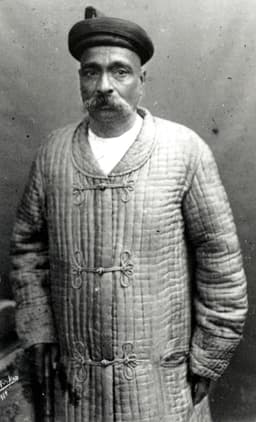
Bal Gangadhar Tilak
Revolutionary · Modern
52.9Total

Napoleon Bonaparte
General · Modern
70.9Total
Basic Information
Born
1856
1769
Died
1920
1821
Era
Modern
Modern
Nationality
India
France
Occupation
Revolutionary
General
Civilization
Indian
Western
Score Comparison
Military (10%)
50.0
94.0
Political (20%)
48.0
72.0
Influence (20%)
58.3
40.0
Legacy (20%)
56.0
80.0
Leadership (15%)
50.7
78.0
Strategy (15%)
45.0
90.0
TOTAL
52.9
70.9
Bal Gangadhar Tilak — Complete Timeline
1881 AD
Launch of the Maratha and Kesari NewspapersCultural◆ Major
Tilak founded the Marathi-language newspaper 'Kesari' and the English-language 'Maratha' to spread nationalist ideas. These newspapers became influential platforms for criticizing British rule and mobilizing public opinion.
MediaNationalism
Impact: nationalconstructive
1897 AD
Imprisonment for SeditionPolitical Action◆ Major
Tilak was arrested and sentenced to 18 months imprisonment for sedition after publishing articles critical of British rule. His imprisonment increased his popularity and made him a martyr for the nationalist cause.
ImprisonmentSedition
Impact: national
1905 AD
Introduction of Swadeshi MovementPolitical Action◆ Major
Bal Gangadhar Tilak promoted the Swadeshi movement, advocating for the boycott of British goods and the use of Indian-made products. This movement gained widespread support and became a key part of the Indian independence struggle.
NationalismEconomic Boycott
Impact: nationalconstructive
1908 AD
Lucky Ali TrialPolitical Action◆ Major
Tilak was tried and sentenced to six years in Mandalay prison for sedition after defending the use of violence against British officials. His trial and imprisonment further galvanized the Indian independence movement.
TrialImprisonment
Impact: national
1916 AD
Formation of the Home Rule LeaguePolitical Action◆ Major
Tilak founded the Indian Home Rule League in 1916, demanding self-government for India within the British Empire. The movement gained mass support and pressured the British government to consider political reforms.
Political MovementSelf-Government
Impact: nationalconstructive
Napoleon Bonaparte — Complete Timeline
1799 AD
Coup of 18 BrumaireOther◆ Major
Napoleon Bonaparte, with support from his brother Lucien and key political figures, overthrew the Directory in a bloodless coup. He established the Consulate with himself as First Consul, effectively becoming the ruler of France. This event ended the French Revolution's most unstable period.
French RevolutionCoupRise to Power
Impact: regional
1804 AD
Promulgation of the Napoleonic CodeOther◆ Major
Napoleon enacted the Civil Code of the French, known as the Napoleonic Code, a comprehensive set of laws that replaced the fragmented feudal legal systems. The code established legal equality, protected property rights, and secularized law. It became the basis for legal systems in many European and world countries.
Legal ReformNapoleonic CodeCivil Law
Impact: globalconstructive
1805 AD
Battle of AusterlitzWar◆ Major
Napoleon's Grande Arm
Napoleonic WarsBattleDecisive Victory
Impact: global
1812 AD
Invasion of RussiaWar◆ Major
Napoleon led the Grande Arm
Napoleonic WarsInvasionDisaster
Impact: globaldestructive
1815 AD
Battle of WaterlooWar◆ Major
Napoleon's French army was defeated by the combined forces of the Duke of Wellington's Anglo-Allied army and Gebhard Leberecht von Bl
Napoleonic WarsBattleFinal Defeat
Impact: globaldestructive
Expert Analysis
bal-gangadhar-tilak-vs-napoleon-bonaparte
### The Corsican and the Brahmin: Two Paths to Power
On a June morning in 1815, a French emperor watched his Grand Army crumble in the muddy fields of Waterloo, his dream of a unified Europe shattered by British and Prussian steel. Half a world away and a century later, in 1920, a frail Indian scholar lay dying in Bombay, his body worn out by years of prison and protest, but his spirit triumphant: he had lit a fire of nationalism that would eventually consume an empire. Napoleon Bonaparte and Bal Gangadhar Tilak never met, never corresponded, and inhabited vastly different worlds. Yet both were revolutionaries who reshaped their nations. Why did one end in exile and the other in apotheosis? The answer lies not in their goals, but in the soil from which they grew.
### Origins: The Gunpowder and the Ink
Napoleon was born in 1769 on Corsica, a Mediterranean island that had just become French. His family was minor nobility, poor and resentful of French rule. Young Napoleon spoke Italian, not French, and was mocked at military school for his accent. This outsider status forged a relentless ambition: he would master the system that scorned him. The French Revolution, erupting when he was twenty, threw open doors that had been locked for centuries. A gifted artillery officer could now become emperor.
Tilak, born in 1856 in Ratnagiri, western India, came from a very different tradition. His father was a schoolteacher and a Brahmin, the highest Hindu caste, dedicated to scholarship and ritual purity. Tilak grew up surrounded by Sanskrit verses and British textbooks. He was a brilliant student of mathematics and law, but he never held a sword. Where Napoleon’s world was defined by gunpowder and battlefield maps, Tilak’s was shaped by ink, newspapers, and courtroom debates. The British Empire, at its zenith, offered no path to military glory for an Indian; the only battlefield was the mind.
### Rise to Power: The Siege and the Sermon
Napoleon’s ascent was meteoric. In 1793, at age twenty-four, he recaptured the port of Toulon from British-backed royalists with a bold artillery plan. By 1796, he commanded the French army in Italy, where his lightning campaigns—crushing Austrian armies in weeks—made him a national hero. His 1799 coup d’état made him First Consul; by 1804, he crowned himself Emperor. Each victory was a stepping stone, each defeat a temporary setback he could reverse with another campaign.
Tilak’s rise was slower, more subtle. He entered politics through the back door of education. In 1881, he launched two newspapers, *Kesari* (in Marathi) and *Maratha* (in English), using them as platforms to criticize British rule. His weapon was not the cannon but the editorial. His first major confrontation came in 1897, when he was imprisoned for sedition after publishing articles that hinted at sympathy for assassins. The trial turned him into a martyr. His real breakthrough came in 1905, when he championed the Swadeshi movement, urging Indians to boycott British cloth and burn foreign goods. This was not a military campaign but a moral one, and it spread like wildfire across the subcontinent.
### Leadership & Governance: The Code and the Chant
Napoleon, with a military score of 94 and strategy of 93, was a genius of war. His campaigns—Austerlitz in 1805, Jena in 1806—are still studied in military academies. But he was also a reformer. The Napoleonic Code, established in 1804, standardized French law, abolished feudal privileges, and enshrined equality before the law. He built roads, founded banks, and reorganized education. Yet his governance was autocratic: he centralized power in his own hands, suppressed dissent, and installed his brothers on European thrones. His political score of 75 reflects a leader who was brilliant at conquest but poor at building lasting alliances.
Tilak was no general, but his political score of 76 and leadership score of 72 show a different kind of strength. He never commanded an army, but he mobilized millions. His genius was symbolic: he transformed the Ganesh festival from a private family ritual into a public celebration of Hindu unity. He introduced the chant "Swaraj is my birthright, and I shall have it!" into the Indian vocabulary. In 1916, he founded the Home Rule League, demanding self-government within the British Empire. Unlike Napoleon, who dictated laws from a throne, Tilak worked through persuasion, protest, and prison. His strategy score of 54 is low by military standards, but his influence score of 76.5 shows he understood a different battlefield: the hearts of a people.
### Triumph & Tragedy: Waterloo and Mandalay
Napoleon’s greatest moment was the Battle of Austerlitz in 1805, where he destroyed a larger Russian-Austrian army with a feigned retreat. His worst was Waterloo in 1815, where a combination of bad timing, muddy fields, and Prussian reinforcements ended his empire. He died in 1821 on the remote island of Saint Helena, a prisoner of the British, abandoned by his marshals.
Tilak’s greatest triumph was also his greatest tragedy. In 1908, he was tried for sedition after defending the use of violence against British officials. The judge sentenced him to six years in Mandalay, Burma—a prison far from home. But Tilak used his imprisonment as a pulpit. He wrote, studied, and emerged in 1914 as the undisputed leader of Indian nationalism. His tragedy was that he died in 1920, just as the movement he had built was about to reach its climax under Mahatma Gandhi. He never saw independence in 1947.
### Character & Destiny: The Eagle and the Oak
Napoleon was a man of boundless ego and energy. He once said, "I am not a man, but a thing." He believed his destiny was to rule, and he bent history to his will. This hubris led him to invade Russia in 1812, a catastrophic mistake that cost him his army. His character was a double-edged sword: ambition drove him to greatness, but it also blinded him to limits.
Tilak was more patient, more stoic. He was a scholar who wore his learning lightly. His famous saying, "Swaraj is my birthright," was not a boast but a conviction. He accepted prison as a price of principle. He was a Brahmin who championed the rights of the poor. His character was rooted in the Hindu tradition of renunciation and duty. He did not seek power for himself; he sought it for his people.
### Legacy: The Emperor and the Father
Napoleon’s legacy is a mixed one. He is remembered as a military genius and a lawgiver, but also as a tyrant who caused millions of deaths. The Napoleonic Code influences legal systems across Europe and the Americas. His name is synonymous with ambition and downfall.
Tilak is remembered as the "Father of Indian Unrest," a title the British gave him with contempt and Indians wear with pride. His legacy is the idea that freedom is a right, not a gift. His Swadeshi movement laid the groundwork for Gandhi’s nonviolent revolution. He is not a global icon like Napoleon, but in India, his name is spoken with reverence.
### Conclusion: The Mirror of History
Napoleon and Tilak represent two faces of revolution: the conqueror and the conscience. One sought to change the world through force, the other through persuasion. One built an empire that crumbled, the other planted a seed that grew into a nation. Their differences were not just personal; they were products of their civilizations. Europe in 1800 rewarded military genius; India in 1900 rewarded moral stamina. And so, while Napoleon’s story teaches us about the limits of power, Tilak’s teaches us about the power of patience. Both, in their own ways, changed the course of history—one with a sword, the other with a word.
Rankings
🥇
Napoleon BonaparteLeader
Mil: 94.0Pol: 72.0Inf: 40.0
70.9
🥈
Bal Gangadhar Tilak
Mil: 50.0Pol: 48.0Inf: 58.3
52.9
+18.0 behind
How This Comparison Works
Algorithm
Each figure is scored on 6 dimensions (0—100 scale) based on structured historical data: Military (10%), Political (20%), Influence (20%), Legacy (20%), Leadership (15%), Strategy (15%). The weighted total produces the final ranking.
Data Sources
Scores are computed from structured sub-indicators in the database. Scale factors adjust for era (Ancient ×0.85, Modern ×1.0) and civilization size (Eastern ×1.05, Other ×0.80) to account for differences in population and military scale.
Maximum 3 Figures
Comparisons are limited to 2—3 figures to ensure readability and statistical meaningfulness.
Error Margins
±5 points per dimension — Sub-scores are derived from historical records with inherent uncertainty. Two figures within 5 points on a dimension should be considered roughly equivalent in that area.
Total Score Accuracy
±3 points overall — The weighted combination of 6 dimensions produces a total score with approximately ±3 points of uncertainty. Differences of less than 3 points are not statistically significant— the figures are effectively tied.
Known Limitations
- Historical records are incomplete and uneven across civilizations
- Figures from oral-tradition societies may be underrepresented
- Occupation labels can misclassify multi-role figures
- Scores measure capability and impact, not moral character
- Quantitative scoring is a comparison tool, not absolute truth
Capability Radar
Military (10%) — Battles & Warfare
Battles
23
95
Win Rate
30
90
Expansion
30
95
Political (20%) — Governance & Reform
Reform
70
95
Diplomacy
60
80
Economy
20
85
Influence (20%) — Cultural & Global Reach
Cultural
65
85
Global
55
90
Legacy (20%) — Historical Impact
Historical
70
95
Longevity
60
90
Leadership (15%) — Power & Stability
Tenure
30
85
Stability
40
70
Strategy (15%) — Tactics & Innovation
Strategy
37
95
Tactics
39
98
Reform
43
92
Similar Comparisons
Comments & Discussion
No comments yet. Be the first to share your thoughts!