Loading...
Bal Gangadhar Tilak vs Julius Caesar
Julius Caesar leads by 29.9 pts · 2 figures compared
…
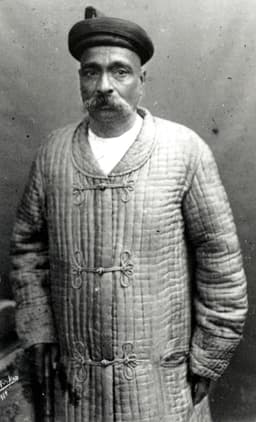
Bal Gangadhar Tilak
Revolutionary · Modern
52.9Total

Julius Caesar
General · Ancient
82.8Total
Basic Information
Born
1856
-100
Died
1920
-44
Era
Modern
Ancient
Nationality
India
Roman Republic
Occupation
Revolutionary
General
Civilization
Indian
Western
Score Comparison
Military (10%)
50.0
88.0
Political (20%)
48.0
78.0
Influence (20%)
58.3
85.0
Legacy (20%)
56.0
82.0
Leadership (15%)
50.7
80.0
Strategy (15%)
45.0
85.0
TOTAL
52.9
82.8
Bal Gangadhar Tilak — Complete Timeline
1881 AD
Launch of the Maratha and Kesari NewspapersCultural◆ Major
Tilak founded the Marathi-language newspaper 'Kesari' and the English-language 'Maratha' to spread nationalist ideas. These newspapers became influential platforms for criticizing British rule and mobilizing public opinion.
MediaNationalism
Impact: nationalconstructive
1897 AD
Imprisonment for SeditionPolitical Action◆ Major
Tilak was arrested and sentenced to 18 months imprisonment for sedition after publishing articles critical of British rule. His imprisonment increased his popularity and made him a martyr for the nationalist cause.
ImprisonmentSedition
Impact: national
1905 AD
Introduction of Swadeshi MovementPolitical Action◆ Major
Bal Gangadhar Tilak promoted the Swadeshi movement, advocating for the boycott of British goods and the use of Indian-made products. This movement gained widespread support and became a key part of the Indian independence struggle.
NationalismEconomic Boycott
Impact: nationalconstructive
1908 AD
Lucky Ali TrialPolitical Action◆ Major
Tilak was tried and sentenced to six years in Mandalay prison for sedition after defending the use of violence against British officials. His trial and imprisonment further galvanized the Indian independence movement.
TrialImprisonment
Impact: national
1916 AD
Formation of the Home Rule LeaguePolitical Action◆ Major
Tilak founded the Indian Home Rule League in 1916, demanding self-government for India within the British Empire. The movement gained mass support and pressured the British government to consider political reforms.
Political MovementSelf-Government
Impact: nationalconstructive
Julius Caesar — Complete Timeline
58 BC
Gallic WarsWar◆ Major
Caesar, as proconsul of Gaul, launched a series of campaigns that conquered all of Gaul (modern France, Belgium, and parts of Switzerland). He fought numerous battles, including against the Helvetii, the Belgae, and the Gallic chieftain Vercingetorix. The wars brought immense wealth and a loyal army to Caesar.
Gallic WarsConquestRoman Expansion
Impact: regional
49 BC
Crossing the RubiconPolitical Action◆ Major
Caesar led Legio XIII across the Rubicon River into Italy, defying the Roman Senate's order to disband his army. This act triggered a civil war against Pompey and the Optimates, ultimately leading to Caesar's dictatorship and the end of the Roman Republic.
Roman Civil WarEnd of RepublicPower Struggle
Impact: global
48 BC
Battle of PharsalusWar◆ Major
Caesar's outnumbered army defeated the larger forces of Pompey the Great at Pharsalus in Greece. Caesar's tactical use of a reserve line to counter Pompey's cavalry charge proved decisive. Pompey fled to Egypt, where he was assassinated, leaving Caesar as the undisputed master of the Roman world.
Roman Civil WarBattleDecisive Victory
Impact: regional
44 BC
Appointment as Dictator for LifePolitical Action◆ Major
The Roman Senate appointed Caesar dictator perpetuo (dictator for life), granting him unprecedented personal power. This move concentrated military, legislative, and judicial authority in one person, effectively ending the Roman Republic's traditional system of checks and balances and alarming many senators.
DictatorshipEnd of RepublicPower Consolidation
Impact: regionaldestructive
Assassination on the Ides of MarchPolitical Action◆ Major
A group of Roman senators, led by Marcus Junius Brutus and Gaius Cassius Longinus, stabbed Caesar to death at a meeting of the Senate in the Theatre of Pompey. The assassination was intended to restore the Republic, but instead triggered another civil war that led to the rise of the Roman Empire.
AssassinationRoman PoliticsEnd of Republic
Impact: globaldestructive
Expert Analysis
bal-gangadhar-tilak-vs-julius-caesar
The Crossing and the Chant: Two Paths to Destiny
On a winter morning in 49 BCE, a Roman general stood at the edge of a small river in northern Italy, the Rubicon. He had paused, legend says, contemplating the abyss. To cross with his army was treason, a declaration of civil war. To turn back was political oblivion. Gaius Julius Caesar made his choice, uttering a phrase that would echo through millennia: *Alea iacta est*—the die is cast. Two thousand years later, in a sweltering courtroom in Bombay, another man stood before a British judge. His crime was not crossing a river but writing words that stirred a nation. Bal Gangadhar Tilak, a man of spectacles and fierce conviction, faced down the empire with a different kind of defiance. Where Caesar crossed with legions, Tilak crossed with ink and ideas. Both men sought to reshape their worlds. One built an empire; the other, a nation’s soul. Why did their paths diverge so radically?
Origins
Julius Caesar was born into the twilight of the Roman Republic, a world of aristocratic rivalries, crumbling institutions, and relentless expansion. His family, the Julii, claimed descent from the goddess Venus, but their political influence had waned. Caesar’s childhood was marked by the terror of civil wars—the dictator Sulla’s proscriptions forced him into hiding. He learned early that survival required cunning, charm, and a willingness to take risks. His education in rhetoric and military command was the standard for a Roman patrician, but his ambition was anything but standard. The Republic, already strained by the gap between the wealthy elite and the dispossessed masses, offered a stage for a man who could master both the Senate and the sword.
Bal Gangadhar Tilak was born in 1856 in Ratnagiri, a coastal town in western India, into a Chitpavan Brahmin family. His world was the British Raj—a foreign empire that had systematically dismantled Indian sovereignty, imposed alien laws, and reduced ancient kingdoms to colonies. Tilak’s father was a schoolteacher, and young Bal was steeped in Sanskrit, mathematics, and English. Unlike Caesar, he never saw a battlefield as a youth. His training was in law and education. But he inherited a deep sense of cultural pride and a resentment of foreign domination. Where Caesar grew up watching Roman armies march, Tilak grew up watching British officials dictate. The difference in their origins was not just one of time and place, but of power: Caesar was born into a system he could hope to master; Tilak was born into a system designed to keep him subordinate.
Rise to Power
Caesar’s ascent was a masterclass in political calculation. He began as a military tribune, then quaestor, aedile, and pontifex maximus—each step leveraged with borrowed money, alliances, and populist gestures. His appointment as governor of Gaul in 58 BCE was the turning point. Over eight years, he conquered a vast territory, amassed a loyal army, and built a personal fortune. His Commentaries on the Gallic Wars were not just history but propaganda, broadcast to Rome to burnish his image. The Senate’s attempt to strip him of command forced his hand. Crossing the Rubicon in 49 BCE was the ultimate gamble, but it was a gamble he had prepared for over decades.
Tilak’s rise was slower, more intellectual, and far more constrained. He co-founded the Deccan Education Society in 1884, but his true entry into history came in 1881 with the launch of two newspapers: *Kesari* (in Marathi) and *The Maratha* (in English). These were his legions. Through them, he reached a public that the British had ignored—the literate Indian masses. His call for Swadeshi (boycott of British goods) in 1905, following the partition of Bengal, ignited a movement. But his path was punctuated by prison. In 1897, he was sentenced to 18 months for sedition; in 1908, a harsher six years in Mandalay. Unlike Caesar, who controlled the instruments of force, Tilak’s power came from his ability to endure suffering and turn martyrdom into moral authority. He could not cross a river with an army; he could only cross a courtroom with a speech.
Leadership & Governance
Caesar ruled with a blend of military genius and political ruthlessness. As dictator, he reformed the calendar (the Julian calendar), granted citizenship to Gauls, initiated public works, and centralized state power. His military strategy was audacious—the siege of Alesia, the rapid campaigns in Egypt, the defeat of Pompey’s forces. But his governance was brittle. He pardoned many enemies, believing clemency would buy loyalty, but it only bred contempt. His reforms were sweeping yet fragile, dependent entirely on his personal authority. He failed to build lasting institutions, preferring to rule as a monarch in all but name.
Tilak never governed. He led movements. His strategy was one of mass mobilization, not military command. The Swadeshi movement and the Home Rule League he founded in 1916 were attempts to force the British to negotiate. His governance was rhetorical and symbolic: he popularized the Ganesh festival to unite Hindus, gave speeches that turned passive subjects into active citizens. His political wisdom lay in understanding that India’s freedom required a cultural awakening, not just political petitions. Yet his methods were divisive—his emphasis on Hindu symbols alienated some Muslims, and his advocacy of militant resistance (defending the use of violence in the 1908 trial) put him at odds with Gandhi’s nonviolence. He was a firebrand, not an administrator.
Triumph & Tragedy
Caesar’s greatest triumph was the conquest of Gaul, a feat that doubled Roman territory and made him the richest man in the Republic. His greatest tragedy was his assassination on the Ides of March, 44 BCE, stabbed by senators he had pardoned. The tragedy was not just his death but its consequence: the Republic he had sought to dominate collapsed into a dictatorship. He died believing he could control the forces he unleashed.
Tilak’s triumph was the Home Rule League, which by 1916 had made self-government a mainstream demand. His tragedy was that he never saw freedom. He died in 1920, a quarter-century before Indian independence. Where Caesar’s fall was violent and immediate, Tilak’s was gradual—a slow fade as younger leaders like Gandhi took the stage. Yet his tragedy was also his legacy: his imprisonment in Mandalay became a symbol of sacrifice that inspired generations.
Character & Destiny
Caesar was driven by an insatiable need for glory—*gloria* was the Roman ideal, and he embodied it. He was charismatic, calculating, and coldly pragmatic. His affair with Cleopatra was as much political as personal. He forgave enemies not out of kindness but strategy, a miscalculation that cost him his life. His character was shaped by a world where individual ambition could topple a republic.
Tilak was driven by a different fire: *swaraj* (self-rule) was his mantra. He was austere, scholarly, and uncompromising. His famous declaration, “Swaraj is my birthright and I shall have it,” was not a boast but a creed. He lacked Caesar’s charm but possessed a moral certainty that Caesar never needed. His character was forged in a world where the oppressed had to create their own destiny. Where Caesar’s personality led him to seize power, Tilak’s led him to demand it.
Legacy
Caesar’s legacy is the Roman Empire. His name became a title—Kaiser, Tsar—and his reforms shaped Western civilization. But he also left a warning: that one man’s ambition can destroy a republic. He is remembered as both a genius and a tyrant.
Tilak’s legacy is Indian nationalism. He is called the “Father of Indian Unrest” by the British, but “Lokmanya” (revered by the people) by Indians. He did not build an empire but a movement. His ideas—Swadeshi, boycott, national education—became the bedrock of Gandhi’s struggle. His legacy is less tangible than Caesar’s, but no less profound: he taught a colonized people to believe they could be free.
Conclusion
Caesar crossed a river and changed the world. Tilak crossed a courtroom and changed a nation. Both men were rebels against their own systems—Caesar against the Republic’s decaying traditions, Tilak against the empire’s iron grip. One built with swords and laws, the other with words and sacrifice. In the end, their stories remind us that destiny is not a single path but a choice: whether to seize power or to demand it. Caesar’s die is still cast, but Tilak’s chant still echoes. And the question they leave behind is not which path was better, but what each of us would do standing at our own Rubicon.
Rankings
🥇
Julius CaesarLeader
Mil: 88.0Pol: 78.0Inf: 85.0
82.8
🥈
Bal Gangadhar Tilak
Mil: 50.0Pol: 48.0Inf: 58.3
52.9
+29.9 behind
How This Comparison Works
Algorithm
Each figure is scored on 6 dimensions (0—100 scale) based on structured historical data: Military (10%), Political (20%), Influence (20%), Legacy (20%), Leadership (15%), Strategy (15%). The weighted total produces the final ranking.
Data Sources
Scores are computed from structured sub-indicators in the database. Scale factors adjust for era (Ancient ×0.85, Modern ×1.0) and civilization size (Eastern ×1.05, Other ×0.80) to account for differences in population and military scale.
Maximum 3 Figures
Comparisons are limited to 2—3 figures to ensure readability and statistical meaningfulness.
Error Margins
±5 points per dimension — Sub-scores are derived from historical records with inherent uncertainty. Two figures within 5 points on a dimension should be considered roughly equivalent in that area.
Total Score Accuracy
±3 points overall — The weighted combination of 6 dimensions produces a total score with approximately ±3 points of uncertainty. Differences of less than 3 points are not statistically significant— the figures are effectively tied.
Known Limitations
- Historical records are incomplete and uneven across civilizations
- Figures from oral-tradition societies may be underrepresented
- Occupation labels can misclassify multi-role figures
- Scores measure capability and impact, not moral character
- Quantitative scoring is a comparison tool, not absolute truth
Capability Radar
Military (10%) — Battles & Warfare
Battles
23
95
Win Rate
30
92
Expansion
30
97
Political (20%) — Governance & Reform
Reform
70
90
Diplomacy
60
85
Economy
20
82
Influence (20%) — Cultural & Global Reach
Cultural
65
88
Global
55
94
Legacy (20%) — Historical Impact
Historical
70
95
Longevity
60
96
Leadership (15%) — Power & Stability
Tenure
30
75
Stability
40
60
Strategy (15%) — Tactics & Innovation
Strategy
37
94
Tactics
39
96
Reform
43
88
Similar Comparisons
Comments & Discussion
No comments yet. Be the first to share your thoughts!