Loading...
Bal Gangadhar Tilak vs Francisco I. Madero
Bal Gangadhar Tilak leads by 2.6 pts · 2 figures compared
…
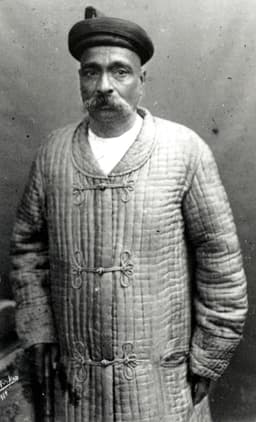
Bal Gangadhar Tilak
Revolutionary · Modern
52.9Total
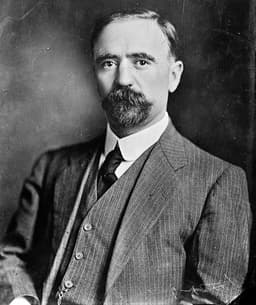
Francisco I. Madero
Revolutionary · Modern
50.3Total
Basic Information
Born
1856
1873
Died
1920
1913
Era
Modern
Modern
Nationality
India
Mexico
Occupation
Revolutionary
Revolutionary
Civilization
Indian
Western
Score Comparison
Military (10%)
50.0
50.0
Political (20%)
48.0
54.7
Influence (20%)
58.3
52.5
Legacy (20%)
56.0
47.5
Leadership (15%)
50.7
54.2
Strategy (15%)
45.0
39.6
TOTAL
52.9
50.3
Bal Gangadhar Tilak — Complete Timeline
1881 AD
Launch of the Maratha and Kesari NewspapersCultural◆ Major
Tilak founded the Marathi-language newspaper 'Kesari' and the English-language 'Maratha' to spread nationalist ideas. These newspapers became influential platforms for criticizing British rule and mobilizing public opinion.
MediaNationalism
Impact: nationalconstructive
1897 AD
Imprisonment for SeditionPolitical Action◆ Major
Tilak was arrested and sentenced to 18 months imprisonment for sedition after publishing articles critical of British rule. His imprisonment increased his popularity and made him a martyr for the nationalist cause.
ImprisonmentSedition
Impact: national
1905 AD
Introduction of Swadeshi MovementPolitical Action◆ Major
Bal Gangadhar Tilak promoted the Swadeshi movement, advocating for the boycott of British goods and the use of Indian-made products. This movement gained widespread support and became a key part of the Indian independence struggle.
NationalismEconomic Boycott
Impact: nationalconstructive
1908 AD
Lucky Ali TrialPolitical Action◆ Major
Tilak was tried and sentenced to six years in Mandalay prison for sedition after defending the use of violence against British officials. His trial and imprisonment further galvanized the Indian independence movement.
TrialImprisonment
Impact: national
1916 AD
Formation of the Home Rule LeaguePolitical Action◆ Major
Tilak founded the Indian Home Rule League in 1916, demanding self-government for India within the British Empire. The movement gained mass support and pressured the British government to consider political reforms.
Political MovementSelf-Government
Impact: nationalconstructive
Francisco I. Madero — Complete Timeline
1908 AD
Madero publishes 'The Presidential Succession in 1910'Cultural◆ Major
Francisco I. Madero published a book criticizing the long dictatorship of Porfirio D
Mexican RevolutionPolitical WritingDemocracy
Impact: nationalprogressive
1910 AD
Madero launches the Mexican RevolutionPolitical Action
After being fraudulently defeated in the 1910 presidential election, Madero issued the Plan of San Luis Potos
Mexican RevolutionArmed RebellionPlan of San Luis
Impact: national
1911 AD
Madero becomes President of MexicoPolitical Action◆ Major
Following the resignation of Porfirio D
PresidencyDemocracyReform
Impact: nationalconstructive
1913 AD
Madero's assassination during the Decena TrágicaPolitical Action
During a coup known as the Decena Tr
AssassinationCoupDecena Trágica
Impact: nationaltragic
Expert Analysis
Bal Gangadhar Tilak vs Francisco I. Madero
# The Revolutionary’s Dilemma: Tilak and Madero
On a sweltering July morning in 1908, a Bombay courtroom fell silent as Bal Gangadhar Tilak, then fifty-two, stood to hear his sentence. The charge was sedition—six years in Mandalay prison, across the sea in Burma. Half a world away, in November 1910, Francisco I. Madero, a slight, bearded man of thirty-seven, crossed the Rio Grande into Texas, a fugitive from Porfirio Díaz’s Mexico. Both men had dared to challenge entrenched powers. Both had written and spoken with the fervor of prophets. Yet their paths diverged dramatically: Tilak died a free man, revered as the father of Indian unrest; Madero was gunned down in the night, his presidency lasting barely fifteen months. What drove these two revolutionaries to such different ends?
Origins
Tilak came of age in a British India that was stable but stifling. Born in 1856 to a Chitpavan Brahmin family, he was steeped in Sanskrit, mathematics, and law—a product of both tradition and Western education. The British Raj was at its zenith, and Tilak’s world was one of quiet humiliation: Indians were second-class citizens in their own land. This bred in him a fierce, unyielding nationalism. Madero, born in 1873 to a wealthy landowning family in Coahuila, Mexico, grew up under the long shadow of Porfirio Díaz, whose dictatorship had brought peace and foreign investment but crushed political freedom. Educated in France and the United States, Madero was a spiritualist, a believer in democracy as a moral force. Where Tilak saw oppression as a system to be dismantled, Madero saw it as a flaw to be corrected—a difference that would define their struggles.
Rise to Power
Tilak’s ascent was gradual, built on words. In 1881, he launched *Kesari* (in Marathi) and *The Maratha* (in English), using journalism as a weapon. His pen was a sword: he criticized British rule, demanded education reform, and called for swaraj—self-rule. The 1897 imprisonment for sedition only burnished his reputation. By 1905, when he promoted the Swadeshi movement—boycotting British goods and reviving Indian industries—he had become the voice of a generation. Madero’s rise was more dramatic. His 1908 book, *The Presidential Succession in 1910*, was a bombshell, arguing for democratic elections. When Díaz rigged the 1910 vote, Madero fled to Texas and issued the Plan of San Luis Potosí, calling for armed rebellion. Within months, Díaz was gone, and Madero entered Mexico City in triumph.
Leadership & Governance
Here the contrast sharpens. Tilak never held high office; his genius was as a movement builder. He organized, agitated, and inspired. The 1916 Home Rule League, which he founded, demanded self-government within the Empire—a radical but pragmatic step. His political score of 76.0 reflects a master of mobilization, not administration. He was a strategist of the street, not the palace. Madero, by contrast, became president in 1911 with a political score of 53.1—lower, yet he now had to govern. He faced chaos: landless peasants, resentful generals, and a broken economy. His idealism—free press, labor rights, land reform—clashed with reality. He hesitated to use force, trusting in democracy to solve all ills. His leadership score of 41.2 reveals a man out of his depth, while Tilak’s 72.0 shows a leader who knew how to wield power without holding it.
Triumph & Tragedy
Tilak’s greatest triumph was resilience. After six years in Mandalay (1908–1914), he emerged not broken but transformed, now willing to work with moderates like Gandhi. He died in 1920, his legacy secure. His tragedy was that he never saw independence—but he had set the stage. Madero’s triumph was overthrowing Díaz, a feat that shook Latin America. His tragedy was immediate: the old order struck back. In February 1913, during the Decena Trágica, a coup led by General Victoriano Huerta overthrew him. Madero was arrested, forced to resign, and then murdered—a brutal end that left Mexico bleeding into a decade of revolution.
Character & Destiny
Tilak was iron-willed, calculating, and patient. He understood that revolution required decades, not days. His slogan, “Swaraj is my birthright,” was a long game. Madero was a man of faith—in democracy, in the goodness of people, in the power of a free vote. He believed that once Díaz fell, Mexico would heal. He was wrong. His naivety made him a martyr; Tilak’s pragmatism made him a survivor. One was a builder; the other, a spark.
Legacy
Today, Tilak is remembered as the father of Indian nationalism, his image on postage stamps, his words in every history book. His legacy score of 68.1 places him among the giants of the independence movement. Madero, with a legacy score of 65.3, is the “Apostle of Democracy” in Mexico, but his story is a cautionary tale: idealism without power is a fragile thing. Both men gave their lives to a cause. But while Tilak’s fire burned slow and steady, Madero’s blazed and was extinguished—a reminder that in revolutions, timing and temperament are everything.
Rankings
🥇
Bal Gangadhar TilakLeader
Mil: 50.0Pol: 48.0Inf: 58.3
52.9
🥈
Francisco I. Madero
Mil: 50.0Pol: 54.7Inf: 52.5
50.3
+2.6 behind
How This Comparison Works
Algorithm
Each figure is scored on 6 dimensions (0—100 scale) based on structured historical data: Military (10%), Political (20%), Influence (20%), Legacy (20%), Leadership (15%), Strategy (15%). The weighted total produces the final ranking.
Data Sources
Scores are computed from structured sub-indicators in the database. Scale factors adjust for era (Ancient ×0.85, Modern ×1.0) and civilization size (Eastern ×1.05, Other ×0.80) to account for differences in population and military scale.
Maximum 3 Figures
Comparisons are limited to 2—3 figures to ensure readability and statistical meaningfulness.
Error Margins
±5 points per dimension — Sub-scores are derived from historical records with inherent uncertainty. Two figures within 5 points on a dimension should be considered roughly equivalent in that area.
Total Score Accuracy
±3 points overall — The weighted combination of 6 dimensions produces a total score with approximately ±3 points of uncertainty. Differences of less than 3 points are not statistically significant— the figures are effectively tied.
Known Limitations
- Historical records are incomplete and uneven across civilizations
- Figures from oral-tradition societies may be underrepresented
- Occupation labels can misclassify multi-role figures
- Scores measure capability and impact, not moral character
- Quantitative scoring is a comparison tool, not absolute truth
Capability Radar
Military (10%) — Battles & Warfare
Battles
23
25
Win Rate
30
30
Expansion
30
10
Political (20%) — Governance & Reform
Reform
70
60
Diplomacy
60
35
Economy
20
30
Influence (20%) — Cultural & Global Reach
Cultural
65
45
Global
55
40
Legacy (20%) — Historical Impact
Historical
70
55
Longevity
60
50
Leadership (15%) — Power & Stability
Tenure
30
40
Stability
40
15
Strategy (15%) — Tactics & Innovation
Strategy
37
25
Tactics
39
20
Reform
43
10
Similar Comparisons
Comments & Discussion
No comments yet. Be the first to share your thoughts!