Loading...
Bal Gangadhar Tilak vs Emiliano Zapata
Emiliano Zapata leads by 3.4 pts · 2 figures compared
…
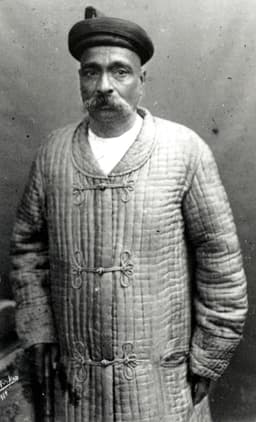
Bal Gangadhar Tilak
Revolutionary · Modern
52.9Total
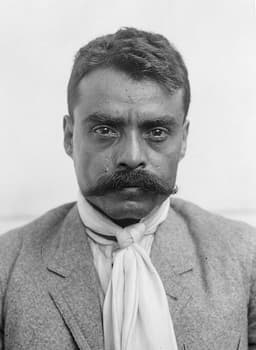
Emiliano Zapata
Revolutionary · Modern
56.3Total
Basic Information
Born
1856
1879
Died
1920
1919
Era
Modern
Modern
Nationality
India
Mexico
Occupation
Revolutionary
Revolutionary
Civilization
Indian
Western
Score Comparison
Military (10%)
50.0
40.0
Political (20%)
48.0
68.0
Influence (20%)
58.3
58.0
Legacy (20%)
56.0
54.0
Leadership (15%)
50.7
54.2
Strategy (15%)
45.0
60.0
TOTAL
52.9
56.3
Bal Gangadhar Tilak — Complete Timeline
1881 AD
Launch of the Maratha and Kesari NewspapersCultural◆ Major
Tilak founded the Marathi-language newspaper 'Kesari' and the English-language 'Maratha' to spread nationalist ideas. These newspapers became influential platforms for criticizing British rule and mobilizing public opinion.
MediaNationalism
Impact: nationalconstructive
1897 AD
Imprisonment for SeditionPolitical Action◆ Major
Tilak was arrested and sentenced to 18 months imprisonment for sedition after publishing articles critical of British rule. His imprisonment increased his popularity and made him a martyr for the nationalist cause.
ImprisonmentSedition
Impact: national
1905 AD
Introduction of Swadeshi MovementPolitical Action◆ Major
Bal Gangadhar Tilak promoted the Swadeshi movement, advocating for the boycott of British goods and the use of Indian-made products. This movement gained widespread support and became a key part of the Indian independence struggle.
NationalismEconomic Boycott
Impact: nationalconstructive
1908 AD
Lucky Ali TrialPolitical Action◆ Major
Tilak was tried and sentenced to six years in Mandalay prison for sedition after defending the use of violence against British officials. His trial and imprisonment further galvanized the Indian independence movement.
TrialImprisonment
Impact: national
1916 AD
Formation of the Home Rule LeaguePolitical Action◆ Major
Tilak founded the Indian Home Rule League in 1916, demanding self-government for India within the British Empire. The movement gained mass support and pressured the British government to consider political reforms.
Political MovementSelf-Government
Impact: nationalconstructive
Emiliano Zapata — Complete Timeline
1911 AD
Plan of AyalaPolitical Action
Zapata issued the Plan of Ayala, denouncing Francisco I. Madero for failing to implement land reform. The plan called for the return of land to peasants and became the ideological foundation of the Zapatista movement.
Land ReformAgrarian MovementRevolution
Impact: nationalprogressive
1914 AD
Occupation of Mexico CityWar◆ Major
Zapata's forces, allied with Villa's Division of the North, occupied Mexico City. They held the capital for several weeks but failed to establish lasting control, highlighting the limits of their coalition.
Military OccupationRevolutionary AllianceCapital
Impact: national
Convention of AguascalientesPolitical Action◆ Major
Zapata attended the Convention of Aguascalientes, where revolutionary factions attempted to unify. He allied with Pancho Villa against Venustiano Carranza, but the convention failed to produce a stable government.
Revolutionary AlliancePolitical DivisionCivil War
Impact: national
1919 AD
Assassination at ChinamecaPolitical Action
Zapata was lured to the Hacienda de Chinameca by Colonel Jesus Guajardo, who pretended to defect. Guajardo's troops ambushed and killed Zapata, ending his leadership of the agrarian rebellion.
AssassinationBetrayalEnd of Leadership
Impact: nationaltragic
Expert Analysis
Bal Gangadhar Tilak vs Emiliano Zapata
### The Firebrand and the Peasant: Two Paths to Revolution
On a sweltering July day in 1908, a fifty-two-year-old Indian lawyer stood before a British judge in Bombay, his voice calm but his words like embers. Bal Gangadhar Tilak had just been sentenced to six years of exile in the distant prison of Mandalay, Burma. His crime? Writing articles that the British deemed seditious—specifically, defending the use of violence against colonial oppressors. Across the world, a decade later, on a dusty April morning in 1919, a Mexican peasant leader named Emiliano Zapata rode into the Hacienda de Chinameca, lured by a false promise of defection. A bugle sounded, a volley of bullets tore through the air, and the man who had embodied the cry of "Tierra y Libertad" (Land and Liberty) crumpled to the ground. Both men were revolutionaries. Both sought to liberate their people. Yet their origins, their methods, and their fates could not have been more different. What drove these two titans of resistance down such divergent paths?
### Origins: The Brahmin and the Peasant
Tilak was born in 1856 into a Chitpavan Brahmin family in Ratnagiri, a coastal town in western India. His father was a schoolteacher, and young Bal Gangadhar grew up in a world of Sanskrit verses, English education, and a deep reverence for India’s ancient past. The British Raj, by then, had ruled for nearly a century, and the Indian elite—especially Brahmins—were often caught between admiration for Western modernity and resentment of foreign domination. Tilak’s upbringing was steeped in law, history, and philosophy. He studied mathematics and law, but his soul was drawn to the idea of *swaraj*—self-rule—as a sacred duty.
Zapata, by contrast, was born in 1879 in Anenecuilco, a small village in the state of Morelos, Mexico. His family were *campesinos*—peasant farmers who had worked the land for generations under a system of *haciendas*, vast estates owned by a wealthy few. Zapata’s education was rudimentary; he learned to read and write, but his real teacher was the soil. By his teens, he had witnessed the theft of communal lands by powerful landowners, and his father had fought in vain to reclaim them. Where Tilak’s world was one of books and courts, Zapata’s was one of cornfields, horses, and the bitter taste of injustice.
This difference in origins shaped everything. Tilak’s revolution was intellectual and political—a fight for the soul of a nation. Zapata’s was visceral and local—a fight for the earth itself.
### Rise to Power: The Pen and the Horse
Tilak’s rise was gradual, built on the power of words. In 1881, he launched two newspapers: the Marathi-language *Kesari* (Lion) and the English-language *Maratha*. Through them, he turned journalism into a weapon. He was not a man of the masses in the sense of a street leader; he was a man of ideas, a firebrand who used ancient Hindu festivals like Ganapati to rally public sentiment against British rule. His first major clash with the Raj came in 1897, when he was imprisoned for 18 months for sedition—a punishment that only elevated his status. By 1905, when he introduced the Swadeshi movement, calling for the boycott of British goods and the revival of Indian-made products, he had become the voice of a generation. His slogan, "Swaraj is my birthright and I shall have it," electrified the country.
Zapata’s path was more direct. He became a leader in his village by organizing peasants to resist land seizures. In 1911, after the fall of dictator Porfirio Díaz, he issued the Plan of Ayala, which denounced the new president, Francisco I. Madero, for betraying the promise of land reform. The plan demanded the return of stolen lands to villages and called for armed resistance. Zapata did not write editorials; he rode at the head of a peasant army. His power came not from a printing press but from the loyalty of men who saw him as one of their own—a *caudillo* of the cornfields.
### Leadership & Governance: The Philosopher-King and the Guerrilla Chief
Tilak’s leadership was that of a political strategist. He was a master of organization: in 1916, he founded the Indian Home Rule League, demanding self-government within the British Empire. He sought to unify India’s fragmented society—Hindus and Muslims, moderates and extremists—under a single banner. His approach was constitutional agitation, but he never shied from confrontation. He believed in the power of sacrifice, and his six-year exile in Mandalay only deepened his mystique. Yet Tilak was not a military man; his score of 34.3 in military aptitude reflects a leader who fought with laws and protests, not swords.
Zapata was the opposite. His military score of 55.8 was higher, but his political score of 57.6 was lower. He was a guerrilla commander, leading raids on haciendas and burning land titles. In 1914, his forces, allied with Pancho Villa’s Division of the North, occupied Mexico City. For weeks, the capital was in the hands of peasants who had never seen a paved street. But Zapata had little interest in governing a nation. He refused the presidency, saying, "I want no power, I want the land to belong to those who work it." His vision was local, not national—a federation of free villages.
### Triumph & Tragedy: The Exile and the Ambush
Tilak’s greatest moment came in 1916, when he forged the Lucknow Pact with the Muslim League, a rare show of Hindu-Muslim unity. His tragedy was that he never saw *swaraj* realized. He died in 1920, at the age of 64, just as Mahatma Gandhi was rising to lead the independence movement. His legacy was that of a prophet, not a king.
Zapata’s triumph was the Plan of Ayala, which became the moral compass of the Mexican Revolution. His tragedy was his assassination at Chinameca, lured by a false defector. He died at 39, still fighting. His body was displayed to prove he was dead, but his legend only grew.
### Character & Destiny: The Brahmin’s Pride and the Peasant’s Faith
Tilak was a man of immense pride and intellectual arrogance. He once said, "The sword of the British is sharp, but the pen is sharper." He believed in the power of the educated elite to lead the masses. Zapata was humble, almost fatalistic. He said, "It is better to die on your feet than to live on your knees." His faith was in the land and the people.
Their personalities determined their fates. Tilak’s pride led him to court imprisonment, turning him into a martyr. Zapata’s trust in a fellow revolutionary led him to a trap. Both were betrayed by the very systems they fought—Tilak by British law, Zapata by political deceit.
### Legacy: The Father and the Saint
Tilak is remembered as the "Father of Indian Unrest," a title given by the British but worn as a badge of honor. His call for *swaraj* inspired generations, from Gandhi to Bose. His total score of 66.5 reflects a man who shaped a nation’s consciousness.
Zapata’s legacy is more localized but equally profound. He is a folk saint in Mexico, his image on murals and his name chanted in protests. His score of 60.2 is lower, but his influence on agrarian movements across Latin America is immense.
### Conclusion: Two Revolutions, One Cry
Tilak and Zapata never met, but they shared a common enemy: an oppressive system that denied people their humanity. One fought with the pen, the other with the plow. One sought a nation, the other a village. Yet both understood that revolution is not just about changing governments—it is about changing how people see themselves. Tilak gave India a voice; Zapata gave Mexico a soul. In the end, their stories remind us that the fight for freedom takes many forms, but the cost is always the same: a life given for a dream that others will finish.
Rankings
🥇
Emiliano ZapataLeader
Mil: 40.0Pol: 68.0Inf: 58.0
56.3
🥈
Bal Gangadhar Tilak
Mil: 50.0Pol: 48.0Inf: 58.3
52.9
+3.4 behind
How This Comparison Works
Algorithm
Each figure is scored on 6 dimensions (0—100 scale) based on structured historical data: Military (10%), Political (20%), Influence (20%), Legacy (20%), Leadership (15%), Strategy (15%). The weighted total produces the final ranking.
Data Sources
Scores are computed from structured sub-indicators in the database. Scale factors adjust for era (Ancient ×0.85, Modern ×1.0) and civilization size (Eastern ×1.05, Other ×0.80) to account for differences in population and military scale.
Maximum 3 Figures
Comparisons are limited to 2—3 figures to ensure readability and statistical meaningfulness.
Error Margins
±5 points per dimension — Sub-scores are derived from historical records with inherent uncertainty. Two figures within 5 points on a dimension should be considered roughly equivalent in that area.
Total Score Accuracy
±3 points overall — The weighted combination of 6 dimensions produces a total score with approximately ±3 points of uncertainty. Differences of less than 3 points are not statistically significant— the figures are effectively tied.
Known Limitations
- Historical records are incomplete and uneven across civilizations
- Figures from oral-tradition societies may be underrepresented
- Occupation labels can misclassify multi-role figures
- Scores measure capability and impact, not moral character
- Quantitative scoring is a comparison tool, not absolute truth
Capability Radar
Military (10%) — Battles & Warfare
Battles
23
45
Win Rate
30
50
Expansion
30
35
Political (20%) — Governance & Reform
Reform
70
70
Diplomacy
60
40
Economy
20
35
Influence (20%) — Cultural & Global Reach
Cultural
65
65
Global
55
55
Legacy (20%) — Historical Impact
Historical
70
70
Longevity
60
65
Leadership (15%) — Power & Stability
Tenure
30
30
Stability
40
25
Strategy (15%) — Tactics & Innovation
Strategy
37
50
Tactics
39
55
Reform
43
60
Similar Comparisons
Comments & Discussion
EMERALD REBEL6/16/2026
Tilak was a fire-spitting Brahmin who treated nationalism like a blood sacrament—his defense of violence wasn’t just strategy but religious theater, invoking the Bhagavad Gita to sanctify political murder. Zapata, by contrast, was a dirt-under-nails peasant who saw land as tangible flesh, not metaphor. Tilak’s legacy is intellectual martyrdom; Zapata’s is hungry soil still bleeding. I’d take a farmer with a mule over a lawyer with a Sanskrit quote any day.
历史数据筛子6/16/2026
别被浪漫叙事骗了。Tilak的“暴力辩护”实际只针对英国象征物,他从未组织过一场真正起义;Zapata号召了数万农民烧地契,但1910年墨西哥农村识字率不到10%,他根本没可能搞现代民族国家。两个都是没写完的PPT革命家,一个在牢里背诗,一个在埋伏中成灰。数据冷酷:Tilak的追随者转型成了国大党官僚,而Zapata的地契改革在1920年就烂尾了。
CODEX CRACKER6/16/2026
Tilak weaponized history like a scholar god—he revived the Maratha Empire’s proto-nationalist tales and twisted them into a club against the Raj. Zapata had no time for archives; the soil itself was his parchment. Both were mythical figures, but Tilak’s myths built a future Indian state, while Zapata’s myths died with him in a muddy stable. One wrote epics on colonial paper, the other carved lines with a machete. I’ll bet my books on the Brahmin.
田野观察员6/16/2026
Zapata的“Tierra y Libertad”不是口号,是每日见证。1915年莫雷洛斯州62%的土地归村社集体所有,这是他刀尖逼出来的现实革命。Tilak喊着“Swaraj is my birthright”,但他从没让哪个孟加拉农民真摸到土地证。一个是把牛犁当剑的实干家,一个是把报纸当战场的文人。历史爱给精英写传记,但我站那个死在泥里的人。
MODERN REVISIONIST6/16/2026
Both were overhyped romantic failures. Tilak demonized Muslims to unite Hindus, a divisive tactic that poisoned later Indian communalism. Zapata, for all his land reform rhetoric, never centralized power enough to stop his own assassination. The real heroes? The anonymous census takers, tax collectors, and irrigation engineers who actually built their revolutions’ crumbling foundations. Give me a bureaucrat over a fiery demagogue any century.