Loading...
Authari vs Zhao Kuangyin
Zhao Kuangyin leads by 25.1 pts · 2 figures compared
…
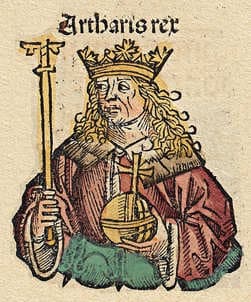
Authari
Emperor · Medieval
46.4Total
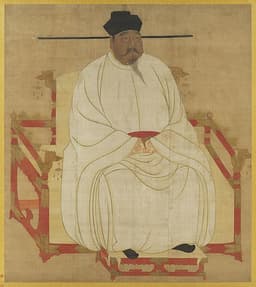
Zhao Kuangyin
Emperor · Medieval
71.5Total
Basic Information
Born
540
927
Died
590
976
Era
Medieval
Medieval
Nationality
Lombards
China
Occupation
Emperor
Emperor
Civilization
Western
Eastern
Score Comparison
Military (10%)
10.0
78.0
Political (20%)
39.4
84.0
Influence (20%)
56.4
68.0
Legacy (20%)
45.0
65.0
Leadership (15%)
64.5
74.0
Strategy (15%)
45.0
68.0
TOTAL
46.4
71.5
Authari — Complete Timeline
568 AD
Invasion of ItalyWar
Authari led the Lombard invasion of Italy, crossing the Alps and establishing a kingdom. This conquest seized large parts of the Italian peninsula from Byzantine control, founding the Lombard Kingdom in Italy.
Lombard InvasionConquestItaly
Impact: regionaldestructive
572 AD
Establishment of the Lombard KingdomPolitical Action◆ Major
Authari established Pavia as the capital of the Lombard Kingdom, consolidating Lombard rule over northern and central Italy. He organized the kingdom into duchies, creating a stable political structure that lasted for centuries.
State FormationCapitalLombard Kingdom
Impact: regionalconstructive
589 AD
Marriage to TheudelindaPolitical Action
Authari married Theudelinda, a Bavarian princess, to strengthen alliances with the Bavarians and promote Catholic conversion among the Lombards. The marriage produced no heir, but Theudelinda later became a key figure in Lombard politics.
Marriage AllianceDynastic PoliticsCatholic Conversion
Impact: nationalconstructive
Zhao Kuangyin — Complete Timeline
960 AD
Founded Song dynastyPolitical Action
Zhao Kuangyin, a general of Later Zhou, was proclaimed emperor by his troops at Chenqiao. He established the Song dynasty, ending the Five Dynasties period and beginning a new era of Chinese history.
Song dynastyFoundingChenqiao
Impact: globalconstructive
961 AD
Removed military power from generalsPolitical Action◆ Major
Zhao Kuangyin invited senior generals to a banquet and persuaded them to retire peacefully. This 'removal of military power over wine' prevented military coups and centralized control.
Song dynastyMilitary reformCentralization
Impact: nationalconstructive
963 AD
Unified southern ChinaWar◆ Major
Zhao Kuangyin launched campaigns to conquer the southern kingdoms, including Jingnan, Later Shu, and Southern Tang. By his death, most of China was reunified under Song rule.
Song unificationConquestSouthern kingdoms
Impact: national
Expert Analysis
Zhao Kuangyin vs Authari
# The Unifier and the Invader: Two Paths to Power in Medieval Europe and China
In the autumn of 961, a Chinese emperor hosted a banquet for his most trusted generals. Wine flowed, laughter echoed through the palace halls, and then, quietly, the emperor spoke of sleepless nights—how he feared that one day, his own officers might be forced by their troops to seize the throne, just as he himself had been. By morning, the generals had resigned their commands, accepting wealth and titles in exchange for peace. Three decades later and half a world away, a Lombard king named Authari led his warriors across the snow-capped Alps into Italy, his sword wet with blood, his claim to power written not in wine cups but in the ashes of conquered cities. Zhao Kuangyin and Authari both founded kingdoms in the late sixth and tenth centuries, yet their stories could not be more different—one a master of peaceful consolidation, the other a warrior of violent conquest. What drove these two men, and why did their paths diverge so sharply?
Origins
Zhao Kuangyin was born in 927 into a military family serving the Later Zhou dynasty, one of the short-lived regimes that followed the collapse of the Tang Empire. China was fractured into a patchwork of warring states, a period known as the Five Dynasties and Ten Kingdoms. Zhao grew up watching generals rise and fall, thrones change hands through bloodshed, and the common people suffer endless war. His world taught him one lesson above all: military power was unstable, and only a ruler who could control his own army could hope to bring lasting peace.
Authari, born in 540, emerged from a very different world. The Lombards were a Germanic people who had migrated into the Carpathian basin, living as semi-nomadic warriors under the shadow of the Byzantine Empire. Authari’s father, King Alboin, had led the Lombards into Italy in 568, but Alboin was assassinated in 572, leaving Authari to inherit a kingdom still being carved out by force. For Authari, power was not something to be negotiated—it was something to be taken and held by the sword.
Rise to Power
Zhao Kuangyin’s rise was almost accidental. In 960, as a general of the Later Zhou, he was sent north to repel a Khitan invasion. Before his army reached the frontier, his troops halted at Chenqiao, draped a yellow robe over his shoulders, and proclaimed him emperor. This was a familiar ritual in chaotic times—armies often elevated their commanders—but Zhao handled it differently. He made his soldiers swear to protect the capital, spare the imperial family, and avoid looting. He then marched into Kaifeng and accepted the abdication of the young Zhou emperor, establishing the Song dynasty with minimal bloodshed.
Authari’s rise was more direct. He became king of the Lombards around 584, after a decade of interregnum and fragmentation. His first task was to reunite the Lombard dukes, who had carved out semi-independent domains across northern and central Italy. Authari did this through a combination of military pressure and political marriage. In 589, he married Theudelinda, a Bavarian princess, securing an alliance that strengthened his position and opened the door to Catholic conversion—a shrewd move in a land where the Pope and Byzantine emperor still held sway.
Leadership & Governance
Zhao Kuangyin’s genius lay in his ability to disarm his own supporters. In 961, the famous “Removal of Military Power at a Banquet” saw him persuade his senior generals to retire peacefully, replacing them with civilian officials. He then restructured the Song military, dividing command among multiple officers so that no single general could threaten the throne. He also reformed the civil service, expanded the examination system, and promoted education. His goal was not just to unify China but to create a stable, civilian-led state that would not collapse into warlordism.
Authari governed differently. He ruled through personal authority and military might, establishing Pavia as his capital in 572 and using it as a base to project power over the Lombard dukes. He issued laws, collected tribute, and fought off Byzantine attempts to reconquer Italy. But his rule remained fragile—the Lombard kingdom was a warrior confederation, not a centralized state. Authari’s success depended on his ability to lead in battle and maintain the loyalty of his dukes, a balance that could tip at any moment.
Triumph & Tragedy
Zhao Kuangyin’s greatest triumph was the unification of southern China. Between 963 and 976, he launched campaigns that conquered the kingdoms of Jingnan, Later Shu, and Southern Tang, bringing vast territories under Song control. He did this with remarkable restraint—offering generous terms to surrendering rulers, sparing civilians, and integrating conquered lands into the Song administrative system. His tragedy came in 976, when he died suddenly at age 49, possibly assassinated by his brother Zhao Guangyi, who succeeded him. The mystery of his death has haunted historians ever since.
Authari’s triumph was the establishment of a Lombard kingdom that would endure for two centuries. He secured the core of Lombard power in the Po Valley, married strategically to the Bavarian royal house, and laid the groundwork for the conversion of his people to Catholicism. His tragedy was his early death in 590, likely by poison, just as his kingdom was gaining stability. He left behind a young widow, Theudelinda, who would later marry his successor and ensure the Lombard dynasty’s survival.
Character & Destiny
Zhao Kuangyin was a man of careful calculation. He understood that in a world of shifting loyalties, the greatest danger to a ruler came not from foreign enemies but from his own army. His decision to peacefully retire his generals was not weakness—it was a masterstroke of political wisdom. He once said, “The empire is not something that can be ridden on horseback,” meaning that military conquest alone could not sustain a dynasty. His personality—cautious, strategic, and humane—shaped the Song dynasty’s character for centuries.
Authari was a warrior-king in the old Germanic mold. He led from the front, fought in battles, and expected his dukes to follow him out of personal loyalty and fear. He did not build institutions or reform governance; he built a kingdom through force of arms and personal charisma. His death at 50 left a power vacuum that his successors struggled to fill. His personality—bold, direct, and violent—reflected the world of the Lombard migration, where power was personal and fleeting.
Legacy
Zhao Kuangyin’s legacy is immense. The Song dynasty he founded lasted over three centuries, becoming one of China’s most prosperous and culturally brilliant eras. His reforms created a civilian bureaucracy that endured for centuries, and his policy of “emphasizing civil over military” shaped Chinese governance long after the Song fell. He is remembered as a unifier and a peacemaker, a rare figure in Chinese history who consolidated power without wholesale slaughter.
Authari’s legacy is more modest but still significant. He gave the Lombards a kingdom that lasted until 774, when Charlemagne conquered it. His marriage to Theudelinda helped convert the Lombards to Catholicism, integrating them into the broader European Christian world. But his kingdom remained fragile, and his name is less known today than that of his more famous successors or his wife.
Conclusion
Standing at the crossroads of their respective worlds, Zhao Kuangyin and Authari embody two fundamental approaches to power. Zhao built a state that outlasted him by centuries, using persuasion and institutional reform to tame the very military that had elevated him. Authari built a kingdom that survived only as long as his sword arm held, a personal dominion that crumbled without his presence. The difference between them is not merely one of talent or luck—it is a difference of vision. Zhao saw that power, to be lasting, must be shared and embedded in laws and institutions. Authari saw power as something to be held tightly, wielded personally, and passed on through blood. Both succeeded in their own ways, but only one built a foundation that could withstand the storms of time. In the end, the unifier’s quiet banquet proved mightier than the invader’s loudest battle cry.
Rankings
🥇
Zhao KuangyinLeader
Mil: 78.0Pol: 84.0Inf: 68.0
71.5
🥈
Authari
Mil: 10.0Pol: 39.4Inf: 56.4
46.4
+25.1 behind
How This Comparison Works
Algorithm
Each figure is scored on 6 dimensions (0—100 scale) based on structured historical data: Military (10%), Political (20%), Influence (20%), Legacy (20%), Leadership (15%), Strategy (15%). The weighted total produces the final ranking.
Data Sources
Scores are computed from structured sub-indicators in the database. Scale factors adjust for era (Ancient ×0.85, Modern ×1.0) and civilization size (Eastern ×1.05, Other ×0.80) to account for differences in population and military scale.
Maximum 3 Figures
Comparisons are limited to 2—3 figures to ensure readability and statistical meaningfulness.
Error Margins
±5 points per dimension — Sub-scores are derived from historical records with inherent uncertainty. Two figures within 5 points on a dimension should be considered roughly equivalent in that area.
Total Score Accuracy
±3 points overall — The weighted combination of 6 dimensions produces a total score with approximately ±3 points of uncertainty. Differences of less than 3 points are not statistically significant— the figures are effectively tied.
Known Limitations
- Historical records are incomplete and uneven across civilizations
- Figures from oral-tradition societies may be underrepresented
- Occupation labels can misclassify multi-role figures
- Scores measure capability and impact, not moral character
- Quantitative scoring is a comparison tool, not absolute truth
Capability Radar
Military (10%) — Battles & Warfare
Battles
35
75
Win Rate
40
85
Expansion
45
75
Political (20%) — Governance & Reform
Reform
30
90
Diplomacy
35
85
Economy
25
80
Influence (20%) — Cultural & Global Reach
Cultural
30
70
Global
20
60
Legacy (20%) — Historical Impact
Historical
35
80
Longevity
25
75
Leadership (15%) — Power & Stability
Tenure
40
65
Stability
30
85
Strategy (15%) — Tactics & Innovation
Strategy
35
80
Tactics
30
70
Reform
25
90
Similar Comparisons
Comments & Discussion
短命王朝观察员6/16/2026
Authari那套纯粹的武力征服模式,放在五代的乱世里,活不过三集。他砍人夺地再爽,解决不了继承权混乱和贵族反扑的问题。反观赵匡胤,杯酒释兵权虽然被人骂软弱,但人家靠这套制度让宋朝安稳了三百多年。历史不是比谁砍得多,是比谁活得久。Authari能跟赵匡胤比香火续命?差远了。
Chronicler42916/16/2026
Zhao Kuangyin’s "banquet release of military power" wasn’t some wise peace move—it was a paranoid emperor gutting his own army out of fear. He demobilized the very generals who had won him the throne, leaving Song China vulnerable to Liao and Xixia. Meanwhile, Authari didn’t hesitate to lead his troops into Italy, cementing Lombard dominance through aggressive leadership. Zhao’s caution lost China’s northern frontiers; Authari’s daring secured a legacy.