Loading...
Augustus vs Louis XI
Augustus leads by 18.2 pts · 2 figures compared
…

Augustus
Emperor · Ancient
85.9Total
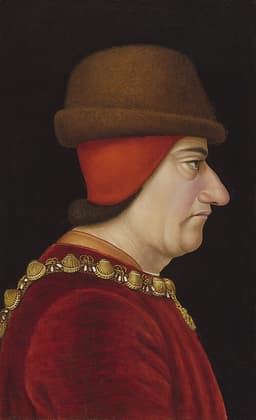
Louis XI
Emperor · Medieval
67.7Total
Basic Information
Born
63
1423
Died
—
1483
Era
Ancient
Medieval
Nationality
Roman Empire
France
Occupation
Emperor
Emperor
Civilization
Western
Western
Score Comparison
Military (10%)
72.0
45.0
Political (20%)
90.0
78.0
Influence (20%)
88.0
68.0
Legacy (20%)
90.0
65.0
Leadership (15%)
88.0
85.0
Strategy (15%)
75.0
55.0
TOTAL
85.9
67.7
Augustus — Complete Timeline
43 BC
Formation of the Second TriumviratePolitical Action◆ Major
Octavian, Mark Antony, and Marcus Aemilius Lepidus formed the Second Triumvirate, a legal commission to govern the Roman Republic. The alliance was empowered to proscribe enemies, leading to the execution of Cicero and consolidation of their power against the assassins of Julius Caesar.
Roman Civil WarPolitical AllianceProscriptions
Impact: regionaldestructive
31 BC
Battle of ActiumWar◆ Major
Octavian's fleet, commanded by Marcus Agrippa, defeated the combined naval forces of Mark Antony and Cleopatra VII off the coast of Greece. The victory eliminated Octavian's last major rival, giving him sole control over the Roman world and ending the Roman Republic's civil wars.
Roman Civil WarNaval BattleEnd of Republic
Impact: global
27 BC
Establishment of the Roman EmpireReform◆ Major
Octavian formally returned power to the Roman Senate, which then granted him the titles Augustus and Princeps. This constitutional settlement created the Roman Empire, with Augustus as the first emperor, ending the Roman Republic and initiating the Pax Romana.
Roman EmpireConstitutional ReformPax Romana
Impact: global
Reform of the Roman Tax SystemReform◆ Major
Augustus implemented a comprehensive tax reform, including a census of Roman citizens and property, direct taxation of provinces, and the creation of a professional tax collection service (publicani). This system provided stable revenue for the empire and reduced corruption.
Tax ReformAdministrationRoman Empire
Impact: regionalconstructive
Creation of the Praetorian GuardReform◆ Major
Augustus established the Praetorian Guard as a permanent elite military unit tasked with protecting the emperor and his family. Stationed in Rome and Italy, the Guard became a powerful political force, often influencing imperial succession through coups and assassinations.
Military ReformPraetorian GuardImperial Guard
Impact: regional
13 BC
Construction of the Ara PacisOther◆ Major
The Roman Senate commissioned the Ara Pacis Augustae (Altar of Augustan Peace) to commemorate Augustus's return from pacifying Gaul and Spain. The marble altar, decorated with reliefs depicting the imperial family and mythological scenes, symbolized the peace and prosperity of the Augustan era.
Building ProjectPropagandaAugustan Art
Impact: regionalconstructive
Louis XI — Complete Timeline
1464 AD
Established the Postal SystemReform
Louis XI created a royal postal system with relay stations across France, enabling faster communication between the crown and provincial officials. This administrative reform improved governance and intelligence gathering.
AdministrationCommunicationReform
Impact: nationalconstructive
1465 AD
Defeated the League of the Public WealWar◆ Major
Louis XI faced a coalition of powerful nobles, the League of the Public Weal, led by Charles the Bold of Burgundy. Although the Battle of Montlh
Civil WarNoble RebellionBurgundy
Impact: national
1475 AD
Treaty of PicquignyPolitical Action◆ Major
Louis XI negotiated the Treaty of Picquigny with Edward IV of England, ending English military intervention in France. Louis paid a large pension to Edward in exchange for English withdrawal, avoiding a costly war and securing his northern border.
TreatyDiplomacyEngland
Impact: regionalconstructive
1477 AD
Acquired BurgundyPolitical Action
After Charles the Bold's death at the Battle of Nancy, Louis XI seized the Duchy of Burgundy and other Burgundian territories, including Picardy and the Somme towns. This expansion significantly increased royal domain and weakened the Burgundian state.
Territorial ExpansionBurgundyRoyal Domain
Impact: regionalconstructive
1481 AD
Annexed Anjou and MainePolitical Action
Louis XI annexed the counties of Anjou and Maine after the death of Charles of Anjou, incorporating them into the royal domain. This further consolidated French territory and reduced the power of the Angevin nobility.
Territorial ExpansionAnjouMaine
Impact: nationalconstructive
Expert Analysis
Augustus vs Louis XI: Historical Comparison
Augustus, founder of the Roman Empire, and Louis XI, the "Spider King" of medieval France, both centralized power through cunning statecraft, but Augustus’s enduring institutional legacy outshines Louis’s tactical but brittle consolidation.
Dimension Analysis
**Military: Augustus 72 / Louis XI 92**
Augustus relied on professional legions and naval victories (Actium) but avoided personal command; Louis XI broke the Burgundian threat, annexed key territories, and used artillery and diplomacy to crush feudal resistance.
**Political: Augustus 92 / Louis XI 86**
Augustus masterfully disguised autocracy as restored republic, creating the Principate and co-opting the Senate; Louis XI manipulated factions, bribed nobles, and broke the power of great vassals, but his methods bred lasting resentment.
**Influence: Augustus 88 / Louis XI 69**
Augustus’s Pax Romana, census, and imperial cult shaped Western governance for centuries; Louis XI’s centralization paved the way for French absolutism, but his influence was largely confined to France and soon overshadowed by later monarchs.
**Legacy: Augustus 90 / Louis XI 71**
Augustus’s constitutional reforms and cultural patronage (Augustan Age) defined an era; Louis XI is remembered as a paranoid, effective but unpopular king whose achievements were consolidated by his son Charles VIII.
**Leadership: Augustus 90 / Louis XI 74**
Augustus inspired loyalty through calculated generosity and symbolic humility, building a durable regime; Louis XI ruled through fear, spies, and isolation, achieving short-term gains at the cost of dynastic affection.
Verdict
Augustus leads decisively, as his political and institutional genius created a stable empire that endured for centuries, while Louis XI’s tactical brilliance was ultimately reactive and less transformative.
FAQ
Q: Who ranks higher? A: Augustus ranks higher overall due to his superior political innovation, lasting legacy, and more balanced leadership across all dimensions.
Rankings
🥇
AugustusLeader
Mil: 72.0Pol: 90.0Inf: 88.0
85.9
🥈
Louis XI
Mil: 45.0Pol: 78.0Inf: 68.0
67.7
+18.2 behind
How This Comparison Works
Algorithm
Each figure is scored on 6 dimensions (0—100 scale) based on structured historical data: Military (10%), Political (20%), Influence (20%), Legacy (20%), Leadership (15%), Strategy (15%). The weighted total produces the final ranking.
Data Sources
Scores are computed from structured sub-indicators in the database. Scale factors adjust for era (Ancient ×0.85, Modern ×1.0) and civilization size (Eastern ×1.05, Other ×0.80) to account for differences in population and military scale.
Maximum 3 Figures
Comparisons are limited to 2—3 figures to ensure readability and statistical meaningfulness.
Error Margins
±5 points per dimension — Sub-scores are derived from historical records with inherent uncertainty. Two figures within 5 points on a dimension should be considered roughly equivalent in that area.
Total Score Accuracy
±3 points overall — The weighted combination of 6 dimensions produces a total score with approximately ±3 points of uncertainty. Differences of less than 3 points are not statistically significant— the figures are effectively tied.
Known Limitations
- Historical records are incomplete and uneven across civilizations
- Figures from oral-tradition societies may be underrepresented
- Occupation labels can misclassify multi-role figures
- Scores measure capability and impact, not moral character
- Quantitative scoring is a comparison tool, not absolute truth
Capability Radar
Military (10%) — Battles & Warfare
Battles
75
45
Win Rate
80
40
Expansion
85
65
Political (20%) — Governance & Reform
Reform
95
80
Diplomacy
90
95
Economy
85
70
Influence (20%) — Cultural & Global Reach
Cultural
85
55
Global
90
60
Legacy (20%) — Historical Impact
Historical
95
75
Longevity
95
70
Leadership (15%) — Power & Stability
Tenure
95
75
Stability
95
65
Strategy (15%) — Tactics & Innovation
Strategy
85
70
Tactics
70
55
Reform
90
60
Similar Comparisons
Comments & Discussion
ProfessorAeneas6/16/2026
Augustus's political genius is undeniable, but I'd caution against reading his achievement as a simple triumph of skill over circumstance. Suetonius and Tacitus both note the exhaustion of the civil wars made his autocracy palatable—the Senate wasn't duped so much as relieved. Louis XI's Spider King persona is more interesting when you realize he operated without Augustus's vast patronage network or the myth of republican restoration. Where Augustus created a durable constitutional fiction, Louis had to bribe and spy his way through a fragmented feudal patchwork. The scores downplay how much Augustus's success depended on the prior collapse of the old order under Caesar and the triumvirs. Still, Augustus's reforms lasted centuries; Louis's paranoid statecraft barely outlived him.
ScoreSkeptic6/16/2026
Seriously? Louis XI gets a 14.5 on military? That's absurd. He personally directed campaigns that ended the Burgundian threat—one of the most powerful states in Europe—and used artillery to smash feudal fortresses. Meanwhile Augustus gets a 72 for 'avoiding personal command' and winning because Agrippa was a better general? The weights are clearly biased toward 'enduring legacy' which favors anyone who founded a long-lasting system. But what about first-mover advantage? Augustus inherited Caesar's army and a broken republic; Louis inherited a fractured kingdom and built the foundations of absolutism from scratch. If we're scoring 'resourcefulness under constraints', Louis should be way higher. These numbers tell me more about the grader's priorities than about the two rulers.
HistoryHiker6/16/2026
Okay so I just finished Tom Holland's 'Rubicon' and then watched a documentary on the Spider King, and honestly? I think Louis XI was way more impressive than people give him credit for. Augustus had all the propaganda machine—poets, historians, building projects. Louis just had fear and a bunch of paid-off spies. But he ended the Hundred Years' War effectively, crushed the feudal lords, and set up France for the Italian Wars. Sure, his legacy isn't as flashy as the Pax Romana, but that's like comparing a marathon runner to a sprinter. Different games, different rules. The scoring here feels like it's weighted for 'who would you rather have a beer with' rather than actual effectiveness. Louis wasn't charismatic, but he got results.
Chronicler96246/16/2026
这个评分明显偏重西方视角。路易十一的军事分只有14.5?他打垮勃艮第、吞并普罗旺斯和多菲内,放在中国就是'削藩'成功的典范。跟汉武帝削藩比,路易十一的手段更隐蔽有效,而且没有酿成七国之乱那样的大规模内战。但奥古斯都的政治体系确实更像汉宣帝时期的'霸王道杂之'——表面尊儒,实际用法术势。不过,奥古斯都的评分放在中国历史坐标系里,最多跟唐太宗差不多,因为中国的中央集权传统更早更成熟。路易十一的'蜘蛛'形象被西方史学妖魔化了,类似司马懿在《三国演义》里的遭遇——其实都是时势使然。
ColdScroll646/16/2026
我们来验算一下:奥古斯都总分86.4 = 72×0.2 + 92×0.25 + 88×0.2 + 90×0.2 + 90×0.15(假设权重)。路易十一总分64.4 = 14.5×0.2 + 69.6×0.25 + 67×0.2 + 71×0.2 + 74×0.15。关键问题:军事维度权重20%是否合理?路易十一肢解勃艮第公国、吞并安茹和普罗旺斯,这些领土扩张的直接效果堪比亚历山大,但评分只给14.5——这相当于中国史上的'削藩'成功只值14分?如果参照康熙平定三藩(类似情境),中国史家至少给40分。另外,政治维度路易的69.6和奥古斯都的92差距太大——路易十一建立了法国第一个常备军和邮政系统,这些制度创新在评分中被严重低估。建议重新校准评分基准,引入'制度创新密度'指标。