Loading...
Antonio Lopez de Santa Anna vs Suchinda Kraprayoon
Antonio Lopez de Santa Anna leads by 12.3 pts · 2 figures compared
…
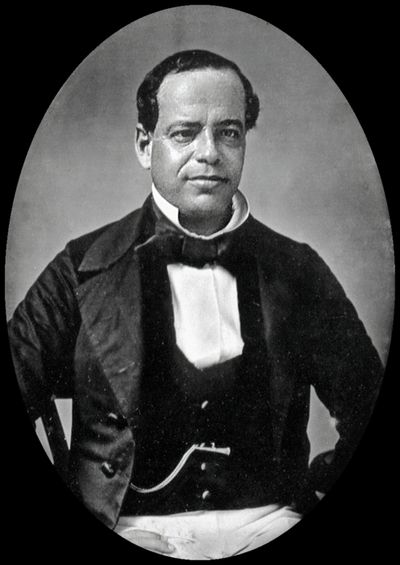
Antonio Lopez de Santa Anna
General · Modern
70.1Total
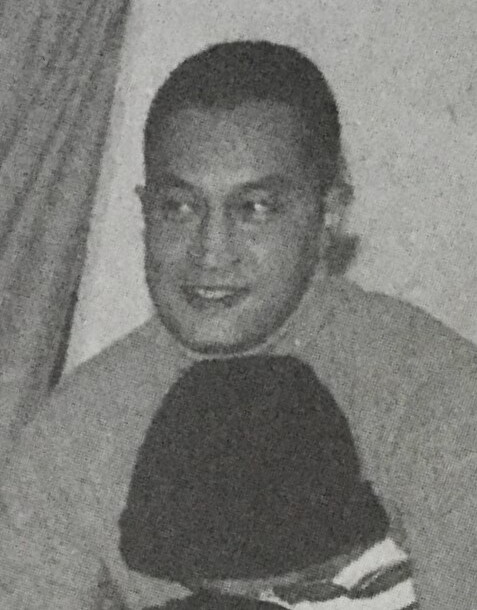
Suchinda Kraprayoon
General · Modern
57.8Total
Basic Information
Born
1794
1933
Died
1876
—
Era
Modern
Modern
Nationality
Mexico
Thailand
Occupation
General
General
Civilization
Western
Eastern
Score Comparison
Military (10%)
66.3
31.7
Political (20%)
81.1
50.0
Influence (20%)
68.5
66.3
Legacy (20%)
65.2
52.4
Leadership (15%)
77.6
81.2
Strategy (15%)
59.4
57.8
TOTAL
70.1
57.8
Rankings
🥇
Antonio Lopez de Santa AnnaLeader
Mil: 66.3Pol: 81.1Inf: 68.5
70.1
🥈
Suchinda Kraprayoon
Mil: 31.7Pol: 50.0Inf: 66.3
57.8
+12.3 behind
How This Comparison Works
Algorithm
Each figure is scored on 6 dimensions (0—100 scale) based on structured historical data: Military (10%), Political (20%), Influence (20%), Legacy (20%), Leadership (15%), Strategy (15%). The weighted total produces the final ranking.
Data Sources
Scores are computed from structured sub-indicators in the database. Scale factors adjust for era (Ancient ×0.85, Modern ×1.0) and civilization size (Eastern ×1.05, Other ×0.80) to account for differences in population and military scale.
Maximum 3 Figures
Comparisons are limited to 2—3 figures to ensure readability and statistical meaningfulness.
Error Margins
±5 points per dimension — Sub-scores are derived from historical records with inherent uncertainty. Two figures within 5 points on a dimension should be considered roughly equivalent in that area.
Total Score Accuracy
±3 points overall — The weighted combination of 6 dimensions produces a total score with approximately ±3 points of uncertainty. Differences of less than 3 points are not statistically significant— the figures are effectively tied.
Known Limitations
- Historical records are incomplete and uneven across civilizations
- Figures from oral-tradition societies may be underrepresented
- Occupation labels can misclassify multi-role figures
- Scores measure capability and impact, not moral character
- Quantitative scoring is a comparison tool, not absolute truth
Capability Radar
Military (10%) — Battles & Warfare
Battles
65
5
Win Rate
40
5
Expansion
50
5
Political (20%) — Governance & Reform
Reform
20
5
Diplomacy
35
10
Economy
15
5
Influence (20%) — Cultural & Global Reach
Cultural
55
5
Global
50
5
Legacy (20%) — Historical Impact
Historical
60
10
Longevity
55
5
Leadership (15%) — Power & Stability
Tenure
75
10
Stability
10
5
Strategy (15%) — Tactics & Innovation
Strategy
45
10
Tactics
60
10
Reform
30
5
Expert Analysis
Antonio Lopez de Santa Anna vs Suchinda Kraprayoon
**The General Who Would Be King: Santa Anna and Suchinda, Two Faces of Military Rule**
In the spring of 1836, Antonio López de Santa Anna stood on the ramparts of the Alamo, surveying the smoldering ruins of a mission he had just taken by force. He was the master of Mexico, the Napoleon of the West, a man who had crushed a Spanish invasion and now held Texas in his grip. One hundred and fifty-six years later, in the spring of 1992, General Suchinda Kraprayoon sat in a Bangkok office, having just been appointed prime minister of Thailand. He was a man who had seized power in a bloodless coup, promising stability, and now faced a different kind of enemy: a sea of unarmed citizens demanding democracy. Both were generals who ruled their nations. Both sought to shape history. But their paths diverged as sharply as the centuries that separated them—one a caudillo of the 19th century, the other a reluctant autocrat of the late 20th. Why did Santa Anna dominate for decades, while Suchinda crumbled in weeks? The answer lies in the eras they inhabited and the choices they made.
**Origins**
Santa Anna was born in 1794 in Jalapa, Mexico, into a world of colonial hierarchy and revolutionary ferment. The Spanish Empire was crumbling, and young Antonio, a boy of modest Creole family, found his calling in the army. He was a creature of his time—the age of caudillos, where personal charisma and military might could topple governments. He learned war in the chaotic years after Mexico’s independence, where loyalty was fluid and power came from the barrel of a gun. Suchinda, by contrast, was born in 1933 in Bangkok, into a Thailand that had never been colonized. He came of age during the Cold War, when the military was the guardian of the nation against communism. He was a product of the Royal Thai Army, an institution steeped in hierarchy and loyalty to the monarchy, not a man who dreamed of personal glory. Santa Anna’s world was one of endless rebellion; Suchinda’s was one of ordered coups.
**Rise to Power**
Santa Anna’s rise was a masterpiece of opportunism. In 1823, he issued the Plan of Casa Mata, a rebellion that overthrew Emperor Agustín de Iturbide. He was just 29. He then became a hero in 1829, defeating a Spanish invasion at Tampico—a victory that made him the “Savior of the Nation.” But Santa Anna was no ideologue; he switched sides as easily as he changed uniforms. He became president in 1833, then promptly handed power to his vice president and retreated to his hacienda, only to return when needed. His power was personal, not institutional. Suchinda’s rise was more methodical. He climbed the ranks of the Thai military, becoming army commander by 1990. On February 23, 1991, he led the National Peace Keeping Council in a bloodless coup against Prime Minister Chatichai Choonhavan, citing corruption. It was a classic Thai coup—swift, orderly, and tolerated by the king. Suchinda then promised elections, but when they came in 1992, he maneuvered to become prime minister himself, despite not being an elected MP. He had no popular mandate, only the army’s guns.
**Leadership & Governance**
Santa Anna governed as a caudillo: personal, erratic, and self-serving. He was a brilliant military tactician but a poor strategist. At the Alamo in 1836, he won a victory but at a terrible cost—he ordered no quarter, turning the Texan rebels into martyrs. Then, at San Jacinto, he was caught napping by Sam Houston and captured, signing away Texas. He returned to power repeatedly, selling territory in the Gadsden Purchase in 1853 for personal gain, and was overthrown in 1855 after the Plan of Ayutla. His rule was a cycle of triumph and disaster. Suchinda’s leadership was more sterile. He had no grand vision—only a desire to restore order. When protests erupted in Bangkok in May 1992, he ordered a crackdown. Soldiers fired into crowds, killing dozens in what became known as Black May. But unlike Santa Anna, Suchinda faced a modern world: cameras captured the violence, and the king, King Bhumibol Adulyadej, intervened. Suchinda resigned within days. His military prowess was irrelevant; he lacked the political cunning to survive.
**Triumph & Tragedy**
Santa Anna’s greatest moment was Tampico in 1829, where he defeated a Spanish invasion and was hailed as a national hero. His worst was San Jacinto in 1836, where his arrogance led to disaster. He later lost half of Mexico’s territory in the Mexican-American War. His tragedy was that he could never learn from defeat. Suchinda’s triumph was the 1991 coup itself—a bloodless seizure of power that seemed to promise stability. His tragedy was Black May, where his order to shoot protesters turned him into a pariah. He resigned on May 24, 1992, and faded into obscurity. Santa Anna died in 1876, poor and blind, but still remembered; Suchinda is still alive, but largely forgotten.
**Character & Destiny**
Santa Anna was a man of immense ego and resilience. He once said, “A hundred years to come, my posterity will be proud of me.” He believed in his own myth. Suchinda was more cautious, a product of an institution. He lacked Santa Anna’s theatricality. Their destinies were shaped by their eras: Santa Anna’s 19th-century Mexico was a land of chaos where a strongman could rise again and again. Suchinda’s 1990s Thailand was a modernizing state where the middle class demanded accountability, and the monarchy held ultimate authority. Santa Anna could sell territory and survive; Suchinda could not even sell a policy.
**Legacy**
Santa Anna is remembered as a traitor in Mexico, the man who lost Texas and half the nation. His legacy is a cautionary tale of personal ambition. Suchinda is a footnote in Thai history, a general who tried to turn back the clock. His legacy is the lesson that military rule cannot suppress democracy forever. Both failed, but for different reasons: Santa Anna because he was too reckless, Suchinda because he was too rigid.
**Conclusion**
Standing at the Alamo, Santa Anna saw a stepping stone to glory. Standing in Bangkok, Suchinda saw a throne that would not hold. The difference was not just in their characters, but in the worlds they ruled. Santa Anna’s Mexico was a house of cards, rebuilt after every collapse. Suchinda’s Thailand was a steel frame, unmoved by his weight. One fell because he could not stop winning; the other because he could not stop losing. Both remind us that generals who rule must understand not just the battlefield, but the times. And the times, in the end, always win.
Antonio Lopez de Santa Anna — Complete Timeline
1823 AD
Led the Plan of Casa Mata rebellionPolitical Action
Santa Anna, then a general, issued the Plan of Casa Mata on February 1, 1823, calling for the overthrow of Emperor Agust
RebellionOverthrowRepublic
Impact: nationalconstructive
1829 AD
Defended Mexico at the Battle of TampicoWar◆ Major
Santa Anna commanded Mexican forces that defeated a Spanish invasion force at Tampico on September 11, 1829. The victory ended Spain's last attempt to reconquer Mexico and made Santa Anna a national hero. He was hailed as the 'Hero of Tampico' and used this fame to advance politically.
VictorySpanish InvasionNational Hero
Impact: nationalconstructive
1833 AD
Became President of Mexico for the first timePolitical Action◆ Major
Santa Anna was elected President of Mexico in 1833. He quickly delegated power to Vice President Valent
PresidencyPolitical InstabilityPower
Impact: national
1836 AD
Commanded at the Siege of the AlamoWar◆ Major
Santa Anna personally led the Mexican army in the siege of the Alamo mission in San Antonio, Texas. After a 13-day siege, Mexican forces stormed the fort on March 6, 1836, killing all 180-250 Texan defenders. The battle became a symbol of Texan resistance and a rallying cry for independence.
BattleTexas RevolutionAlamo
Impact: regionaldestructive
Defeated and captured at the Battle of San JacintoWar
Santa Anna's army was surprised and routed by Texan forces under Sam Houston at the Battle of San Jacinto on April 21, 1836. Santa Anna was captured the next day. He was forced to sign the Treaties of Velasco, recognizing Texan independence, though Mexico later repudiated them.
DefeatCaptureTexas Independence
Impact: regionaltragic
1847 AD
Lost the Mexican-American WarWar
Santa Anna returned from exile to command Mexican forces during the Mexican-American War. Despite initial efforts, his army was defeated at the Battle of Cerro Gordo and later at the Battle of Chapultepec. US forces captured Mexico City on September 14, 1847, leading to the Treaty of Guadalupe Hidalgo and massive territorial losses.
Mexican-American WarDefeatTerritorial Loss
Impact: globaltragic
1853 AD
Sold La Mesilla to the United StatesPolitical Action◆ Major
During his final presidency, Santa Anna agreed to the Gadsden Purchase, selling 29,670 square miles of territory (La Mesilla) to the United States for $10 million. The sale was widely condemned in Mexico as a betrayal. This act further damaged his reputation and led to his overthrow.
Territorial CessionGadsden PurchaseBetrayal
Impact: nationaldestructive
1855 AD
Overthrown and exiled for the final timePolitical Action◆ Major
The Plan of Ayutla, led by Juan
OverthrowExileEnd of Career
Impact: nationaltragic
Suchinda Kraprayoon — Complete Timeline
1991 AD
Leadership of the 1991 Thai Coup d'ÉtatPolitical Action◆ Major
General Suchinda Kraprayoon led the National Peace Keeping Council in a bloodless coup that overthrew Prime Minister Chatichai Choonhavan. The coup was justified by claims of corruption and political instability, establishing a military junta.
CoupMilitary JuntaPower Seizure
Impact: nationaldestructive
1992 AD
Appointment as Prime MinisterPolitical Action◆ Major
After a general election, Suchinda was appointed Prime Minister despite not being an elected MP. His appointment sparked widespread protests, as it was seen as a continuation of military rule and a violation of democratic principles.
Prime MinisterControversyMilitary Rule
Impact: nationaldestructive
Black May 1992 Uprising and ResignationPolitical Action
Massive pro-democracy protests in Bangkok, led by Chamlong Srimuang, demanded Suchinda's resignation. The military crackdown resulted in dozens of deaths. King Bhumibol intervened, leading to Suchinda's resignation and the restoration of civilian government.
UprisingBlack MayResignation
Impact: nationaltragic
Similar Comparisons
Comments & Discussion
No comments yet. Be the first to share your thoughts!