Loading...
Antonio Lopez de Santa Anna vs Prayut Chan-o-cha
Antonio Lopez de Santa Anna leads by 10.8 pts · 2 figures compared
…
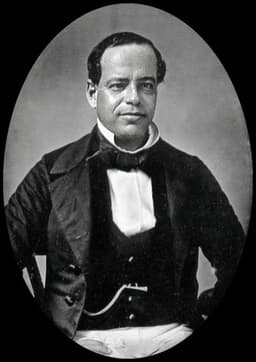
Antonio Lopez de Santa Anna
General · Modern
58.9Total
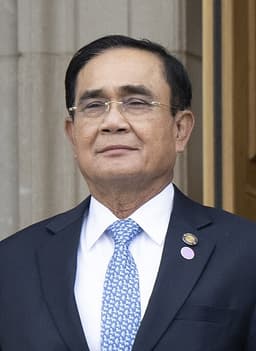
Prayut Chan-o-cha
General · Modern
48.1Total
Basic Information
Born
1794
1954
Died
1876
—
Era
Modern
Modern
Nationality
Mexico
Thailand
Occupation
General
General
Civilization
Western
Eastern
Score Comparison
Military (10%)
70.0
10.2
Political (20%)
46.6
68.0
Influence (20%)
56.7
51.8
Legacy (20%)
58.0
40.8
Leadership (15%)
68.0
68.0
Strategy (15%)
60.0
35.7
TOTAL
58.9
48.1
Antonio Lopez de Santa Anna — Complete Timeline
1823 AD
Led the Plan of Casa Mata rebellionPolitical Action
Santa Anna, then a general, issued the Plan of Casa Mata on February 1, 1823, calling for the overthrow of Emperor Agust
RebellionOverthrowRepublic
Impact: nationalconstructive
1829 AD
Defended Mexico at the Battle of TampicoWar◆ Major
Santa Anna commanded Mexican forces that defeated a Spanish invasion force at Tampico on September 11, 1829. The victory ended Spain's last attempt to reconquer Mexico and made Santa Anna a national hero. He was hailed as the 'Hero of Tampico' and used this fame to advance politically.
VictorySpanish InvasionNational Hero
Impact: nationalconstructive
1833 AD
Became President of Mexico for the first timePolitical Action◆ Major
Santa Anna was elected President of Mexico in 1833. He quickly delegated power to Vice President Valent
PresidencyPolitical InstabilityPower
Impact: national
1836 AD
Commanded at the Siege of the AlamoWar◆ Major
Santa Anna personally led the Mexican army in the siege of the Alamo mission in San Antonio, Texas. After a 13-day siege, Mexican forces stormed the fort on March 6, 1836, killing all 180-250 Texan defenders. The battle became a symbol of Texan resistance and a rallying cry for independence.
BattleTexas RevolutionAlamo
Impact: regionaldestructive
Defeated and captured at the Battle of San JacintoWar
Santa Anna's army was surprised and routed by Texan forces under Sam Houston at the Battle of San Jacinto on April 21, 1836. Santa Anna was captured the next day. He was forced to sign the Treaties of Velasco, recognizing Texan independence, though Mexico later repudiated them.
DefeatCaptureTexas Independence
Impact: regionaltragic
1847 AD
Lost the Mexican-American WarWar
Santa Anna returned from exile to command Mexican forces during the Mexican-American War. Despite initial efforts, his army was defeated at the Battle of Cerro Gordo and later at the Battle of Chapultepec. US forces captured Mexico City on September 14, 1847, leading to the Treaty of Guadalupe Hidalgo and massive territorial losses.
Mexican-American WarDefeatTerritorial Loss
Impact: globaltragic
1853 AD
Sold La Mesilla to the United StatesPolitical Action◆ Major
During his final presidency, Santa Anna agreed to the Gadsden Purchase, selling 29,670 square miles of territory (La Mesilla) to the United States for $10 million. The sale was widely condemned in Mexico as a betrayal. This act further damaged his reputation and led to his overthrow.
Territorial CessionGadsden PurchaseBetrayal
Impact: nationaldestructive
1855 AD
Overthrown and exiled for the final timePolitical Action◆ Major
The Plan of Ayutla, led by Juan
OverthrowExileEnd of Career
Impact: nationaltragic
Prayut Chan-o-cha — Complete Timeline
2014 AD
Led the 2014 military coupPolitical Action
General Prayut Chan-o-cha, as Army Commander-in-Chief, led a coup d'
CoupMilitaryThailand
Impact: nationaldestructive
Appointed Prime Minister by military legislaturePolitical Action◆ Major
Following the coup, Prayut was appointed Prime Minister by the military-controlled National Legislative Assembly. He assumed executive power, leading a government that promised reforms and national reconciliation.
AppointmentMilitary RuleThailand
Impact: national
2017 AD
Promulgation of the 2017 ConstitutionReform◆ Major
Prayut's government oversaw the drafting and approval of a new constitution that strengthened the military's political role and created a fully appointed Senate. The charter was criticized for entrenching military influence.
ConstitutionMilitaryThailand
Impact: national
2019 AD
Re-elected Prime Minister after 2019 electionPolitical Action◆ Major
Prayut was re-elected Prime Minister following a general election that was criticized for being manipulated to favor pro-military parties. He formed a coalition government, continuing his rule under a civilian facade.
ElectionContinuityThailand
Impact: national
Expert Analysis
Antonio Lopez de Santa Anna vs Prayut Chan-o-cha
# The General and the Strongman
On a dusty April afternoon in 1836, Antonio López de Santa Anna stood in the smoldering ruins of the Alamo, his uniform still stained with gunpowder, convinced he had crushed a rebellion for good. Nearly two centuries later, on a humid May morning in 2014, General Prayut Chan-o-cha stepped before television cameras in Bangkok, his face impassive, and announced that the Thai military had seized control of the country. Both men were generals who became the dominant political figures of their nations. But one lost everything—his territory, his reputation, his place in history—while the other held power for nearly a decade and left his country transformed. Why did their paths diverge so sharply?
Origins
Santa Anna was born in 1794 in Jalapa, Veracruz, into a colonial world that was about to shatter. His family was of modest Spanish descent, and he entered the army at sixteen, a common path for ambitious young men in New Spain. The wars of independence that followed were brutal and chaotic, and Santa Anna learned early that loyalty was a currency to be spent, not a principle to be kept. He fought first for Spain, then for the rebels, switching sides with the ease of a man who understood that power, not ideology, was the only constant.
Prayut Chan-o-cha was born in 1954 in Nakhon Ratchasima, Thailand, into a nation that had never been colonized but had endured dozens of coups. His father was a military officer, and Prayut followed the family trade, graduating from the Armed Forces Academies Preparatory School. Unlike Santa Anna, who entered a world of revolution and collapse, Prayut came of age in a Thailand where the military was already the invisible hand behind every government. He did not need to create a role for the army—it had been waiting for him.
Rise to Power
Santa Anna’s rise was a series of gambles. In 1823, at just twenty-nine, he issued the Plan of Casa Mata, calling for the overthrow of Emperor Agustín de Iturbide. The rebellion succeeded, and Santa Anna became a hero to the republicans. But he was never satisfied with being one general among many. He craved the center of the stage. In 1829, when Spain attempted to reconquer Mexico, Santa Anna marched to Tampico and defeated the invasion force. The victory made him a national savior, a title he would claim again and again, even as his decisions led to disaster.
Prayut’s path was slower, more methodical. He rose through the ranks of the Royal Thai Army, never commanding a famous battle or winning a decisive victory. His power came from institutional loyalty, not personal charisma. By 2014, when Thailand was paralyzed by protests between the pro-establishment "Yellow Shirts" and the populist "Red Shirts," Prayut was the Army Commander-in-Chief. He did not need to issue a plan or lead a rebellion. He simply waited for the chaos to peak, then moved. On May 22, he announced the coup, and the country, exhausted by months of unrest, accepted it.
Leadership & Governance
Santa Anna governed as a caudillo—a personalist strongman who ruled through patronage, charisma, and fear. He was president eleven times, but he rarely stayed in the capital, preferring to delegate power to vice presidents while he retreated to his hacienda. He was a brilliant tactical commander in small engagements, as at Tampico, but he lacked strategic vision. When he faced the Texan rebellion in 1836, he marched north with an army that was poorly supplied and overconfident. The victory at the Alamo was brutal but hollow; six weeks later, he was captured at San Jacinto, asleep in his tent while his army was slaughtered. He signed away Texas while a prisoner.
Prayut governed as a technocrat in uniform. After the 2014 coup, he did not declare himself emperor or rewrite history. Instead, he appointed himself prime minister, oversaw the drafting of a new constitution in 2017 that entrenched military influence, and then held elections in 2019 that were carefully managed to ensure his victory. He did not lead armies into battle; he led committees. His military score of 31.7 reflects that he was never a warrior, but his political score of 71.6 shows he understood that modern power requires institutions, not just bayonets.
Triumph & Tragedy
Santa Anna’s greatest moment was Tampico in 1829, when he saved Mexico from Spanish reconquest. His greatest tragedy was the Mexican-American War of 1847. Recalled from exile, he took command of an army that was outnumbered, outgunned, and outmaneuvered. He fought bravely at Buena Vista, but it was not enough. The Americans took Mexico City, and Santa Anna fled again. In 1853, during his final presidency, he sold the Mesilla Valley to the United States in the Gadsden Purchase—a betrayal that sealed his reputation as the man who sold his country.
Prayut’s triumph was stability. He ended the street protests that had paralyzed Bangkok, restored order, and kept the economy from collapsing. But his tragedy was that this stability came at the cost of democracy. The 2017 constitution was designed to keep the military in power, and the 2019 election was widely criticized as a sham. He ruled not by winning hearts, but by controlling levers.
Character & Destiny
Santa Anna was a man of immense ego and little discipline. He believed in his own myth—the "Napoleon of the West"—and this delusion led him to overreach again and again. His strategy score of 59.4 is the lowest among his metrics, a fitting testament to a man who could win a battle but never a war. Prayut, by contrast, was cautious and calculating. He did not seek glory; he sought control. His strategy score of 66.7 is modest, but it was enough for a country that had already accepted military rule.
Legacy
Santa Anna is remembered in Mexico as a traitor and a fool, the man who lost half the nation's territory. His name is a curse. Prayut’s legacy is more ambiguous. He retired in 2023 after nine years in power, and Thailand remains a semi-authoritarian state where the military holds a veto over democracy. He did not lose territory, but he lost something harder to measure: the trust that a nation can govern itself.
Conclusion
Both men were generals who became politicians. But Santa Anna governed a country that was still inventing itself, a chaotic republic born from empire, where one man could rise and fall in a single decade. Prayut governed a country that had long since made peace with military rule, where the army was not a disruptor but a guardian of the status quo. The difference is not in their character alone, but in the soil they grew from. Santa Anna’s Mexico was a house on fire; Prayut’s Thailand was a house already built by generals. One tried to rebuild and failed. The other simply locked the doors.
Rankings
🥇
Antonio Lopez de Santa AnnaLeader
Mil: 70.0Pol: 46.6Inf: 56.7
58.9
🥈
Prayut Chan-o-cha
Mil: 10.2Pol: 68.0Inf: 51.8
48.1
+10.8 behind
How This Comparison Works
Algorithm
Each figure is scored on 6 dimensions (0—100 scale) based on structured historical data: Military (10%), Political (20%), Influence (20%), Legacy (20%), Leadership (15%), Strategy (15%). The weighted total produces the final ranking.
Data Sources
Scores are computed from structured sub-indicators in the database. Scale factors adjust for era (Ancient ×0.85, Modern ×1.0) and civilization size (Eastern ×1.05, Other ×0.80) to account for differences in population and military scale.
Maximum 3 Figures
Comparisons are limited to 2—3 figures to ensure readability and statistical meaningfulness.
Error Margins
±5 points per dimension — Sub-scores are derived from historical records with inherent uncertainty. Two figures within 5 points on a dimension should be considered roughly equivalent in that area.
Total Score Accuracy
±3 points overall — The weighted combination of 6 dimensions produces a total score with approximately ±3 points of uncertainty. Differences of less than 3 points are not statistically significant— the figures are effectively tied.
Known Limitations
- Historical records are incomplete and uneven across civilizations
- Figures from oral-tradition societies may be underrepresented
- Occupation labels can misclassify multi-role figures
- Scores measure capability and impact, not moral character
- Quantitative scoring is a comparison tool, not absolute truth
Capability Radar
Military (10%) — Battles & Warfare
Battles
65
5
Win Rate
40
5
Expansion
50
5
Political (20%) — Governance & Reform
Reform
20
30
Diplomacy
35
40
Economy
15
35
Influence (20%) — Cultural & Global Reach
Cultural
55
20
Global
50
20
Legacy (20%) — Historical Impact
Historical
60
20
Longevity
55
15
Leadership (15%) — Power & Stability
Tenure
75
60
Stability
10
25
Strategy (15%) — Tactics & Innovation
Strategy
45
15
Tactics
60
10
Reform
30
20
Similar Comparisons
Comments & Discussion
THE LONE STAR GHOST6/16/2026
Santa Anna lost Texas because he thought winning battles meant winning wars. He wasted his best troops assaulting the Alamo while Houston built an army. Prayut learned differently - he took power without a shot and never let elections threaten his grip. Santa Anna had 11 presidencies and lost half his country. Prayut had one coup and kept it all. The difference? Knowing when to stop fighting.
德州刀客6/16/2026
圣安那是19世纪的墨西哥赌徒,打仗像打牌,赢了阿拉莫就全押,结果在圣哈辛托河畔输个精光。Prayut才是现代政变的教科书:不流血、不恋战、不谈判。他用宪法当缰绳,用军队当马鞭,太平了九年。圣安那输在把自己当救世主,Prayut赢在把自己当守夜人。