Loading...
Antonio Lopez de Santa Anna vs Louis Botha
Louis Botha leads by 2.2 pts · 2 figures compared
…
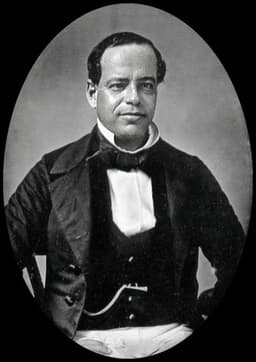
Antonio Lopez de Santa Anna
General · Modern
58.9Total
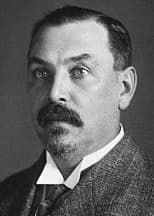
Louis Botha
General · Modern
61.1Total
Basic Information
Born
1794
1862
Died
1876
1919
Era
Modern
Modern
Nationality
Mexico
South Africa
Occupation
General
General
Civilization
Western
Other
Score Comparison
Military (10%)
70.0
61.7
Political (20%)
46.6
70.0
Influence (20%)
56.7
56.7
Legacy (20%)
58.0
50.0
Leadership (15%)
68.0
79.8
Strategy (15%)
60.0
58.0
TOTAL
58.9
61.1
Antonio Lopez de Santa Anna — Complete Timeline
1823 AD
Led the Plan of Casa Mata rebellionPolitical Action
Santa Anna, then a general, issued the Plan of Casa Mata on February 1, 1823, calling for the overthrow of Emperor Agust
RebellionOverthrowRepublic
Impact: nationalconstructive
1829 AD
Defended Mexico at the Battle of TampicoWar◆ Major
Santa Anna commanded Mexican forces that defeated a Spanish invasion force at Tampico on September 11, 1829. The victory ended Spain's last attempt to reconquer Mexico and made Santa Anna a national hero. He was hailed as the 'Hero of Tampico' and used this fame to advance politically.
VictorySpanish InvasionNational Hero
Impact: nationalconstructive
1833 AD
Became President of Mexico for the first timePolitical Action◆ Major
Santa Anna was elected President of Mexico in 1833. He quickly delegated power to Vice President Valent
PresidencyPolitical InstabilityPower
Impact: national
1836 AD
Commanded at the Siege of the AlamoWar◆ Major
Santa Anna personally led the Mexican army in the siege of the Alamo mission in San Antonio, Texas. After a 13-day siege, Mexican forces stormed the fort on March 6, 1836, killing all 180-250 Texan defenders. The battle became a symbol of Texan resistance and a rallying cry for independence.
BattleTexas RevolutionAlamo
Impact: regionaldestructive
Defeated and captured at the Battle of San JacintoWar
Santa Anna's army was surprised and routed by Texan forces under Sam Houston at the Battle of San Jacinto on April 21, 1836. Santa Anna was captured the next day. He was forced to sign the Treaties of Velasco, recognizing Texan independence, though Mexico later repudiated them.
DefeatCaptureTexas Independence
Impact: regionaltragic
1847 AD
Lost the Mexican-American WarWar
Santa Anna returned from exile to command Mexican forces during the Mexican-American War. Despite initial efforts, his army was defeated at the Battle of Cerro Gordo and later at the Battle of Chapultepec. US forces captured Mexico City on September 14, 1847, leading to the Treaty of Guadalupe Hidalgo and massive territorial losses.
Mexican-American WarDefeatTerritorial Loss
Impact: globaltragic
1853 AD
Sold La Mesilla to the United StatesPolitical Action◆ Major
During his final presidency, Santa Anna agreed to the Gadsden Purchase, selling 29,670 square miles of territory (La Mesilla) to the United States for $10 million. The sale was widely condemned in Mexico as a betrayal. This act further damaged his reputation and led to his overthrow.
Territorial CessionGadsden PurchaseBetrayal
Impact: nationaldestructive
1855 AD
Overthrown and exiled for the final timePolitical Action◆ Major
The Plan of Ayutla, led by Juan
OverthrowExileEnd of Career
Impact: nationaltragic
Louis Botha — Complete Timeline
1899 AD
Battle of ColensoWar◆ Major
Botha commanded Boer forces at the Battle of Colenso during the Second Boer War. His troops repelled a British attack under General Buller, inflicting heavy casualties and boosting Boer morale.
Second Boer WarBattleVictory
Impact: regional
1900 AD
Boer War Guerrilla CommanderWar◆ Major
After the British captured Pretoria, Botha led Boer guerrilla forces in the Transvaal. He conducted hit-and-run attacks against British columns, prolonging the war and becoming a symbol of Afrikaner resistance.
Second Boer WarGuerrillaResistance
Impact: regional
1902 AD
Signed the Treaty of VereenigingPolitical Action
Botha, as a leading Boer general, signed the Treaty of Vereeniging which ended the Second Boer War. The treaty granted the Boer republics self-government under British sovereignty and promised eventual self-rule.
TreatyPeaceSecond Boer War
Impact: regional
1910 AD
First Prime Minister of the Union of South AfricaPolitical Action
Botha became the first Prime Minister of the newly formed Union of South Africa. He led a coalition government that sought to reconcile Afrikaners and English-speaking whites, while implementing segregationist policies.
Prime MinisterUnion of South AfricaFounding
Impact: nationalconstructive
1914 AD
Suppressed the 1914 RebellionWar◆ Major
Botha personally led government forces to suppress the Maritz Rebellion, an Afrikaner uprising against South Africa's entry into World War I. He defeated the rebels, asserting state authority and maintaining support for the British Empire.
RebellionWorld War ISuppression
Impact: national
1915 AD
Conquered German South West AfricaWar◆ Major
Botha commanded South African forces in the invasion and conquest of German South West Africa. The campaign succeeded, and the territory was later administered by South Africa under a League of Nations mandate.
World War IConquestGerman South West Africa
Impact: regional
Expert Analysis
Louis Botha vs Antonio Lopez de Santa Anna
### Two Paths from the Battlefield
The year is 1915. In the arid vastness of German South West Africa, a stout, bearded man in a simple khaki uniform leads his troops through the desert. He is Louis Botha, the first Prime Minister of the Union of South Africa, yet he fights alongside his men, a general who never forgot the saddle. Half a century earlier and a hemisphere away, another figure stands on the ramparts of a crumbling mission in San Antonio de Béxar. He is Antonio López de Santa Anna, the "Napoleon of the West," resplendent in a gold-laced uniform, watching his men storm the Alamo. Both men were soldiers who became the supreme political leaders of their nations. But where one built a foundation for a new country, the other became the architect of his nation’s catastrophe. The difference between them is not merely one of skill, but of character, vision, and the cruel arithmetic of historical timing.
### Origins: The Creole and the Frontiersman
Santa Anna was born in 1794 in Jalapa, a son of the Spanish colonial elite. His world was one of rigid hierarchy, where a young *criollo* could rise through the army, but could never truly trust the system that held him down. The Napoleonic Wars and the collapse of Spanish authority in the Americas created a vacuum of power, and Santa Anna learned early that loyalty was a currency to be spent, not a bond to be kept. He was a product of a fractured society, where personal ambition often trumped national identity.
Louis Botha, born in 1862 in the British colony of Natal, came from a different frontier. His family were Boers—Dutch-speaking farmers who had trekked into the African interior to escape British rule. Botha’s world was one of self-reliance, a harsh land where a man’s word and his rifle were his only guarantees. He grew up speaking Afrikaans, fighting the Zulu, and learning that survival depended on community and a stubborn, pragmatic will. His nation, the South African Republic, was a fledgling, democratic-minded republic, not a decaying empire. Botha’s ambition was never personal glory; it was the survival of his people.
### Rise to Power: The Caudillo and the Commando
Santa Anna’s rise was a masterpiece of opportunism. In 1823, he issued the Plan of Casa Mata, switching sides to overthrow Emperor Agustín de Iturbide, the very man he had helped to power. This was his signature move: the sudden, well-timed betrayal that made him a hero to the new republicans. He built a reputation as a military savior in 1829 at the Battle of Tampico, where he crushed a Spanish invasion attempt. The victory was real, but Santa Anna inflated it into a legend. He became the indispensable man, the one who could save Mexico from chaos—or so he convinced a weary nation. By 1833, he was president, but he famously delegated power to his liberal vice president, preferring to retreat to his hacienda, waiting to be called back as the savior when things went wrong.
Botha’s ascent was forged in the crucible of total war. When the Second Boer War erupted in 1899, he was a farmer and a member of the Transvaal parliament. He had no formal military training. But at the Battle of Colenso, he commanded the Boer defense that shattered a British offensive, killing over a thousand men. His strategy was simple and devastating: dig trenches, use modern rifles, and wait for the British to walk into a killing field. When the conventional war was lost and the British burned Boer farms, Botha became a guerrilla leader. He didn’t seek power; power was thrust upon him by desperate men. In 1902, he signed the Treaty of Vereeniging, accepting British sovereignty but winning a promise of self-government. It was a defeat, but a strategic one.
### Leadership & Governance: The Dictator and the Unifier
Santa Anna’s governance was a cycle of charisma and chaos. He was a brilliant political actor who understood the theater of power. He would resign, go into exile, and then return to a country that begged for his leadership. But he had no program, no vision beyond his own aggrandizement. His military genius was tactical, not strategic. He won battles (the Alamo) but lost wars (San Jacinto, the Mexican-American War). His political wisdom was a mirage: he sold the Mesilla Valley to the United States in the Gadsden Purchase of 1853 for personal profit, sacrificing national territory for cash. He centralized power, crushed federalism, and sold his country piece by piece. His leadership score of 77.6 masks a profound emptiness; he was a leader of men, but not of a nation.
Botha’s leadership was the opposite. After the war, he became the apostle of reconciliation. As Prime Minister from 1910, he forged a coalition between Boer and Briton, a nearly impossible task. He spoke English, respected the British Empire, but never forgot his own people. When hardline Afrikaners rebelled in 1914 against South Africa’s entry into World War I, Botha did not negotiate—he rode out with his old commando and crushed the rebellion himself. He was a politician who could fight, and a soldier who could govern. His strategy score of 59.0 is deceptively low; his real genius was in statecraft, not battlefield maneuvers. He conquered German South West Africa in 1915, not for personal glory, but to secure South Africa’s place in the British Empire and to prove that his nation was a loyal partner.
### Triumph & Tragedy: The Alamo and the Treaty
Santa Anna’s greatest moment was also his seed of destruction. The Alamo in 1836 was a brutal victory—a 13-day siege ending in the massacre of all defenders. It was a tactical success, but a strategic catastrophe. The "Remember the Alamo!" cry galvanized Texas, and weeks later at San Jacinto, Santa Anna was caught napping by Sam Houston, his army annihilated, he himself captured in a dirty soldier’s coat. He signed away Texas. His second act of tragedy was the Mexican-American War (1846-1848), where he returned from exile, rallied the nation, but then lost battle after battle, finally surrendering half of Mexico’s territory. His legacy is a nation stripped of its northern lands.
Botha’s triumph was the Treaty of Vereeniging. He accepted defeat to save his people from extinction. His tragedy was the price of reconciliation. He was branded a traitor by many Afrikaners for working with the British. He died in 1919, exhausted, having spent his final years fighting for South Africa’s interests at the Versailles Peace Conference. He never saw the apartheid state that would arise, but he had laid the foundation for a unified, if deeply flawed, nation.
### Character & Destiny: The Peacock and the Ploughman
Santa Anna was a man of immense vanity. He called himself the "Napoleon of the West," wore lavish uniforms, and demanded to be called "His Most Serene Highness." He was courageous in battle but cowardly in responsibility, always blaming others for his failures. He was a gambler who never learned when to fold. His character was his destiny: a man who could not see beyond his own reflection.
Botha was a man of quiet pride. He dressed simply, spoke plainly, and led from the front. He was stubborn but pragmatic, fierce but forgiving. He understood that leadership was not about glory, but about service. His destiny was to be a bridge between two warring cultures, a role that broke him but built a nation.
### Legacy: The Empty Palace and the Unfinished Union
Santa Anna is remembered in Mexico as a traitor and a buffoon. His name is a curse. He lost more than half of his country’s territory. His legacy score of 65.2 is generous; he is a cautionary tale of how one man’s ambition can destroy a nation.
Botha is remembered as a founding father, but a controversial one. He is honored by some, despised by others who see him as a collaborator with British imperialism. His legacy score of 66.8 reflects this ambiguity. Yet, the Union of South Africa he helped create lasted for half a century. He proved that a defeated general could become a successful statesman.
### Conclusion: The Lesson of the Saddle
One man rode into history on a white horse, leaving a trail of broken treaties and lost provinces. The other rode into history on a sturdy pony, leaving a fragile peace and a unified country. Santa Anna fought for himself; Botha fought for his people. The difference is not in their military scores—both were competent generals—but in their understanding of what leadership meant. Santa Anna saw power as a possession to be hoarded. Botha saw it as a trust to be held. In the end, the man who thought he was a Napoleon ended as a laughingstock. The man who thought he was a farmer ended as a statesman. History, in its cruel justice, gives each man exactly what he deserves.
Rankings
🥇
Louis BothaLeader
Mil: 61.7Pol: 70.0Inf: 56.7
61.1
🥈
Antonio Lopez de Santa Anna
Mil: 70.0Pol: 46.6Inf: 56.7
58.9
+2.2 behind
How This Comparison Works
Algorithm
Each figure is scored on 6 dimensions (0—100 scale) based on structured historical data: Military (10%), Political (20%), Influence (20%), Legacy (20%), Leadership (15%), Strategy (15%). The weighted total produces the final ranking.
Data Sources
Scores are computed from structured sub-indicators in the database. Scale factors adjust for era (Ancient ×0.85, Modern ×1.0) and civilization size (Eastern ×1.05, Other ×0.80) to account for differences in population and military scale.
Maximum 3 Figures
Comparisons are limited to 2—3 figures to ensure readability and statistical meaningfulness.
Error Margins
±5 points per dimension — Sub-scores are derived from historical records with inherent uncertainty. Two figures within 5 points on a dimension should be considered roughly equivalent in that area.
Total Score Accuracy
±3 points overall — The weighted combination of 6 dimensions produces a total score with approximately ±3 points of uncertainty. Differences of less than 3 points are not statistically significant— the figures are effectively tied.
Known Limitations
- Historical records are incomplete and uneven across civilizations
- Figures from oral-tradition societies may be underrepresented
- Occupation labels can misclassify multi-role figures
- Scores measure capability and impact, not moral character
- Quantitative scoring is a comparison tool, not absolute truth
Capability Radar
Military (10%) — Battles & Warfare
Battles
65
65
Win Rate
40
70
Expansion
50
60
Political (20%) — Governance & Reform
Reform
20
65
Diplomacy
35
70
Economy
15
55
Influence (20%) — Cultural & Global Reach
Cultural
55
45
Global
50
50
Legacy (20%) — Historical Impact
Historical
60
55
Longevity
55
40
Leadership (15%) — Power & Stability
Tenure
75
60
Stability
10
50
Strategy (15%) — Tactics & Innovation
Strategy
45
72
Tactics
60
68
Reform
30
55
Similar Comparisons
Comments & Discussion
战术哲学家6/16/2026
Santa Anna的军事记录简直是个笑话。他指挥的军队在阿拉莫占了人数优势,但随后在圣哈辛托被山姆·休斯顿的800人打爆,18分钟内全盘崩溃。反过来看Botha,在1899-1902年的布尔战争中面对全球最强帝国,硬是打了三年游击战,战术灵活得像草原上的羚羊。Santa Anna只会纸上谈兵和背信弃义,Botha才是真正的战地统帅。
BOER WARRIOR6/16/2026
Comparing a competent commander like Botha to Santa Anna is laughable. Botha actually won decisive victories against the British Empire at Colenso and Spion Kop, using mobile guerrilla tactics that became a blueprint for modern insurgency. Santa Anna? He lost Texas, lost the Mexican-American War, and kept losing territory every time he grabbed power. Botha knew when to negotiate a fair peace; Santa Anna sold his country out repeatedly. Leadership means knowing when to stop fighting too.
NUMBERS GUY6/16/2026
Let's look at hard data. Botha managed to unify a fractured South Africa after the Boer War and became its first prime minister, maintaining power until his death in 1919. Santa Anna held the Mexican presidency eleven times and lost about 55% of Mexico's territory through his incompetence. The math is simple: Botha built something that lasted; Santa Anna destroyed everything he touched. You don't need romantic stories about the Alamo to see which general actually served his nation.
深潜考据迷6/16/2026
很多人忽略了一个细节:Santa Anna在1836年以"荣誉"为名拒绝了休斯顿的谈判,结果被俘后签了让他蒙羞的条约。而Botha在1902年主动选择通过《弗里尼欣条约》结束战争,自愿放弃布尔人独立以换取南非联邦的未来。这不仅是战略差异,更是对"国家利益"本质的不同理解——一个追求个人荣誉,另一个追求长治久安。
REVISIONIST CRITIC6/16/2026
The romantic narrative around Botha is deeply flawed. Sure, he fought the British, but once in power, he became the architect of racial segregation policies that laid the groundwork for apartheid. Santa Anna at least fought against colonial powers consistently, even if he failed. Botha's "national-building" came at the expense of black South Africans who had no voice. Let's stop pretending either was a hero—they were both products of their time, but with different geopolitical luck.