Loading...
Antonio Lopez de Santa Anna vs Julius Maada Bio
Antonio Lopez de Santa Anna leads by 7.7 pts · 2 figures compared
…
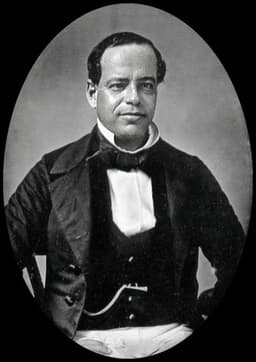
Antonio Lopez de Santa Anna
General · Modern
58.9Total
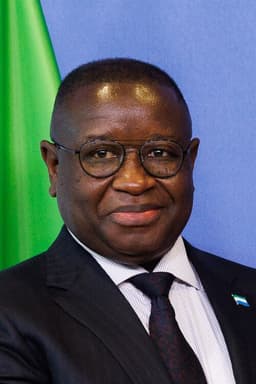
Julius Maada Bio
General · Modern
51.2Total
Basic Information
Born
1794
1964
Died
1876
—
Era
Modern
Modern
Nationality
Mexico
Sierra Leone
Occupation
General
General
Civilization
Western
Other
Score Comparison
Military (10%)
70.0
50.0
Political (20%)
46.6
45.0
Influence (20%)
56.7
53.3
Legacy (20%)
58.0
45.0
Leadership (15%)
68.0
70.0
Strategy (15%)
60.0
43.7
TOTAL
58.9
51.2
Antonio Lopez de Santa Anna — Complete Timeline
1823 AD
Led the Plan of Casa Mata rebellionPolitical Action
Santa Anna, then a general, issued the Plan of Casa Mata on February 1, 1823, calling for the overthrow of Emperor Agust
RebellionOverthrowRepublic
Impact: nationalconstructive
1829 AD
Defended Mexico at the Battle of TampicoWar◆ Major
Santa Anna commanded Mexican forces that defeated a Spanish invasion force at Tampico on September 11, 1829. The victory ended Spain's last attempt to reconquer Mexico and made Santa Anna a national hero. He was hailed as the 'Hero of Tampico' and used this fame to advance politically.
VictorySpanish InvasionNational Hero
Impact: nationalconstructive
1833 AD
Became President of Mexico for the first timePolitical Action◆ Major
Santa Anna was elected President of Mexico in 1833. He quickly delegated power to Vice President Valent
PresidencyPolitical InstabilityPower
Impact: national
1836 AD
Commanded at the Siege of the AlamoWar◆ Major
Santa Anna personally led the Mexican army in the siege of the Alamo mission in San Antonio, Texas. After a 13-day siege, Mexican forces stormed the fort on March 6, 1836, killing all 180-250 Texan defenders. The battle became a symbol of Texan resistance and a rallying cry for independence.
BattleTexas RevolutionAlamo
Impact: regionaldestructive
Defeated and captured at the Battle of San JacintoWar
Santa Anna's army was surprised and routed by Texan forces under Sam Houston at the Battle of San Jacinto on April 21, 1836. Santa Anna was captured the next day. He was forced to sign the Treaties of Velasco, recognizing Texan independence, though Mexico later repudiated them.
DefeatCaptureTexas Independence
Impact: regionaltragic
1847 AD
Lost the Mexican-American WarWar
Santa Anna returned from exile to command Mexican forces during the Mexican-American War. Despite initial efforts, his army was defeated at the Battle of Cerro Gordo and later at the Battle of Chapultepec. US forces captured Mexico City on September 14, 1847, leading to the Treaty of Guadalupe Hidalgo and massive territorial losses.
Mexican-American WarDefeatTerritorial Loss
Impact: globaltragic
1853 AD
Sold La Mesilla to the United StatesPolitical Action◆ Major
During his final presidency, Santa Anna agreed to the Gadsden Purchase, selling 29,670 square miles of territory (La Mesilla) to the United States for $10 million. The sale was widely condemned in Mexico as a betrayal. This act further damaged his reputation and led to his overthrow.
Territorial CessionGadsden PurchaseBetrayal
Impact: nationaldestructive
1855 AD
Overthrown and exiled for the final timePolitical Action◆ Major
The Plan of Ayutla, led by Juan
OverthrowExileEnd of Career
Impact: nationaltragic
Julius Maada Bio — Complete Timeline
1992 AD
1992 Sierra Leonean coup d'étatPolitical Action◆ Major
Julius Maada Bio was a member of the National Provisional Ruling Council (NPRC) that overthrew President Joseph Momoh in a military coup. Bio served as a key figure in the junta, which promised to end the civil war but faced criticism for human rights abuses.
CoupSierra LeoneCivil War
Impact: nationaldestructive
1996 AD
Brief tenure as head of statePolitical Action◆ Major
Bio led a palace coup within the NPRC in January 1996, becoming head of state. He oversaw the transition to civilian rule, handing over power to Ahmad Tejan Kabbah after elections in March 1996, a move that earned him praise for restoring democracy.
TransitionDemocracyCoup
Impact: nationalconstructive
2018 AD
Election as President of Sierra LeonePolitical Action◆ Major
Bio won the 2018 Sierra Leonean presidential election as the candidate of the Sierra Leone People's Party, defeating Samura Kamara in a runoff. His victory marked a return to power for the SLPP after a decade in opposition.
ElectionSierra LeonePresidency
Impact: nationalconstructive
2023 AD
Re-election amid economic challengesPolitical Action◆ Major
Bio was re-elected in 2023 with 56.6% of the vote, but the election was disputed by the opposition. His second term has been marked by economic difficulties, including high inflation and debt, as well as allegations of authoritarianism.
ElectionSierra LeoneEconomy
Impact: national
Expert Analysis
Antonio Lopez de Santa Anna vs Julius Maada Bio
# The General's Two Paths
On a sweltering April afternoon in 1836, Antonio López de Santa Anna stood in the mud of a Texas prairie, his silk uniform torn, his sword surrendered to a ragged band of rebels who had just destroyed his army. One hundred and sixty years later, in the humid heat of Freetown, Sierra Leone, another young general named Julius Maada Bio handed over power to an elected civilian, then quietly stepped back into the shadows. Both men were military officers who seized control of their nations. One became a cautionary tale; the other, a fragile hope. What made the difference?
Origins
Santa Anna was born in 1794 into a world of Spanish colonial certainty, a world that would shatter before he turned thirty. The son of a minor colonial official in Veracruz, he grew up in a society where military glory was the surest ladder to power. He joined the army at sixteen, and the wars of independence that convulsed Mexico from 1810 to 1821 gave him a battlefield education in ambition. He learned early that in times of chaos, the man with the most loyal troops writes the rules.
Julius Maada Bio came into the world in 1964, as Sierra Leone was emerging from British rule with little but hope and diamonds. His childhood unfolded against a backdrop of post-colonial decay—corrupt governments, collapsing infrastructure, and a state that seemed to exist only to be looted. By the time Bio graduated from the military academy in the 1980s, Sierra Leone was a powder keg. He learned that in such a world, survival meant choosing sides carefully.
Rise to Power
Santa Anna’s path was theatrical and opportunistic. In 1823, he issued the Plan of Casa Mata, a rebellion that overthrew Emperor Agustín de Iturbide. He was thirty-one years old and had already discovered his formula: wait for crisis, declare for the popular cause, and let others take the blame. When Spain tried to reconquer Mexico in 1829, Santa Anna defended Tampico, routing the invaders and emerging as the nation’s savior. He was now indispensable.
Bio’s rise was quieter but no less ruthless. In 1992, he was part of the National Provisional Ruling Council that overthrew President Joseph Momoh, a man whose government had all but ceased to function. The coup was driven by young officers who had watched their country disintegrate into civil war. Bio was not the leader then, but he was watching, learning. In January 1996, he staged a palace coup within the ruling council and became head of state. He was thirty-one years old.
Leadership & Governance
Santa Anna governed by instinct and appetite. He was president of Mexico eleven times, but he treated the office as a prize to be enjoyed rather than a trust to be honored. He delegated power to his vice president in 1833, then returned to his hacienda to play cards and watch cockfights. When crises erupted—and they always did—he would ride back to the capital, restore order with theatrical brutality, and then abandon the work of governing again. His military strategy was equally mercurial. At the Alamo in 1836, he stormed the mission with reckless courage, but at San Jacinto, he allowed his army to nap in the afternoon sun while Sam Houston’s Texans crept through the grass. The result was catastrophic: Santa Anna captured, Texas lost.
Bio, by contrast, governed with the discipline of a man who had seen the alternative. His brief tenure as head of state in 1996 was defined by one decision: he oversaw elections and handed power to a civilian, Ahmed Tejan Kabbah. It was an act almost unheard of in West African military politics. When he returned to run for president in 2018, he campaigned on education and reform, not on the glories of his coup days. As president, he has struggled with an economy ravaged by corruption and the legacy of war, but he has not dissolved parliament or declared himself caudillo. He has, so far, stayed within the lines.
Triumph & Tragedy
Santa Anna’s greatest moment was Tampico in 1829, when he saved Mexico from Spanish reconquest. His worst was San Jacinto, where he lost not only a battle but a third of his nation’s territory. Yet even that humiliation was not the end. He returned to power, lost the Mexican-American War in 1847, and then, in 1853, sold 29,670 square miles of land to the United States in the Gadsden Purchase—a final, desperate act of a man who had run out of options. He was overthrown in 1855 and spent his last decades in exile, a bitter ghost.
Bio’s triumph was not a battlefield victory but a transition. In 1996, he chose democracy over dictatorship, and in 2018, he won the presidency in a free election. His tragedy is the slow, grinding work of governing a country where most people live on less than two dollars a day. His 2023 re-election was disputed, and the opposition cried fraud. The jury is still out on whether his legacy will be that of a reformer or another general who could not escape the habits of power.
Character & Destiny
Santa Anna was a man of immense charm, boundless ego, and zero self-reflection. He believed he was Mexico’s destiny, and he was right—but in the worst possible way. His personality drove him to seek power without responsibility, glory without work. He could not share authority, could not plan for the long term, could not admit failure. Each defeat was followed by a comeback, each comeback by a new disaster.
Bio is a quieter figure, harder to read. He has the patience of a man who spent years in the shadows. He seems to understand that power is a tool, not a reward. Whether that understanding comes from wisdom or fear of the alternative is impossible to say. But it has produced different results.
Legacy
Santa Anna is remembered in Mexico as the man who lost Texas, sold the borderlands, and made a career of betrayal. His name is a curse. In Texas, he is the villain of the Alamo story, the tyrant who fell to freedom fighters. His military scores are middling, his political influence undeniable, but his legacy is a monument to failure.
Bio is still writing his legacy. He is remembered as the general who gave up power, then came back to win it honestly. His scores are lower than Santa Anna’s in raw influence, but higher in leadership and strategy. He has not lost territory or sold his country’s future. He has simply tried to hold a fragile democracy together.
Conclusion
Two generals, two nations, two centuries. Santa Anna could not stop being a caudillo; Bio has tried to stop being a coup-maker. The difference is not in their ambition—both wanted power—but in what they were willing to sacrifice to keep it. Santa Anna sacrificed everything: his country, his honor, his future. Bio sacrificed his immediate power for a chance at something more. Whether that chance will bear fruit, only time will tell. But in the long history of generals who become presidents, the ones who know when to step aside are rarer than the ones who never leave.
Rankings
🥇
Antonio Lopez de Santa AnnaLeader
Mil: 70.0Pol: 46.6Inf: 56.7
58.9
🥈
Julius Maada Bio
Mil: 50.0Pol: 45.0Inf: 53.3
51.2
+7.7 behind
How This Comparison Works
Algorithm
Each figure is scored on 6 dimensions (0—100 scale) based on structured historical data: Military (10%), Political (20%), Influence (20%), Legacy (20%), Leadership (15%), Strategy (15%). The weighted total produces the final ranking.
Data Sources
Scores are computed from structured sub-indicators in the database. Scale factors adjust for era (Ancient ×0.85, Modern ×1.0) and civilization size (Eastern ×1.05, Other ×0.80) to account for differences in population and military scale.
Maximum 3 Figures
Comparisons are limited to 2—3 figures to ensure readability and statistical meaningfulness.
Error Margins
±5 points per dimension — Sub-scores are derived from historical records with inherent uncertainty. Two figures within 5 points on a dimension should be considered roughly equivalent in that area.
Total Score Accuracy
±3 points overall — The weighted combination of 6 dimensions produces a total score with approximately ±3 points of uncertainty. Differences of less than 3 points are not statistically significant— the figures are effectively tied.
Known Limitations
- Historical records are incomplete and uneven across civilizations
- Figures from oral-tradition societies may be underrepresented
- Occupation labels can misclassify multi-role figures
- Scores measure capability and impact, not moral character
- Quantitative scoring is a comparison tool, not absolute truth
Capability Radar
Military (10%) — Battles & Warfare
Battles
65
15
Win Rate
40
20
Expansion
50
5
Political (20%) — Governance & Reform
Reform
20
50
Diplomacy
35
55
Economy
15
45
Influence (20%) — Cultural & Global Reach
Cultural
55
30
Global
50
20
Legacy (20%) — Historical Impact
Historical
60
35
Longevity
55
25
Leadership (15%) — Power & Stability
Tenure
75
55
Stability
10
40
Strategy (15%) — Tactics & Innovation
Strategy
45
20
Tactics
60
25
Reform
30
10
Similar Comparisons
Comments & Discussion
Caudillo's Curse6/16/2026
Santa Anna sold his own people for epaulets. The guy lost half of Mexico, signed away Texas after getting captured, and still came back to rule eleven times. He imposed a 400% tax on windows just to fund his ego. Bio actually stepped down after five months—in 1996, he handed power to civilians and only returned through elections. One bled his country dry for personal glory; the other proved that a general could serve, not just seize. Night and day.
废墟上的将军6/16/2026
Santa Anna在1836年阿拉莫屠杀之后,还下令处决四百多投降的俘虏,这种血腥暴行彻底撕裂了墨西哥与得克萨斯的关系。Bio却至少懂得适时退出,1996年他把政权交给民选总统,直到2018年才通过投票重新上台。一个用铁血维持权力,一个用妥协试探民主。别把这两者混为一谈——前者是毒药,后者充其量是止痛片。
Revisionist's Razor6/16/2026
Everyone romanticizes Bio's voluntary handover, but let's be real: he only stepped down because the military council was crumbling under international sanctions and domestic insurrection. Santa Anna, meanwhile, was a master of political survival—he re-invented himself as a liberal, then a conservative, then a monarchist. The difference isn't moral; it's about who had a better exit strategy. Bio's "heroic resignation" was just smart career management in a weaker state.
帝国的阴影6/16/2026
Santa Anna的失败不只是个人野心,更是墨西哥独立后没有稳定制度的悲剧。他1823年推翻伊图尔维德,1829年抗击西班牙复辟,1833年做总统,1836年输给得克萨斯——每一次政治危机都把他推向权力中心。而Bio所在的塞拉利昂,战后有联合国、英国等外部力量强行搭建的民主框架。你让Santa Anna活在有维和部队和世界银行的时代,他说不定也能“体面退位”。比较个人,不如比较历史结构。
Trophy of Tyranny6/16/2026
Santa Anna's prosthetic leg is literally on display in an Illinois museum—captured during the Mexican-American War. That's the level of humiliation we're talking about. Bio never had his body parts turned into battlefield souvenirs. One general was so venomous that losing his leg became a symbol of national disgrace; the other just faded into an election cycle. That's not just different paths—that's different planets of historical outcome. Santa Anna made Mexico a laughingstock; Bio made Sierra