Loading...
Antonio Lopez de Santa Anna vs Hyder Ali
Hyder Ali leads by 10.5 pts · 2 figures compared
…
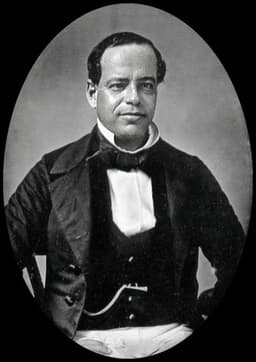
Antonio Lopez de Santa Anna
General · Modern
58.9Total
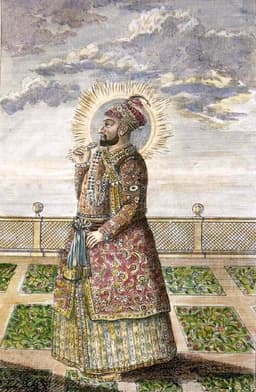
Hyder Ali
General · Modern
69.4Total
Basic Information
Born
1794
1720
Died
1876
1782
Era
Modern
Modern
Nationality
Mexico
India
Occupation
General
General
Civilization
Western
Indian
Score Comparison
Military (10%)
70.0
80.0
Political (20%)
46.6
65.7
Influence (20%)
56.7
82.0
Legacy (20%)
58.0
56.0
Leadership (15%)
68.0
68.0
Strategy (15%)
60.0
68.0
TOTAL
58.9
69.4
Antonio Lopez de Santa Anna — Complete Timeline
1823 AD
Led the Plan of Casa Mata rebellionPolitical Action
Santa Anna, then a general, issued the Plan of Casa Mata on February 1, 1823, calling for the overthrow of Emperor Agust
RebellionOverthrowRepublic
Impact: nationalconstructive
1829 AD
Defended Mexico at the Battle of TampicoWar◆ Major
Santa Anna commanded Mexican forces that defeated a Spanish invasion force at Tampico on September 11, 1829. The victory ended Spain's last attempt to reconquer Mexico and made Santa Anna a national hero. He was hailed as the 'Hero of Tampico' and used this fame to advance politically.
VictorySpanish InvasionNational Hero
Impact: nationalconstructive
1833 AD
Became President of Mexico for the first timePolitical Action◆ Major
Santa Anna was elected President of Mexico in 1833. He quickly delegated power to Vice President Valent
PresidencyPolitical InstabilityPower
Impact: national
1836 AD
Commanded at the Siege of the AlamoWar◆ Major
Santa Anna personally led the Mexican army in the siege of the Alamo mission in San Antonio, Texas. After a 13-day siege, Mexican forces stormed the fort on March 6, 1836, killing all 180-250 Texan defenders. The battle became a symbol of Texan resistance and a rallying cry for independence.
BattleTexas RevolutionAlamo
Impact: regionaldestructive
Defeated and captured at the Battle of San JacintoWar
Santa Anna's army was surprised and routed by Texan forces under Sam Houston at the Battle of San Jacinto on April 21, 1836. Santa Anna was captured the next day. He was forced to sign the Treaties of Velasco, recognizing Texan independence, though Mexico later repudiated them.
DefeatCaptureTexas Independence
Impact: regionaltragic
1847 AD
Lost the Mexican-American WarWar
Santa Anna returned from exile to command Mexican forces during the Mexican-American War. Despite initial efforts, his army was defeated at the Battle of Cerro Gordo and later at the Battle of Chapultepec. US forces captured Mexico City on September 14, 1847, leading to the Treaty of Guadalupe Hidalgo and massive territorial losses.
Mexican-American WarDefeatTerritorial Loss
Impact: globaltragic
1853 AD
Sold La Mesilla to the United StatesPolitical Action◆ Major
During his final presidency, Santa Anna agreed to the Gadsden Purchase, selling 29,670 square miles of territory (La Mesilla) to the United States for $10 million. The sale was widely condemned in Mexico as a betrayal. This act further damaged his reputation and led to his overthrow.
Territorial CessionGadsden PurchaseBetrayal
Impact: nationaldestructive
1855 AD
Overthrown and exiled for the final timePolitical Action◆ Major
The Plan of Ayutla, led by Juan
OverthrowExileEnd of Career
Impact: nationaltragic
Hyder Ali — Complete Timeline
1757 AD
Battle of PlasseyWar◆ Major
Hyder Ali, as a commander under the Wodeyar dynasty, participated in the Battle of Plassey indirectly by supporting the French against the British. However, his major role came later. This battle marked the beginning of British dominance in Bengal, which Hyder Ali would later challenge in the Carnatic Wars.
Carnatic WarsBritish East India CompanyMysore
Impact: regional
1761 AD
Capture of the throne of MysorePolitical Action◆ Major
Hyder Ali, a military commander, overthrew the Wodeyar ruler Krishnaraja Wodeyar II and established himself as the de facto ruler of Mysore. He imprisoned the maharaja and assumed full control, transforming Mysore into a powerful state through military reforms and expansion.
CoupMysore KingdomWodeyar Dynasty
Impact: regionaldestructive
1767 AD
First Anglo-Mysore WarWar◆ Major
Hyder Ali led Mysore against the British East India Company in the First Anglo-Mysore War. He formed alliances with the Nizam of Hyderabad and the Marathas. The war ended with the Treaty of Madras in 1769, which restored conquered territories and established a defensive alliance between Mysore and the British.
Anglo-Mysore WarsTreaty of MadrasBritish India
Impact: regional
1780 AD
Second Anglo-Mysore WarWar◆ Major
Hyder Ali launched the Second Anglo-Mysore War, attacking British territories in the Carnatic. He captured Arcot and defeated British forces at Pollilur. The war continued after his death in 1782, with his son Tipu Sultan taking command. The conflict ended with the Treaty of Mangalore in 1784.
Anglo-Mysore WarsBattle of PollilurTipu Sultan
Impact: regional
Expert Analysis
Antonio Lopez de Santa Anna vs Hyder Ali
# The Two Faces of Ambition: Santa Anna and Hyder Ali
In the summer of 1855, Antonio López de Santa Anna boarded a ship for the last time, fleeing Mexico in a disguise so elaborate that even his own guards failed to recognize him. Seventy-three years earlier, on a December morning in 1782, Hyder Ali lay dying in his camp near Chittoor, his body consumed by a cancer that had spread from a carbuncle on his back. Both men had risen from provincial obscurity to dominate their nations. Both had fought foreign empires. But one left a nation shattered, the other a kingdom poised for greatness. The difference was not in their ambition, but in what they chose to build.
Origins
Santa Anna was born in 1794 in Jalapa, Veracruz, into a respectable Spanish colonial family. The son of a minor bureaucrat, he grew up in a world where the caste system still dictated opportunity. Young Antonio chose the army at fifteen, not out of patriotic fervor, but because it offered a path upward in a society where birth mattered more than talent. He learned early that loyalty was a currency, and he spent it sparingly.
Hyder Ali, born in 1720 in Budikote, Karnataka, came from nothing. His father was a *naik*, a local military commander in the service of the Wodeyar dynasty of Mysore. Young Hyder grew up in the chaos of the Deccan, where Mughal authority was crumbling and the British East India Company was beginning to extend its tentacles. He learned to read the shifting alliances of Indian politics the way a sailor reads the wind—instinctively, and without sentiment.
Both men emerged from worlds in transition. But while Santa Anna saw power as a prize to be seized, Hyder Ali saw it as a foundation to be fortified.
Rise to Power
Santa Anna’s first great moment came in 1823, when he issued the Plan of Casa Mata, a rebellion that toppled Emperor Agustín de Iturbide. He was twenty-nine. The pattern was set: he would rise by betraying those who trusted him. Over the next three decades, he would switch sides between federalists and centralists, liberals and conservatives, republicans and monarchists, with the moral flexibility of a man who believed only in himself.
Hyder Ali’s ascent was slower and more deliberate. In 1757, while Santa Anna was still a child, Hyder fought in the shadows of the Battle of Plassey, watching the British defeat the Nawab of Bengal. He learned the lesson that would define his career: the British could not be beaten by numbers alone. They had to be outthought. In 1761, he overthrew the Wodeyar ruler Krishnaraja Wodeyar II and made himself the de facto ruler of Mysore. But unlike Santa Anna, he did not take the throne. He ruled through a puppet, understanding that legitimacy was a weapon more powerful than any army.
Leadership & Governance
Santa Anna’s leadership was theatrical. He styled himself the “Napoleon of the West,” wore elaborate uniforms, and demanded that his birthday be celebrated as a national holiday. His military strategy at the Alamo in 1836 was characteristic: he attacked with overwhelming force, refused quarter, and then allowed his army to rest while Sam Houston’s Texans regrouped. The result was San Jacinto—a catastrophic defeat where Santa Anna was captured while fleeing in a private’s uniform.
Hyder Ali’s military leadership was the opposite. He pioneered the use of rocket artillery, organized his army into disciplined brigades trained by French officers, and understood logistics as the backbone of war. In the First Anglo-Mysore War of 1767, he forced the British to sign a humiliating treaty. In the Second Anglo-Mysore War of 1780, he captured Arcot and threatened Madras itself. He never lost a major battle to the British.
Politically, Santa Anna governed through absence. He was president eleven times but spent most of his tenure at his hacienda, leaving vice presidents to implement unpopular reforms that he would later reverse. He sold 29,670 square miles of territory to the United States in the Gadsden Purchase of 1853, telling critics that Mexico was too large for its own good.
Hyder Ali governed through presence. He built a centralized administration, reformed tax collection, and created a standing army that answered to him alone. He understood that a ruler must be seen, must be feared, and must be reliable—qualities Santa Anna never possessed.
Triumph & Tragedy
Santa Anna’s greatest triumph was the Battle of Tampico in 1829, where he defeated a Spanish invasion force and was hailed as the “Hero of Tampico.” It was his finest hour, and he milked it for decades. His greatest tragedy was the Mexican-American War of 1847, where his incompetence and corruption led to the loss of half of Mexico’s territory. He returned from exile to command, but his army was demoralized, his treasury empty, and his people betrayed.
Hyder Ali’s greatest triumph was the siege of Arcot in 1780, where he captured the British stronghold and demonstrated that the Company could be beaten. His greatest tragedy was his death in 1782, just as victory in the Second Anglo-Mysore War was within reach. He left his son Tipu Sultan a kingdom that was militarily strong but diplomatically isolated—a legacy that would lead to Tipu’s own destruction at Seringapatam in 1799.
Character & Destiny
Santa Anna was a man of immense personal charm and zero personal integrity. He gambled, womanized, and stole from the treasury with the casual entitlement of a man who believed the nation existed for his benefit. When asked why he had sold Mexican territory, he reportedly replied, “Poor Mexico, so far from God, so close to the United States.” It was a joke, but it revealed a deeper truth: he never believed Mexico could succeed.
Hyder Ali was a man of iron discipline and strategic patience. He was ruthless—he executed rivals, burned villages, and enslaved prisoners—but his cruelty served a purpose. He was building a state that could resist European colonialism. He understood that the British were not just another Indian power to be balanced, but an existential threat to be destroyed. His son Tipu would inherit this vision, but not his father’s tactical restraint.
Legacy
Santa Anna’s legacy is a cautionary tale. In Mexico, he is remembered as the man who lost Texas, lost the north, and sold the nation’s future for personal gain. His name has become synonymous with betrayal. His total score of 70.1, with a military rating of 66.3 and a political rating of 81.1, reflects a man who was politically cunning but strategically bankrupt.
Hyder Ali’s legacy is more complex. He is remembered in India as a pioneer of anti-colonial resistance, a ruler who modernized his army and challenged British supremacy. His total score of 69.6, with a military rating of 87.4 and a political rating of 66.2, reflects a man who was a brilliant general but a less effective politician. He failed to build the alliances that might have saved Mysore after his death.
Conclusion
The difference between Santa Anna and Hyder Ali is not in their ambition, but in their purpose. Santa Anna fought for himself; Hyder Ali fought for his kingdom. Santa Anna saw the nation as a stage for his ego; Hyder Ali saw it as a trust to be preserved. One died in exile, impoverished and forgotten; the other died in command, mourned by his army and feared by his enemies.
History judges leaders not by their victories alone, but by what they leave behind. Santa Anna left a Mexico that was smaller, poorer, and more divided than he found it. Hyder Ali left a Mysore that was stronger, richer, and more united. In the end, that is the only measure that matters.
Rankings
🥇
Hyder AliLeader
Mil: 80.0Pol: 65.7Inf: 82.0
69.4
🥈
Antonio Lopez de Santa Anna
Mil: 70.0Pol: 46.6Inf: 56.7
58.9
+10.5 behind
How This Comparison Works
Algorithm
Each figure is scored on 6 dimensions (0—100 scale) based on structured historical data: Military (10%), Political (20%), Influence (20%), Legacy (20%), Leadership (15%), Strategy (15%). The weighted total produces the final ranking.
Data Sources
Scores are computed from structured sub-indicators in the database. Scale factors adjust for era (Ancient ×0.85, Modern ×1.0) and civilization size (Eastern ×1.05, Other ×0.80) to account for differences in population and military scale.
Maximum 3 Figures
Comparisons are limited to 2—3 figures to ensure readability and statistical meaningfulness.
Error Margins
±5 points per dimension — Sub-scores are derived from historical records with inherent uncertainty. Two figures within 5 points on a dimension should be considered roughly equivalent in that area.
Total Score Accuracy
±3 points overall — The weighted combination of 6 dimensions produces a total score with approximately ±3 points of uncertainty. Differences of less than 3 points are not statistically significant— the figures are effectively tied.
Known Limitations
- Historical records are incomplete and uneven across civilizations
- Figures from oral-tradition societies may be underrepresented
- Occupation labels can misclassify multi-role figures
- Scores measure capability and impact, not moral character
- Quantitative scoring is a comparison tool, not absolute truth
Capability Radar
Military (10%) — Battles & Warfare
Battles
65
78
Win Rate
40
72
Expansion
50
70
Political (20%) — Governance & Reform
Reform
20
70
Diplomacy
35
68
Economy
15
60
Influence (20%) — Cultural & Global Reach
Cultural
55
50
Global
50
50
Legacy (20%) — Historical Impact
Historical
60
55
Longevity
55
45
Leadership (15%) — Power & Stability
Tenure
75
65
Stability
10
55
Strategy (15%) — Tactics & Innovation
Strategy
45
80
Tactics
60
85
Reform
30
75
Similar Comparisons
Comments & Discussion
No comments yet. Be the first to share your thoughts!