Loading...
Antonio Lopez de Santa Anna vs Dzhokhar Dudayev
Antonio Lopez de Santa Anna leads by 6.9 pts · 2 figures compared
…
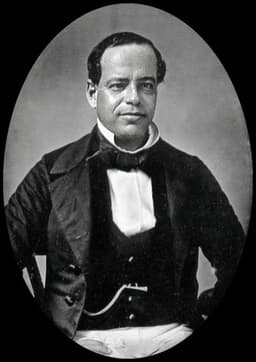
Antonio Lopez de Santa Anna
General · Modern
58.9Total
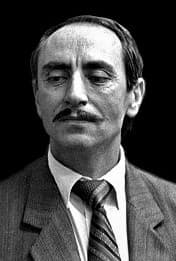
Dzhokhar Dudayev
General · Modern
52.0Total
Basic Information
Born
1794
1944
Died
1876
—
Era
Modern
Modern
Nationality
Mexico
Chechnya
Occupation
General
General
Civilization
Western
Western
Score Comparison
Military (10%)
70.0
46.7
Political (20%)
46.6
45.1
Influence (20%)
56.7
57.2
Legacy (20%)
58.0
47.5
Leadership (15%)
68.0
57.6
Strategy (15%)
60.0
57.5
TOTAL
58.9
52.0
Antonio Lopez de Santa Anna — Complete Timeline
1823 AD
Led the Plan of Casa Mata rebellionPolitical Action
Santa Anna, then a general, issued the Plan of Casa Mata on February 1, 1823, calling for the overthrow of Emperor Agust
RebellionOverthrowRepublic
Impact: nationalconstructive
1829 AD
Defended Mexico at the Battle of TampicoWar◆ Major
Santa Anna commanded Mexican forces that defeated a Spanish invasion force at Tampico on September 11, 1829. The victory ended Spain's last attempt to reconquer Mexico and made Santa Anna a national hero. He was hailed as the 'Hero of Tampico' and used this fame to advance politically.
VictorySpanish InvasionNational Hero
Impact: nationalconstructive
1833 AD
Became President of Mexico for the first timePolitical Action◆ Major
Santa Anna was elected President of Mexico in 1833. He quickly delegated power to Vice President Valent
PresidencyPolitical InstabilityPower
Impact: national
1836 AD
Commanded at the Siege of the AlamoWar◆ Major
Santa Anna personally led the Mexican army in the siege of the Alamo mission in San Antonio, Texas. After a 13-day siege, Mexican forces stormed the fort on March 6, 1836, killing all 180-250 Texan defenders. The battle became a symbol of Texan resistance and a rallying cry for independence.
BattleTexas RevolutionAlamo
Impact: regionaldestructive
Defeated and captured at the Battle of San JacintoWar
Santa Anna's army was surprised and routed by Texan forces under Sam Houston at the Battle of San Jacinto on April 21, 1836. Santa Anna was captured the next day. He was forced to sign the Treaties of Velasco, recognizing Texan independence, though Mexico later repudiated them.
DefeatCaptureTexas Independence
Impact: regionaltragic
1847 AD
Lost the Mexican-American WarWar
Santa Anna returned from exile to command Mexican forces during the Mexican-American War. Despite initial efforts, his army was defeated at the Battle of Cerro Gordo and later at the Battle of Chapultepec. US forces captured Mexico City on September 14, 1847, leading to the Treaty of Guadalupe Hidalgo and massive territorial losses.
Mexican-American WarDefeatTerritorial Loss
Impact: globaltragic
1853 AD
Sold La Mesilla to the United StatesPolitical Action◆ Major
During his final presidency, Santa Anna agreed to the Gadsden Purchase, selling 29,670 square miles of territory (La Mesilla) to the United States for $10 million. The sale was widely condemned in Mexico as a betrayal. This act further damaged his reputation and led to his overthrow.
Territorial CessionGadsden PurchaseBetrayal
Impact: nationaldestructive
1855 AD
Overthrown and exiled for the final timePolitical Action◆ Major
The Plan of Ayutla, led by Juan
OverthrowExileEnd of Career
Impact: nationaltragic
Dzhokhar Dudayev — Complete Timeline
1991 AD
Proclaimed Independence of ChechnyaPolitical Action
Dzhokhar Dudayev declared the independence of the Chechen Republic of Ichkeria from the Soviet Union. He was elected president in a controversial election. This act triggered the First Chechen War with Russia.
ChechnyaIndependenceIchkeria
Impact: regionalconstructive
1994 AD
First Chechen War BeginsWar
Russian forces invaded Chechnya to suppress the independence movement. Dudayev led the Chechen resistance, using guerrilla tactics. The war resulted in heavy casualties and destruction but failed to defeat the Chechen forces.
Chechen WarRussiaInvasion
Impact: regionaltragic
1996 AD
Assassination by Russian MissileWar
Dudayev was killed by a Russian guided missile while using a satellite phone near Grozny. His death was a major blow to the Chechen resistance but did not end the war. He was succeeded by Aslan Maskhadov.
AssassinationChechnyaRussia
Impact: regionaltragic
Expert Analysis
Antonio Lopez de Santa Anna vs Dzhokhar Dudayev
# The General Who Lost a Nation
On the morning of April 21, 1836, a Mexican army of more than a thousand men was taking its siesta near the San Jacinto River in Texas. Their commander, Antonio López de Santa Anna, had not posted sentries. The afternoon air was thick with complacency. Then, from the tall grass, Texan forces under Sam Houston charged, screaming “Remember the Alamo!” The battle lasted eighteen minutes. Santa Anna was found the next day, hiding in the marshes, dressed as a common soldier. He would surrender, be taken to Washington, and ultimately trade his freedom for an agreement that sealed the loss of Texas.
One hundred and sixty years later and half a world away, another general stood in the ruins of Grozny, the capital of Chechnya, under a constant rain of Russian bombs. Dzhokhar Dudayev, the first president of the breakaway Chechen Republic of Ichkeria, commanded a ragged army of fighters who had no air force, no tanks, and little hope. Yet they held the city for months. Dudayev did not surrender. He did not negotiate. On April 21, 1996—exactly 160 years after San Jacinto—a Russian missile, guided by his own satellite phone signal, killed him in a field outside the village of Gekhi-Chu. He died as he had lived: defiant, unbending, and ultimately, alone.
Both men were generals. Both led nations in their moments of existential crisis. But one lost a country while wearing silk slippers; the other lost his life while wearing a Chechen sheepskin hat. Why did their paths diverge so dramatically?
Origins
Santa Anna was born in 1794 in Jalapa, a provincial town in colonial Mexico, to a respected Spanish-descended family. He was a creature of the old order, shaped by the rigid hierarchies of New Spain. As a young officer, he learned that loyalty was a commodity to be traded, and that the key to power was not principle but timing. He fought for the Spanish crown, then against it, then for the emperor, then against him. By 1823, at age twenty-nine, he had already led the Plan of Casa Mata rebellion that overthrew Emperor Agustín de Iturbide. For Santa Anna, ideology was always secondary to opportunity.
Dudayev was born in 1944 in a remote Chechen village, into a people who had just been deported to Central Asia by Stalin on the pretext of wartime collaboration. His family was among the hundreds of thousands of Chechens packed into cattle cars and sent to Kazakhstan. He grew up in exile, stateless, hungry, and angry. When Khrushchev allowed the Chechens to return in 1957, Dudayev was thirteen. He joined the Soviet Air Force, became a general, and commanded a strategic bomber division in Estonia. He was a Soviet man—but he never forgot the trains.
Santa Anna’s Mexico was a young nation searching for identity, torn between monarchy and republic, centralism and federalism. Dudayev’s Chechnya was an ancient nation crushed by empire, its memory of independence preserved in song and blood feud. One man emerged from a world of court intrigue; the other, from a world of survival.
Rise to Power
Santa Anna’s rise was a masterclass in opportunism. After the Battle of Tampico in 1829, where he defeated a hapless Spanish invasion force, he was hailed as the “Hero of Tampico.” He used this fame to enter the presidency in 1833, but immediately delegated power to his liberal vice president, Valentín Gómez Farías, and retreated to his hacienda. When conservative opposition mounted, Santa Anna returned, overthrew his own vice president, and abolished the federal constitution. He was a chameleon who changed colors with the political weather.
Dudayev’s rise was different. In 1991, as the Soviet Union crumbled, he returned to Chechnya and seized the initiative. He did not negotiate with Moscow; he simply declared independence. The Chechen parliament elected him president in October 1991, and he took the oath on the Quran. There was no intrigue, no backroom deal. He was chosen because he was the only Chechen general who had not forgotten his people. His power came not from maneuvering but from the raw legitimacy of a cause.
Leadership and Governance
Santa Anna governed like a feudal lord. He was president of Mexico eleven times, but he rarely stayed in the capital. He preferred his hacienda, Manga de Clavo, where he collected cockfighting roosters and watched his peons work. When he did rule, he ruled by decree. He sold territory—the Gadsden Purchase of 1853, known in Mexico as La Mesilla—to pay his debts. He taxed windows, dogs, and even the number of buttons on citizens’ coats. He was a brilliant politician in the sense that he knew how to stay in power. But he had no vision for Mexico beyond himself.
Dudayev was the opposite. He had little political experience and less patience for administration. His Chechnya was chaotic, impoverished, and blockaded. He could not pay his soldiers, let alone build schools. But he understood something Santa Anna never did: that leadership in a fight for survival is not about comfort but about example. He lived in a bombed-out building in Grozny, shared food with his fighters, and refused to leave even when Russian forces surrounded the city. His governance was not of laws but of presence.
Triumph and Tragedy
Santa Anna’s greatest moment was Tampico in 1829, where he repelled a Spanish invasion and became the savior of the nation. His greatest failure was the Alamo—not the siege itself, which he won, but what came after. He ordered the execution of all survivors, a massacre that turned the Texas rebellion into a holy war. Then came San Jacinto, where his arrogance cost him an army, a province, and his reputation. He never recovered.
Dudayev’s greatest moment was the defense of Grozny in the winter of 1994–1995. Russian forces, expecting a quick victory, were ambushed in the streets by Chechen fighters who knew every alley. Hundreds of Russian soldiers died. The world watched in amazement. His greatest failure was that he could not turn this victory into a lasting peace. Chechnya was devastated, its people displaced, and Dudayev himself became a hunted man. His tragedy was that he won the battle but lost the war—and then lost his life.
Character and Destiny
Santa Anna was a man of immense charm and immense vanity. He styled himself the “Napoleon of the West,” wore lavish uniforms, and insisted on being called “His Most Serene Highness.” He believed his own legend. He was also profoundly cynical. When asked why he had sold Mexican territory, he reportedly said, “Poor Mexico, so far from God, so close to the United States.” His destiny was to be the man who lost half his country, not because he was defeated, but because he never truly believed in the nation he led.
Dudayev was a man of conviction and tragedy. He was not a great strategist—his military scores are lower than Santa Anna’s—but he was a great symbol. He once said, “We are not fighting for territory. We are fighting for the right to exist.” His character was forged in exile, and he could not bend. His destiny was to die in a field, betrayed by a phone signal, because he refused to surrender. He lost Chechnya, but he gave it a story.
Legacy
Santa Anna is remembered in Mexico as a traitor, a buffoon, and the architect of national humiliation. His name is synonymous with betrayal. In Texas, he is the villain of the Alamo. His legacy is a cautionary tale about the dangers of personal ambition over national interest.
Dudayev is remembered in Chechnya as a martyr and a father of the nation. His portrait hangs in homes and government buildings. His son, though, became a warlord; his movement fractured into extremism. His legacy is complicated—a hero who could not build a state, a freedom fighter whose war led to terror.
Both men were generals who led their nations into war. One lost because he cared only for himself. The other lost because he cared only for his cause. The difference between them is the difference between a man who wears a crown and a man who carries a cross.
Conclusion
History does not forgive self-interest, but it does not always reward sacrifice either. Santa Anna died in 1876, old, blind, and forgotten, in Mexico City. Dudayev died at fifty-two, in a field, with a satellite phone in his hand. One was buried with honors; the other was buried in a secret grave. Yet which one rests more peacefully? Perhaps the answer lies not in how they died, but in what they were willing to lose. Santa Anna lost a nation. Dudayev lost everything else—except his honor. And sometimes, for a people fighting for survival, that is enough.
Rankings
🥇
Antonio Lopez de Santa AnnaLeader
Mil: 70.0Pol: 46.6Inf: 56.7
58.9
🥈
Dzhokhar Dudayev
Mil: 46.7Pol: 45.1Inf: 57.2
52.0
+6.9 behind
How This Comparison Works
Algorithm
Each figure is scored on 6 dimensions (0—100 scale) based on structured historical data: Military (10%), Political (20%), Influence (20%), Legacy (20%), Leadership (15%), Strategy (15%). The weighted total produces the final ranking.
Data Sources
Scores are computed from structured sub-indicators in the database. Scale factors adjust for era (Ancient ×0.85, Modern ×1.0) and civilization size (Eastern ×1.05, Other ×0.80) to account for differences in population and military scale.
Maximum 3 Figures
Comparisons are limited to 2—3 figures to ensure readability and statistical meaningfulness.
Error Margins
±5 points per dimension — Sub-scores are derived from historical records with inherent uncertainty. Two figures within 5 points on a dimension should be considered roughly equivalent in that area.
Total Score Accuracy
±3 points overall — The weighted combination of 6 dimensions produces a total score with approximately ±3 points of uncertainty. Differences of less than 3 points are not statistically significant— the figures are effectively tied.
Known Limitations
- Historical records are incomplete and uneven across civilizations
- Figures from oral-tradition societies may be underrepresented
- Occupation labels can misclassify multi-role figures
- Scores measure capability and impact, not moral character
- Quantitative scoring is a comparison tool, not absolute truth
Capability Radar
Military (10%) — Battles & Warfare
Battles
65
35
Win Rate
40
30
Expansion
50
20
Political (20%) — Governance & Reform
Reform
20
35
Diplomacy
35
30
Economy
15
15
Influence (20%) — Cultural & Global Reach
Cultural
55
40
Global
50
35
Legacy (20%) — Historical Impact
Historical
60
45
Longevity
55
30
Leadership (15%) — Power & Stability
Tenure
75
30
Stability
10
10
Strategy (15%) — Tactics & Innovation
Strategy
45
50
Tactics
60
55
Reform
30
40
Similar Comparisons
Comments & Discussion
IronGringo6/16/2026
Santa Anna's not just a bad general, he's the patron saint of catastrophic hubris. Dude literally took a siesta while the enemy was in striking distance at San Jacinto. Compare that to Dudayev: he's fighting a superpower with sticks and stones, and he still made Russia pay for every inch of Grozny. Santa Anna sold out Texas for his own skin. Dudayev got blown up for refusing to bend. One's a cautionary tale, the other's a martyr. Easy call.
沉默的烟雾6/16/2026
说两个将军就非得比谁更硬气?历史不是擂台赛。Santa Anna的失败是18分钟的事,但别忘了,他之前打回来了,后来还回来当总统。Dudayev死在导弹下确实悲壮,但他的车臣根本撑不到现在。Santa Anna失去的是一块殖民地,Dudayev失去的是整个国家的未来。输的方式不同,但结局都是灰烬。别把悲剧浪漫化了。
断章取义者6/16/2026
别被浪漫叙事骗了。Dudayev真不是干净英雄,他1980年代是苏联空军少将,还拿过勋章,怎么突然就“民族解放者”了?Santa Anna有野心,有贪腐,Dudayev也不干净——车臣绑票、种族清洗的黑历史都算在他头上。比死法?一个被火箭弹炸飞,一个被抓了活活送走,都难看。历史不欠谁一个情怀滤镜。
KremlinWhisper6/16/2026
Dudayev died on April 21, 1996—exactly 160 years after San Jacinto. Coincidence? History loves its poetic bookends. But let's be real: Dudayev's defiance got him killed by a Russian missile guided by his own phone. Santa Anna's surrender got him a cushy exile in Cuba. Both men lost their causes, but only one left a legacy that fuels a separatist movement to this day. Casualties of war, sure—but one's a footnote, the other's a war cry.
Historian1566/16/2026
Let's talk numbers: Santa Anna commanded 1,400+ men at San Jacinto, lost 630 in 18 minutes. That's a kill rate of nearly 45% per minute of actual fighting. Dudayev's Chechen forces, maybe 15,000 against a Russian army of 80,000, held Grozny for months—a staggering disparity. Santa Anna's tactical failure is measurable; Dudayev's strategic survival against impossible odds is statistically remarkable. One failed math, the other defied it.