Loading...
Antonio Lopez de Santa Anna vs Bipin Rawat
Antonio Lopez de Santa Anna leads by 3.9 pts · 2 figures compared
…
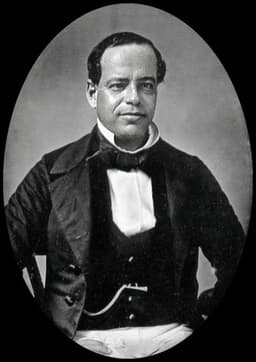
Antonio Lopez de Santa Anna
General · Modern
58.9Total
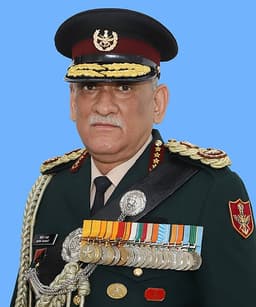
Bipin Rawat
General · Modern
55.0Total
Basic Information
Born
1794
1958
Died
1876
—
Era
Modern
Modern
Nationality
Mexico
India
Occupation
General
General
Civilization
Western
Indian
Score Comparison
Military (10%)
70.0
40.0
Political (20%)
46.6
68.0
Influence (20%)
56.7
59.0
Legacy (20%)
58.0
45.0
Leadership (15%)
68.0
62.0
Strategy (15%)
60.0
55.0
TOTAL
58.9
55.0
Antonio Lopez de Santa Anna — Complete Timeline
1823 AD
Led the Plan of Casa Mata rebellionPolitical Action
Santa Anna, then a general, issued the Plan of Casa Mata on February 1, 1823, calling for the overthrow of Emperor Agust
RebellionOverthrowRepublic
Impact: nationalconstructive
1829 AD
Defended Mexico at the Battle of TampicoWar◆ Major
Santa Anna commanded Mexican forces that defeated a Spanish invasion force at Tampico on September 11, 1829. The victory ended Spain's last attempt to reconquer Mexico and made Santa Anna a national hero. He was hailed as the 'Hero of Tampico' and used this fame to advance politically.
VictorySpanish InvasionNational Hero
Impact: nationalconstructive
1833 AD
Became President of Mexico for the first timePolitical Action◆ Major
Santa Anna was elected President of Mexico in 1833. He quickly delegated power to Vice President Valent
PresidencyPolitical InstabilityPower
Impact: national
1836 AD
Commanded at the Siege of the AlamoWar◆ Major
Santa Anna personally led the Mexican army in the siege of the Alamo mission in San Antonio, Texas. After a 13-day siege, Mexican forces stormed the fort on March 6, 1836, killing all 180-250 Texan defenders. The battle became a symbol of Texan resistance and a rallying cry for independence.
BattleTexas RevolutionAlamo
Impact: regionaldestructive
Defeated and captured at the Battle of San JacintoWar
Santa Anna's army was surprised and routed by Texan forces under Sam Houston at the Battle of San Jacinto on April 21, 1836. Santa Anna was captured the next day. He was forced to sign the Treaties of Velasco, recognizing Texan independence, though Mexico later repudiated them.
DefeatCaptureTexas Independence
Impact: regionaltragic
1847 AD
Lost the Mexican-American WarWar
Santa Anna returned from exile to command Mexican forces during the Mexican-American War. Despite initial efforts, his army was defeated at the Battle of Cerro Gordo and later at the Battle of Chapultepec. US forces captured Mexico City on September 14, 1847, leading to the Treaty of Guadalupe Hidalgo and massive territorial losses.
Mexican-American WarDefeatTerritorial Loss
Impact: globaltragic
1853 AD
Sold La Mesilla to the United StatesPolitical Action◆ Major
During his final presidency, Santa Anna agreed to the Gadsden Purchase, selling 29,670 square miles of territory (La Mesilla) to the United States for $10 million. The sale was widely condemned in Mexico as a betrayal. This act further damaged his reputation and led to his overthrow.
Territorial CessionGadsden PurchaseBetrayal
Impact: nationaldestructive
1855 AD
Overthrown and exiled for the final timePolitical Action◆ Major
The Plan of Ayutla, led by Juan
OverthrowExileEnd of Career
Impact: nationaltragic
Bipin Rawat — Complete Timeline
2016 AD
Led Counter-Insurgency Operations in KashmirWar
As Army Chief, Rawat oversaw intensified counter-insurgency operations in Kashmir following the 2016 unrest. He advocated for a tough approach against militants, leading to increased military presence.
KashmirCounter-insurgencyMilitary Operations
Impact: regional
Served as Chief of Army StaffPolitical Action◆ Major
Rawat was appointed Chief of Army Staff in 2016. He oversaw operations in Jammu and Kashmir, including the 2016 surgical strikes across the Line of Control, and focused on counter-insurgency.
Army ChiefSurgical StrikesCounter-insurgency
Impact: national
2019 AD
Appointed First Chief of Defence Staff of IndiaPolitical Action
General Bipin Rawat was appointed as India's first Chief of Defence Staff (CDS), a new position created to integrate the three armed services. He was tasked with improving jointness and military efficiency.
CDSMilitary ReformIntegration
Impact: nationalconstructive
2021 AD
Died in Helicopter CrashOther◆ Major
General Rawat, his wife, and 11 others died in a helicopter crash in Tamil Nadu. The crash occurred while he was traveling to a military event, and an inquiry attributed it to weather and pilot error.
DeathAccidentHelicopter Crash
Impact: nationaltragic
Expert Analysis
Antonio Lopez de Santa Anna vs Bipin Rawat
# The Caudillo and the Commander: Two Generals, Two Worlds
On a sweltering April afternoon in 1836, Antonio López de Santa Anna, the self-styled "Napoleon of the West," was captured hiding in a marsh, wearing a private's uniform. He had just lost Texas. One hundred and eighty-five years later, on a December morning in 2021, General Bipin Rawat, India's first Chief of Defence Staff, perished in a helicopter crash in the hills of Tamil Nadu, his country's military modernization left unfinished. One died in disgrace, the other in duty. Both were generals. Both sought to shape their nations. But the paths they walked—and the worlds that shaped them—could not have been more different. What drives such divergent destinies?
Origins
Santa Anna was born in 1794 in Jalapa, Mexico, into a colonial world on the verge of upheaval. His family was of modest Spanish descent, and he joined the army as a teenager, fighting first for Spain against Mexican insurgents, then switching sides when independence beckoned. He was a creature of the 19th century—a century of caudillos, of personalist rule, of fragile republics that often collapsed into dictatorships. Mexico, newly independent, was a land of vast inequalities, weak institutions, and regional strongmen. Santa Anna learned early that loyalty was provisional, power was personal, and the army was the fastest route to the top.
Bipin Rawat, born in 1958 in Pauri, Uttarakhand, came from a different India entirely. His father was a senior military officer, and Rawat grew up in a post-colonial nation that had chosen democracy, civilian supremacy, and institutional stability. He attended the National Defence Academy and the Indian Military Academy—modern institutions designed to produce professional officers, not warlords. His India was a rising power, nuclear-armed, bureaucratic, and deeply committed to the principle that soldiers serve the state, not themselves.
Rise to Power
Santa Anna’s rise was opportunistic and swift. In 1823, he issued the Plan of Casa Mata, a rebellion that overthrew Emperor Agustín de Iturbide. He was 28. For the next three decades, he would be the central figure in Mexican politics, switching sides between liberals and conservatives, federalists and centralists, as it suited him. He became president in 1833, only to hand power to his vice president and retire to his hacienda—then return when called. His power came from charisma, military success, and the absence of any stable alternative.
Rawat’s rise was methodical, institutional. He spent decades climbing the ranks of the Indian Army, commanding in counter-insurgency zones, serving in the United Nations, and eventually becoming Vice Chief of Army Staff. In 2016, he was appointed Chief of Army Staff. His rise was not about personal ambition alone; it was about merit, seniority, and the trust of a civilian government. His appointment as India’s first Chief of Defence Staff in 2019 was a historic moment—a bureaucratic and political triumph, not a coup.
Leadership & Governance
Santa Anna governed as a caudillo: personally, unpredictably, and often disastrously. He led Mexico into the Texas Revolution, personally commanding the siege of the Alamo in 1836—a tactical victory that cost him strategic clarity. Weeks later, at San Jacinto, he was caught napping, his army destroyed, his nation humiliated. He returned to power repeatedly, but his leadership was reactive, not visionary. He sold La Mesilla (the Gadsden Purchase) in 1853 for personal gain and national loss. His military strategy was bold but brittle; his political wisdom was shallow, rooted in survival rather than state-building.
Rawat led differently. As Army Chief, he oversaw the 2016 surgical strikes across the Line of Control, a calibrated response to terrorism that avoided full-scale war. He advocated for tough counter-insurgency in Kashmir, but always within the framework of civilian control. As Chief of Defence Staff, he pushed for integration of the three services—a long-overdue reform that aimed to make India’s military more efficient. His leadership was professional, strategic, and institutional. He was a modernizer, not a caudillo.
Triumph & Tragedy
Santa Anna’s greatest moment was the Battle of Tampico in 1829, where he defeated a Spanish invasion force and became a national hero. His greatest tragedy was the Mexican-American War (1846–1848), where his command was indecisive, his politics chaotic, and his nation lost half its territory. He was overthrown and exiled repeatedly, dying in poverty in 1876, largely forgotten by the country he had dominated.
Rawat’s triumph was the creation of the Chief of Defence Staff position itself—a reform that had been debated for decades. His tragedy was his sudden death in 2021, just as he was beginning to implement his vision. He left behind no legacy of defeat, but one of unfinished work. His helicopter crash was a national shock, but not a national shame.
Character & Destiny
Santa Anna was vain, ambitious, and shortsighted. He loved titles, uniforms, and public adulation. He once said, "I am the Napoleon of the West," but he lacked Napoleon’s strategic genius and institutional legacy. His character led him to overreach, to trust his own luck, and to neglect the hard work of building a stable state. His destiny was to be a cautionary tale.
Rawat was disciplined, focused, and institutional. He was known for blunt speech and a no-nonsense demeanor. He once said, "We are not here to be popular; we are here to be effective." His character led him to push for reform, to challenge bureaucratic inertia, and to accept the risks of high office. His destiny was to be a symbol of what a professional military can achieve.
Legacy
Santa Anna is remembered in Mexico as a traitor and a buffoon—the man who lost Texas, sold territory, and embodied the chaos of the 19th century. In Texas, he is a villain. In history books, he is a lesson in the dangers of personal rule.
Rawat is remembered as a pioneer—the first to hold a crucial office, a reformer cut down in mid-stride. His legacy is institutional: the CDS position will outlast him. He is mourned, not scorned.
Conclusion
Two generals, two centuries, two nations. Santa Anna rose in a world without institutions, where a man could become a nation’s fate. Rawat rose in a world of institutions, where a man could serve a nation’s future. One built a career on himself; the other built a career on service. Their stories remind us that generals are shaped by their times—but also that character, for good or ill, writes the final chapter. In the end, Santa Anna lost everything because he trusted only himself. Rawat died in service because he trusted in something larger. That difference is the difference between a caudillo and a commander.
Rankings
🥇
Antonio Lopez de Santa AnnaLeader
Mil: 70.0Pol: 46.6Inf: 56.7
58.9
🥈
Bipin Rawat
Mil: 40.0Pol: 68.0Inf: 59.0
55.0
+3.9 behind
How This Comparison Works
Algorithm
Each figure is scored on 6 dimensions (0—100 scale) based on structured historical data: Military (10%), Political (20%), Influence (20%), Legacy (20%), Leadership (15%), Strategy (15%). The weighted total produces the final ranking.
Data Sources
Scores are computed from structured sub-indicators in the database. Scale factors adjust for era (Ancient ×0.85, Modern ×1.0) and civilization size (Eastern ×1.05, Other ×0.80) to account for differences in population and military scale.
Maximum 3 Figures
Comparisons are limited to 2—3 figures to ensure readability and statistical meaningfulness.
Error Margins
±5 points per dimension — Sub-scores are derived from historical records with inherent uncertainty. Two figures within 5 points on a dimension should be considered roughly equivalent in that area.
Total Score Accuracy
±3 points overall — The weighted combination of 6 dimensions produces a total score with approximately ±3 points of uncertainty. Differences of less than 3 points are not statistically significant— the figures are effectively tied.
Known Limitations
- Historical records are incomplete and uneven across civilizations
- Figures from oral-tradition societies may be underrepresented
- Occupation labels can misclassify multi-role figures
- Scores measure capability and impact, not moral character
- Quantitative scoring is a comparison tool, not absolute truth
Capability Radar
Military (10%) — Battles & Warfare
Battles
65
45
Win Rate
40
50
Expansion
50
30
Political (20%) — Governance & Reform
Reform
20
55
Diplomacy
35
50
Economy
15
30
Influence (20%) — Cultural & Global Reach
Cultural
55
35
Global
50
30
Legacy (20%) — Historical Impact
Historical
60
40
Longevity
55
20
Leadership (15%) — Power & Stability
Tenure
75
40
Stability
10
45
Strategy (15%) — Tactics & Innovation
Strategy
45
65
Tactics
60
60
Reform
30
75
Similar Comparisons
Comments & Discussion
CaudilloCounter6/16/2026
Santa Anna's greatest failure wasn't the Alamo—it was the 1836 Treaties of Velasco, which he signed under duress while prisoner. Mexico's Congress later rejected them, but the damage was done. Rawat never had to negotiate from a POW cot. Santa Anna lost an entire province because he couldn't read the room, or the map. A true "Napoleon" would have known when to stop grandstanding. The comparison isn't even close: Rawat modernized doctrine; Santa Anna just modernized his uniform.
流水账粉碎机6/16/2026
说什么“两者命运不同”?Santa Anna 活了七次,丢了半壁江山还能回锅当总统——这叫“不同”?Rawat 一次意外就殉职了。军事圈最烦这种“半斤八两”式比较。Santa Anna 的军事遗产是“我献出得州换我活命”,Rawat 至少留下了一体化战区改革。数据上:Santa Anna 打了十一场仗输掉九场;Rawat 从无败仗记录。这叫同一个层次?别侮辱印度军人了。
ClassicsSkeptic6/16/2026
Setting aside the body count disparity, let's talk about narrative. Santa Anna's self-cultivated legend—he claimed to be the "Napoleon of the West" while losing half his country—is a masterclass in propaganda over performance. Rawat, by contrast, didn't need a myth: the 2016 surgical strikes spoke for themselves. One man built a career on borrowed glory and grotesque personal ambition; the other built institutional capacity. The only thing these two share is a title. History should stop pretendi
驯龙史料哥6/16/2026
Santa Anna 的成名战是1829年 Tampico 打退西班牙复辟军,但代价是什么?他随后就靠这场胜利当上总统,然后开始卖国求权。Rawat 的崛起则是在1999年 Kargil 冲突中担任旅长,面对巴基斯坦正规军。两人的“转折点”一对比就露底:一个靠抵抗过气殖民者刷功绩,一个面对现代国家军队、实打实打山地战。把这两个放在同一段话里讨论,本身就是对印度军史的粗糙简化。
FutilityWatch6/16/2026
Rawat's tragedy is he died before his CDS reforms could fully take root—a helicopter crash stopped time. Santa Anna's tragedy is he lived too long, through seven presidencies, each more disastrous than the last. The irony of "duty vs. disgrace" is that Rawat's duty killed him, while Santa Anna's disgrace kept him alive until 1876, bitter and impoverished. If we're scoring survival instincts, Santa Anna wins. But for strategic contribution? One man integrated three service branches; the other int