Loading...
This comparison has not been analyzed yet.
One-time AI generation (~1 minute). Scores and timeline are already available below.
Antonio Guzman Blanco vs Feng Guozhang
Antonio Guzman Blanco leads by 6.7 pts · 2 figures compared
…

Antonio Guzman Blanco
General · Modern
55.8Total
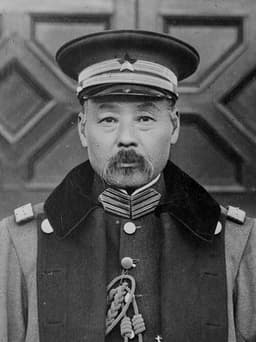
Feng Guozhang
General · Modern
49.1Total
Basic Information
Born
1829
1859
Died
1899
1919
Era
Modern
Modern
Nationality
Venezuela
China
Occupation
General
General
Civilization
Western
Eastern
Score Comparison
Military (10%)
30.0
30.0
Political (20%)
72.0
61.3
Influence (20%)
56.7
54.9
Legacy (20%)
50.0
45.8
Leadership (15%)
62.0
40.0
Strategy (15%)
60.0
57.5
TOTAL
55.8
49.1
Antonio Guzman Blanco — Complete Timeline
1870 AD
Establishment of the Guzmán Blanco DictatorshipPolitical Action◆ Major
Guzmán Blanco seized power in Venezuela, beginning a period of authoritarian rule. He centralized the government, suppressed opposition, and initiated a program of modernization and infrastructure development.
DictatorshipModernizationVenezuela
Impact: national
1873 AD
Construction of the Caracas-Valencia RailwayReform◆ Major
Guzmán Blanco oversaw the construction of the Caracas-Valencia railway, a major infrastructure project. The railway improved transportation and trade between the capital and the interior, boosting economic development.
InfrastructureRailwayModernization
Impact: nationalconstructive
1874 AD
Abolition of Church PrivilegesReform◆ Major
Guzmán Blanco implemented anti-clerical reforms, including the abolition of church privileges and the seizure of church property. These measures reduced the power of the Catholic Church in Venezuela and promoted secularism.
Anti-ClericalismSecularismChurch-State Relations
Impact: nationalconstructive
1875 AD
Promotion of Education and CultureCultural◆ Major
Guzmán Blanco promoted education and culture, founding schools, libraries, and museums. He also supported the arts, commissioning public works and monuments that reflected his vision of a modern Venezuela.
EducationCulturePublic Works
Impact: nationalconstructive
1887 AD
Exile and Return to PowerPolitical Action◆ Major
After a period of exile in Europe, Guzm
ExileReturn to PowerAuthoritarianism
Impact: national
Feng Guozhang — Complete Timeline
1912 AD
Command of the Beiyang ArmyPolitical Action◆ Major
Feng Guozhang became a key commander of the Beiyang Army under Yuan Shikai. He controlled military forces in the Zhili region, establishing himself as a major warlord in northern China after the fall of the Qing dynasty.
Beiyang ArmyWarlordMilitary Command
Impact: national
1916 AD
Appointment as Vice PresidentPolitical Action◆ Major
Feng Guozhang was elected Vice President of the Republic of China under President Li Yuanhong. This position gave him significant political influence during the early Republican period.
Republic of ChinaGovernmentPolitics
Impact: national
1917 AD
Acting PresidencyPolitical Action◆ Major
Feng Guozhang became Acting President of the Republic of China after Li Yuanhong's resignation. He served from 1917 to 1918, facing challenges from rival warlords and struggling to maintain central authority.
Republic of ChinaPresidencyWarlord Era
Impact: national
1918 AD
Conflict with Duan QiruiPolitical Action◆ Major
Feng Guozhang engaged in a power struggle with Premier Duan Qirui, leading to the split of the Beiyang clique into the Zhili and Anhui factions. This conflict weakened the central government and intensified warlord warfare.
Beiyang CliquePower StruggleWarlord Era
Impact: nationaldestructive
This comparison has not been analyzed yet.
One-time AI generation (~1 minute). Scores and timeline are already available below.
Rankings
🥇
Antonio Guzman BlancoLeader
Mil: 30.0Pol: 72.0Inf: 56.7
55.8
🥈
Feng Guozhang
Mil: 30.0Pol: 61.3Inf: 54.9
49.1
+6.7 behind
How This Comparison Works
Algorithm
Each figure is scored on 6 dimensions (0—100 scale) based on structured historical data: Military (10%), Political (20%), Influence (20%), Legacy (20%), Leadership (15%), Strategy (15%). The weighted total produces the final ranking.
Data Sources
Scores are computed from structured sub-indicators in the database. Scale factors adjust for era (Ancient ×0.85, Modern ×1.0) and civilization size (Eastern ×1.05, Other ×0.80) to account for differences in population and military scale.
Maximum 3 Figures
Comparisons are limited to 2—3 figures to ensure readability and statistical meaningfulness.
Error Margins
±5 points per dimension — Sub-scores are derived from historical records with inherent uncertainty. Two figures within 5 points on a dimension should be considered roughly equivalent in that area.
Total Score Accuracy
±3 points overall — The weighted combination of 6 dimensions produces a total score with approximately ±3 points of uncertainty. Differences of less than 3 points are not statistically significant— the figures are effectively tied.
Known Limitations
- Historical records are incomplete and uneven across civilizations
- Figures from oral-tradition societies may be underrepresented
- Occupation labels can misclassify multi-role figures
- Scores measure capability and impact, not moral character
- Quantitative scoring is a comparison tool, not absolute truth
Capability Radar
Military (10%) — Battles & Warfare
Battles
45
45
Win Rate
55
40
Expansion
20
35
Political (20%) — Governance & Reform
Reform
75
30
Diplomacy
65
45
Economy
70
25
Influence (20%) — Cultural & Global Reach
Cultural
50
30
Global
45
20
Legacy (20%) — Historical Impact
Historical
55
40
Longevity
40
25
Leadership (15%) — Power & Stability
Tenure
70
55
Stability
40
20
Strategy (15%) — Tactics & Innovation
Strategy
50
55
Tactics
40
50
Reform
30
40
Similar Comparisons
Comments & Discussion
No comments yet. Be the first to share your thoughts!