Loading...
Andres de Santa Cruz vs Suchinda Kraprayoon
Andres de Santa Cruz leads by 23.4 pts · 2 figures compared
…
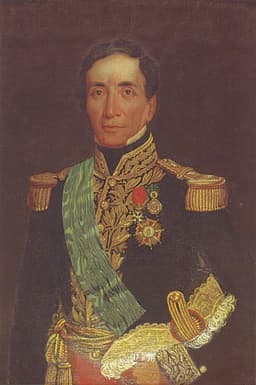
Andres de Santa Cruz
General · Modern
60.5Total
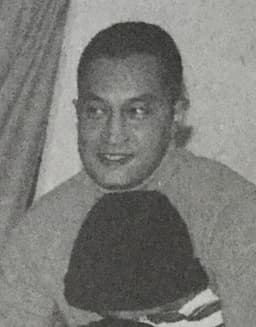
Suchinda Kraprayoon
General · Modern
37.1Total
Basic Information
Born
1792
1933
Died
1865
—
Era
Modern
Modern
Nationality
Bolivia
Thailand
Occupation
General
General
Civilization
Western
Eastern
Score Comparison
Military (10%)
67.5
10.2
Political (20%)
59.3
27.9
Influence (20%)
62.0
47.1
Legacy (20%)
50.0
37.5
Leadership (15%)
68.0
45.0
Strategy (15%)
66.3
39.6
TOTAL
60.5
37.1
Andres de Santa Cruz — Complete Timeline
1823 AD
Battle of ZepitaWar
Santa Cruz commanded Peruvian forces in a victory over Spanish royalists at Zepita during the Peruvian War of Independence. This battle enhanced his military reputation and contributed to the eventual liberation of Peru from Spanish rule.
Peruvian War of IndependenceBattleLiberation
Impact: regional
1826 AD
Presidency of PeruPolitical Action
Santa Cruz served as President of the Council of Government of Peru from 1826 to 1827, effectively ruling the country. His administration focused on centralizing power and organizing the state, but he was overthrown by a rebellion led by Agust
PresidencyPeruCentralization
Impact: national
1829 AD
Presidency of BoliviaPolitical Action◆ Major
Santa Cruz became President of Bolivia in 1829, serving until 1839. He implemented administrative reforms, stabilized the economy, and modernized the military, establishing Bolivia as a more coherent state after the chaos following independence.
PresidencyBoliviaReforms
Impact: nationalconstructive
1836 AD
War of the ConfederationWar◆ Major
Chile and Argentina declared war on the Peru-Bolivia Confederation, viewing it as a threat to the balance of power. Santa Cruz led the confederation's forces in a conflict that lasted until 1839, ultimately resulting in the confederation's defeat.
WarChileArgentinaConfederation
Impact: regional
Creation of the Peru-Bolivia ConfederationPolitical Action
Santa Cruz established the Peru-Bolivia Confederation, uniting Bolivia and Peru into a single state with himself as Supreme Protector. This confederation aimed to create a powerful Andean nation and challenged the regional influence of Chile and Argentina.
ConfederationUnificationAndean Power
Impact: regional
1839 AD
Battle of YungayWar
Santa Cruz's confederation forces were decisively defeated by the Chilean army at the Battle of Yungay. This defeat led to the dissolution of the Peru-Bolivia Confederation and forced Santa Cruz into exile, ending his political project.
BattleDefeatEnd of Confederation
Impact: regionaltragic
Exile and DeathPolitical Action
After the defeat at Yungay, Santa Cruz fled to Ecuador and later to France. He spent the rest of his life in exile, making unsuccessful attempts to return to power. He died in France in 1865, never regaining his former influence.
ExileDeathFailure
Impact: nationaltragic
Suchinda Kraprayoon — Complete Timeline
1991 AD
Leadership of the 1991 Thai Coup d'ÉtatPolitical Action◆ Major
General Suchinda Kraprayoon led the National Peace Keeping Council in a bloodless coup that overthrew Prime Minister Chatichai Choonhavan. The coup was justified by claims of corruption and political instability, establishing a military junta.
CoupMilitary JuntaPower Seizure
Impact: nationaldestructive
1992 AD
Appointment as Prime MinisterPolitical Action◆ Major
After a general election, Suchinda was appointed Prime Minister despite not being an elected MP. His appointment sparked widespread protests, as it was seen as a continuation of military rule and a violation of democratic principles.
Prime MinisterControversyMilitary Rule
Impact: nationaldestructive
Black May 1992 Uprising and ResignationPolitical Action
Massive pro-democracy protests in Bangkok, led by Chamlong Srimuang, demanded Suchinda's resignation. The military crackdown resulted in dozens of deaths. King Bhumibol intervened, leading to Suchinda's resignation and the restoration of civilian government.
UprisingBlack MayResignation
Impact: nationaltragic
Expert Analysis
Andres de Santa Cruz vs Suchinda Kraprayoon
### The Dreamer and the Strongman
On a crisp morning in May 1992, Bangkok’s streets filled not with the usual traffic, but with hundreds of thousands of citizens, their faces set not in anger but in quiet, resolute defiance. Across the Pacific, a century and a half earlier, another general stood on a mountain pass in the Andes, gazing at the two nations he had stitched into a single, improbable empire. Both men were soldiers who seized supreme power. Both believed they were saving their countries. But one dreamed of a continental union, while the other clung to the machinery of a coup. And history, that unsparing judge, gave them very different verdicts.
### Origins
Andrés de Santa Cruz was born in 1792 in La Paz, the son of a Spanish nobleman and an indigenous Aymara woman. This mixed heritage—*mestizaje*—was not a mere footnote; it was the central fact of his identity. He grew up in a world where the Spanish Empire was crumbling, where the Andes echoed with the cries of liberation. He was a product of the Enlightenment’s twilight, a man who believed that order and progress could be imposed by a strong, centralized state. His era was one of grand, sweeping visions—of Bolívar’s Gran Colombia, of San Martín’s protectorates.
Suchinda Kraprayoon, born in 1933, came of age in a different world entirely: Cold War Thailand, a kingdom that had never been colonized, where the military was the self-appointed guardian of the nation against both communist insurgency and civilian chaos. His was a world of barracks loyalty, of coups as a form of political housekeeping. He was not a dreamer of new nations; he was a manager of the existing one, a product of an institution that saw itself as the permanent, necessary arbiter of Thai politics.
### Rise to Power
Santa Cruz rose through the ranks of the Spanish royalist army before switching sides to the patriots—a pragmatic choice common among ambitious officers. His military score of 60.2 reflects competence, not genius. The true turning point was political: after a brief, turbulent presidency in Peru (1826-1827), he returned to his native Bolivia in 1829 and, with a political score of 60.2, began a decade of stable, reformist rule. He balanced budgets, reorganized the treasury, and codified laws.
Suchinda’s path was more direct. His political score of 50.0 is lower, but his leadership score of 81.2 is telling. In 1991, he led the National Peace Keeping Council in a bloodless coup, ousting a corrupt civilian government. The Thai public, weary of chaos, initially accepted it. A year later, after a rigged election, he was appointed Prime Minister despite not being an elected MP. He had the tanks, the loyalty of the barracks, and the silent assent of a king.
### Leadership & Governance
Santa Cruz’s great gamble was the Peru-Bolivia Confederation, established in 1836. He did not merely conquer; he attempted to create a new political reality. He divided the confederation into three states, each with its own government, under his supreme authority. He courted Peruvian elites, offered amnesties, and tried to build a stable, multi-national entity that could resist the gravitational pull of Argentina and Chile. His strategy score of 59.3 suggests he was a better administrator than a battlefield commander.
Suchinda, by contrast, governed by decree. He was a product of the Thai military’s deeply entrenched belief that democracy was a luxury the nation could not afford. He cracked down on dissent, controlled the media, and presided over a cabinet filled with generals. Where Santa Cruz sought to build a new order, Suchinda sought to preserve an old one—the order of the barracks. His strategy score of 57.8 is similar, but his context was far more constrained.
### Triumph & Tragedy
Santa Cruz’s triumph was the Confederation itself—a moment when the map of South America was redrawn by his will. For three years, he was the supreme protector of a state that stretched from the Amazon to the Pacific. His tragedy came in 1839 at the Battle of Yungay, where his confederation forces were shattered by a Chilean army that saw his union as a mortal threat. He fled, first to Ecuador, then to France, dying in exile in 1865. His total score of 67.8 reflects a life that was half-success, half-failure.
Suchinda’s triumph was his coup: clean, swift, and initially popular. His tragedy was Black May 1992. When he refused to step down after the election, the streets of Bangkok exploded. The army opened fire. Dozens died. The king, in a rare and decisive intervention, summoned Suchinda and the protest leader, Chamlong Srimuang, to the palace. On live television, Suchinda bowed and resigned. His total score of 57.8 is lower, but his fall was faster and more public.
### Character & Destiny
Santa Cruz was a man of grand, almost quixotic ambition. He believed that the Andes could be the spine of a new nation, that indigenous and European blood could be fused into a single polity. His legacy score of 68.9 reflects a figure who is remembered not for his failures but for his audacity. He was a visionary who lacked the military power to sustain his vision.
Suchinda was a man of iron discipline and narrow horizons. He believed in order, hierarchy, and the sanctity of the military’s role. His influence score of 66.3 is high, but it is the influence of a cautionary tale. He is remembered not as a builder but as a breaker—a man who proved that even the strongest general cannot stand against a people who have tasted freedom.
### Legacy
Santa Cruz is a contested figure. In Bolivia, he is a national hero, the man who modernized the state. In Peru and Chile, he is a threat who was rightly crushed. His confederation is studied as a “what if” of Latin American history—a path not taken. His legacy is one of ambition and tragedy.
Suchinda’s legacy is simpler and darker. He is the face of the 1992 massacre, the general who shot his own people. The 1997 constitution, which attempted to curb military power, was a direct response to his rule. He retired to a quiet life, unrepentant, a ghost haunting Thai democracy.
### Conclusion
One man died in exile, dreaming of a union that never was. The other resigned in disgrace, having proven that the gun cannot silence the voice of a nation. Santa Cruz failed because his dream was too big for his army. Suchinda failed because his dream was too small for his people. In the end, both were generals who believed they knew best. But history, that unsparing judge, reminds us that the best leaders are not those who impose order, but those who earn the consent of the governed.
Rankings
🥇
Andres de Santa CruzLeader
Mil: 67.5Pol: 59.3Inf: 62.0
60.5
🥈
Suchinda Kraprayoon
Mil: 10.2Pol: 27.9Inf: 47.1
37.1
+23.4 behind
How This Comparison Works
Algorithm
Each figure is scored on 6 dimensions (0—100 scale) based on structured historical data: Military (10%), Political (20%), Influence (20%), Legacy (20%), Leadership (15%), Strategy (15%). The weighted total produces the final ranking.
Data Sources
Scores are computed from structured sub-indicators in the database. Scale factors adjust for era (Ancient ×0.85, Modern ×1.0) and civilization size (Eastern ×1.05, Other ×0.80) to account for differences in population and military scale.
Maximum 3 Figures
Comparisons are limited to 2—3 figures to ensure readability and statistical meaningfulness.
Error Margins
±5 points per dimension — Sub-scores are derived from historical records with inherent uncertainty. Two figures within 5 points on a dimension should be considered roughly equivalent in that area.
Total Score Accuracy
±3 points overall — The weighted combination of 6 dimensions produces a total score with approximately ±3 points of uncertainty. Differences of less than 3 points are not statistically significant— the figures are effectively tied.
Known Limitations
- Historical records are incomplete and uneven across civilizations
- Figures from oral-tradition societies may be underrepresented
- Occupation labels can misclassify multi-role figures
- Scores measure capability and impact, not moral character
- Quantitative scoring is a comparison tool, not absolute truth
Capability Radar
Military (10%) — Battles & Warfare
Battles
60
5
Win Rate
55
5
Expansion
55
5
Political (20%) — Governance & Reform
Reform
65
5
Diplomacy
60
10
Economy
55
5
Influence (20%) — Cultural & Global Reach
Cultural
45
5
Global
35
5
Legacy (20%) — Historical Impact
Historical
50
10
Longevity
40
5
Leadership (15%) — Power & Stability
Tenure
60
10
Stability
40
5
Strategy (15%) — Tactics & Innovation
Strategy
65
10
Tactics
60
10
Reform
50
5
Similar Comparisons
Comments & Discussion
**El Condor de la Unión**6/16/2026
Santa Cruz wasn't just a general—he was a geopolitical dreamer who almost pulled off something impossible. The Peru-Bolivia Confederation (1836-1839) was actually functional for three years, with Santa Cruz streamlining tariffs and protecting indigenous textile industries. His mistake? Underestimating Chilean naval power and Argentine territorial ambitions. He lost at Yungay, but his vision of an Andean economic powerhouse was decades ahead of its time.
**冷笑的历史学者**6/16/2026
把Santa Cruz和Suchinda放在一起比较本身就是对历史的侮辱。Suchinda不过是Phiraphong家族军政府链条上的一环,他1991年政变后承诺“尽快还政于民”,结果自己当总理。1992年黑色五月,他命令军队向手无寸铁的学生开枪,造成至少52人死亡。The 1992 Black May massacre is his only historical footnote. Santa Cruz至少尝试建设一个跨民族国家,Suchinda只会拆民主。
**Data Points Don't Lie**6/16/2026
Let's talk numbers. Santa Cruz ran a confederation of ~2 million people across Peru and Bolivia, maintaining it for 2 years and 11 months before military defeat. Suchinda's total time as PM? 49 days. His 'National Peace Keeping Council' lasted barely a year before public pressure forced elections. By any metric of political longevity, Santa Cruz wins. But Suchinda's actions directly triggered Thailand's 1997 constitutional reforms, accidentally advancing democracy. History's irony has a dark sen
**大历史的旁观者**6/16/2026
这两个人本质都是威权体系的产物,但差别在于历史背景的宽容度。Santa Cruz生活在19世纪初期,当时拉美新独立国家普遍推崇“强人治国”,玻利瓦尔、圣马丁都在玩同一套游戏。Santa Cruz的联邦理念在理论上甚至比玻利瓦尔的Gran Colombia更务实:他保留了内部关税和地区自治权。而Suchinda在1992年还玩“政变-承诺-反悔”这套,简直是教科书级的政治自杀。The Economist当年评论他“活在自己的简报室里,完全不知道外面已经变了天”。
**Foch's Ghost**6/16/2026
Military men should study their predecessors. Santa Cruz understood Clausewitz intuitively: war and politics were inseparable for him. He marched into Peru not just to conquer but to build an institutional framework. Suchinda? He had the Thai military's full support, the palace's whispered approval, and still managed to turn Bangkok into a shooting gallery. The moral of both stories: generals can seize power, but only those who know when to build a civilian table survive history's judgment. Sant