Loading...
Andres de Santa Cruz vs Shi Dakai
Andres de Santa Cruz leads by 0.9 pts · 2 figures compared
…
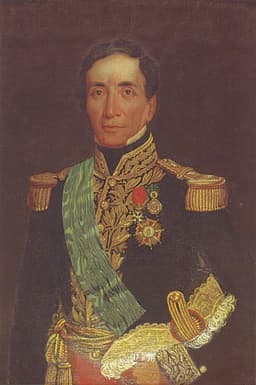
Andres de Santa Cruz
General · Modern
60.5Total
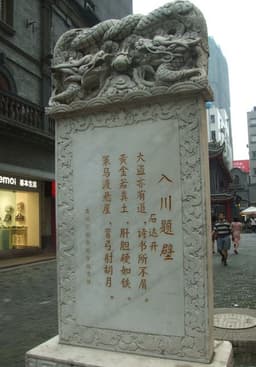
Shi Dakai
General · Modern
59.6Total
Basic Information
Born
1792
1831
Died
1865
1863
Era
Modern
Modern
Nationality
Bolivia
China
Occupation
General
General
Civilization
Western
Eastern
Score Comparison
Military (10%)
67.5
76.0
Political (20%)
59.3
45.0
Influence (20%)
62.0
56.7
Legacy (20%)
50.0
54.0
Leadership (15%)
68.0
72.0
Strategy (15%)
66.3
68.1
TOTAL
60.5
59.6
Andres de Santa Cruz — Complete Timeline
1823 AD
Battle of ZepitaWar
Santa Cruz commanded Peruvian forces in a victory over Spanish royalists at Zepita during the Peruvian War of Independence. This battle enhanced his military reputation and contributed to the eventual liberation of Peru from Spanish rule.
Peruvian War of IndependenceBattleLiberation
Impact: regional
1826 AD
Presidency of PeruPolitical Action
Santa Cruz served as President of the Council of Government of Peru from 1826 to 1827, effectively ruling the country. His administration focused on centralizing power and organizing the state, but he was overthrown by a rebellion led by Agust
PresidencyPeruCentralization
Impact: national
1829 AD
Presidency of BoliviaPolitical Action◆ Major
Santa Cruz became President of Bolivia in 1829, serving until 1839. He implemented administrative reforms, stabilized the economy, and modernized the military, establishing Bolivia as a more coherent state after the chaos following independence.
PresidencyBoliviaReforms
Impact: nationalconstructive
1836 AD
War of the ConfederationWar◆ Major
Chile and Argentina declared war on the Peru-Bolivia Confederation, viewing it as a threat to the balance of power. Santa Cruz led the confederation's forces in a conflict that lasted until 1839, ultimately resulting in the confederation's defeat.
WarChileArgentinaConfederation
Impact: regional
Creation of the Peru-Bolivia ConfederationPolitical Action
Santa Cruz established the Peru-Bolivia Confederation, uniting Bolivia and Peru into a single state with himself as Supreme Protector. This confederation aimed to create a powerful Andean nation and challenged the regional influence of Chile and Argentina.
ConfederationUnificationAndean Power
Impact: regional
1839 AD
Battle of YungayWar
Santa Cruz's confederation forces were decisively defeated by the Chilean army at the Battle of Yungay. This defeat led to the dissolution of the Peru-Bolivia Confederation and forced Santa Cruz into exile, ending his political project.
BattleDefeatEnd of Confederation
Impact: regionaltragic
Exile and DeathPolitical Action
After the defeat at Yungay, Santa Cruz fled to Ecuador and later to France. He spent the rest of his life in exile, making unsuccessful attempts to return to power. He died in France in 1865, never regaining his former influence.
ExileDeathFailure
Impact: nationaltragic
Shi Dakai — Complete Timeline
1851 AD
Jintian UprisingWar◆ Major
Shi Dakai joined the Taiping Rebellion at its inception in Jintian, Guangxi. As a core leader, he helped organize the rebel forces and was appointed Wing King, becoming one of the key military commanders of the Taiping Heavenly Kingdom.
Taiping RebellionUprisingMilitary Command
Impact: national
1854 AD
Battle of XiangtanWar◆ Major
Shi Dakai led Taiping forces to a major victory at Xiangtan, Hunan, defeating Qing imperial troops. This battle secured Taiping control over key territories in the Yangtze River valley and demonstrated his military skill.
Taiping RebellionBattleVictory
Impact: regional
1856 AD
Tianjing IncidentPolitical Action
Shi Dakai returned to Tianjing (Nanjing) after the internal purge of the Eastern King Yang Xiuqing and the murder of the Northern King Wei Changhui. He condemned the violence and was forced to flee, leading to a split in Taiping leadership.
Taiping RebellionInternal ConflictPurge
Impact: nationaltragic
1858 AD
Campaign in Zhejiang and FujianWar
Shi Dakai led a separate Taiping army into Zhejiang and Fujian provinces, capturing several cities. This campaign expanded Taiping influence into southeastern China but also isolated his forces from the main Taiping base.
Taiping RebellionCampaignExpansion
Impact: regional
1863 AD
Battle of Baishui RiverWar◆ Major
Shi Dakai's army was trapped and defeated by Qing forces at the Baishui River in Sichuan. He was captured and executed shortly after, marking the end of his military career and a significant loss for the Taiping cause.
Taiping RebellionBattleDefeatDeath
Impact: nationaltragic
Expert Analysis
Shi Dakai vs Andres de Santa Cruz
### The Confederation and the Kingdom: Two Visions of Power, Two Paths to Ruin
On a dusty plain in southern Peru, in the winter of 1839, a dream died. Andrés de Santa Cruz, the architect of the most ambitious state ever conceived in South America, watched his Peru-Bolivia Confederation shatter under the bayonets of the Chilean army at the Battle of Yungay. Just a generation later, on the other side of the world, in the gorges of Sichuan, another commander faced his end. Shi Dakai, the Wing King of the Taiping Heavenly Kingdom, knelt before Qing executioners in 1863, his army annihilated at the Baishui River. Both men were brilliant generals and political visionaries; both built empires of the mind that collapsed into bloody dust. But why did one fail in a decade, while the other’s rebellion burned across China for over a decade? The answer lies not in their ambition—which was equal—but in the worlds they tried to remake.
### Origins
Santa Cruz was a child of the colonial frontier. Born in 1792 in La Paz, he was a *mestizo*—the son of a Spanish nobleman and an indigenous Aymara woman. This dual heritage gave him a foot in two worlds, but a home in neither. He served the Spanish crown as a royalist officer until 1820, then switched sides to join Simón Bolívar’s independence forces. His was a pragmatic patriotism, forged in the chaos of wars that redrew the map of a continent. Shi Dakai, born in 1831 in Guangxi, came from a Hakka family—an ethnic minority in southern China. The Hakkas were outsiders, landless and despised, and their resentment fueled the Taiping Rebellion. Where Santa Cruz learned war in the formal ranks of European-style armies, Shi Dakai learned it in the millenarian frenzy of a religious uprising. He was a teenager when he joined the Jintian Uprising in 1851, a boy-prophet in a movement that promised to overthrow the Manchu Qing dynasty and establish a “Heavenly Kingdom” of peace and equality.
### Rise to Power
Santa Cruz rose through the machinery of state. After commanding a victory over Spanish royalists at the Battle of Zepita in 1823, he became President of the Council of Government of Peru in 1826, effectively ruling the country. Two years later, he took the presidency of Bolivia. He was a bureaucrat with a sword, a man who believed that order could be imposed from above. Shi Dakai’s ascent was more violent and more charismatic. He was not a president but a king—the “Wing King” of the Taiping, one of the original leaders of the rebellion. His military brilliance was evident early: at the Battle of Xiangtan in 1854, he crushed Qing imperial forces, securing Hunan for the Heavenly Kingdom. While Santa Cruz consolidated power through decrees and treaties, Shi Dakai did it through blood and fire.
### Leadership & Governance
Santa Cruz governed like a Roman emperor. As President of Bolivia from 1829 to 1839, he stabilized the economy, reformed the tax system, and modernized the army. His crowning achievement was the Peru-Bolivia Confederation, established in 1836, which united the two nations under a single state with himself as Supreme Protector. He believed that only a large, centralized power could resist the encroachments of Chile, Argentina, and Brazil. His vision was geopolitical: a buffer state that would dominate the Pacific. But his rule was brittle. He relied on force and patronage, not popular support. When Chile and Argentina declared war in 1836, fearing the Confederation would upset the regional balance, Santa Cruz had no deep well of loyalty to draw upon.
Shi Dakai’s leadership was more paradoxical. He was a brilliant tactician—his military score of 84.6 reflects his skill—but his politics were fractured. The Taiping Heavenly Kingdom was a theocracy led by Hong Xiuquan, who claimed to be the brother of Jesus Christ. Shi Dakai was a secular commander in a religious war. After the Tianjing Incident of 1856, an internal purge that saw the murder of the Eastern King Yang Xiuqing and the execution of the Northern King Wei Changhui, Shi Dakai fled the capital in disgust. He took his army on a separate campaign into Zhejiang and Fujian, capturing cities but losing the strategic focus of the rebellion. Where Santa Cruz centralized power, Shi Dakai decentralized it—and both paid the price.
### Triumph & Tragedy
Santa Cruz’s greatest moment was the creation of the Confederation in 1836. For three years, it was a reality: a state that stretched from the Andes to the Pacific, a monument to his vision. His greatest failure was the Battle of Yungay in 1839, where the Chilean army, under General Manuel Bulnes, destroyed his forces. The Confederation dissolved overnight. Santa Cruz fled to Ecuador, then to France, where he died in exile in 1865, a ghost of what might have been. Shi Dakai’s tragedy was more drawn out. His campaigns in Zhejiang and Fujian from 1858 to 1861 were triumphs of mobility and logistics, but they were also a retreat from the heart of the rebellion. In 1863, trapped by Qing forces at the Baishui River in Sichuan, he surrendered, hoping to spare his men. He was executed anyway, his head displayed as a trophy. His last act was a gesture of mercy in a war that had none.
### Character & Destiny
Santa Cruz was a pragmatist who dreamed of order. He believed that a single, unified state could bring peace to the Andes. But he was too cautious, too institutional, to inspire the kind of fanatical loyalty that the Taiping leaders commanded. His defeat was a failure of imagination: he could not see that the Confederation was a paper palace, built on treaties and bayonets, not on hearts. Shi Dakai was a romantic who dreamed of justice. He was the most humane of the Taiping kings, known for sparing civilians and treating prisoners with dignity. But his nobility was his undoing. In a rebellion that demanded ruthlessness, he was too gentle. His separate campaigns fragmented the Taiping forces, and his surrender was an act of honor in a war that had no use for it.
### Legacy
Santa Cruz is remembered in Bolivia and Peru as a visionary, but a failed one. His total score of 67.8 reflects a man who was competent in everything and exceptional in nothing. His Confederation is a footnote in history, a “what if” that never was. Shi Dakai’s legacy is more complex. His military score of 84.6 and strategy score of 81.6 mark him as one of the great commanders of the 19th century. In China, he is celebrated as a tragic hero, a man of principle in a corrupt age. The Taiping Rebellion itself killed over 20 million people, but Shi Dakai remains its most sympathetic figure—a warrior who fought for a kingdom of heaven on earth, and lost.
### Conclusion
Stand at the edge of the Baishui River, where Shi Dakai knelt, and you feel the weight of a world that could have been. Stand on the plain of Yungay, where Santa Cruz’s army broke, and you feel the same. Both men tried to build something new: Santa Cruz a nation, Shi Dakai a kingdom. Both failed because they were caught between the old and the new—between the colonial order and the nation-state, between the Qing dynasty and the modern world. Their stories are not just about war and politics. They are about the limits of vision, the loneliness of power, and the terrible cost of dreaming too big. In the end, the Confederation and the Kingdom both fell, but the men who built them remain—ghosts of ambition, whispering to us across the centuries.
Rankings
🥇
Andres de Santa CruzLeader
Mil: 67.5Pol: 59.3Inf: 62.0
60.5
🥈
Shi Dakai
Mil: 76.0Pol: 45.0Inf: 56.7
59.6
+0.9 behind
How This Comparison Works
Algorithm
Each figure is scored on 6 dimensions (0—100 scale) based on structured historical data: Military (10%), Political (20%), Influence (20%), Legacy (20%), Leadership (15%), Strategy (15%). The weighted total produces the final ranking.
Data Sources
Scores are computed from structured sub-indicators in the database. Scale factors adjust for era (Ancient ×0.85, Modern ×1.0) and civilization size (Eastern ×1.05, Other ×0.80) to account for differences in population and military scale.
Maximum 3 Figures
Comparisons are limited to 2—3 figures to ensure readability and statistical meaningfulness.
Error Margins
±5 points per dimension — Sub-scores are derived from historical records with inherent uncertainty. Two figures within 5 points on a dimension should be considered roughly equivalent in that area.
Total Score Accuracy
±3 points overall — The weighted combination of 6 dimensions produces a total score with approximately ±3 points of uncertainty. Differences of less than 3 points are not statistically significant— the figures are effectively tied.
Known Limitations
- Historical records are incomplete and uneven across civilizations
- Figures from oral-tradition societies may be underrepresented
- Occupation labels can misclassify multi-role figures
- Scores measure capability and impact, not moral character
- Quantitative scoring is a comparison tool, not absolute truth
Capability Radar
Military (10%) — Battles & Warfare
Battles
60
75
Win Rate
55
70
Expansion
55
75
Political (20%) — Governance & Reform
Reform
65
50
Diplomacy
60
45
Economy
55
40
Influence (20%) — Cultural & Global Reach
Cultural
45
55
Global
35
40
Legacy (20%) — Historical Impact
Historical
50
60
Longevity
40
45
Leadership (15%) — Power & Stability
Tenure
60
55
Stability
40
35
Strategy (15%) — Tactics & Innovation
Strategy
65
80
Tactics
60
85
Reform
50
60
Similar Comparisons
Comments & Discussion
南天一柱6/16/2026
作为古典学术研究者,我注意到Santa Cruz的“双重遗产”叙事被过度浪漫化了。他父亲是西班牙贵族,母亲是土著女性,但这份“混血”身份更多是被利用的政治工具而非真正认同的来源。真正值得注意的是他如何在玻利瓦尔麾下完成从保皇派到革命者的身份转变——这种实用性背叛揭示了他权力优先于理念的本质。对比之下,石达开至少为天国理想殉道,Santa Cruz却像变色龙般投机。历史的讽刺是:两类“背叛者”,一个被歌颂,一个被遗忘。