Loading...
Andres de Santa Cruz vs Louis Botha
Louis Botha leads by 0.6 pts · 2 figures compared
…
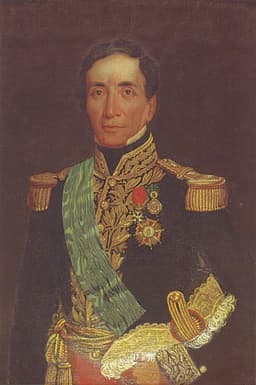
Andres de Santa Cruz
General · Modern
60.5Total
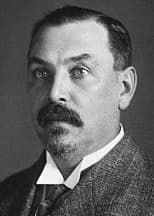
Louis Botha
General · Modern
61.1Total
Basic Information
Born
1792
1862
Died
1865
1919
Era
Modern
Modern
Nationality
Bolivia
South Africa
Occupation
General
General
Civilization
Western
Other
Score Comparison
Military (10%)
67.5
61.7
Political (20%)
59.3
70.0
Influence (20%)
62.0
56.7
Legacy (20%)
50.0
50.0
Leadership (15%)
68.0
79.8
Strategy (15%)
66.3
58.0
TOTAL
60.5
61.1
Andres de Santa Cruz — Complete Timeline
1823 AD
Battle of ZepitaWar
Santa Cruz commanded Peruvian forces in a victory over Spanish royalists at Zepita during the Peruvian War of Independence. This battle enhanced his military reputation and contributed to the eventual liberation of Peru from Spanish rule.
Peruvian War of IndependenceBattleLiberation
Impact: regional
1826 AD
Presidency of PeruPolitical Action
Santa Cruz served as President of the Council of Government of Peru from 1826 to 1827, effectively ruling the country. His administration focused on centralizing power and organizing the state, but he was overthrown by a rebellion led by Agust
PresidencyPeruCentralization
Impact: national
1829 AD
Presidency of BoliviaPolitical Action◆ Major
Santa Cruz became President of Bolivia in 1829, serving until 1839. He implemented administrative reforms, stabilized the economy, and modernized the military, establishing Bolivia as a more coherent state after the chaos following independence.
PresidencyBoliviaReforms
Impact: nationalconstructive
1836 AD
War of the ConfederationWar◆ Major
Chile and Argentina declared war on the Peru-Bolivia Confederation, viewing it as a threat to the balance of power. Santa Cruz led the confederation's forces in a conflict that lasted until 1839, ultimately resulting in the confederation's defeat.
WarChileArgentinaConfederation
Impact: regional
Creation of the Peru-Bolivia ConfederationPolitical Action
Santa Cruz established the Peru-Bolivia Confederation, uniting Bolivia and Peru into a single state with himself as Supreme Protector. This confederation aimed to create a powerful Andean nation and challenged the regional influence of Chile and Argentina.
ConfederationUnificationAndean Power
Impact: regional
1839 AD
Battle of YungayWar
Santa Cruz's confederation forces were decisively defeated by the Chilean army at the Battle of Yungay. This defeat led to the dissolution of the Peru-Bolivia Confederation and forced Santa Cruz into exile, ending his political project.
BattleDefeatEnd of Confederation
Impact: regionaltragic
Exile and DeathPolitical Action
After the defeat at Yungay, Santa Cruz fled to Ecuador and later to France. He spent the rest of his life in exile, making unsuccessful attempts to return to power. He died in France in 1865, never regaining his former influence.
ExileDeathFailure
Impact: nationaltragic
Louis Botha — Complete Timeline
1899 AD
Battle of ColensoWar◆ Major
Botha commanded Boer forces at the Battle of Colenso during the Second Boer War. His troops repelled a British attack under General Buller, inflicting heavy casualties and boosting Boer morale.
Second Boer WarBattleVictory
Impact: regional
1900 AD
Boer War Guerrilla CommanderWar◆ Major
After the British captured Pretoria, Botha led Boer guerrilla forces in the Transvaal. He conducted hit-and-run attacks against British columns, prolonging the war and becoming a symbol of Afrikaner resistance.
Second Boer WarGuerrillaResistance
Impact: regional
1902 AD
Signed the Treaty of VereenigingPolitical Action
Botha, as a leading Boer general, signed the Treaty of Vereeniging which ended the Second Boer War. The treaty granted the Boer republics self-government under British sovereignty and promised eventual self-rule.
TreatyPeaceSecond Boer War
Impact: regional
1910 AD
First Prime Minister of the Union of South AfricaPolitical Action
Botha became the first Prime Minister of the newly formed Union of South Africa. He led a coalition government that sought to reconcile Afrikaners and English-speaking whites, while implementing segregationist policies.
Prime MinisterUnion of South AfricaFounding
Impact: nationalconstructive
1914 AD
Suppressed the 1914 RebellionWar◆ Major
Botha personally led government forces to suppress the Maritz Rebellion, an Afrikaner uprising against South Africa's entry into World War I. He defeated the rebels, asserting state authority and maintaining support for the British Empire.
RebellionWorld War ISuppression
Impact: national
1915 AD
Conquered German South West AfricaWar◆ Major
Botha commanded South African forces in the invasion and conquest of German South West Africa. The campaign succeeded, and the territory was later administered by South Africa under a League of Nations mandate.
World War IConquestGerman South West Africa
Impact: regional
Expert Analysis
Louis Botha vs Andres de Santa Cruz
The Dreamer and the Builder
On a dusty battlefield in the Peruvian highlands in 1823, a young general named Andrés de Santa Cruz watched his forces rout Spanish royalists at Zepita. He was thirty-one, already a veteran of a dozen campaigns, and he believed he saw the future: a great Andean nation that would restore the glory of the Inca Empire. Half a century later and half a world away, in the scorched hills of Natal in 1899, another commander, Louis Botha, watched his Boer marksmen cut down British soldiers at Colenso. He was thirty-seven, a farmer turned soldier, and he fought not for empire but for the right of his people to be left alone. Both men were generals who became statesmen; both dreamed of unity. But one created a confederation that collapsed in three years, while the other built a nation that endures. Why did their paths diverge so sharply?
Origins
Santa Cruz was born in 1792 in La Paz, the son of a Spanish nobleman and a Quechua mother. He grew up in a world of rigid caste hierarchies, where his mixed heritage opened doors but also closed them. The wars of independence that swept South America gave him an opportunity: a man of talent could rise regardless of blood. He chose the patriot cause, and his military skill carried him upward. Yet his identity was always divided—he was neither fully Spanish nor fully indigenous, and he sought to resolve that tension by creating a state that would embrace both.
Botha was born in 1862 in the Orange Free State, a Boer republic carved out of the African veld by Dutch-speaking farmers who had fled British rule. His people were Calvinists who believed God had given them this land, and they defended it with rifles and wagons. Botha grew up speaking Afrikaans, hunting lions, and fighting skirmishes with African kingdoms. He had little formal education but immense practical intelligence. Where Santa Cruz was shaped by the collision of empires, Botha was shaped by the isolation of a frontier people determined to remain free.
Rise to Power
Santa Cruz’s ascent was meteoric. After Zepita, he became the effective ruler of Peru in 1826, then president of Bolivia in 1829. He was a superb administrator: he stabilized the currency, reformed the tax system, and built roads and schools. Bolivia had been a chaotic backwater; under Santa Cruz, it became solvent and orderly. But he wanted more. In 1836, he united Bolivia and Peru into the Peru-Bolivia Confederation, with himself as Supreme Protector. It was a bold stroke, a revival of the old Viceroyalty of Lima, and it terrified its neighbors.
Botha’s rise was slower and harder. He was a farmer, not a politician, when the Second Boer War erupted in 1899. But he proved a natural commander: at Colenso, he directed fire so precisely that the British suffered 1,100 casualties to his 40. When the British captured the Boer capitals, Botha turned to guerrilla warfare, striking supply lines and vanishing into the bush. He was relentless, but he was also pragmatic. In 1902, when the war became unwinnable, he signed the Treaty of Vereeniging, accepting British sovereignty in exchange for self-government. Many Boers called him a traitor. Botha called it survival.
Leadership & Governance
Santa Cruz governed as a visionary bureaucrat. He codified laws, promoted education, and encouraged trade. His regime was efficient but autocratic; he tolerated no opposition. The Confederation was his masterpiece, but it was a fragile one. Peru and Bolivia were divided by geography, culture, and rivalry. Santa Cruz tried to bind them through decrees and tariffs, but he never built a shared identity. When Chile and Argentina declared war in 1836, fearing a superpower on their borders, the Confederation had little popular support. At the Battle of Yungay in 1839, Santa Cruz’s army collapsed. He fled into exile and never returned.
Botha governed as a conciliator. As the first Prime Minister of the Union of South Africa in 1910, he faced an impossible task: to unite bitter enemies—Boer and Briton, white and black—into a single nation. He did not try to erase differences; he tried to manage them. He appointed English-speakers to his cabinet, protected Afrikaner language rights, and crushed a rebellion of hardline Boers in 1914 with his own hands. He even led troops to conquer German South West Africa in 1915, proving his loyalty to the British Empire. It was a balancing act that pleased no one entirely, but it held.
Triumph & Tragedy
Santa Cruz’s greatest moment was the creation of the Confederation—a state that, had it survived, might have reshaped South America. His greatest failure was his inability to see that power alone cannot forge a nation. He died in 1865, forgotten in a French exile, writing memoirs that no one read.
Botha’s greatest moment was the Treaty of Vereeniging, which ended a brutal war and laid the foundation for a unified South Africa. His greatest failure was the legacy he left for black South Africans: the Union he built excluded them from power, setting the stage for apartheid. He died in 1919, still in office, mourned by many but criticized by more.
Character & Destiny
Santa Cruz was a dreamer who believed that grand designs could overcome reality. He was brilliant, arrogant, and blind to the limits of his power. Botha was a builder who understood that politics is the art of the possible. He was tough, patient, and willing to compromise. One created a confederation that lasted three years; the other created a union that lasted nearly a century. The difference was not in their military skill or their vision—it was in their relationship with the people they led. Santa Cruz imposed unity from above; Botha forged it from below.
Legacy
Santa Cruz is remembered in Bolivia as a reformer and a patriot, but his Confederation is a footnote. Botha is remembered as the father of the Union of South Africa, a flawed but essential figure. Both men tried to unite what history had divided. One failed because he tried to force it; the other succeeded, in part, because he accepted that unity requires sacrifice.
Conclusion
Standing at the edge of history, we see two men who faced the same question: how do you build a nation from fragments? Santa Cruz answered with ambition; Botha answered with patience. The first ended in exile, the second in power. But both left behind a deeper truth: that the hardest work of leadership is not conquering enemies, but reconciling friends. And that, in the end, is what separates the dreamer from the builder—and the footnote from the foundation.
Rankings
🥇
Louis BothaLeader
Mil: 61.7Pol: 70.0Inf: 56.7
61.1
🥈
Andres de Santa Cruz
Mil: 67.5Pol: 59.3Inf: 62.0
60.5
+0.6 behind
How This Comparison Works
Algorithm
Each figure is scored on 6 dimensions (0—100 scale) based on structured historical data: Military (10%), Political (20%), Influence (20%), Legacy (20%), Leadership (15%), Strategy (15%). The weighted total produces the final ranking.
Data Sources
Scores are computed from structured sub-indicators in the database. Scale factors adjust for era (Ancient ×0.85, Modern ×1.0) and civilization size (Eastern ×1.05, Other ×0.80) to account for differences in population and military scale.
Maximum 3 Figures
Comparisons are limited to 2—3 figures to ensure readability and statistical meaningfulness.
Error Margins
±5 points per dimension — Sub-scores are derived from historical records with inherent uncertainty. Two figures within 5 points on a dimension should be considered roughly equivalent in that area.
Total Score Accuracy
±3 points overall — The weighted combination of 6 dimensions produces a total score with approximately ±3 points of uncertainty. Differences of less than 3 points are not statistically significant— the figures are effectively tied.
Known Limitations
- Historical records are incomplete and uneven across civilizations
- Figures from oral-tradition societies may be underrepresented
- Occupation labels can misclassify multi-role figures
- Scores measure capability and impact, not moral character
- Quantitative scoring is a comparison tool, not absolute truth
Capability Radar
Military (10%) — Battles & Warfare
Battles
60
65
Win Rate
55
70
Expansion
55
60
Political (20%) — Governance & Reform
Reform
65
65
Diplomacy
60
70
Economy
55
55
Influence (20%) — Cultural & Global Reach
Cultural
45
45
Global
35
50
Legacy (20%) — Historical Impact
Historical
50
55
Longevity
40
40
Leadership (15%) — Power & Stability
Tenure
60
60
Stability
40
50
Strategy (15%) — Tactics & Innovation
Strategy
65
72
Tactics
60
68
Reform
50
55
Similar Comparisons
Comments & Discussion
LouisBothaFan6/16/2026
Botha's legacy is pure pragmatism—he knew when to fight and when to negotiate. After Colenso, he didn't waste men on doomed charges; he adapted to guerrilla warfare. Santa Cruz? He overreached with his Peru-Bolivia Confederation, alienating Chile and Argentina. Botha built a nation that survived apartheid and became a modern state. Santa Cruz's dream died in three years because he ignored realpolitik. Give me a farmer-general who can read a map over a dreamer any day.
南美历史侦探6/16/2026
圣克鲁斯输了,输在他太执着于“印加复兴”的幻想。祖传的混血血统让他觉得能调和一切,但现实是秘鲁和玻利维亚的精英根本不想合并。他的军事胜利(比如塞皮塔战役)只是昙花一现,政治谈判全毁。博塔则相反,布尔战争后他直接和英国人谈条件,确立了南非联邦的基础。圣克鲁斯的梦想很漂亮,但博塔赢了现实。历史从来只奖励结果。
数据控将军6/16/2026
看数字:圣克鲁斯的秘鲁-玻利维亚联邦只维持了三年(1836-1839),而博塔参与建立的南非联邦至今已逾110年。圣克鲁斯在永加之战被智利击败,损失了整支军队;博塔在科伦索战役虽然伤亡惨重(英军伤亡约1,400人),但战略上迫使英军撤退。军事上,圣克鲁斯胜率可能更高,但治国能力完全不在一个量级。博塔用政变和谈判取代了战争,这才是关键。
ClassicsScholar6/16/2026
Botha mirrors Cincinnatus: a farmer called to lead, then returning to his land. Santa Cruz channels Alexander's vision of a blended empire—the Inca revival as his Persian fusion. But Santa Cruz lacked the institutional genius of Rome: he built a confederation on personal loyalty, not bureaucratic structure. Botha, like a Roman consul, worked within existing Boer republics and British law. Santa Cruz's dream was epic, but Botha's republic endured because he built for law, not legend.
讽刺历史学家6/16/2026
博塔是布尔人的“妥协之王”:他先打仗,再投降,最后当上总理。圣克鲁斯是南美的“幻想家”:他想恢复印加帝国,却连自己的盟友都搞不定。讽刺的是,博塔的南非后来成了种族隔离的代名词,而圣克鲁斯渴望的多元国家反而在玻利维亚今天体现(莫拉莱斯时代)。但论个人成就,博塔活到了1920年代,圣克鲁斯1848年被流放巴黎。活得更久,影响力更大,这是硬道理。