Loading...
Andres de Santa Cruz vs Giuseppe Garibaldi
Andres de Santa Cruz leads by 5.5 pts · 2 figures compared
…
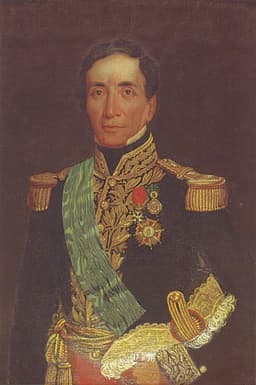
Andres de Santa Cruz
General · Modern
60.5Total
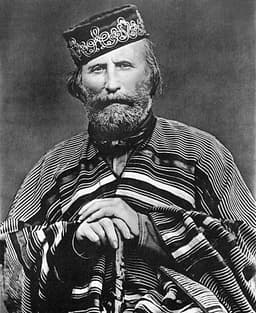
Giuseppe Garibaldi
General · Modern
55.0Total
Basic Information
Born
1792
1807
Died
1865
1882
Era
Modern
Modern
Nationality
Bolivia
Italy
Occupation
General
General
Civilization
Western
Western
Score Comparison
Military (10%)
67.5
61.7
Political (20%)
59.3
54.7
Influence (20%)
62.0
40.0
Legacy (20%)
50.0
68.0
Leadership (15%)
68.0
54.2
Strategy (15%)
66.3
55.0
TOTAL
60.5
55.0
Andres de Santa Cruz — Complete Timeline
1823 AD
Battle of ZepitaWar
Santa Cruz commanded Peruvian forces in a victory over Spanish royalists at Zepita during the Peruvian War of Independence. This battle enhanced his military reputation and contributed to the eventual liberation of Peru from Spanish rule.
Peruvian War of IndependenceBattleLiberation
Impact: regional
1826 AD
Presidency of PeruPolitical Action
Santa Cruz served as President of the Council of Government of Peru from 1826 to 1827, effectively ruling the country. His administration focused on centralizing power and organizing the state, but he was overthrown by a rebellion led by Agust
PresidencyPeruCentralization
Impact: national
1829 AD
Presidency of BoliviaPolitical Action◆ Major
Santa Cruz became President of Bolivia in 1829, serving until 1839. He implemented administrative reforms, stabilized the economy, and modernized the military, establishing Bolivia as a more coherent state after the chaos following independence.
PresidencyBoliviaReforms
Impact: nationalconstructive
1836 AD
War of the ConfederationWar◆ Major
Chile and Argentina declared war on the Peru-Bolivia Confederation, viewing it as a threat to the balance of power. Santa Cruz led the confederation's forces in a conflict that lasted until 1839, ultimately resulting in the confederation's defeat.
WarChileArgentinaConfederation
Impact: regional
Creation of the Peru-Bolivia ConfederationPolitical Action
Santa Cruz established the Peru-Bolivia Confederation, uniting Bolivia and Peru into a single state with himself as Supreme Protector. This confederation aimed to create a powerful Andean nation and challenged the regional influence of Chile and Argentina.
ConfederationUnificationAndean Power
Impact: regional
1839 AD
Battle of YungayWar
Santa Cruz's confederation forces were decisively defeated by the Chilean army at the Battle of Yungay. This defeat led to the dissolution of the Peru-Bolivia Confederation and forced Santa Cruz into exile, ending his political project.
BattleDefeatEnd of Confederation
Impact: regionaltragic
Exile and DeathPolitical Action
After the defeat at Yungay, Santa Cruz fled to Ecuador and later to France. He spent the rest of his life in exile, making unsuccessful attempts to return to power. He died in France in 1865, never regaining his former influence.
ExileDeathFailure
Impact: nationaltragic
Giuseppe Garibaldi — Complete Timeline
1849 AD
Defense of the Roman RepublicWar◆ Major
Garibaldi commanded the defense of the short-lived Roman Republic against French forces sent to restore papal rule. Despite heroic resistance, the republic fell, and Garibaldi led a retreat through central Italy.
Italian UnificationRoman RepublicDefense
Impact: regionaltragic
1860 AD
Expedition of the ThousandWar
Garibaldi led a volunteer force of about 1,000 men to conquer Sicily and Naples. His campaign overthrew the Bourbon monarchy and unified southern Italy with the Kingdom of Sardinia.
Italian UnificationExpeditionVolunteers
Impact: nationalconstructive
Battle of CalatafimiWar◆ Major
Garibaldi's Redshirts defeated a larger Bourbon army at Calatafimi in Sicily. The victory boosted morale and demonstrated the effectiveness of his volunteers, opening the way to Palermo.
Italian UnificationBattleSicily
Impact: regional
Battle of VolturnusWar◆ Major
Garibaldi's forces defeated the Neapolitan army at the Volturno River. The victory secured his conquest of Naples and forced King Francis II into exile, completing the unification of southern Italy.
Italian UnificationBattleNaples
Impact: regional
Cession of Sicily and Naples to Victor Emmanuel IIPolitical Action
After conquering southern Italy, Garibaldi voluntarily handed over his conquests to King Victor Emmanuel II of Sardinia. This act unified Italy under the monarchy and avoided civil war.
Italian UnificationCessionMonarchy
Impact: nationalconstructive
Expert Analysis
Andres de Santa Cruz vs Giuseppe Garibaldi
# The Conqueror and the Unifier
On a spring morning in 1860, Giuseppe Garibaldi stood on a rocky hillside in Sicily, watching his thousand volunteers—farmers, students, and dreamers in red shirts—charge uphill against a Bourbon army four times their size. Across the Atlantic and decades earlier, in the thin air of the Peruvian highlands, Andrés de Santa Cruz had once surveyed a very different battlefield, commanding disciplined troops in the final campaigns against Spanish royalists. Both men were generals, both sought to reshape nations, and both dreamed of unity. But one would be remembered as a hero of liberation, the other as a failed visionary who died in exile. Why? The answer lies not in their courage or ambition, but in the currents of history they rode—and the ones that swept them away.
Origins
Giuseppe Garibaldi was born in 1807 in Nice, a coastal city then part of the French Empire. His father was a fisherman, his mother a woman of deep Catholic faith, and young Giuseppe grew up hearing tales of the sea and of Italy’s glorious but fragmented past. The Napoleonic Wars had stirred dreams of nationhood across Europe, and by the time Garibaldi reached adulthood, the Italian peninsula was a patchwork of foreign-controlled kingdoms and papal states. He joined the secret society of the Carbonari, a revolutionary group dedicated to Italian unification, and was forced into exile after a failed uprising in 1834. That exile—first to South America, where he fought in Brazil and Uruguay—would forge him into a guerrilla leader of rare skill.
Andrés de Santa Cruz, born in 1792 in La Paz, Bolivia, came from a different world. His father was a Spanish colonial official, his mother a Quechua noblewoman, making him a *mestizo* in a society rigidly divided by race. He was educated in the colonial capital of Lima, then joined the Spanish army, fighting for the Crown against early independence movements. But as the winds of revolution swept Latin America, Santa Cruz switched sides, joining the forces of Simón Bolívar and José de San Martín. He was a man caught between two worlds—the old Spanish order and the new republics—and his genius lay in navigating those contradictions.
Rise to Power
Garibaldi’s path to power was forged in fire. After returning from South America in 1848, he threw himself into the revolutions sweeping Europe. In 1849, he commanded the defense of the Roman Republic, a short-lived experiment in democratic governance, against French forces sent to restore papal rule. The republic fell, but Garibaldi’s dramatic retreat through central Italy—with his pregnant wife Anita at his side—became legend. He escaped to the United States, then to Peru, before returning to Italy in 1854. His reputation as a fearless, incorruptible patriot grew, and when the opportunity came to lead the Expedition of the Thousand in 1860, he seized it.
Santa Cruz’s rise was more methodical. After the Battle of Zepita in 1823, where he defeated Spanish royalists, he became a key figure in Peru’s early republic. He served as president of Peru’s council of government from 1826 to 1827, then returned to Bolivia, where he became president in 1829. For a decade, he ruled Bolivia with a steady hand, reforming the administration, stabilizing the economy, and building a professional army. His ambition, however, was not limited to one country. He dreamed of a great Andean federation that would unite Peru and Bolivia, restoring the grandeur of the Inca Empire under a modern, centralized state. In 1836, he created the Peru-Bolivia Confederation, with himself as Supreme Protector.
Leadership & Governance
Garibaldi was a revolutionary leader, not a governor. He inspired men through example—sleeping on the ground, sharing rations, leading charges—but he had little patience for the slow work of administration. After conquering Sicily and Naples in 1860, he declared himself dictator of the conquered territories, but only to maintain order until he could hand them over to King Victor Emmanuel II of Sardinia. His famous telegram to the king—“I obey!”—captured his vision: Italy must be unified under a constitutional monarchy, not a republic of his own making. He was a sword, not a scepter.
Santa Cruz, by contrast, was a builder. As president of Bolivia, he introduced a civil code, reformed the tax system, and promoted education and infrastructure. He understood that unity required institutions, not just armies. The Peru-Bolivia Confederation was his masterwork—a state that combined the resources of Bolivia’s silver mines with Peru’s coastal trade, governed by a centralized administration in Lima. He even introduced a new currency and a unified legal system. But his vision threatened his neighbors. Chile, in particular, saw the Confederation as a rival that could dominate the Pacific coast. Argentina, too, feared its expansion. Santa Cruz had built a state, but he had not built the alliances to protect it.
Triumph & Tragedy
Garibaldi’s greatest triumph was the Expedition of the Thousand. In May 1860, he landed in Sicily with just over a thousand volunteers. At the Battle of Calatafimi, his Redshirts defeated a larger Bourbon army, proving that courage and tactics could overcome numbers. By September, he had conquered Naples, the capital of the Bourbon kingdom. It was a stunning achievement—a guerrilla leader had toppled a monarchy in months. But his greatest moment was also his most selfless: he handed his conquests to Victor Emmanuel, ensuring that Italy would be unified under a single crown.
Santa Cruz’s triumph was the creation of the Confederation itself. For three years, from 1836 to 1839, he ruled a state that spanned the Andes, from the Pacific to the Amazon. He was recognized by major powers, including Britain and France. But the War of the Confederation, launched by Chile and Argentina, proved his undoing. At the Battle of Yungay in January 1839, his forces were decisively defeated by the Chilean army. The Confederation collapsed, and Santa Cruz fled into exile. He spent the rest of his life in Ecuador and France, making futile attempts to return to power. He died in 1865, a forgotten man in a foreign land.
Character & Destiny
Garibaldi’s character was defined by his simplicity. He wore the same red shirt, ate the same food, and shared the same dangers as his men. He was driven by a single idea—Italian unification—and he subordinated his personal ambition to that cause. When offered a title, a castle, and a pension by Victor Emmanuel, he refused, preferring to return to his farm on the island of Caprera. This selflessness made him a symbol, not just of Italy, but of liberation itself. His destiny was to be a hero, a man whose name became synonymous with freedom.
Santa Cruz was a more complex figure. He was a skilled administrator and a visionary, but he was also a pragmatist who sought to build a state that could survive in a hostile world. His mestizo heritage gave him a unique perspective, but it also made him suspect to both the Spanish-descended elites and the indigenous majority. He was a man of grand designs, but he lacked the common touch. Where Garibaldi inspired devotion, Santa Cruz inspired respect—and fear. When the Confederation fell, few mourned him.
Legacy
Garibaldi is remembered as the “Hero of Two Worlds,” a figure who fought for freedom in South America and Italy. His image adorns statues, squares, and even pasta dishes. The Expedition of the Thousand is celebrated as a turning point in Italian unification, and his voluntary cession of power is seen as an act of supreme patriotism. His legacy is one of liberation, selflessness, and the power of the common man.
Santa Cruz is a more ambiguous figure. In Bolivia, he is remembered as a reformer who brought stability and progress. In Peru, he is seen as a usurper who tried to impose Bolivian rule. In Chile, he is a cautionary tale about the dangers of ambition. His Confederation is studied by historians as an early experiment in Andean integration, but it is also remembered as a failure—a dream that could not withstand the realities of geopolitics. He died in exile, his papers scattered, his name nearly forgotten.
Conclusion
What separates Garibaldi from Santa Cruz is not talent or courage, but timing and context. Garibaldi rode the wave of nationalism that was sweeping Europe, a wave that had the support of powerful states like Piedmont-Sardinia and the tacit approval of Britain and France. Santa Cruz, by contrast, tried to create a wave where none existed. He built a state in a region still recovering from the wars of independence, where national identities were fragile and rivalries were fierce. His Confederation threatened too many interests, and when the armies of Chile and Argentina came, he had no allies to call upon.
Both men dreamed of unity. One succeeded because he knew when to step aside. The other failed because he could not see that his dream was ahead of its time. In the end, Garibaldi became a legend, while Santa Cruz became a footnote. But both remind us that history is not made by individuals alone—it is made by the currents they choose to ride, and the ones that choose to drown them.
Rankings
🥇
Andres de Santa CruzLeader
Mil: 67.5Pol: 59.3Inf: 62.0
60.5
🥈
Giuseppe Garibaldi
Mil: 61.7Pol: 54.7Inf: 40.0
55.0
+5.5 behind
How This Comparison Works
Algorithm
Each figure is scored on 6 dimensions (0—100 scale) based on structured historical data: Military (10%), Political (20%), Influence (20%), Legacy (20%), Leadership (15%), Strategy (15%). The weighted total produces the final ranking.
Data Sources
Scores are computed from structured sub-indicators in the database. Scale factors adjust for era (Ancient ×0.85, Modern ×1.0) and civilization size (Eastern ×1.05, Other ×0.80) to account for differences in population and military scale.
Maximum 3 Figures
Comparisons are limited to 2—3 figures to ensure readability and statistical meaningfulness.
Error Margins
±5 points per dimension — Sub-scores are derived from historical records with inherent uncertainty. Two figures within 5 points on a dimension should be considered roughly equivalent in that area.
Total Score Accuracy
±3 points overall — The weighted combination of 6 dimensions produces a total score with approximately ±3 points of uncertainty. Differences of less than 3 points are not statistically significant— the figures are effectively tied.
Known Limitations
- Historical records are incomplete and uneven across civilizations
- Figures from oral-tradition societies may be underrepresented
- Occupation labels can misclassify multi-role figures
- Scores measure capability and impact, not moral character
- Quantitative scoring is a comparison tool, not absolute truth
Capability Radar
Military (10%) — Battles & Warfare
Battles
60
65
Win Rate
55
70
Expansion
55
60
Political (20%) — Governance & Reform
Reform
65
40
Diplomacy
60
50
Economy
55
20
Influence (20%) — Cultural & Global Reach
Cultural
45
70
Global
35
65
Legacy (20%) — Historical Impact
Historical
50
75
Longevity
40
65
Leadership (15%) — Power & Stability
Tenure
60
30
Stability
40
25
Strategy (15%) — Tactics & Innovation
Strategy
65
60
Tactics
60
75
Reform
50
55
Similar Comparisons
Comments & Discussion
CaptainRedshirts6/16/2026
Look, comparing Santa Cruz to Garibaldi is like comparing a chess grandmaster to a street brawler. Garibaldi’s thousand volunteers charging uphill at Calatafimi was pure audacity—tactically reckless but politically brilliant. Santa Cruz, meanwhile, built the Peru-Bolivia Confederation like a meticulous experiment in federalism. Garibaldi won because he understood spectacle; Santa Cruz lost because he believed logic could defeat geopolitics. Chile and Argentina didn’t even give his union a chance