Loading...
Andres de Santa Cruz vs Dzhokhar Dudayev
Andres de Santa Cruz leads by 8.5 pts · 2 figures compared
…
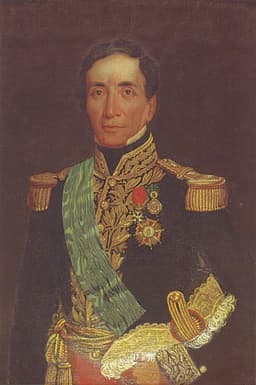
Andres de Santa Cruz
General · Modern
60.5Total
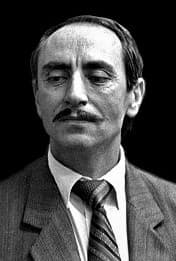
Dzhokhar Dudayev
General · Modern
52.0Total
Basic Information
Born
1792
1944
Died
1865
—
Era
Modern
Modern
Nationality
Bolivia
Chechnya
Occupation
General
General
Civilization
Western
Western
Score Comparison
Military (10%)
67.5
46.7
Political (20%)
59.3
45.1
Influence (20%)
62.0
57.2
Legacy (20%)
50.0
47.5
Leadership (15%)
68.0
57.6
Strategy (15%)
66.3
57.5
TOTAL
60.5
52.0
Andres de Santa Cruz — Complete Timeline
1823 AD
Battle of ZepitaWar
Santa Cruz commanded Peruvian forces in a victory over Spanish royalists at Zepita during the Peruvian War of Independence. This battle enhanced his military reputation and contributed to the eventual liberation of Peru from Spanish rule.
Peruvian War of IndependenceBattleLiberation
Impact: regional
1826 AD
Presidency of PeruPolitical Action
Santa Cruz served as President of the Council of Government of Peru from 1826 to 1827, effectively ruling the country. His administration focused on centralizing power and organizing the state, but he was overthrown by a rebellion led by Agust
PresidencyPeruCentralization
Impact: national
1829 AD
Presidency of BoliviaPolitical Action◆ Major
Santa Cruz became President of Bolivia in 1829, serving until 1839. He implemented administrative reforms, stabilized the economy, and modernized the military, establishing Bolivia as a more coherent state after the chaos following independence.
PresidencyBoliviaReforms
Impact: nationalconstructive
1836 AD
War of the ConfederationWar◆ Major
Chile and Argentina declared war on the Peru-Bolivia Confederation, viewing it as a threat to the balance of power. Santa Cruz led the confederation's forces in a conflict that lasted until 1839, ultimately resulting in the confederation's defeat.
WarChileArgentinaConfederation
Impact: regional
Creation of the Peru-Bolivia ConfederationPolitical Action
Santa Cruz established the Peru-Bolivia Confederation, uniting Bolivia and Peru into a single state with himself as Supreme Protector. This confederation aimed to create a powerful Andean nation and challenged the regional influence of Chile and Argentina.
ConfederationUnificationAndean Power
Impact: regional
1839 AD
Battle of YungayWar
Santa Cruz's confederation forces were decisively defeated by the Chilean army at the Battle of Yungay. This defeat led to the dissolution of the Peru-Bolivia Confederation and forced Santa Cruz into exile, ending his political project.
BattleDefeatEnd of Confederation
Impact: regionaltragic
Exile and DeathPolitical Action
After the defeat at Yungay, Santa Cruz fled to Ecuador and later to France. He spent the rest of his life in exile, making unsuccessful attempts to return to power. He died in France in 1865, never regaining his former influence.
ExileDeathFailure
Impact: nationaltragic
Dzhokhar Dudayev — Complete Timeline
1991 AD
Proclaimed Independence of ChechnyaPolitical Action
Dzhokhar Dudayev declared the independence of the Chechen Republic of Ichkeria from the Soviet Union. He was elected president in a controversial election. This act triggered the First Chechen War with Russia.
ChechnyaIndependenceIchkeria
Impact: regionalconstructive
1994 AD
First Chechen War BeginsWar
Russian forces invaded Chechnya to suppress the independence movement. Dudayev led the Chechen resistance, using guerrilla tactics. The war resulted in heavy casualties and destruction but failed to defeat the Chechen forces.
Chechen WarRussiaInvasion
Impact: regionaltragic
1996 AD
Assassination by Russian MissileWar
Dudayev was killed by a Russian guided missile while using a satellite phone near Grozny. His death was a major blow to the Chechen resistance but did not end the war. He was succeeded by Aslan Maskhadov.
AssassinationChechnyaRussia
Impact: regionaltragic
Expert Analysis
Andres de Santa Cruz vs Dzhokhar Dudayev
# The Dreamer and the Rebel: Andrés de Santa Cruz and Dzhokhar Dudayev
On a cold April morning in 1996, Dzhokhar Dudayev stepped into a clearing in the Chechen countryside, a satellite phone pressed to his ear. Russian radar locked onto his signal, and seconds later, a guided missile turned the first president of independent Chechnya into ash. A century and a half earlier, another general—Andrés de Santa Cruz—fled across the Andes in defeat, his grand vision of a unified Peru-Bolivia Confederation shattered at the Battle of Yungay. Both men dreamed of forging nations from fractured lands. Both were crushed by neighbors who feared their ambition. But the worlds they inhabited, and the paths they took, could not have been more different.
Origins
Andrés de Santa Cruz was born in 1792 in La Paz, Bolivia, to a Spanish nobleman and an indigenous Aymara mother. He grew up fluent in Spanish and Quechua, straddling two worlds that rarely touched. The late colonial era was a time of ferment: the Enlightenment had reached Spanish America, and Napoleon’s invasion of Spain in 1808 had cracked the empire’s legitimacy. Santa Cruz was a product of this hybrid age—educated, ambitious, and acutely aware that the old order was dying. By contrast, Dzhokhar Dudayev entered the world in 1944, the year Stalin ordered the wholesale deportation of the Chechen people to Central Asia. He was born in exile, in a Kazakh village, into a community that had been erased from maps. His childhood was defined not by ideas of liberty but by the raw memory of genocide. Where Santa Cruz inherited a crumbling empire, Dudayev inherited a wound.
Rise to Power
Santa Cruz rose through the ranks of the Spanish royalist army before switching sides to fight for Peruvian independence. His victory at the Battle of Zepita in 1823 made him a hero, but his real ascent came through political maneuvering. By 1826, he was effectively ruling Peru as President of the Council of Government, and in 1829, he seized the presidency of Bolivia. He was a creature of the establishment—a general who understood that power flowed from offices, treaties, and administrative decrees. Dudayev, in contrast, was a Soviet Air Force general who commanded a strategic bomber division. When the Soviet Union collapsed in 1991, he returned to Chechnya—a land he barely knew—and was swept into power by a nationalist uprising. He did not inherit a state; he conjured one from the ruins of an empire. His proclamation of Chechen independence in 1991 was less a political act than a declaration of survival.
Leadership & Governance
Santa Cruz governed as a reformer. He stabilized Bolivia’s economy, streamlined its bureaucracy, and promoted education and infrastructure. His crowning achievement—the Peru-Bolivia Confederation, created in 1836—was a masterpiece of political architecture: a union of two republics under a single protector, designed to restore the economic and strategic unity of the colonial Viceroyalty of Peru. He was a builder, not a warrior. His military score of 60.2 reflects competence, not brilliance; his political score of 60.2 and leadership score of 79.0 suggest a man who governed through consensus and institutional control.
Dudayev was the opposite. He had no time to build. From 1991 until his death in 1996, Chechnya existed in a state of siege. His leadership was charismatic but chaotic: he struggled to control rival warlords, and his government never achieved the administrative coherence of Santa Cruz’s Bolivia. Yet his military score of 56.3 and strategy score of 57.1 understate his genius. In the First Chechen War, which began in 1994, he turned Grozny into a killing zone for Russian armor, using guerrilla tactics that humiliated a superpower. His leadership score of 73.2 captures the fierce loyalty he inspired—not through institutions, but through sheer defiance.
Triumph & Tragedy
Santa Cruz’s greatest moment was the Confederation’s creation in 1836. For three years, he presided over a state that stretched from the Pacific to the Amazon, a revival of Inca-era unity. But Chile and Argentina saw the Confederation as a threat to regional balance. The War of the Confederation ended at Yungay in 1839, where Santa Cruz’s forces were routed. He fled to Ecuador, then to France, where he died in exile in 1865—a visionary undone by geography.
Dudayev’s triumph was survival itself. In 1995, after months of brutal fighting, Chechen fighters retook Grozny, and Russian forces withdrew in humiliation. But the victory was fleeting. On April 21, 1996, a Russian missile found him. He died not in battle, but in a field, talking on the phone. His tragedy was not defeat—it was that his dream of independence died with him, unfinished and unfulfilled.
Character & Destiny
Santa Cruz was a pragmatist. He believed in order, in law, in the power of institutions to reshape history. His exile was quiet, his end obscure. Dudayev was a romantic—a poet who wrote verses about Chechen honor, a general who believed that will alone could overcome might. His death was spectacular and symbolic, turning him into a martyr. Santa Cruz’s personality led him to build something that collapsed under the weight of its own ambition. Dudayev’s personality led him to fight a war he could not win, but in losing, he gave his people a story.
Legacy
Santa Cruz is remembered in Bolivia as a capable administrator, but his Confederation is a footnote—a “what if” of Latin American history. His total score of 67.8 reflects a figure admired but not revered. Dudayev, with a total score of 65.7, is more polarizing: to Chechens, he is a national hero; to Russians, a terrorist. His legacy is not a state but a movement—the Chechen resistance that continues to shape Russian politics today.
Conclusion
One built a confederation; the other declared a republic. One died in exile; the other died under fire. Both were men of the borderlands—Santa Cruz between Spanish and indigenous worlds, Dudayev between Soviet and Chechen identities—who tried to carve out a space for their people in a world that did not want them. Their failures remind us that history is not written by dreamers, but by those who survive. And yet, the dreams linger: in Bolivia, where schoolchildren still learn Santa Cruz’s name, and in Chechnya, where Dudayev’s portrait hangs in every village. Some visions are too powerful to be buried.
Rankings
🥇
Andres de Santa CruzLeader
Mil: 67.5Pol: 59.3Inf: 62.0
60.5
🥈
Dzhokhar Dudayev
Mil: 46.7Pol: 45.1Inf: 57.2
52.0
+8.5 behind
How This Comparison Works
Algorithm
Each figure is scored on 6 dimensions (0—100 scale) based on structured historical data: Military (10%), Political (20%), Influence (20%), Legacy (20%), Leadership (15%), Strategy (15%). The weighted total produces the final ranking.
Data Sources
Scores are computed from structured sub-indicators in the database. Scale factors adjust for era (Ancient ×0.85, Modern ×1.0) and civilization size (Eastern ×1.05, Other ×0.80) to account for differences in population and military scale.
Maximum 3 Figures
Comparisons are limited to 2—3 figures to ensure readability and statistical meaningfulness.
Error Margins
±5 points per dimension — Sub-scores are derived from historical records with inherent uncertainty. Two figures within 5 points on a dimension should be considered roughly equivalent in that area.
Total Score Accuracy
±3 points overall — The weighted combination of 6 dimensions produces a total score with approximately ±3 points of uncertainty. Differences of less than 3 points are not statistically significant— the figures are effectively tied.
Known Limitations
- Historical records are incomplete and uneven across civilizations
- Figures from oral-tradition societies may be underrepresented
- Occupation labels can misclassify multi-role figures
- Scores measure capability and impact, not moral character
- Quantitative scoring is a comparison tool, not absolute truth
Capability Radar
Military (10%) — Battles & Warfare
Battles
60
35
Win Rate
55
30
Expansion
55
20
Political (20%) — Governance & Reform
Reform
65
35
Diplomacy
60
30
Economy
55
15
Influence (20%) — Cultural & Global Reach
Cultural
45
40
Global
35
35
Legacy (20%) — Historical Impact
Historical
50
45
Longevity
40
30
Leadership (15%) — Power & Stability
Tenure
60
30
Stability
40
10
Strategy (15%) — Tactics & Innovation
Strategy
65
50
Tactics
60
55
Reform
50
40
Similar Comparisons
Comments & Discussion
青史钓叟6/16/2026
把玻利维亚总统和车臣总统放一起比?Santa Cruz再怎么遭也是19世纪拉丁美洲联邦实验的失败者,顶多算个想象力过剩的战略家;Dudayev可是扛着俄军打了两年独立战争的殉道者。一个败给智利,一个被导弹点名,这两人的悲剧等级压根不是一个维度的。Santa Cruz在秘鲁-玻利维亚联盟里搞的官僚整合,跟车臣人用血肉拼出来的尊严比,太苍白了。
SkepticalSpectre6/16/2026
Comparing a 19th-century caudillo who lost a confederation to a Cold War-era rebel who died by satellite-guided missile is more about narrative convenience than historical rigor. Santa Cruz's "grand vision" was essentially a power grab—he annexed Upper Peru under the guise of unification. Dudayev, on the other hand, was fighting for ethnic survival after centuries of Russian imperialism. The scale of oppression gap alone makes this comparison unfair: Santa Cruz's enemies used bayonets; Dudayev's
汉尼拔的切片6/16/2026
军事角度更残酷:Santa Cruz在Yungay战役(1839)输给智利军队时,对方才用滑膛枪和骑兵冲锋;而Dudayev面对的是俄军用雷达定位、战术导弹斩首的精确打击。前者死两三百人,后者让俄军折损上万兵力。Santa Cruz死后还能在国际上当外交官,Dudayev在空袭中只剩碎片。这不是一个量级的战争,根本不是。
RevisionistRanger6/16/2026
Everyone frames Dudayev as a romantic martyr, but let's not forget: he was a Soviet Air Force general who bombed Afghan villages before "defending" Chechnya. That's not a patriot—that's a pragmatist flipping sides when his paycheck changed. Santa Cruz at least had a consistent vision: integrating indigenous elites into state-building. Dudayev's Chechnya was a turf war dressed up as national liberation. The comparison sanitizes Dudayev's contradictions by leaning on Santa Cruz's "tragic hero" tem