Loading...
This comparison has not been analyzed yet.
One-time AI generation (~1 minute). Scores and timeline are already available below.
Amoghavarsha I vs Dantidurga
Dantidurga leads by 7.1 pts · 2 figures compared
…
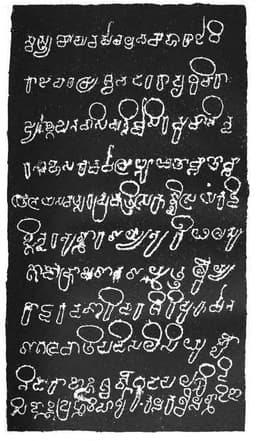
Amoghavarsha I
Emperor · Medieval
51.6Total
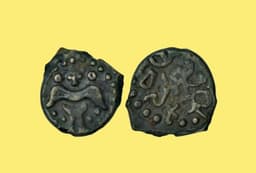
Dantidurga
Emperor · Medieval
58.7Total
Basic Information
Born
814
735
Died
878
756
Era
Medieval
Medieval
Nationality
India
India
Occupation
Emperor
Emperor
Civilization
Indian
Indian
Score Comparison
Military (10%)
10.0
67.5
Political (20%)
45.0
68.0
Influence (20%)
61.0
56.4
Legacy (20%)
54.0
50.0
Leadership (15%)
72.0
65.7
Strategy (15%)
43.3
52.5
TOTAL
51.6
58.7
Amoghavarsha I — Complete Timeline
830 AD
Patronage of JainismCultural
Amoghavarsha I became a patron of Jainism, supporting Jain monasteries and scholars. He adopted Jain principles, including non-violence, and is credited with building several Jain temples and promoting religious tolerance.
JainismReligious PatronageTolerance
Impact: regionalconstructive
850 AD
Authorship of KavirajamargaCultural◆ Major
Amoghavarsha I authored the Kavirajamarga, the earliest extant work on Kannada poetics and rhetoric. The text served as a guide for poets and helped standardize the Kannada literary language, influencing subsequent literature.
Kannada LiteraturePoeticsLiterary Standard
Impact: regionalconstructive
860 AD
Construction of the Jain Basadi at ShravanabelagolaCultural
Amoghavarsha I is believed to have commissioned the construction of Jain basadis (temples) at Shravanabelagola, a major Jain pilgrimage site. These structures became important centers for Jain learning and worship.
Jain ArchitectureShravanabelagolaTemple
Impact: regionalconstructive
Dantidurga — Complete Timeline
753 AD
Founding of the Rashtrakuta DynastyPolitical Action
Dantidurga overthrew his overlord, the Chalukya king Kirtivarman II, in a coup. He established the Rashtrakuta dynasty as the dominant power in the Deccan, with Manyakheta as his capital. This marked the beginning of a new imperial era.
Impact: regionalconstructive
754 AD
Performance of the Hiranyagarbha RitualCultural
Dantidurga performed the Hiranyagarbha (golden womb) ritual, a Vedic ceremony that symbolically rebirthed him as a Kshatriya. This legitimized his rule by claiming a higher caste status, as the Rashtrakutas were originally of humble origin.
Impact: nationalconstructive
755 AD
Conquest of MalwaWar◆ Major
Dantidurga led a military campaign into Malwa, defeating the Gurjara-Pratihara ruler Nagabhata I. He annexed the region, expanding Rashtrakuta territory northward. This victory established Rashtrakuta influence in central India.
Impact: regionaldestructive
This comparison has not been analyzed yet.
One-time AI generation (~1 minute). Scores and timeline are already available below.
Rankings
🥇
DantidurgaLeader
Mil: 67.5Pol: 68.0Inf: 56.4
58.7
🥈
Amoghavarsha I
Mil: 10.0Pol: 45.0Inf: 61.0
51.6
+7.1 behind
How This Comparison Works
Algorithm
Each figure is scored on 6 dimensions (0—100 scale) based on structured historical data: Military (10%), Political (20%), Influence (20%), Legacy (20%), Leadership (15%), Strategy (15%). The weighted total produces the final ranking.
Data Sources
Scores are computed from structured sub-indicators in the database. Scale factors adjust for era (Ancient ×0.85, Modern ×1.0) and civilization size (Eastern ×1.05, Other ×0.80) to account for differences in population and military scale.
Maximum 3 Figures
Comparisons are limited to 2—3 figures to ensure readability and statistical meaningfulness.
Error Margins
±5 points per dimension — Sub-scores are derived from historical records with inherent uncertainty. Two figures within 5 points on a dimension should be considered roughly equivalent in that area.
Total Score Accuracy
±3 points overall — The weighted combination of 6 dimensions produces a total score with approximately ±3 points of uncertainty. Differences of less than 3 points are not statistically significant— the figures are effectively tied.
Known Limitations
- Historical records are incomplete and uneven across civilizations
- Figures from oral-tradition societies may be underrepresented
- Occupation labels can misclassify multi-role figures
- Scores measure capability and impact, not moral character
- Quantitative scoring is a comparison tool, not absolute truth
Capability Radar
Military (10%) — Battles & Warfare
Battles
40
60
Win Rate
45
65
Expansion
35
65
Political (20%) — Governance & Reform
Reform
60
45
Diplomacy
70
55
Economy
65
50
Influence (20%) — Cultural & Global Reach
Cultural
65
40
Global
40
30
Legacy (20%) — Historical Impact
Historical
60
55
Longevity
55
50
Leadership (15%) — Power & Stability
Tenure
75
40
Stability
70
45
Strategy (15%) — Tactics & Innovation
Strategy
40
60
Tactics
35
55
Reform
30
40
Similar Comparisons
Comments & Discussion
No comments yet. Be the first to share your thoughts!