Loading...
Alp Tigin vs Zhao Kuangyin
Zhao Kuangyin leads by 21.0 pts · 2 figures compared
…
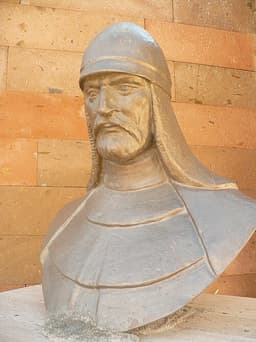
Alp Tigin
Emperor · Medieval
50.5Total
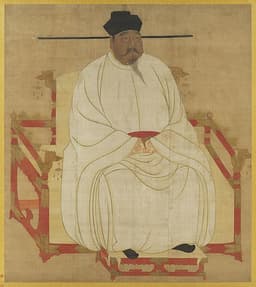
Zhao Kuangyin
Emperor · Medieval
71.5Total
Basic Information
Born
911
927
Died
963
976
Era
Medieval
Medieval
Nationality
Ghaznavid Empire
China
Occupation
Emperor
Emperor
Civilization
Middle Eastern
Eastern
Score Comparison
Military (10%)
55.0
78.0
Political (20%)
33.6
84.0
Influence (20%)
56.4
68.0
Legacy (20%)
49.2
65.0
Leadership (15%)
50.7
74.0
Strategy (15%)
60.0
68.0
TOTAL
50.5
71.5
Alp Tigin — Complete Timeline
961 AD
Rebellion against the SamanidsPolitical Action◆ Major
Alp Tigin rebelled against the Samanid ruler Mansur I after being passed over for a governorship. He marched from Nishapur to Ghazni, defeating Samanid forces along the way, and established his own rule in eastern Afghanistan.
Impact: regional
963 AD
Consolidation of GhazniPolitical Action
Alp Tigin fortified Ghazni and organized a military state based on slave soldiers (ghilman). He established a stable administration that attracted scholars and merchants, turning Ghazni into a major regional power center.
Impact: regionalconstructive
Zhao Kuangyin — Complete Timeline
960 AD
Founded Song dynastyPolitical Action
Zhao Kuangyin, a general of Later Zhou, was proclaimed emperor by his troops at Chenqiao. He established the Song dynasty, ending the Five Dynasties period and beginning a new era of Chinese history.
Song dynastyFoundingChenqiao
Impact: globalconstructive
961 AD
Removed military power from generalsPolitical Action◆ Major
Zhao Kuangyin invited senior generals to a banquet and persuaded them to retire peacefully. This 'removal of military power over wine' prevented military coups and centralized control.
Song dynastyMilitary reformCentralization
Impact: nationalconstructive
963 AD
Unified southern ChinaWar◆ Major
Zhao Kuangyin launched campaigns to conquer the southern kingdoms, including Jingnan, Later Shu, and Southern Tang. By his death, most of China was reunified under Song rule.
Song unificationConquestSouthern kingdoms
Impact: national
Expert Analysis
Zhao Kuangyin vs Alp Tigin
# The Slave and the Emperor: Two Founders, Two Paths
In the year 963, two men died on opposite ends of Asia, each having founded a dynasty that would shape the medieval world. One was a Turkic slave who carved a kingdom from the bones of a decaying empire; the other was a Chinese general who persuaded his rivals to lay down their swords over wine. Alp Tigin of Ghazni and Zhao Kuangyin of Song never met, never knew of each other's existence, yet their stories form a perfect mirror—reflecting how power can be seized through violence or through wisdom, and how the choices of a single ruler can echo for centuries.
Origins
Alp Tigin began life as property. Born in 911, he was a Turkic slave purchased by the Samanid court, a vast Persianate empire that stretched across Central Asia. In the harsh world of the steppe and the palace, a slave's only currency was loyalty and ruthlessness. Alp Tigin rose through the ranks of the Samanid military, becoming a commander of the *ghilman*—slave soldiers who owed everything to their masters. He knew no other world. His power came not from birth but from the sword, and from the brutal calculus of survival in a court where yesterday's favorite could be tomorrow's corpse.
Zhao Kuangyin, born in 927, came from a different world entirely. He was the son of a military officer in the chaotic Five Dynasties and Ten Kingdoms period, when China was fractured into warring states. Though not noble, he was born free and Chinese, inheriting a tradition of Confucian statecraft that stretched back two millennia. His path was not one of slavery but of service—he rose as a general in the Later Zhou dynasty, admired for his skill and his reputation for fairness. Where Alp Tigin learned to dominate, Zhao learned to persuade.
Rise to Power
The year 961 marked a rebellion that would define Alp Tigin's life. The Samanid ruler Mansur I had passed him over for the governorship of Khorasan, and the insult was a death sentence for a man whose power depended on favor. Alp Tigin marched from Nishapur with his loyal *ghilman*, not to conquer the empire but to escape it. He seized Ghazni, a remote fortress city in what is now Afghanistan, and declared himself independent. It was an act of desperation turned into opportunity—a slave carving his own kingdom from the margins of a dying world.
Zhao Kuangyin's rise in 960 could not have been more different. As a general of Later Zhou, he was sent north to repel an invasion. At Chenqiao, his troops proclaimed him emperor, draping him in a yellow robe before he could protest. But Zhao did not seize power through bloodshed. He returned to the capital, negotiated the peaceful abdication of the child emperor, and established the Song dynasty with minimal violence. Where Alp Tigin rebelled against a master, Zhao orchestrated a coup that looked like an invitation.
Leadership & Governance
Alp Tigin's rule over Ghazni was a fortress built on fear and loyalty. He consolidated his power by fortifying the city and organizing a military state centered on his *ghilman*—slave soldiers who had no ties to the local population, only to him. His administration was pragmatic and harsh: taxes were collected, enemies were crushed, and the state existed to feed the army. There was no vision beyond survival, no philosophy beyond the sword. He was a warlord, not a statesman.
Zhao Kuangyin governed with a radical idea: that a ruler's greatest weapon was not his army but his wisdom. In 961, one year after founding the Song, he invited his senior generals to a banquet. As wine flowed, he spoke of the danger of military power, of how easily a general could become a usurper. Then he offered them wealth, land, and retirement in exchange for their commands. They accepted. This "removal of military power over a cup of wine" was a masterstroke of political genius—Zhao dismantled the very system that had brought him to power, replacing warlords with civil officials. He then launched campaigns to reunify China, conquering the southern kingdoms of Jingnan, Later Shu, and Southern Tang by 963. But he fought not for glory but for peace.
Triumph & Tragedy
Alp Tigin's triumph was survival itself. He died in 963, having held Ghazni against all odds, having founded a dynasty that would grow into the Ghaznavid Empire—a power that would later sweep into India and leave its mark on history. But his tragedy was that he could not escape his origins. His state remained a slave-soldier machine, dependent on conquest and plunder, destined to collapse when the enemies grew stronger.
Zhao Kuangyin's triumph was the unification of China, a feat that had seemed impossible in the chaos of his era. He died in 976, having built a dynasty that would last three centuries, a golden age of culture, commerce, and technology. But his tragedy was subtle: by weakening the military, he left the Song vulnerable to northern invaders. The price of peace was perpetual vulnerability.
Character & Destiny
Alp Tigin's character was forged in the crucible of slavery. He was suspicious, ruthless, and solitary—a man who trusted only his own sword. His decisions were driven by fear of betrayal and the need to dominate. He built a state in his own image: harsh, efficient, and brittle.
Zhao Kuangyin was a man of balance. He was ambitious but not cruel, powerful but not paranoid. He understood that the greatest threat to his rule was not foreign enemies but his own generals. His decisions were driven by a vision of stability, of a China ruled by scholars rather than soldiers. He built a state in his own image: civil, prosperous, and fragile.
Legacy
Alp Tigin is remembered today as the founder of the Ghaznavid dynasty, a footnote in the larger story of Islamic history. His legacy is the sword—the *ghilman* system that would be copied by later Turkic rulers, the plunder that would fuel the rise of Delhi. But his name is known only to specialists, a shadow in the margins of time.
Zhao Kuangyin is remembered as Song Taizu, one of China's greatest emperors. His legacy is the civil service examination, the flourishing of Neo-Confucianism, the invention of movable type and gunpowder. His name is known to every Chinese schoolchild, a symbol of wisdom over violence.
Conclusion
Two founders, two paths. One seized power through rebellion and held it through fear; the other accepted power through persuasion and held it through wisdom. Alp Tigin's Ghazni became a fortress of slaves; Zhao Kuangyin's Song became a civilization of scholars. Both succeeded, both failed, and both remind us that the tools we use to build our empires shape the empires we build. In the end, the slave and the emperor were both prisoners of their choices—one bound by the sword, the other by the cup of wine.
Rankings
🥇
Zhao KuangyinLeader
Mil: 78.0Pol: 84.0Inf: 68.0
71.5
🥈
Alp Tigin
Mil: 55.0Pol: 33.6Inf: 56.4
50.5
+21.0 behind
How This Comparison Works
Algorithm
Each figure is scored on 6 dimensions (0—100 scale) based on structured historical data: Military (10%), Political (20%), Influence (20%), Legacy (20%), Leadership (15%), Strategy (15%). The weighted total produces the final ranking.
Data Sources
Scores are computed from structured sub-indicators in the database. Scale factors adjust for era (Ancient ×0.85, Modern ×1.0) and civilization size (Eastern ×1.05, Other ×0.80) to account for differences in population and military scale.
Maximum 3 Figures
Comparisons are limited to 2—3 figures to ensure readability and statistical meaningfulness.
Error Margins
±5 points per dimension — Sub-scores are derived from historical records with inherent uncertainty. Two figures within 5 points on a dimension should be considered roughly equivalent in that area.
Total Score Accuracy
±3 points overall — The weighted combination of 6 dimensions produces a total score with approximately ±3 points of uncertainty. Differences of less than 3 points are not statistically significant— the figures are effectively tied.
Known Limitations
- Historical records are incomplete and uneven across civilizations
- Figures from oral-tradition societies may be underrepresented
- Occupation labels can misclassify multi-role figures
- Scores measure capability and impact, not moral character
- Quantitative scoring is a comparison tool, not absolute truth
Capability Radar
Military (10%) — Battles & Warfare
Battles
45
75
Win Rate
50
85
Expansion
50
75
Political (20%) — Governance & Reform
Reform
20
90
Diplomacy
30
85
Economy
20
80
Influence (20%) — Cultural & Global Reach
Cultural
30
70
Global
30
60
Legacy (20%) — Historical Impact
Historical
45
80
Longevity
40
75
Leadership (15%) — Power & Stability
Tenure
25
65
Stability
25
85
Strategy (15%) — Tactics & Innovation
Strategy
45
80
Tactics
40
70
Reform
30
90
Similar Comparisons
Comments & Discussion
铁骑书虫6/16/2026
赵匡胤杯酒释兵权是典型文人的意淫。真实历史:960年陈桥驿,他弟弟赵光义和赵普早把禁军将领的家属扣作人质。那些"自愿交权"的节度使,哪个不是刀架脖子上才低头?看看郭威怎么死的就知道——后周太祖就是被部下黄袍加身逼反的,大宋这套把戏纯属高级政治勒索。
Crimson Turban Strategist6/16/2026
Alp Tigin represents the purest form of military meritocracy—rising from chattel to founder through sheer force. Zhao Kuangyin's "coup over wine" is romanticized nonsense. The reality? He threatened his own generals with execution if they refused his "offer." Zhao didn't end military rebellions through wisdom; he simply replaced one set of strongmen with another. At least Alp Tigin was honest about power being taken at swordpoint.
Numismatic Nomad6/16/2026
Let's talk currency. Zhao's Song dynasty minted 3 billion coins annually by 1080—matching the entire Roman Empire's peak. Alp Tigin's Ghaznavids couldn't mint silver because they literally didn't control any productive mines. Zhao managed inflation through sophisticated fiscal policy; Alp Tigin's economy ran on slave-raiding and plunder. That single fact explains why Song lasted 300 years while Ghazni crumbled within three generations. Economic infrastructure beats battlefield glory every time.
冷眼观史6/16/2026
别忘了:赵匡胤"迁都洛阳"的提案被弟弟否决后,整个宋朝定都开封——无险可守的四战之地。结果呢?103年后的靖康耻,金兵骑兵直接踏过黄河冰面。反观阿尔普特勤选在加兹尼建都,阿富汗群山环绕,蒙古人都啃了三十年。一个帝国活了三百年却苟且偷生,一个蛮族王朝凶猛但短命,你选哪个?
Praetorian Philosopher6/16/2026
Here's the uncomfortable truth: Zhao's "civil over military" policy caused Song's notorious weakness. By 1040, Song generals were literally taking poetry exams. Meanwhile, Alp Tigin's ghazis conquered from Samarkand to the Indus. I respect Zhao's administrative genius—but he created a system where his own soldiers mutinied over rice rations. The Ghaznavid slave-soldier model may have been brutal, but it produced a century of unbroken military expansion. Stability is worthless without power proje