Loading...
This comparison has not been analyzed yet.
One-time AI generation (~1 minute). Scores and timeline are already available below.
Alexios II Komnenos vs Ghazan Khan
Ghazan Khan leads by 15.0 pts · 2 figures compared
…
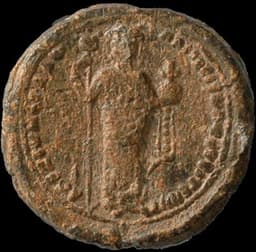
Alexios II Komnenos
Emperor · Medieval
48.2Total
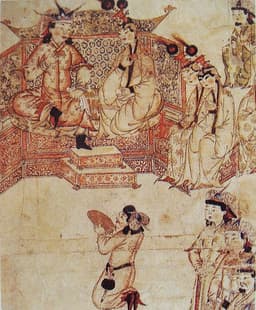
Ghazan Khan
Emperor · Medieval
63.2Total
Basic Information
Born
1169
1271
Died
1183
1304
Era
Medieval
Medieval
Nationality
Byzantine Empire
Ilkhanate
Occupation
Emperor
Emperor
Civilization
Western
Middle Eastern
Score Comparison
Military (10%)
11.6
50.0
Political (20%)
68.0
70.0
Influence (20%)
60.0
72.0
Legacy (20%)
42.5
58.0
Leadership (15%)
45.0
68.0
Strategy (15%)
44.2
50.0
TOTAL
48.2
63.2
Alexios II Komnenos — Complete Timeline
1171 AD
Accession as co-emperorPolitical Action
Alexios II was crowned co-emperor alongside his father Manuel I Komnenos at the age of two. This was a dynastic move to secure the succession, but left the empire in the hands of regents after Manuel's death in 1180.
SuccessionDynastic Politics
Impact: national
1183 AD
Murder by Andronikos I KomnenosPolitical Action◆ Major
Alexios II was strangled to death in Constantinople on the orders of his cousin Andronikos I Komnenos. Andronikos had seized power as regent and then co-emperor, and eliminated the 14-year-old Alexios to secure his own rule, ending the direct Komnenian line.
AssassinationDynastic ConflictRegency
Impact: nationaltragic
Ghazan Khan — Complete Timeline
1295 AD
Reforms of the Ilkhanate (Ghazan's Reforms)Reform◆ Major
Ghazan implemented a comprehensive reform program including tax reform, standardization of weights and measures, land redistribution, and the establishment of a new legal code. He also reformed the military and postal system, stabilizing the Ilkhanate after decades of instability.
ReformIlkhanateAdministration
Impact: regionalconstructive
Conversion to IslamCultural
Ghazan converted to Islam upon ascending the throne, becoming the first Ilkhan to adopt the faith. He publicly declared Islam the state religion, ordered the destruction of Buddhist temples and churches, and adopted the name Mahmud. This transformed the Ilkhanate's identity.
ReligionIlkhanateIslam
Impact: regionalconstructive
1297 AD
Patronage of Science and CultureCultural
Ghazan patronized scholars, historians, and scientists, including the vizier Rashid al-Din, who wrote the Jami' al-tawarikh, a world history. Ghazan also built observatories, hospitals, and mosques, contributing to the cultural flowering of the Ilkhanate.
CulturePatronageIlkhanate
Impact: regionalconstructive
1299 AD
Campaigns against the MamluksWar◆ Major
Ghazan led three major invasions of Mamluk Syria, capturing Damascus and Aleppo in 1299
Mongol InvasionSyriaMamluk Sultanate
Impact: regional
Battle of Wadi al-KhaznadarWar
Ghazan's Mongol army defeated the Mamluks under Sultan Al-Nasir Muhammad at Wadi al-Khaznadar near Homs. The victory allowed the Mongols to occupy Damascus and Aleppo, but they withdrew after a few months due to logistical problems and the need to return to Persia.
BattleMongol VictorySyria
Impact: regional
This comparison has not been analyzed yet.
One-time AI generation (~1 minute). Scores and timeline are already available below.
Rankings
🥇
Ghazan KhanLeader
Mil: 50.0Pol: 70.0Inf: 72.0
63.2
🥈
Alexios II Komnenos
Mil: 11.6Pol: 68.0Inf: 60.0
48.2
+15.0 behind
How This Comparison Works
Algorithm
Each figure is scored on 6 dimensions (0—100 scale) based on structured historical data: Military (10%), Political (20%), Influence (20%), Legacy (20%), Leadership (15%), Strategy (15%). The weighted total produces the final ranking.
Data Sources
Scores are computed from structured sub-indicators in the database. Scale factors adjust for era (Ancient ×0.85, Modern ×1.0) and civilization size (Eastern ×1.05, Other ×0.80) to account for differences in population and military scale.
Maximum 3 Figures
Comparisons are limited to 2—3 figures to ensure readability and statistical meaningfulness.
Error Margins
±5 points per dimension — Sub-scores are derived from historical records with inherent uncertainty. Two figures within 5 points on a dimension should be considered roughly equivalent in that area.
Total Score Accuracy
±3 points overall — The weighted combination of 6 dimensions produces a total score with approximately ±3 points of uncertainty. Differences of less than 3 points are not statistically significant— the figures are effectively tied.
Known Limitations
- Historical records are incomplete and uneven across civilizations
- Figures from oral-tradition societies may be underrepresented
- Occupation labels can misclassify multi-role figures
- Scores measure capability and impact, not moral character
- Quantitative scoring is a comparison tool, not absolute truth
Capability Radar
Military (10%) — Battles & Warfare
Battles
5
55
Win Rate
8
60
Expansion
11
45
Political (20%) — Governance & Reform
Reform
0
85
Diplomacy
0
70
Economy
0
75
Influence (20%) — Cultural & Global Reach
Cultural
0
70
Global
0
55
Legacy (20%) — Historical Impact
Historical
5
65
Longevity
0
60
Leadership (15%) — Power & Stability
Tenure
5
60
Stability
0
65
Strategy (15%) — Tactics & Innovation
Strategy
17
55
Tactics
17
50
Reform
21
65
Similar Comparisons
Comments & Discussion
No comments yet. Be the first to share your thoughts!