Loading...
Alexios I Komnenos vs Zhao Kuangyin
Alexios I Komnenos leads by 6.9 pts · 2 figures compared
…
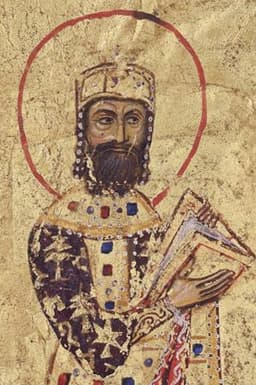
Alexios I Komnenos
Emperor · Medieval
78.4Total
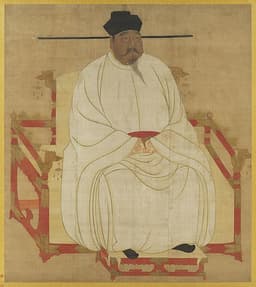
Zhao Kuangyin
Emperor · Medieval
71.5Total
Basic Information
Born
1048
927
Died
1118
976
Era
Medieval
Medieval
Nationality
Byzantine Empire
China
Occupation
Emperor
Emperor
Civilization
Western
Eastern
Score Comparison
Military (10%)
61.7
78.0
Political (20%)
78.0
84.0
Influence (20%)
88.0
68.0
Legacy (20%)
80.0
65.0
Leadership (15%)
78.0
74.0
Strategy (15%)
68.0
68.0
TOTAL
78.4
71.5
Alexios I Komnenos — Complete Timeline
1081 AD
Battle of DyrrhachiumWar◆ Major
Alexios I Komnenos was defeated by the Norman army under Robert Guiscard at Dyrrhachium. The Byzantine forces were routed, and Alexios barely escaped. This loss allowed the Normans to occupy much of the western Balkans, though Alexios later recovered some territory.
Norman InvasionDefeatBalkans
Impact: regionaltragic
1090 AD
Reforms of the Byzantine Military and EconomyReform◆ Major
Alexios I implemented a series of reforms to restore Byzantine power. He reorganized the army by relying more on foreign mercenaries, reformed the currency (the hyperpyron), and granted tax exemptions to the Church. These measures stabilized the empire after decades of decline.
Military ReformEconomic ReformKomnenian Restoration
Impact: nationalconstructive
1095 AD
Appeal to the West: Council of PiacenzaPolitical Action
Alexios I sent envoys to Pope Urban II at the Council of Piacenza, requesting military aid against the Seljuk Turks. This appeal contributed to Urban's call for the First Crusade at the Council of Clermont later that year, initiating the Crusader movement.
First CrusadePope Urban IISeljuk Turks
Impact: global
1097 AD
First Crusade: Siege of NicaeaWar◆ Major
Alexios I cooperated with the Crusader army to besiege and capture Nicaea from the Seljuk Turks. The city was surrendered to Byzantine control, and Alexios used the Crusaders to recover key territories in Anatolia, though tensions later arose over land claims.
First CrusadeNicaeaByzantine-Crusader Relations
Impact: regionalconstructive
Zhao Kuangyin — Complete Timeline
960 AD
Founded Song dynastyPolitical Action
Zhao Kuangyin, a general of Later Zhou, was proclaimed emperor by his troops at Chenqiao. He established the Song dynasty, ending the Five Dynasties period and beginning a new era of Chinese history.
Song dynastyFoundingChenqiao
Impact: globalconstructive
961 AD
Removed military power from generalsPolitical Action◆ Major
Zhao Kuangyin invited senior generals to a banquet and persuaded them to retire peacefully. This 'removal of military power over wine' prevented military coups and centralized control.
Song dynastyMilitary reformCentralization
Impact: nationalconstructive
963 AD
Unified southern ChinaWar◆ Major
Zhao Kuangyin launched campaigns to conquer the southern kingdoms, including Jingnan, Later Shu, and Southern Tang. By his death, most of China was reunified under Song rule.
Song unificationConquestSouthern kingdoms
Impact: national
Expert Analysis
Zhao Kuangyin vs Alexios I Komnenos
# The Emperor and the Unifier
On a late autumn evening in 1081, Alexios I Komnenos watched his elite Varangian Guard being cut down on the plains of Dyrrhachium. The Norman cavalry of Robert Guiscard had shattered his army, and the Byzantine emperor fled the field, his empire crumbling around him. A century earlier and half a world away, another general faced a different kind of crisis. In 960, Zhao Kuangyin stood before his mutinous troops at Chenqiao, who had draped an imperial yellow robe over his shoulders. He could have plunged China into civil war. Instead, he chose a path that would define his reign—and the fate of two vastly different civilizations.
Origins
Alexios Komnenos was born into the Byzantine aristocracy in 1048, a world of court intrigue, theological debate, and the fading memory of Roman grandeur. The empire he inherited was a shadow of its former self—besieged by Normans in the west, Seljuk Turks in the east, and torn apart by internal rebellions. He had watched four emperors rise and fall in his lifetime. Survival demanded cunning.
Zhao Kuangyin, born in 927, emerged from the chaos of the Five Dynasties and Ten Kingdoms period, when China had shattered into rival states. Unlike Alexios, who grew up in the imperial capital of Constantinople, Zhao came from a military family in the northern frontier. He knew war intimately—but he also knew that war alone could not rebuild a civilization. His world was one of warlords and short-lived dynasties, where a general’s loyalty was measured in months.
Rise to Power
Alexios rose through the ranks by playing the game of Byzantine politics with ruthless skill. He led a rebellion against Emperor Nikephoros III, not as a usurper but as a savior. When he took the throne in 1081, he was 33 years old—young, ambitious, and facing an empire on the verge of extinction. His path to power was bloody, but it was also pragmatic: he knew that in Byzantium, the throne was won by those who could hold it.
Zhao’s ascent was almost accidental in comparison. In 960, the Later Zhou emperor died young, leaving a child on the throne. While marching to defend the northern border, Zhao’s soldiers decided they preferred a proven general over a boy emperor. They forced the imperial robe upon him. Zhao could have refused and been killed. Instead, he accepted—but on his own terms. He made his troops swear to protect the child emperor and the capital from looting. This was not a conqueror’s rise; it was a reluctant leader’s bargain.
Leadership & Governance
Here the two emperors diverged most profoundly. Alexios governed as a survivor. He reformed the Byzantine military by relying on foreign mercenaries—Varangians, Normans, Turks—because he could not trust his own generals. He debased the currency to pay for wars, and he manipulated the church and the aristocracy through marriage alliances and political appointments. His greatest stroke was the 1095 appeal to Pope Urban II at the Council of Piacenza, which inadvertently launched the First Crusade. Alexios saw the Crusaders as mercenaries to be used; he never imagined they would reshape the Middle East.
Zhao governed as a unifier. In 961, he invited his most powerful generals to a banquet, filled them with wine, and then gently explained that a peaceful retirement would be better for everyone. This “removal of military power over a cup of wine” became legendary. He then systematically conquered the southern kingdoms—Jingnan, Later Shu, Southern Tang—absorbing them through diplomacy and limited warfare rather than total annihilation. He centralized civil administration, promoted Confucian scholarship, and built a bureaucracy that would last centuries.
Triumph & Tragedy
Alexios’s triumph was survival itself. By the time of his death in 1118, he had restored Byzantine authority in Anatolia, repelled the Normans, and established the Komnenian dynasty. But his tragedy was that he never fully trusted his own people. His reliance on foreign soldiers and Crusader armies planted seeds of future disaster. The Fourth Crusade would sack Constantinople just 86 years after his death.
Zhao’s triumph was unification without bloodshed. He brought peace to a land that had known only war for generations. Yet his tragedy was subtler: by weakening the military and prioritizing civil administration, he left the Song dynasty vulnerable to northern invaders. The very peace he created would eventually be shattered by Jurchen and Mongol armies.
Character & Destiny
Alexios was a man of shadows. He negotiated, deceived, and compromised. He was neither a great general nor a visionary reformer; he was a master of the possible. His personality was shaped by the Byzantine conviction that the empire was eternal but constantly threatened—a fortress that must be defended by any means. He died exhausted, having spent his life fighting fires.
Zhao was a man of clarity. He knew what he wanted—a unified, peaceful China—and he pursued it with remarkable restraint. His personality was shaped by the Confucian ideal of the sage ruler who leads by virtue, not force. When he died in 976, he had achieved his goal. But his gentleness also left his dynasty exposed.
Legacy
Alexios is remembered as the founder of the Komnenian restoration, the emperor who bought Byzantium another century of life. But his legacy is ambiguous: he started the Crusades, an event that would ultimately destroy his empire. Historians give him a total score of 74.7—respectable but not towering.
Zhao is remembered as one of China’s greatest emperors, the founder of the Song dynasty, which became a golden age of culture and commerce. His scores are only slightly higher at 75.5, but his influence on Chinese civilization is immeasurable. He proved that power could be surrendered peacefully—a lesson that resonates across millennia.
Conclusion
Alexios and Zhao faced the same fundamental problem: how to rule when the old order has collapsed. Alexios chose cunning, Zhao chose virtue. One fought to preserve a dying empire; the other built a new one. Their differences were not merely personal but civilizational. Byzantium was a fortress under siege; Song China was a garden waiting to be planted. In the end, both approaches worked—for a time. And both ultimately failed. Perhaps that is the final lesson: no empire lasts forever, but the manner of its passing reveals the soul of its founder.
Rankings
🥇
Alexios I KomnenosLeader
Mil: 61.7Pol: 78.0Inf: 88.0
78.4
🥈
Zhao Kuangyin
Mil: 78.0Pol: 84.0Inf: 68.0
71.5
+6.9 behind
How This Comparison Works
Algorithm
Each figure is scored on 6 dimensions (0—100 scale) based on structured historical data: Military (10%), Political (20%), Influence (20%), Legacy (20%), Leadership (15%), Strategy (15%). The weighted total produces the final ranking.
Data Sources
Scores are computed from structured sub-indicators in the database. Scale factors adjust for era (Ancient ×0.85, Modern ×1.0) and civilization size (Eastern ×1.05, Other ×0.80) to account for differences in population and military scale.
Maximum 3 Figures
Comparisons are limited to 2—3 figures to ensure readability and statistical meaningfulness.
Error Margins
±5 points per dimension — Sub-scores are derived from historical records with inherent uncertainty. Two figures within 5 points on a dimension should be considered roughly equivalent in that area.
Total Score Accuracy
±3 points overall — The weighted combination of 6 dimensions produces a total score with approximately ±3 points of uncertainty. Differences of less than 3 points are not statistically significant— the figures are effectively tied.
Known Limitations
- Historical records are incomplete and uneven across civilizations
- Figures from oral-tradition societies may be underrepresented
- Occupation labels can misclassify multi-role figures
- Scores measure capability and impact, not moral character
- Quantitative scoring is a comparison tool, not absolute truth
Capability Radar
Military (10%) — Battles & Warfare
Battles
75
75
Win Rate
70
85
Expansion
60
75
Political (20%) — Governance & Reform
Reform
85
90
Diplomacy
90
85
Economy
70
80
Influence (20%) — Cultural & Global Reach
Cultural
70
70
Global
75
60
Legacy (20%) — Historical Impact
Historical
85
80
Longevity
80
75
Leadership (15%) — Power & Stability
Tenure
80
65
Stability
75
85
Strategy (15%) — Tactics & Innovation
Strategy
85
80
Tactics
80
70
Reform
75
90
Similar Comparisons
Comments & Discussion
No comments yet. Be the first to share your thoughts!