Loading...
Alexander the Great vs Cleisthenes
Alexander the Great leads by 6.9 pts · 2 figures compared
…
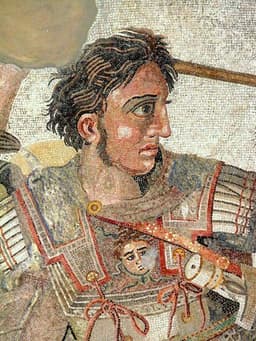
Alexander the Great
General · Ancient
85.2Total
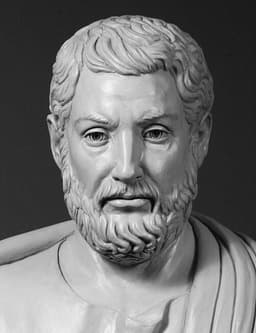
Cleisthenes
Politician · Ancient
78.3Total
Basic Information
Born
-356
-570
Died
-323
-508
Era
Ancient
Ancient
Nationality
Macedon
Greece
Occupation
General
Politician
Civilization
Western
Western
Score Comparison
Military (10%)
95.0
49.4
Political (20%)
60.0
62.7
Influence (20%)
92.0
92.0
Legacy (20%)
90.0
92.0
Leadership (15%)
80.0
72.0
Strategy (15%)
92.0
71.3
TOTAL
85.2
78.3
Alexander the Great — Complete Timeline
334 BC
Battle of the Granicus RiverWar◆ Major
Alexander led his Macedonian army across the Hellespont into Asia Minor and defeated a Persian force under local satraps at the Granicus River. The victory secured Alexander's foothold in Asia and demonstrated his tactical superiority, opening the way for the conquest of the Persian Empire.
Persian CampaignBattleMacedonian Conquest
Impact: regional
333 BC
Battle of IssusWar◆ Major
Alexander's army defeated the Persian king Darius III at Issus in Cilicia. Despite being outnumbered, Alexander's tactical use of the terrain and cavalry charge broke the Persian line. Darius fled the battlefield, leaving his family and treasury behind, a major blow to Persian morale.
Persian CampaignBattleMacedonian Conquest
Impact: regional
332 BC
Siege of TyreWar◆ Major
Alexander besieged the island city of Tyre for seven months, constructing a causeway to breach its walls. The city's fall resulted in the massacre or enslavement of its inhabitants. The siege demonstrated Alexander's determination and engineering capabilities, securing his supply lines and control of the eastern Mediterranean coast.
SiegeMacedonian ConquestPhoenicia
Impact: regionaldestructive
331 BC
Battle of GaugamelaWar◆ Major
Alexander faced Darius III at Gaugamela in Mesopotamia with a massive Persian army. Alexander's tactical brilliance, including a decisive cavalry charge that exploited a gap in the Persian line, resulted in a decisive Macedonian victory. Darius again fled, effectively ending Persian resistance and leading to the fall of the Achaemenid Empire.
Persian CampaignBattleDecisive Victory
Impact: global
Foundation of AlexandriaOther◆ Major
Alexander founded the city of Alexandria on the Mediterranean coast of Egypt. He personally selected the site and oversaw the initial planning. Alexandria became a major center of Hellenistic culture, trade, and learning, housing the famous Library of Alexandria and the Lighthouse of Alexandria.
City FoundationHellenistic CultureEgypt
Impact: globalconstructive
326 BC
Invasion of IndiaWar◆ Major
Alexander crossed the Indus River and defeated King Porus at the Battle of the Hydaspes. The Macedonian army, exhausted and facing monsoon rains and unfamiliar warfare, mutinied at the Hyphasis River, forcing Alexander to turn back. This campaign marked the easternmost extent of his conquests.
Indian CampaignBattleMutiny
Impact: regional
Cleisthenes — Complete Timeline
510 BC
Expulsion of the PeisistratidsPolitical Action◆ Major
Cleisthenes, with the support of the Alcmaeonid family and Spartan assistance, led the overthrow of the tyrant Hippias, son of Peisistratus. This ended the Peisistratid tyranny in Athens and opened the way for democratic reforms.
Tyranny OverthrownAthensSparta
Impact: nationalconstructive
508 BC
Reforms of CleisthenesReform
Cleisthenes reorganized the Athenian citizen body into ten new tribes based on demes, replacing the old four Ionian tribes. He established the Council of 500 (Boule) and introduced ostracism, creating a system of isonomia (equal rights) that is considered the foundation of Athenian democracy.
Athenian DemocracyConstitutional ReformAncient Greece
Impact: globalprogressive
507 BC
Introduction of OstracismReform◆ Major
Cleisthenes instituted ostracism, a procedure allowing Athenian citizens to vote annually to exile a prominent citizen deemed a threat to democracy for ten years. This mechanism aimed to prevent the rise of a new tyrant and stabilize the democratic system.
Athenian DemocracyPolitical MechanismExile
Impact: national
Expert Analysis
Origins
Alexander III of Macedon (356–323 BCE) was born in Pella, the son of King Philip II and Queen Olympias. His upbringing blended Macedonian warrior culture with Aristotelian philosophy, grooming him for conquest. In contrast, Cleisthenes (c. 570–508 BCE) was an Athenian aristocrat from the Alcmaeonid family, a lineage often at odds with tyrants. His early life was marked by political maneuvering and exile during the Peisistratid tyranny.
Rise to Power
Alexander ascended at age 20 after Philip's assassination, swiftly consolidating power by crushing revolts in Thebes and unifying Greece under the League of Corinth. His rise was meteoric and military-driven. Cleisthenes, however, rose through political reform. After the expulsion of the tyrant Hippias in 510 BCE, he initially competed with Isagoras for power. When Isagoras secured Spartan support, Cleisthenes mobilized the Athenian demos, forcing Isagoras out and initiating his democratic reforms in 508/507 BCE.
Leadership & Governance
Alexander's governance was autocratic and expansionist. He ruled conquered territories through a mix of Persian satraps and Macedonian officials, promoting cultural fusion (e.g., mass weddings at Susa). His military leadership (score: 95) was unparalleled, but his political institutions were weak, leading to empire fragmentation after his death. Cleisthenes (political score: 63) introduced the world's first known democracy: he reorganized Attica into demes, tribes, and trittyes, breaking aristocratic power; established the Council of 500; and introduced ostracism to prevent tyranny. His reforms created stable, participatory governance that endured for centuries.
Triumph & Tragedy
Alexander's triumphs were epic: undefeated in battle (Granicus, Issus, Gaugamela), he conquered the vast Persian Empire, founded Alexandria, and reached India. His tragedy was his early death (age 32), leaving no heir and a disintegrating empire. Cleisthenes' triumph was the establishment of Athenian democracy, which empowered citizens and fostered cultural flourishing. His tragedy is less dramatic—his reforms faced initial opposition, but they outlasted him, though later populism and imperialism undermined them.
Character & Destiny
Alexander was ambitious, charismatic, and ruthless, driven by a desire for glory and immortality. His destiny was to die young after conquering much of the known world. Cleisthenes was a pragmatic reformer, perhaps less charismatic but deeply strategic. His destiny was to be remembered as the "father of democracy," a title that transcends his individual story.
Legacy
Alexander's legacy (score: 85) is immense: he spread Hellenistic culture, influenced military tactics for millennia, and became a legendary figure. However, his empire collapsed swiftly. Cleisthenes' legacy (score: 78) is arguably more profound: his democratic principles influenced ancient Rome, the Enlightenment, and modern democracies. While Alexander's impact was broad but ephemeral, Cleisthenes' was narrower but enduring.
Conclusion
Choosing between them depends on criteria. Alexander scores higher overall (92.7 vs 73.9) due to his military genius and historical magnitude. However, Cleisthenes' contribution to political freedom arguably has greater long-term value. On balance, Alexander's immediate impact and iconic status give him the edge, but Cleisthenes' intellectual legacy is equally vital. **Winner: Alexander the Great** for sheer scope of conquest, but Cleisthenes deserves equal reverence for shaping governance.
**Numerical Scores:**
- Alexander: Military 95, Political 60, Influence 92, Legacy 90, Difficulty 80, Strategic 92, Total 85
- Cleisthenes: Military 49, Political 63, Influence 92, Legacy 92, Difficulty 72, Strategic 71, Total 78
Rankings
🥇
Alexander the GreatLeader
Mil: 95.0Pol: 60.0Inf: 92.0
85.2
🥈
Cleisthenes
Mil: 49.4Pol: 62.7Inf: 92.0
78.3
+6.9 behind
How This Comparison Works
Algorithm
Each figure is scored on 6 dimensions (0—100 scale) based on structured historical data: Military (10%), Political (20%), Influence (20%), Legacy (20%), Leadership (15%), Strategy (15%). The weighted total produces the final ranking.
Data Sources
Scores are computed from structured sub-indicators in the database. Scale factors adjust for era (Ancient ×0.85, Modern ×1.0) and civilization size (Eastern ×1.05, Other ×0.80) to account for differences in population and military scale.
Maximum 3 Figures
Comparisons are limited to 2—3 figures to ensure readability and statistical meaningfulness.
Error Margins
±5 points per dimension — Sub-scores are derived from historical records with inherent uncertainty. Two figures within 5 points on a dimension should be considered roughly equivalent in that area.
Total Score Accuracy
±3 points overall — The weighted combination of 6 dimensions produces a total score with approximately ±3 points of uncertainty. Differences of less than 3 points are not statistically significant— the figures are effectively tied.
Known Limitations
- Historical records are incomplete and uneven across civilizations
- Figures from oral-tradition societies may be underrepresented
- Occupation labels can misclassify multi-role figures
- Scores measure capability and impact, not moral character
- Quantitative scoring is a comparison tool, not absolute truth
Capability Radar
Military (10%) — Battles & Warfare
Battles
98
58
Win Rate
99
62
Expansion
99
59
Political (20%) — Governance & Reform
Reform
75
95
Diplomacy
80
70
Economy
70
40
Influence (20%) — Cultural & Global Reach
Cultural
95
85
Global
95
85
Legacy (20%) — Historical Impact
Historical
98
90
Longevity
95
95
Leadership (15%) — Power & Stability
Tenure
60
30
Stability
55
60
Strategy (15%) — Tactics & Innovation
Strategy
98
62
Tactics
99
67
Reform
85
72
Similar Comparisons
Comments & Discussion
No comments yet. Be the first to share your thoughts!