Loading...
Alcide De Gasperi vs Otto von Bismarck
Otto von Bismarck leads by 10.3 pts · 2 figures compared
…
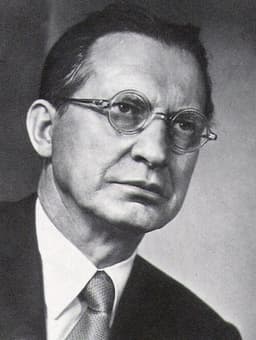
Alcide De Gasperi
Politician · Modern
55.5Total
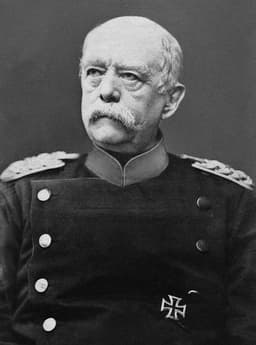
Otto von Bismarck
Politician · Modern
65.8Total
Basic Information
Born
1881
1815
Died
1954
1898
Era
Modern
Modern
Nationality
Italy
Germany
Occupation
Politician
Politician
Civilization
Western
Western
Score Comparison
Military (10%)
12.4
55.0
Political (20%)
85.0
85.0
Influence (20%)
65.0
82.0
Legacy (20%)
40.0
40.0
Leadership (15%)
80.7
80.0
Strategy (15%)
31.5
50.0
TOTAL
55.5
65.8
Alcide De Gasperi — Complete Timeline
1946 AD
First Prime Minister of the Italian RepublicPolitical Action
De Gasperi became the first prime minister of the newly proclaimed Italian Republic in December 1945. He led a coalition government that included Christian Democrats, Socialists, and Communists. His government oversaw the transition from monarchy to republic.
RepublicGovernmentTransition
Impact: nationalconstructive
1947 AD
Peace Treaty of ParisPolitical Action◆ Major
De Gasperi signed the Treaty of Paris, which formally ended World War II for Italy. Italy lost its colonies, ceded territory to Yugoslavia and France, and paid reparations. The treaty was unpopular but allowed Italy to regain sovereignty and join the Western alliance.
TreatyWorld War IIDiplomacy
Impact: global
Expulsion of Communists from GovernmentPolitical Action
De Gasperi expelled the Italian Communist Party and Socialist Party from his coalition government in May 1947. This move aligned Italy with the United States and the Marshall Plan, deepening the Cold War divide. It solidified Christian Democratic dominance for decades.
Cold WarMarshall PlanCoalition
Impact: global
1949 AD
Italian Membership in NATOPolitical Action◆ Major
De Gasperi led Italy into the North Atlantic Treaty Organization (NATO) as a founding member. This decision anchored Italy in the Western bloc during the Cold War and secured U.S. military and economic support. It was opposed by the Communist Party.
NATOCold WarAlliance
Impact: globalconstructive
Otto von Bismarck — Complete Timeline
1870 AD
Franco-Prussian WarWar
Bismarck provoked France into declaring war by editing the Ems Dispatch to appear insulting. The resulting conflict saw Prussia and its allies decisively defeat France, leading to the fall of Napoleon III, the capture of Paris, and the annexation of Alsace-Lorraine.
WarProvocationAnnexation
Impact: globaldestructive
1871 AD
Unification of Germany ProclaimedPolitical Action
Following the Franco-Prussian War, Bismarck orchestrated the proclamation of the German Empire in the Hall of Mirrors at Versailles. King Wilhelm I of Prussia was declared German Emperor, uniting the German states under Prussian leadership and establishing the Second Reich.
UnificationGerman EmpireNationalism
Impact: globalconstructive
1878 AD
Enactment of the Anti-Socialist LawsPolitical Action◆ Major
After two assassination attempts on Kaiser Wilhelm I, Bismarck pushed through laws banning socialist organizations, publications, and meetings. The laws remained in force until 1890, suppressing the Social Democratic Party while Bismarck simultaneously introduced welfare reforms to undercut its appeal.
RepressionSocialismWelfare State
Impact: nationaldestructive
Congress of BerlinPolitical Action◆ Major
Bismarck hosted the Congress of Berlin to revise the Treaty of San Stefano and resolve the Eastern Crisis. He acted as 'honest broker,' reducing Russian gains, granting independence to Romania, Serbia, and Montenegro, and placing Bosnia-Herzegovina under Austro-Hungarian administration.
DiplomacyBalkansBalance of Power
Impact: global
1883 AD
Establishment of the Welfare StateReform◆ Major
Bismarck introduced the Health Insurance Bill (1883), Accident Insurance Bill (1884), and Old Age and Disability Insurance Bill (1889). These laws created the first modern welfare state, providing workers with social security and aiming to reduce support for socialist movements.
Social ReformWelfareInsurance
Impact: globalprogressive
1890 AD
Dismissal as ChancellorPolitical Action◆ Major
Emperor Wilhelm II forced Bismarck to resign due to policy disagreements, particularly over anti-socialist laws and foreign policy. Bismarck's departure marked the end of an era, leading to a more aggressive German foreign policy and the eventual unraveling of his alliance system.
ResignationWilhelm IIPolicy Shift
Impact: global
Expert Analysis
Otto von Bismarck vs Alcide De Gasperi
# The Architect and the Rebuilder: Bismarck and De Gasperi
In the Hall of Mirrors at Versailles, on January 18, 1871, a Prussian aristocrat in a white cuirassier uniform watched as German princes proclaimed their new emperor. Seventy-five years later, almost to the day, an Italian politician from the alpine province of Trentino stood before a shattered parliament in Rome, tasked with rebuilding a nation that had been torn apart by fascism and war. Otto von Bismarck and Alcide De Gasperi never met, yet their lives trace a single arc of European history—from the forging of nation-states to their redemption from totalitarianism. Both men were political geniuses, but they used their genius for profoundly different ends, and their contrasting fates reveal something essential about the nature of power itself.
Origins
Bismarck was born in 1815, the year of Waterloo, into the Junker aristocracy of Brandenburg. His father was a landowner who drank and hunted; his mother came from the educated bourgeoisie. Bismarck despised her world of books and ideas, yet he absorbed its cunning. He studied law at Göttingen, where he fought duels and drank himself into debt, then returned to manage his decaying estates. The young Bismarck was a reactionary—he believed in God, king, and the natural superiority of the Prussian nobility. He once wrote to his fiancée that he would "lead the life of a country gentleman until I am called to higher service."
De Gasperi was born in 1881 in Pieve Tesino, a village in the Tyrolean Alps then under Austrian rule. His father was a policeman; his mother a devout Catholic. Growing up as an Italian-speaking subject of the Habsburg Empire, De Gasperi learned early what it meant to belong to a nation without a state. He studied literature and philosophy in Vienna, where he absorbed the social teachings of the Catholic Church and the democratic traditions of the Austrian parliament. Unlike Bismarck, who was shaped by the certainties of the old order, De Gasperi was formed by the tensions of a multinational empire and the hopes of a suppressed nationality.
Rise to Power
Bismarck entered politics almost by accident. In 1847, at age thirty-two, he was elected to the Prussian United Diet as a substitute for a sick friend. He immediately made his mark with a speech defending the king's absolute authority. When the revolutions of 1848 swept Europe, Bismarck was one of the few conservatives who refused to compromise. He urged the king to crush the rebels with military force. This loyalty earned him a series of diplomatic posts—Frankfurt, St. Petersburg, Paris—where he learned the arts of deception and maneuver that would later define his chancellorship. In 1862, when the Prussian parliament refused to fund military reforms, King Wilhelm I summoned Bismarck to Berlin. "The great questions of the day," Bismarck told the parliament, "will not be decided by speeches and majority resolutions—but by blood and iron."
De Gasperi's rise was slower and more painful. He entered the Austrian parliament in 1911 as a representative of the Italian minority, advocating for cultural autonomy within the empire. When World War I broke out, he chose Italian unification over Habsburg loyalty and was arrested by the Austrians. After the war, he joined the newly formed Italian People's Party, a Catholic democratic movement. But Mussolini's rise forced him into hiding. In 1927, he was arrested and sentenced to four years in prison. Upon release, he worked as a librarian in the Vatican, biding his time. For nearly two decades, he watched from the shadows as fascism consumed his country. When Mussolini fell in 1943, De Gasperi emerged, frail and fifty-seven years old, to lead the Christian Democratic Party. "We must rebuild," he told his followers, "not just our houses, but our souls."
Leadership & Governance
Bismarck governed through division. He unified Germany by defeating its external enemies—Denmark, Austria, France—and then pacified its internal conflicts by pitting groups against each other. He gave the industrialists tariffs and the workers welfare; he crushed socialists with the Anti-Socialist Laws of 1878 while simultaneously enacting health insurance in 1883, accident insurance in 1884, and old-age pensions in 1889. This was not benevolence but calculation. "A government must have the courage to be unpopular," he once said, "but it must also have the wisdom to make its enemies unnecessary."
De Gasperi governed through reconciliation. As prime minister from 1945 to 1953, he faced a country ruined by war, divided between communist and anti-communist factions, and humiliated by defeat. His first act was to include the Communist Party in a coalition government—not from sympathy, but from necessity. Only when he had secured the nation's stability did he expel them in May 1947, a move that cost him the left but won him the trust of the United States. He signed the Treaty of Paris in 1947, accepting the loss of Italy's colonies and territories, because he understood that only by facing defeat could Italy rejoin the family of nations. He led Italy into NATO in 1949, anchoring the country to the West, but never allowed anti-communism to become an excuse for authoritarianism.
Triumph & Tragedy
Bismarck's greatest triumph was the unification of Germany in 1871, achieved through a war he had deliberately provoked. The Ems Dispatch—a telegram he edited to make it seem that the French ambassador had insulted the Prussian king—was a masterpiece of political manipulation. France declared war, Germany united, and Bismarck became the most powerful man in Europe. But his tragedy was that his system could not survive him. He had built a machine that required his hand to operate. When the young Kaiser Wilhelm II dismissed him in 1890, Bismarck predicted disaster. Within a generation, the machine he created—militaristic, authoritarian, unstable—would drag Europe into world war.
De Gasperi's triumph was the creation of the Italian Republic, a democracy born from the ashes of fascism. He oversaw the 1946 referendum that abolished the monarchy, wrote the constitution, and established a parliamentary system that endured for decades. His tragedy was different: he died in 1954, before he could see the economic miracle his policies had set in motion. In his final years, he was criticized by the right for being too soft on communism and by the left for being too close to the Church. He bore it silently. "The art of politics," he once said, "is to know when to stand firm and when to bend."
Character & Destiny
Bismarck was a man of immense will, cynical intelligence, and a capacity for hatred that bordered on the pathological. He suffered from insomnia, hypochondria, and fits of weeping rage. He once said that "politics is the art of the possible," but he meant that possibility was defined by power. He respected only strength and despised weakness in others. His personality shaped his decisions: the wars he fought, the alliances he broke, the social reforms he enacted to buy off the masses. History, for Bismarck, was a chessboard where pawns were sacrificed and kings toppled.
De Gasperi was a man of quiet endurance, deep religious faith, and a patience that approached saintliness. He had learned in prison that power is temporary and that the only lasting victories are those of the spirit. He never sought personal glory; his speeches were dry, his manner reserved. But his personality shaped his decisions just as surely: the compromises he accepted, the enemies he forgave, the institutions he built to outlast him. History, for De Gasperi, was a cathedral under construction, each generation adding a stone.
Legacy
Bismarck's legacy is ambiguous. He unified Germany, but he also militarized it. He created the welfare state, but also the authoritarian state. He is remembered as the Iron Chancellor, the man who made modern Germany, but also as the architect of the conditions that led to Hitler. His score of 88 in political skill reflects his mastery, but his total of 74 reminds us that brilliance without wisdom can be dangerous.
De Gasperi's legacy is more modest but more secure. He is remembered as the founding father of the Italian Republic, the man who brought Italy into NATO, the democrat who never lost his faith in democracy. His political score of 88 matches Bismarck's, but his total of 70 reflects a quieter kind of greatness. He built no empire, fought no wars, provoked no crises. He simply rebuilt a country and left it free.
Conclusion
Bismarck and De Gasperi faced the same fundamental question: how to create order in a world of chaos. Bismarck answered with power, De Gasperi with patience. Bismarck built a nation that would break itself against the twentieth century; De Gasperi built one that would endure. In the end, the contrast between them is not just a contrast between two men, but between two ideas of statesmanship—the one that conquers and the one that heals. And as we look at the Europe they both helped to shape, we might ask ourselves which legacy we need more today.
Rankings
🥇
Otto von BismarckLeader
Mil: 55.0Pol: 85.0Inf: 82.0
65.8
🥈
Alcide De Gasperi
Mil: 12.4Pol: 85.0Inf: 65.0
55.5
+10.3 behind
How This Comparison Works
Algorithm
Each figure is scored on 6 dimensions (0—100 scale) based on structured historical data: Military (10%), Political (20%), Influence (20%), Legacy (20%), Leadership (15%), Strategy (15%). The weighted total produces the final ranking.
Data Sources
Scores are computed from structured sub-indicators in the database. Scale factors adjust for era (Ancient ×0.85, Modern ×1.0) and civilization size (Eastern ×1.05, Other ×0.80) to account for differences in population and military scale.
Maximum 3 Figures
Comparisons are limited to 2—3 figures to ensure readability and statistical meaningfulness.
Error Margins
±5 points per dimension — Sub-scores are derived from historical records with inherent uncertainty. Two figures within 5 points on a dimension should be considered roughly equivalent in that area.
Total Score Accuracy
±3 points overall — The weighted combination of 6 dimensions produces a total score with approximately ±3 points of uncertainty. Differences of less than 3 points are not statistically significant— the figures are effectively tied.
Known Limitations
- Historical records are incomplete and uneven across civilizations
- Figures from oral-tradition societies may be underrepresented
- Occupation labels can misclassify multi-role figures
- Scores measure capability and impact, not moral character
- Quantitative scoring is a comparison tool, not absolute truth
Capability Radar
Military (10%) — Battles & Warfare
Battles
11
60
Win Rate
15
70
Expansion
17
80
Political (20%) — Governance & Reform
Reform
85
90
Diplomacy
80
95
Economy
70
80
Influence (20%) — Cultural & Global Reach
Cultural
60
65
Global
65
75
Legacy (20%) — Historical Impact
Historical
70
85
Longevity
65
70
Leadership (15%) — Power & Stability
Tenure
75
85
Stability
75
70
Strategy (15%) — Tactics & Innovation
Strategy
21
85
Tactics
23
55
Reform
27
75
Similar Comparisons
Comments & Discussion
数字拆解者6/16/2026
吹什么"政治天才"?Bismarck的养老保险制度不过是收买工人的手段,De Gasperi的经济复苏全靠马歇尔计划输血。没有美国人的美元和普鲁士的刺刀,这两位就是普通官僚。具体数据:1871年德国统一后GDP年增长才2.3%,而1950年代意大利靠美国援助GDP飙到6%。别拿历史浪漫化当真理,政治家的作用被高估了至少50%。|
Augustan Scholar6/16/2026
The real comparison is tragic: both men spoke of European unity, but with radically different visions. Bismarck's Congress of Berlin (1878) carved up the Balkans for German advantage—balance of power as a weapon. De Gasperi, along with Schuman and Adenauer, built institutions meant to prevent that very game. Bismarck called Italy "the land of lemons and mandolins"; De Gasperi made Italy a founding member of the European Coal and Steel Community. One played chess with nations, the other tried to
历史辩证家6/16/2026
别被"统一之父"的神话骗了。Bismarck把德国绑上普鲁士军国主义战车,埋下两次世界大战的祸根。De Gasperi至少看透了民族主义的毒,推动欧洲一体化。证据?Bismarck的"铁血"演讲直接催生泛日耳曼主义,而De Gasperi在1948年宪法里写入"限制主权以维护和平"。一个制造问题,一个尝试解决问题。时间会站在理性这边。|
Chronicler21986/16/2026
Bismarck would've laughed at De Gasperi's "moral reconstruction." Real power isn't built on Christian Democratic handshakes—it's forged in blood and iron. Look at the facts: Bismarck unified Germany through three calculated wars (1864, 1866, 1870), not committee meetings. De Gasperi spent years in the Vatican library while Mussolini crushed his opposition. The Austrian-born Italian was a diplomat, not a statesman. Bismarck crushed the Socialists with the Anti-Socialist Laws; De Gasperi invited C
Chronicler70836/16/2026
Let's be blunt: Bismarck succeeded because he had an army, De Gasperi succeeded because he had the Americans. The Iron Chancellor could fire Ems Telegram at France because Prussian staff officers had already drawn up mobilization schedules. De Gasperi's greatest achievement—keeping Italy out of the Soviet bloc—came because Truman sent ships to the Mediterranean in 1947. One man's genius is another man's geography. Both were servants of their century's dominant military reality: Bismarck of Pruss