Loading...
Alcide De Gasperi vs Napoleon Bonaparte
Napoleon Bonaparte leads by 15.4 pts · 2 figures compared
…
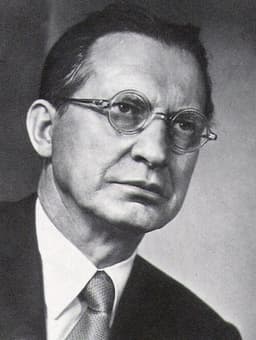
Alcide De Gasperi
Politician · Modern
55.5Total

Napoleon Bonaparte
General · Modern
70.9Total
Basic Information
Born
1881
1769
Died
1954
1821
Era
Modern
Modern
Nationality
Italy
France
Occupation
Politician
General
Civilization
Western
Western
Score Comparison
Military (10%)
12.4
94.0
Political (20%)
85.0
72.0
Influence (20%)
65.0
40.0
Legacy (20%)
40.0
80.0
Leadership (15%)
80.7
78.0
Strategy (15%)
31.5
90.0
TOTAL
55.5
70.9
Alcide De Gasperi — Complete Timeline
1946 AD
First Prime Minister of the Italian RepublicPolitical Action
De Gasperi became the first prime minister of the newly proclaimed Italian Republic in December 1945. He led a coalition government that included Christian Democrats, Socialists, and Communists. His government oversaw the transition from monarchy to republic.
RepublicGovernmentTransition
Impact: nationalconstructive
1947 AD
Peace Treaty of ParisPolitical Action◆ Major
De Gasperi signed the Treaty of Paris, which formally ended World War II for Italy. Italy lost its colonies, ceded territory to Yugoslavia and France, and paid reparations. The treaty was unpopular but allowed Italy to regain sovereignty and join the Western alliance.
TreatyWorld War IIDiplomacy
Impact: global
Expulsion of Communists from GovernmentPolitical Action
De Gasperi expelled the Italian Communist Party and Socialist Party from his coalition government in May 1947. This move aligned Italy with the United States and the Marshall Plan, deepening the Cold War divide. It solidified Christian Democratic dominance for decades.
Cold WarMarshall PlanCoalition
Impact: global
1949 AD
Italian Membership in NATOPolitical Action◆ Major
De Gasperi led Italy into the North Atlantic Treaty Organization (NATO) as a founding member. This decision anchored Italy in the Western bloc during the Cold War and secured U.S. military and economic support. It was opposed by the Communist Party.
NATOCold WarAlliance
Impact: globalconstructive
Napoleon Bonaparte — Complete Timeline
1799 AD
Coup of 18 BrumaireOther◆ Major
Napoleon Bonaparte, with support from his brother Lucien and key political figures, overthrew the Directory in a bloodless coup. He established the Consulate with himself as First Consul, effectively becoming the ruler of France. This event ended the French Revolution's most unstable period.
French RevolutionCoupRise to Power
Impact: regional
1804 AD
Promulgation of the Napoleonic CodeOther◆ Major
Napoleon enacted the Civil Code of the French, known as the Napoleonic Code, a comprehensive set of laws that replaced the fragmented feudal legal systems. The code established legal equality, protected property rights, and secularized law. It became the basis for legal systems in many European and world countries.
Legal ReformNapoleonic CodeCivil Law
Impact: globalconstructive
1805 AD
Battle of AusterlitzWar◆ Major
Napoleon's Grande Arm
Napoleonic WarsBattleDecisive Victory
Impact: global
1812 AD
Invasion of RussiaWar◆ Major
Napoleon led the Grande Arm
Napoleonic WarsInvasionDisaster
Impact: globaldestructive
1815 AD
Battle of WaterlooWar◆ Major
Napoleon's French army was defeated by the combined forces of the Duke of Wellington's Anglo-Allied army and Gebhard Leberecht von Bl
Napoleonic WarsBattleFinal Defeat
Impact: globaldestructive
Expert Analysis
alcide-de-gasperi-vs-napoleon-bonaparte
# The Conqueror and the Builder
In the spring of 1815, Napoleon Bonaparte stood on the muddy fields of Waterloo, marshaling the last remnants of an empire that had stretched from Madrid to Moscow. One hundred thirty-two years later, in the winter of 1947, Alcide De Gasperi sat in a Paris conference room, signing away Italy's colonies and accepting defeat with a diplomat's grace. One man died in exile on a remote Atlantic island; the other died in his homeland, mourned as a founding father. Both sought to reshape Europe, but their tools were radically different: the sword and the treaty. Why did one path lead to glory and ruin, the other to quiet transformation?
Origins
Napoleon was born in 1769 on Corsica, an island recently annexed by France. His family was minor nobility, but the French Revolution shattered the old order and opened doors that had been locked for centuries. A young artillery officer with a prodigious mind for mathematics and tactics, he absorbed the Enlightenment ideals of meritocracy and efficiency. The chaos of revolutionary France was his forge.
Alcide De Gasperi, born in 1881 in the Trentino region of the Austro-Hungarian Empire, grew up speaking Italian and German in a land of overlapping loyalties. His father was a local tax official, and young Alcide was shaped by the Catholic social teachings that emphasized community, compromise, and gradual reform. While Napoleon learned to command armies, De Gasperi learned to navigate parliaments and newspaper offices. Their eras could not have been more different: Napoleon rose in a world of collapsing thrones and mass mobilization; De Gasperi rose in a world of industrializing states and ideological conflict.
Rise to Power
Napoleon’s ascent was meteoric. At age twenty-four, he drove the British out of Toulon; at twenty-six, he crushed a royalist uprising in Paris with a "whiff of grapeshot"; at thirty, he was First Consul of France. Each victory was a stepping stone, and his military score of 94.0 reflects a genius who could read a battlefield like a chessboard. The turning point came in 1796, when he took command of the starving, demoralized Army of Italy and turned it into a conquering force. He understood that in revolutionary France, glory and power were earned through action, not birth.
De Gasperi’s rise was a marathon of patience. He entered politics in the Austrian parliament, defending Italian-speaking rights, then became a founder of the Italian People's Party. When Mussolini’s fascists seized power, De Gasperi was arrested, imprisoned, and spent years hiding in the Vatican library, studying history and waiting. His political score of 88.0 reflects a man who understood that survival was a form of strategy. He emerged in 1945, at age sixty-four, as the first prime minister of the Italian Republic—not through conquest, but through sheer endurance and moral authority.
Leadership & Governance
Napoleon governed as he commanded: with relentless energy and total control. He centralized the French state, created the Napoleonic Code, and reformed education, banking, and infrastructure. His leadership score of 80.0 and strategy score of 93.0 reveal a ruler who saw governance as another form of warfare—efficient, hierarchical, and decisive. Yet his political score of 75.0 hints at his weakness: he could conquer but not consolidate. He placed his brothers on thrones across Europe, ignoring the deep currents of nationalism he himself had awakened. Every reform was ultimately in service of his ambition.
De Gasperi governed through coalition and consensus. He understood that Italy, shattered by fascism and war, could not be rebuilt by a single strongman. In 1947, he made the painful decision to expel the Communist and Socialist parties from his government—a turning point that secured American aid and anchored Italy in the West. That same year, he signed the Treaty of Paris, accepting territorial losses and war guilt. Where Napoleon would have fought, De Gasperi negotiated. His leadership score of 84.9 reflects a man who saw power not as domination, but as stewardship. He led Italy into NATO in 1949, not as a conquered satellite, but as a founding member.
Triumph & Tragedy
Napoleon’s greatest triumph was Austerlitz in 1805, where he destroyed an Austro-Russian army and redrew the map of Europe. His greatest tragedy was the invasion of Russia in 1812—a disaster born of hubris, where he lost half a million men to winter and guerrilla warfare. He never recovered. Waterloo, in 1815, was the final act: a brilliant tactical plan undone by a muddy field and the Prussian arrival. His military genius could not overcome his political blindness.
De Gasperi’s greatest triumph was the reconstruction of Italy as a democratic republic, a feat that seemed impossible in 1945. His greatest tragedy was perhaps the loss of Istria and Dalmatia, territories with Italian populations, which he accepted for the sake of peace. He died in 1954, just as the Italian economic miracle began to accelerate. He never saw the full fruit of his labor, but he had planted the seeds.
Character & Destiny
Napoleon was driven by an insatiable will. “Impossible is a word to be found only in the dictionary of fools,” he said. His character made him a conqueror but also a prisoner of his own momentum—he could not stop, could not share power, could not accept limits. His destiny was to rise higher than any man of his age, and to fall harder.
De Gasperi was driven by a quiet sense of duty. He once said, “The future is not a gift; it is an achievement.” His character made him a builder, not a destroyer. He accepted limits—geopolitical, economic, human—and worked within them. His destiny was to be remembered not with statues on horseback, but with streets and schools named after him in every Italian town.
Legacy
Napoleon left a legacy of law, administration, and national identity that still shapes Europe. His influence score of 82.0 and legacy score of 78.0 reflect a man who changed the world, for better and worse. He is remembered as both a tyrant and a reformer, a genius and a cautionary tale.
De Gasperi left a legacy of democratic stability, European integration, and moral leadership. His influence score of 70.0 and legacy score of 72.0 are quieter numbers, but they measure something deeper: the slow, patient work of building institutions that endure. He is remembered as one of the "founding fathers" of the European Union, a man who understood that the future of Europe lay not in conquest, but in cooperation.
Conclusion
Napoleon and De Gasperi represent two poles of leadership: the warrior and the statesman, the conqueror and the architect. One sought to impose his will on history; the other sought to guide history gently. Both succeeded, and both paid a price. Napoleon’s tomb in Les Invalides is a monument to glory and ambition; De Gasperi’s modest grave in Trentino is a monument to service and humility. Perhaps the deepest lesson is this: the men who reshape the world are not always the ones who march at the head of armies. Sometimes they are the ones who sit at the table, sign the treaties, and build the peace.
Rankings
🥇
Napoleon BonaparteLeader
Mil: 94.0Pol: 72.0Inf: 40.0
70.9
🥈
Alcide De Gasperi
Mil: 12.4Pol: 85.0Inf: 65.0
55.5
+15.4 behind
How This Comparison Works
Algorithm
Each figure is scored on 6 dimensions (0—100 scale) based on structured historical data: Military (10%), Political (20%), Influence (20%), Legacy (20%), Leadership (15%), Strategy (15%). The weighted total produces the final ranking.
Data Sources
Scores are computed from structured sub-indicators in the database. Scale factors adjust for era (Ancient ×0.85, Modern ×1.0) and civilization size (Eastern ×1.05, Other ×0.80) to account for differences in population and military scale.
Maximum 3 Figures
Comparisons are limited to 2—3 figures to ensure readability and statistical meaningfulness.
Error Margins
±5 points per dimension — Sub-scores are derived from historical records with inherent uncertainty. Two figures within 5 points on a dimension should be considered roughly equivalent in that area.
Total Score Accuracy
±3 points overall — The weighted combination of 6 dimensions produces a total score with approximately ±3 points of uncertainty. Differences of less than 3 points are not statistically significant— the figures are effectively tied.
Known Limitations
- Historical records are incomplete and uneven across civilizations
- Figures from oral-tradition societies may be underrepresented
- Occupation labels can misclassify multi-role figures
- Scores measure capability and impact, not moral character
- Quantitative scoring is a comparison tool, not absolute truth
Capability Radar
Military (10%) — Battles & Warfare
Battles
11
95
Win Rate
15
90
Expansion
17
95
Political (20%) — Governance & Reform
Reform
85
95
Diplomacy
80
80
Economy
70
85
Influence (20%) — Cultural & Global Reach
Cultural
60
85
Global
65
90
Legacy (20%) — Historical Impact
Historical
70
95
Longevity
65
90
Leadership (15%) — Power & Stability
Tenure
75
85
Stability
75
70
Strategy (15%) — Tactics & Innovation
Strategy
21
95
Tactics
23
98
Reform
27
92
Similar Comparisons
Comments & Discussion
No comments yet. Be the first to share your thoughts!