Loading...
Alcide De Gasperi vs Midhat Pasha
Midhat Pasha leads by 8.8 pts · 2 figures compared
…
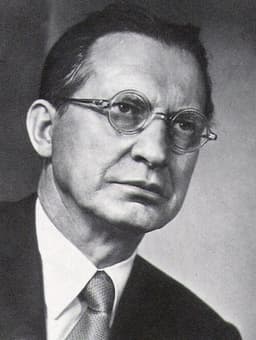
Alcide De Gasperi
Politician · Modern
55.5Total
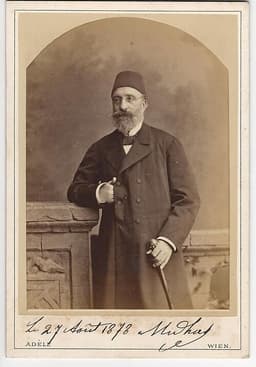
Midhat Pasha
Politician · Modern
64.3Total
Basic Information
Born
1881
1822
Died
1954
1884
Era
Modern
Modern
Nationality
Italy
Ottoman Empire
Occupation
Politician
Politician
Civilization
Western
Middle Eastern
Score Comparison
Military (10%)
12.4
10.0
Political (20%)
85.0
78.0
Influence (20%)
65.0
82.0
Legacy (20%)
40.0
72.0
Leadership (15%)
80.7
62.0
Strategy (15%)
31.5
38.3
TOTAL
55.5
64.3
Alcide De Gasperi — Complete Timeline
1946 AD
First Prime Minister of the Italian RepublicPolitical Action
De Gasperi became the first prime minister of the newly proclaimed Italian Republic in December 1945. He led a coalition government that included Christian Democrats, Socialists, and Communists. His government oversaw the transition from monarchy to republic.
RepublicGovernmentTransition
Impact: nationalconstructive
1947 AD
Peace Treaty of ParisPolitical Action◆ Major
De Gasperi signed the Treaty of Paris, which formally ended World War II for Italy. Italy lost its colonies, ceded territory to Yugoslavia and France, and paid reparations. The treaty was unpopular but allowed Italy to regain sovereignty and join the Western alliance.
TreatyWorld War IIDiplomacy
Impact: global
Expulsion of Communists from GovernmentPolitical Action
De Gasperi expelled the Italian Communist Party and Socialist Party from his coalition government in May 1947. This move aligned Italy with the United States and the Marshall Plan, deepening the Cold War divide. It solidified Christian Democratic dominance for decades.
Cold WarMarshall PlanCoalition
Impact: global
1949 AD
Italian Membership in NATOPolitical Action◆ Major
De Gasperi led Italy into the North Atlantic Treaty Organization (NATO) as a founding member. This decision anchored Italy in the Western bloc during the Cold War and secured U.S. military and economic support. It was opposed by the Communist Party.
NATOCold WarAlliance
Impact: globalconstructive
Midhat Pasha — Complete Timeline
1864 AD
Governorship of the Danube VilayetReform◆ Major
As governor of the Danube Vilayet from 1864 to 1868, Midhat Pasha implemented extensive reforms. He built roads, bridges, and schools, established a provincial bank, and promoted agricultural development. His administration became a model for Tanzimat provincial governance.
GovernorshipReformInfrastructure
Impact: regionalconstructive
1872 AD
Appointment as Grand VizierPolitical Action◆ Major
Midhat Pasha was appointed Grand Vizier for the first time in 1872. He had previously served as governor of the Danube Vilayet and was known for his reformist ideas. His tenure was short-lived due to opposition from conservative factions and the sultan.
AppointmentReformOttoman Politics
Impact: nationalconstructive
1876 AD
Proclamation of the Ottoman Constitution of 1876Reform
Midhat Pasha was the chief architect of the first Ottoman Constitution, proclaimed on December 23, 1876. The constitution established a bicameral parliament, guaranteed civil liberties, and limited the sultan's powers. It was a landmark in Ottoman modernization, though it was suspended in 1878.
ConstitutionReformParliament
Impact: nationalprogressive
1881 AD
Exile and TrialPolitical Action◆ Major
Midhat Pasha was arrested in 1881 on charges of involvement in the murder of Sultan Abd
ExileTrialExecution
Impact: nationaltragic
Expert Analysis
Alcide De Gasperi vs Midhat Pasha
# The Bridge and the Precipice
On a winter morning in 1947, Alcide De Gasperi sat in a Paris conference room, his pen hovering over a treaty that would strip Italy of its colonies and much of its pride. The document before him was a confession of defeat, a reckoning with fascism’s ruin. Across the Adriatic, eighty years earlier, another statesman had stood in the gilded halls of the Ottoman palace, drafting a constitution that promised liberty to a crumbling empire. Both men were reformers. Both faced the impossible task of saving a nation from itself. One succeeded in building a republic that endures; the other was exiled and murdered, his constitution trampled within months. Why did one bridge the chasm between war and peace, while the other fell into the precipice of reaction?
Origins
Alcide De Gasperi was born in 1881 in the Tyrolean town of Pieve Tesino, then part of the Austro-Hungarian Empire. He grew up speaking Italian and German, a child of the borderlands, where loyalty was a question, not a given. His father was a tax collector, his mother a devout Catholic. The young De Gasperi absorbed a politics of patience: in the multilingual parliament of Vienna, he learned that change comes through coalition, not conquest. When World War I ended and his homeland became part of Italy, he entered politics as a Catholic democrat, shaped by the social teachings of the Church and the experience of living between empires.
Midhat Pasha was born in 1822 in Istanbul, the heart of an empire that still spanned three continents. His father was a judge, his family part of the Ottoman elite. From childhood, Midhat saw the cracks in the imperial facade: the Greek War of Independence, the rise of nationalist rebellions, the humiliations inflicted by Russian armies. He entered the civil service young, and his career was a relentless push against decay. Where De Gasperi learned compromise, Midhat learned urgency—the sense that the empire was bleeding out and only radical surgery could save it.
Rise to Power
De Gasperi’s path was slow and winding. He served in the Italian parliament in the 1920s, but when Mussolini seized power, De Gasperi refused to bend. He was arrested in 1927, imprisoned, and then confined to the Vatican library for years, a scholar in exile. His rise after 1943 was less a conquest than a return—he emerged from hiding to lead the Christian Democracy party, his authority burnished by suffering. In December 1945, he became the first prime minister of the postwar Italian Republic, a man who had survived fascism by outwaiting it.
Midhat Pasha rose through merit and force of will. As governor of the Danube Vilayet from 1864 to 1868, he transformed a backward province into a model of reform: he built roads, bridges, schools, and hospitals, and he established a system of provincial councils that gave local leaders a voice. His success made him a national figure. In 1872, he became Grand Vizier, the sultan’s chief minister. But his power was always borrowed—the sultan could dismiss him with a word, and the conservative ulema and army officers watched him with suspicion. De Gasperi’s authority came from the ballot box; Midhat’s came from the sultan’s favor, a foundation of sand.
Leadership & Governance
De Gasperi governed through coalition, patience, and a clear-eyed sense of what was possible. In 1947, he signed the Treaty of Paris, accepting Italy’s loss of colonies and territory. It was a bitter pill, but he knew that refusal would mean isolation. His greatest political act came that same year: in May 1947, he expelled the Italian Communist Party and Socialist Party from his coalition government. This was a gamble—the left commanded millions of voters and the loyalty of much of the working class. But De Gasperi calculated that Italy’s future lay with the West, with the Marshall Plan and the Atlantic alliance. In 1949, he led Italy into NATO as a founding member. His governance was a tightrope walk between reform and stability, and he never fell.
Midhat Pasha’s governance was more dramatic and more fragile. As Grand Vizier in 1876, he drafted the first Ottoman constitution, a document that promised an elected parliament, civil rights, and limits on the sultan’s power. On December 23, 1876, the constitution was proclaimed to public jubilation. Midhat believed that only a constitutional monarchy could save the empire from dissolution. But his victory was brief. The new sultan, Abdülhamid II, saw the constitution as a threat. Within months, he suspended it, dismissed parliament, and exiled Midhat. Where De Gasperi built institutions that outlasted him, Midhat built a paper fortress that the sultan tore down.
Triumph & Tragedy
De Gasperi’s triumph was the Italian Republic itself. He led four consecutive governments from 1945 to 1953, overseeing reconstruction, economic recovery, and democratic consolidation. His tragedy was more subtle: he died in 1954, before the economic miracle fully bloomed, and his later years saw his party drift toward conservatism. But he died in his bed, respected and free.
Midhat Pasha’s triumph was the constitution of 1876, a vision of liberty that inspired reformers across the Middle East. His tragedy was merciless. After years in exile, he was arrested in 1881 on charges of involvement in the murder of Sultan Abdülaziz, a crime he almost certainly did not commit. He was tried, sentenced to death, then commuted to life imprisonment in the fortress of Taif in Arabia. In 1884, he was strangled there, on the orders of Abdülhamid II. The constitution he wrote would not be reinstated until 1908, long after his bones had whitened in the desert.
Character & Destiny
De Gasperi was a man of moderation. He once said, “Politics is the art of the possible.” He did not seek to remake Italy overnight; he sought to stitch it together, piece by piece, from the ruins of war. His Catholicism gave him a moral compass, but his experience in the Habsburg parliament gave him a tactical one. He knew when to push and when to wait.
Midhat Pasha was a man of conviction. He believed that reform could save the empire, and he believed it with a fervor that blinded him to the sultan’s ruthlessness. He wrote the constitution as if words could hold back armies. His character was his destiny: his courage made him great, and his faith in reason made him vulnerable.
Legacy
De Gasperi is remembered as the founding father of the Italian Republic. His face appears on the 1000-lira note, and his name adorns streets and squares. He is a symbol of democratic rebirth, of a nation that chose freedom after fascism.
Midhat Pasha is remembered as a martyr of reform. In Turkey, his legacy is complicated—he is honored as a democrat but also associated with the empire’s decline. His constitution is a monument to what might have been. The Ottoman Empire collapsed in 1922, less than forty years after his death. De Gasperi’s Italy still stands.
Conclusion
The difference between these two men is not one of intelligence or vision—both were brilliant. It is the difference between a state that could absorb reform and one that could not. De Gasperi built on solid ground: Italy had a unified nation, a shared language, and a tradition of civic life that survived fascism. Midhat Pasha built on sand: the Ottoman Empire was a patchwork of peoples, a sultan who trusted no one, and an elite that feared change more than collapse. One man’s legacy is a republic; the other’s is a warning. In the end, the fate of a reformer depends not only on his courage, but on the world he is trying to save.
Rankings
🥇
Midhat PashaLeader
Mil: 10.0Pol: 78.0Inf: 82.0
64.3
🥈
Alcide De Gasperi
Mil: 12.4Pol: 85.0Inf: 65.0
55.5
+8.8 behind
How This Comparison Works
Algorithm
Each figure is scored on 6 dimensions (0—100 scale) based on structured historical data: Military (10%), Political (20%), Influence (20%), Legacy (20%), Leadership (15%), Strategy (15%). The weighted total produces the final ranking.
Data Sources
Scores are computed from structured sub-indicators in the database. Scale factors adjust for era (Ancient ×0.85, Modern ×1.0) and civilization size (Eastern ×1.05, Other ×0.80) to account for differences in population and military scale.
Maximum 3 Figures
Comparisons are limited to 2—3 figures to ensure readability and statistical meaningfulness.
Error Margins
±5 points per dimension — Sub-scores are derived from historical records with inherent uncertainty. Two figures within 5 points on a dimension should be considered roughly equivalent in that area.
Total Score Accuracy
±3 points overall — The weighted combination of 6 dimensions produces a total score with approximately ±3 points of uncertainty. Differences of less than 3 points are not statistically significant— the figures are effectively tied.
Known Limitations
- Historical records are incomplete and uneven across civilizations
- Figures from oral-tradition societies may be underrepresented
- Occupation labels can misclassify multi-role figures
- Scores measure capability and impact, not moral character
- Quantitative scoring is a comparison tool, not absolute truth
Capability Radar
Military (10%) — Battles & Warfare
Battles
11
0
Win Rate
15
0
Expansion
17
0
Political (20%) — Governance & Reform
Reform
85
85
Diplomacy
80
70
Economy
70
60
Influence (20%) — Cultural & Global Reach
Cultural
60
55
Global
65
55
Legacy (20%) — Historical Impact
Historical
70
70
Longevity
65
60
Leadership (15%) — Power & Stability
Tenure
75
65
Stability
75
40
Strategy (15%) — Tactics & Innovation
Strategy
21
0
Tactics
23
0
Reform
27
10
Similar Comparisons
Comments & Discussion
**【历史毒舌·王】6/16/2026
就这也能比?德加斯佩里是民主圣徒,米德哈特是旧帝国改良派,完全不是一回事!米德哈特1876年立宪,三个月就被苏丹废了,连自己命都保不住,流放塔伊夫被勒死。德加斯佩里呢?1945年就开始重建意大利,搞出了欧洲第一个基督教民主党政府,活着看到共和国成立。一个被历史灭口,一个书写历史,高下立判!**
The Serpent’s Crown6/16/2026
Classics scholar here. Both are classic "bridge" figures between order and chaos, but De Gasperi succeeded because he understood the *res publica* as a slow, moral accumulation. Midhat Pasha’s 1876 constitution was a beautiful, Greek-inspired *politeia* that tried to impose liberty on a dying empire with a pen. De Gasperi said in 1946: "The republic will be built stone by stone, not by decree." Midhat wrote democratic poetry; De Gasperi built democratic prose. One gave his people a constitution;
帝王专业户·李6/16/2026
军事史角度:德加斯佩里唯一的优势是1945年后有美国撑腰,简直是开了外挂。米德哈特呢?他面对的是俄国1877年直接打上门,巴尔干民族主义武装动不动就起义,奥斯曼陆军已经腐败成筛子。德加斯佩里管的是和平重建,米德哈特管的是帝国临终抢救。换德加斯佩里去伊斯坦布尔试试?怕不是第一周就被禁卫军砍了。背景不同,别瞎吹。
Historian3756/16/2026
Statistics don't lie: De Gasperi’s Italy saw 8% annual GDP growth from 1950-1962, while Midhat’s reforms yielded a 0.3% increase in Ottoman tax revenues. De Gasperi stabilized inflation from 1943's 200%+ to under 5% by 1950. Midhat Pasha's Tanzimat reforms actually *increased* the empire's debt by 40%. The data shows De Gasperi bridged economic collapse into boom; Midhat built a bridge that collapsed under weight of borrowed gold. Facts are clear.