Loading...
Alcide De Gasperi vs Julius Caesar
Julius Caesar leads by 27.3 pts · 2 figures compared
…
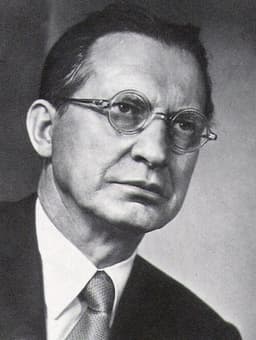
Alcide De Gasperi
Politician · Modern
55.5Total

Julius Caesar
General · Ancient
82.8Total
Basic Information
Born
1881
-100
Died
1954
-44
Era
Modern
Ancient
Nationality
Italy
Roman Republic
Occupation
Politician
General
Civilization
Western
Western
Score Comparison
Military (10%)
12.4
88.0
Political (20%)
85.0
78.0
Influence (20%)
65.0
85.0
Legacy (20%)
40.0
82.0
Leadership (15%)
80.7
80.0
Strategy (15%)
31.5
85.0
TOTAL
55.5
82.8
Alcide De Gasperi — Complete Timeline
1946 AD
First Prime Minister of the Italian RepublicPolitical Action
De Gasperi became the first prime minister of the newly proclaimed Italian Republic in December 1945. He led a coalition government that included Christian Democrats, Socialists, and Communists. His government oversaw the transition from monarchy to republic.
RepublicGovernmentTransition
Impact: nationalconstructive
1947 AD
Peace Treaty of ParisPolitical Action◆ Major
De Gasperi signed the Treaty of Paris, which formally ended World War II for Italy. Italy lost its colonies, ceded territory to Yugoslavia and France, and paid reparations. The treaty was unpopular but allowed Italy to regain sovereignty and join the Western alliance.
TreatyWorld War IIDiplomacy
Impact: global
Expulsion of Communists from GovernmentPolitical Action
De Gasperi expelled the Italian Communist Party and Socialist Party from his coalition government in May 1947. This move aligned Italy with the United States and the Marshall Plan, deepening the Cold War divide. It solidified Christian Democratic dominance for decades.
Cold WarMarshall PlanCoalition
Impact: global
1949 AD
Italian Membership in NATOPolitical Action◆ Major
De Gasperi led Italy into the North Atlantic Treaty Organization (NATO) as a founding member. This decision anchored Italy in the Western bloc during the Cold War and secured U.S. military and economic support. It was opposed by the Communist Party.
NATOCold WarAlliance
Impact: globalconstructive
Julius Caesar — Complete Timeline
58 BC
Gallic WarsWar◆ Major
Caesar, as proconsul of Gaul, launched a series of campaigns that conquered all of Gaul (modern France, Belgium, and parts of Switzerland). He fought numerous battles, including against the Helvetii, the Belgae, and the Gallic chieftain Vercingetorix. The wars brought immense wealth and a loyal army to Caesar.
Gallic WarsConquestRoman Expansion
Impact: regional
49 BC
Crossing the RubiconPolitical Action◆ Major
Caesar led Legio XIII across the Rubicon River into Italy, defying the Roman Senate's order to disband his army. This act triggered a civil war against Pompey and the Optimates, ultimately leading to Caesar's dictatorship and the end of the Roman Republic.
Roman Civil WarEnd of RepublicPower Struggle
Impact: global
48 BC
Battle of PharsalusWar◆ Major
Caesar's outnumbered army defeated the larger forces of Pompey the Great at Pharsalus in Greece. Caesar's tactical use of a reserve line to counter Pompey's cavalry charge proved decisive. Pompey fled to Egypt, where he was assassinated, leaving Caesar as the undisputed master of the Roman world.
Roman Civil WarBattleDecisive Victory
Impact: regional
44 BC
Appointment as Dictator for LifePolitical Action◆ Major
The Roman Senate appointed Caesar dictator perpetuo (dictator for life), granting him unprecedented personal power. This move concentrated military, legislative, and judicial authority in one person, effectively ending the Roman Republic's traditional system of checks and balances and alarming many senators.
DictatorshipEnd of RepublicPower Consolidation
Impact: regionaldestructive
Assassination on the Ides of MarchPolitical Action◆ Major
A group of Roman senators, led by Marcus Junius Brutus and Gaius Cassius Longinus, stabbed Caesar to death at a meeting of the Senate in the Theatre of Pompey. The assassination was intended to restore the Republic, but instead triggered another civil war that led to the rise of the Roman Empire.
AssassinationRoman PoliticsEnd of Republic
Impact: globaldestructive
Expert Analysis
alcide-de-gasperi-vs-julius-caesar
# The Dictator and the Democrat
On the Ides of March, 44 BCE, Julius Caesar fell beneath twenty-three dagger thrusts from men he had called friends. The dictator’s blood pooled on the floor of the Pompeian Senate chamber, and with it, the Roman Republic drowned. Two thousand years later, in December 1945, Alcide De Gasperi stood before a shattered Italian parliament and accepted the burden of building a republic from fascism’s ruins. One man destroyed a republic to save it; another saved a republic by refusing to destroy it. What drove them down such different paths?
Origins
Caesar was born into the twilight of the Roman Republic, a world of senatorial intrigue and civil wars. His family, the Julii, claimed descent from the goddess Venus, but they were patricians in name only—politically marginal, financially strained. Young Gaius learned early that in Rome, glory and gold belonged to those who seized them. His uncle Marius had been a populist general; his father-in-law Cinna, a revolutionary. Caesar grew up watching the old aristocratic order crumble under the weight of its own corruption and the ambition of military strongmen.
De Gasperi came from a different world entirely. Born in 1881 in the Tyrolean town of Pieve Tesino, then part of the Austro-Hungarian Empire, he grew up speaking German in school and Italian at home. His father was a modest tax collector. This borderland childhood taught De Gasperi something Caesar never needed to learn: how to negotiate between competing identities, how to build coalitions across divides. While Caesar trained with the sword, De Gasperi studied philosophy and immersed himself in Catholic social teaching—a tradition that emphasized community over conquest, compromise over domination.
Rise to Power
Caesar’s ascent was a masterpiece of calculated audacity. At thirty-seven, he secured the governorship of Gaul and spent eight years conquering a territory that would become the wealthiest province of Rome. He wrote his own propaganda—the *Commentaries*—and sent it back to Rome, making himself a legend while his rivals grew complacent. When the Senate ordered him to disband his army, Caesar crossed the Rubicon River in 49 BCE with a single legion, uttering the famous words *“Alea iacta est”*—the die is cast. He gambled everything on the loyalty of his soldiers and the fear of his enemies.
De Gasperi’s rise followed a quieter, more patient rhythm. A founder of the Italian People’s Party in 1919, he spent the 1920s as a parliamentarian opposing Mussolini’s rise. When the Fascists banned all opposition, De Gasperi was arrested in 1927 and spent sixteen months in prison. Upon release, he found work as a librarian in the Vatican—an exile in his own country. For nearly two decades, he waited, studied, and planned. When Mussolini fell in 1943, De Gasperi emerged from obscurity to lead the Christian Democracy party. He had no army, no wealth, no legend—only a reputation for integrity and a vision of reconciliation.
Leadership & Governance
The contrast in their governance styles could not be starker. Caesar ruled through personal authority and military force. As dictator, he reformed the calendar, extended citizenship to provincials, and launched massive public works. But he also centralized power in his own hands, packed the Senate with his supporters, and accepted the title “dictator for life.” His genius was strategic and tactical—he knew how to win battles and how to reward loyalty. He did not know how to build institutions that could outlast him.
De Gasperi governed through coalition and consensus. As Prime Minister from 1945 to 1953, he presided over a fractured nation: monarchists and republicans, Catholics and Communists, industrialists and peasants. His greatest achievement was the 1947 expulsion of the Communist and Socialist parties from his coalition—a move that required immense political courage. He then anchored Italy in the Western alliance, signing the 1947 Peace Treaty of Paris and leading Italy into NATO in 1949. Where Caesar had crushed his enemies, De Gasperi outmaneuvered them within the rules of democracy. His strategy was not the sword but the ballot box, not conquest but constitution-building.
Triumph & Tragedy
Caesar’s triumph was also his tragedy. He conquered Gaul, defeated his rivals in a civil war, and became master of the Mediterranean world. But his success bred fear. The senators who killed him claimed they were saving the Republic; in truth, they only ensured that the next strongman would be more ruthless. Caesar’s assassination in 44 BCE, at age fifty-five, unleashed another round of civil wars that ended with his adopted heir Octavian becoming Augustus, the first emperor.
De Gasperi’s tragedy was more subtle. He led Italy through its most difficult reconstruction, but by 1953, his coalition was fraying. He resigned after failing to secure enough electoral support for a stable majority. He died the following year, at seventy-two, having never held the kind of absolute power Caesar wielded for a moment. Yet De Gasperi’s Italy endured—a functioning democracy that survived the Cold War, terrorism, and economic crisis. His tragedy was that he succeeded too well: a stable republic rarely remembers its founders with the same fervor it reserves for its conquerors.
Character & Destiny
Caesar was driven by an insatiable hunger for glory. Plutarch records that he once said, “I would rather be first in a little village than second in Rome.” This ambition made him brilliant and dangerous. He trusted his own genius above all else, and that trust proved fatal. When warned about the Ides of March, he dismissed the soothsayer. Destiny, for Caesar, was something to be seized, not feared.
De Gasperi was driven by a different impulse: duty. A devout Catholic, he believed that political power was a trust, not a prize. His speeches are filled with calls for moderation, patience, and sacrifice. “The art of politics,” he once said, “is the art of the possible.” Where Caesar saw history as a stage for his own greatness, De Gasperi saw it as a slow, collective work of repair.
Legacy
Caesar’s legacy is written in stone and blood. His name became a title—Kaiser, Tsar—and his conquests shaped the map of Europe. His reforms laid the foundations for imperial Rome. But he also proved that a republic cannot survive when its leaders place themselves above its laws. He is remembered as both a hero and a warning.
De Gasperi’s legacy is quieter but no less profound. He is one of the founding fathers of the European Union, a man who believed that nations could transcend their ancient hatreds. Italy’s post-war democracy—flawed, chaotic, but enduring—is his monument. He proved that a republic can be rebuilt by men who respect its limits.
Conclusion
Standing at the Capitoline Hill in Rome, one can see the statue of Caesar and the tomb of De Gasperi within a few hundred meters of each other. They belong to the same civilization, the same landscape, but to different worlds. Caesar believed that greatness meant breaking the rules; De Gasperi believed it meant building them. One gave us an empire, the other gave us a republic. In the end, the dictator’s empire fell, while the democrat’s republic still stands—a quiet answer to the question of which path serves history best.
Rankings
🥇
Julius CaesarLeader
Mil: 88.0Pol: 78.0Inf: 85.0
82.8
🥈
Alcide De Gasperi
Mil: 12.4Pol: 85.0Inf: 65.0
55.5
+27.3 behind
How This Comparison Works
Algorithm
Each figure is scored on 6 dimensions (0—100 scale) based on structured historical data: Military (10%), Political (20%), Influence (20%), Legacy (20%), Leadership (15%), Strategy (15%). The weighted total produces the final ranking.
Data Sources
Scores are computed from structured sub-indicators in the database. Scale factors adjust for era (Ancient ×0.85, Modern ×1.0) and civilization size (Eastern ×1.05, Other ×0.80) to account for differences in population and military scale.
Maximum 3 Figures
Comparisons are limited to 2—3 figures to ensure readability and statistical meaningfulness.
Error Margins
±5 points per dimension — Sub-scores are derived from historical records with inherent uncertainty. Two figures within 5 points on a dimension should be considered roughly equivalent in that area.
Total Score Accuracy
±3 points overall — The weighted combination of 6 dimensions produces a total score with approximately ±3 points of uncertainty. Differences of less than 3 points are not statistically significant— the figures are effectively tied.
Known Limitations
- Historical records are incomplete and uneven across civilizations
- Figures from oral-tradition societies may be underrepresented
- Occupation labels can misclassify multi-role figures
- Scores measure capability and impact, not moral character
- Quantitative scoring is a comparison tool, not absolute truth
Capability Radar
Military (10%) — Battles & Warfare
Battles
11
95
Win Rate
15
92
Expansion
17
97
Political (20%) — Governance & Reform
Reform
85
90
Diplomacy
80
85
Economy
70
82
Influence (20%) — Cultural & Global Reach
Cultural
60
88
Global
65
94
Legacy (20%) — Historical Impact
Historical
70
95
Longevity
65
96
Leadership (15%) — Power & Stability
Tenure
75
75
Stability
75
60
Strategy (15%) — Tactics & Innovation
Strategy
21
94
Tactics
23
96
Reform
27
88
Similar Comparisons
Comments & Discussion
No comments yet. Be the first to share your thoughts!