Loading...
Alcide De Gasperi vs George Washington
George Washington leads by 21.3 pts · 2 figures compared
…
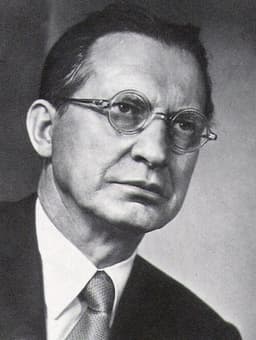
Alcide De Gasperi
Politician · Modern
55.5Total
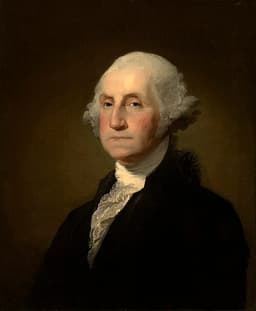
George Washington
Politician · Modern
76.8Total
Basic Information
Born
1881
1732
Died
1954
1799
Era
Modern
Modern
Nationality
Italy
United States
Occupation
Politician
Politician
Civilization
Western
Western
Score Comparison
Military (10%)
12.4
75.0
Political (20%)
85.0
82.0
Influence (20%)
65.0
75.0
Legacy (20%)
40.0
80.0
Leadership (15%)
80.7
85.0
Strategy (15%)
31.5
55.0
TOTAL
55.5
76.8
Alcide De Gasperi — Complete Timeline
1946 AD
First Prime Minister of the Italian RepublicPolitical Action
De Gasperi became the first prime minister of the newly proclaimed Italian Republic in December 1945. He led a coalition government that included Christian Democrats, Socialists, and Communists. His government oversaw the transition from monarchy to republic.
RepublicGovernmentTransition
Impact: nationalconstructive
1947 AD
Peace Treaty of ParisPolitical Action◆ Major
De Gasperi signed the Treaty of Paris, which formally ended World War II for Italy. Italy lost its colonies, ceded territory to Yugoslavia and France, and paid reparations. The treaty was unpopular but allowed Italy to regain sovereignty and join the Western alliance.
TreatyWorld War IIDiplomacy
Impact: global
Expulsion of Communists from GovernmentPolitical Action
De Gasperi expelled the Italian Communist Party and Socialist Party from his coalition government in May 1947. This move aligned Italy with the United States and the Marshall Plan, deepening the Cold War divide. It solidified Christian Democratic dominance for decades.
Cold WarMarshall PlanCoalition
Impact: global
1949 AD
Italian Membership in NATOPolitical Action◆ Major
De Gasperi led Italy into the North Atlantic Treaty Organization (NATO) as a founding member. This decision anchored Italy in the Western bloc during the Cold War and secured U.S. military and economic support. It was opposed by the Communist Party.
NATOCold WarAlliance
Impact: globalconstructive
George Washington — Complete Timeline
1775 AD
Appointed Commander-in-Chief of the Continental ArmyOther◆ Major
The Second Continental Congress appointed Washington as commander-in-chief of the Continental Army on June 15, 1775. He accepted the position without pay, taking command of the forces besieging Boston at the start of the American Revolutionary War.
American RevolutionMilitary Leadership
Impact: national
1776 AD
Crossed the Delaware RiverOther◆ Major
On the night of December 25-26, 1776, Washington led 2,400 troops across the ice-choked Delaware River. The surprise attack on Hessian forces at Trenton resulted in a decisive American victory, capturing nearly 1,000 prisoners and reviving Patriot morale after a series of defeats.
American RevolutionBattleTurning Point
Impact: nationalconstructive
1787 AD
Presided over the Constitutional ConventionPolitical Action◆ Major
Washington served as president of the Constitutional Convention in Philadelphia from May to September 1787. His presence lent legitimacy to the proceedings, and he formally signed the final draft of the U.S. Constitution, though he contributed little to the debates.
ConstitutionFounding Father
Impact: national
1789 AD
Inaugurated as First President of the United StatesPolitical Action◆ Major
Washington was unanimously elected by the Electoral College and inaugurated on April 30, 1789, at Federal Hall in New York City. He established numerous executive branch precedents, including the cabinet system, the inaugural address, and the title 'Mr. President'.
PresidencyFounding Father
Impact: national
1793 AD
Issued the Proclamation of NeutralityOther◆ Major
Washington issued the Proclamation of Neutrality on April 22, 1793, declaring the United States neutral in the conflict between France and Great Britain. This decision established the precedent of American isolationism and avoided entanglement in European wars.
Foreign PolicyNeutrality
Impact: national
1796 AD
Delivered the Farewell AddressOther◆ Major
Washington published his Farewell Address on September 19, 1796, announcing his decision not to seek a third term. The address warned against political factionalism, permanent foreign alliances, and the influence of the military in government, shaping American political culture.
PresidencyLegacy
Impact: national
Expert Analysis
George Washington vs Alcide De Gasperi
# The Founder and the Rebuilder
On a spring morning in 1789, George Washington stood on the balcony of Federal Hall in New York City, his hand resting on a Bible, about to become the first president of a nation that had not existed a decade earlier. Across the Atlantic and a century and a half later, in December 1945, Alcide De Gasperi stepped into the prime minister's office in Rome, tasked with rebuilding a country that had been shattered by fascism, war, and occupation. One man forged a nation from nothing; the other rescued a nation from ruin. Both are remembered as founding fathers of their republics, yet their paths could not have been more different—and the reasons why tell us something profound about the relationship between character and circumstance.
Origins
George Washington was born in 1732 into the Virginia gentry, a world of tobacco plantations, enslaved labor, and the rigid hierarchies of British colonial society. His formal education was modest—he never attended university—but he learned surveying, land speculation, and the art of command on the frontier. The American Revolution gave him his stage: a rebellion against monarchy, animated by Enlightenment ideals of liberty and representative government.
Alcide De Gasperi was born in 1881 in the Trentino region, then part of the Austro-Hungarian Empire. He grew up speaking Italian and German, a child of the borderlands where empires clashed. Educated at the University of Vienna, he entered politics as a Catholic activist in a multi-ethnic empire, then watched that empire collapse after World War I. He spent the 1920s as a deputy in the Italian parliament, only to be arrested by Mussolini's fascists in 1927, spending sixteen months in prison before finding refuge in the Vatican library, where he worked in obscurity for nearly two decades.
Washington's world was expanding—a new nation rising. De Gasperi's world was contracting—a proud civilization descending into dictatorship and war. One was born into a revolution; the other was forced to survive through one.
Rise to Power
Washington's rise was meteoric but conventional for his time. He gained fame as a young officer during the French and Indian War, then built a reputation as a planter and legislator. When the Continental Congress needed a commander in 1775, they chose him not for his tactical brilliance—his military score of 70 reflects competence rather than genius—but for his gravitas, his Virginian pedigree, and his ability to hold together a fractious coalition of colonies.
De Gasperi's rise was the opposite: slow, patient, forged in defeat. After Mussolini's fall in 1943, he emerged from his Vatican exile to help found the Christian Democracy party. He became prime minister in December 1945, at age 64, when Italy was a devastated, occupied country with hyperinflation, armed communist partisans in the north, and a monarchy discredited by its fascist alliance. He had no army, no treasury, and no guarantee that Italy would even remain a unified state.
Washington took command of an army. De Gasperi took command of a wreckage.
Leadership & Governance
Washington's leadership style was defined by restraint. As general, he lost more battles than he won, but he kept the army intact. As president, he established norms—the cabinet system, the two-term precedent, the dignity of the office—that would outlast him. His political genius lay in knowing when not to act: he refused to become a monarch, refused to align with factions, refused to seek a third term. His political score of 80 reflects this wisdom, but his military score of 70 reminds us that he was no Napoleon. He was a manager of men, not a conqueror.
De Gasperi's leadership was defined by audacity within constraint. In 1947, with Italy's economy collapsing and communist influence growing, he made a decision that could have destroyed him: he expelled the Italian Communist and Socialist parties from his coalition government. This was not a purge—it was a calculated risk that split the left, alienated the Soviet Union, and aligned Italy with the United States. That same year, he signed the Treaty of Paris, accepting harsh terms—loss of colonies, territorial concessions, reparations—that humiliated Italy but ended its pariah status. Then, in 1949, he led Italy into NATO as a founding member, permanently anchoring his country to the West.
Washington built a structure. De Gasperi made choices that defined Italy's future for generations.
Triumph & Tragedy
Washington's greatest triumph was not a battle but a surrender: when he resigned his commission as commander in chief in 1783, returning power to civilian authority, King George III reportedly said that if Washington did that, he would be "the greatest man in the world." His tragedy was personal and systemic: he owned enslaved people throughout his life, and his failure to confront slavery during his presidency left a wound that would tear the nation apart eighty years later.
De Gasperi's triumph was the Italian Republic itself. He served as prime minister from 1945 to 1953, longer than any democratic leader before or since, guiding Italy through reconstruction, the Marshall Plan, and the consolidation of democratic institutions. His tragedy was more subtle: he was succeeded by a series of weak coalitions, and the Christian Democracy party he founded eventually collapsed under corruption. He died in 1954, just as the "economic miracle" was beginning, never seeing the full fruit of his labor.
Character & Destiny
Washington was a man of immense self-control, almost to the point of coldness. He cultivated an image of disinterested virtue, deliberately suppressing his temper and ambition. This made him trustworthy but also distant—even his closest aides called him "Your Excellency." His character was a mask, but the mask became the man.
De Gasperi was different: a pragmatist, a negotiator, a man who had learned in the shadows of fascism that survival required compromise. He was called "the Sicilian priest" for his quiet, canny style. He did not inspire love like Washington; he inspired trust. Where Washington embodied the revolution, De Gasperi embodied the reconstruction—patient, unglamorous, indispensable.
Their different scores tell this story: Washington's total is 74.5, De Gasperi's is 70.0. But De Gasperi's political score of 88 surpasses Washington's 80, and his leadership score of 84.9 exceeds Washington's 78. This is not a judgment of worth—it is a reflection of context. Washington built for eternity; De Gasperi built for survival.
Legacy
Washington is everywhere in America—on the dollar bill, on the capital city, in the mythology of the cherry tree. He is the father of the nation, a figure so monumental that he risks becoming a statue rather than a person. De Gasperi is less visible: an airport in Rome, a few streets, a place in history books. But his legacy is equally profound. He proved that a country could emerge from fascism, defeat, and division to become a stable democracy. He showed that leadership is not always about glory—sometimes it is about endurance.
Conclusion
Standing at their respective thresholds, Washington and De Gasperi faced opposite tasks. Washington had to create a nation that did not exist; De Gasperi had to save a nation that had lost itself. One gave his people a constitution; the other gave them a place in the West. Both understood that the greatest leaders are not those who conquer, but those who build institutions that outlast them. Washington's monument is carved in stone. De Gasperi's is written in the quiet stability of a republic that, against all odds, survived.
Rankings
🥇
George WashingtonLeader
Mil: 75.0Pol: 82.0Inf: 75.0
76.8
🥈
Alcide De Gasperi
Mil: 12.4Pol: 85.0Inf: 65.0
55.5
+21.3 behind
How This Comparison Works
Algorithm
Each figure is scored on 6 dimensions (0—100 scale) based on structured historical data: Military (10%), Political (20%), Influence (20%), Legacy (20%), Leadership (15%), Strategy (15%). The weighted total produces the final ranking.
Data Sources
Scores are computed from structured sub-indicators in the database. Scale factors adjust for era (Ancient ×0.85, Modern ×1.0) and civilization size (Eastern ×1.05, Other ×0.80) to account for differences in population and military scale.
Maximum 3 Figures
Comparisons are limited to 2—3 figures to ensure readability and statistical meaningfulness.
Error Margins
±5 points per dimension — Sub-scores are derived from historical records with inherent uncertainty. Two figures within 5 points on a dimension should be considered roughly equivalent in that area.
Total Score Accuracy
±3 points overall — The weighted combination of 6 dimensions produces a total score with approximately ±3 points of uncertainty. Differences of less than 3 points are not statistically significant— the figures are effectively tied.
Known Limitations
- Historical records are incomplete and uneven across civilizations
- Figures from oral-tradition societies may be underrepresented
- Occupation labels can misclassify multi-role figures
- Scores measure capability and impact, not moral character
- Quantitative scoring is a comparison tool, not absolute truth
Capability Radar
Military (10%) — Battles & Warfare
Battles
11
75
Win Rate
15
70
Expansion
17
60
Political (20%) — Governance & Reform
Reform
85
90
Diplomacy
80
85
Economy
70
65
Influence (20%) — Cultural & Global Reach
Cultural
60
85
Global
65
85
Legacy (20%) — Historical Impact
Historical
70
95
Longevity
65
90
Leadership (15%) — Power & Stability
Tenure
75
70
Stability
75
85
Strategy (15%) — Tactics & Innovation
Strategy
21
80
Tactics
23
65
Reform
27
85
Similar Comparisons
Comments & Discussion
THE WHIG WATCHDOG6/16/2026
Washington gets too much credit as a "founder" when he was really just the guy willing to stand in front while Hamilton and Madison did the real intellectual heavy lifting. De Gasperi actually had to rebuild a state from literal rubble with no roadmap. Washington inherited a victorious Continental Army and a functioning constitutional convention—De Gasperi had to navigate Cold War pressures, purge fascists, and keep Italy from falling to communism. Give me the Italian peasant's son any day.|
THE REVISIONIST'S CROWBAR6/16/2026
Comparing Washington's "founding" to De Gasperi's "rebuilding" conveniently ignores that Washington's America was built on genocide and chattel slavery from day one. De Gasperi at least had to reconcile Italy with its fascist past and rebuild democratic institutions from scratch, while Washington just presided over a plantation oligarchy dressed up as liberty. Calling both "founding fathers" whitewashes how differently they handled the moral rot of their systems.|
罗马铁秤砣6/16/2026
说华盛顿是建国者没问题,但德加斯佩里才是真正的修补匠。他接手的是一个经济崩溃、政党林立、天主教会还想掌权的意大利。华盛顿只用跟13个殖民地谈判,德加斯佩里得同时讨好美国、英国、梵蒂冈,还得防着陶里亚蒂的红旗。更别说他主导的土改动了多少地主奶酪——这种务实权衡比华盛顿的"谦虚退让"难多了。|
古典共和迷6/16/2026
你们都在夸德加斯佩里务实,却忽略了一个关键:华盛顿以一己之身定义了总统制的底线。他拒绝当国王、拒绝第三任期、坚持文官治军——这些看似简单的选择正是共和政体最脆弱的时刻。德加斯佩里当然厉害,但他是在既有宪政框架内操作;华盛顿是那个在没有先例的情况下,用行动给后来者画了道红线的人。|
数据杠精6/16/2026
说德加斯佩里"重建了意大利"的请先看看GDP曲线。1951年意大利人均GDP才恢复到战前水平,而1946年就被赶下台了。真正推动战后复苏的是马歇尔计划和五六十年代的经济奇迹,跟他那届短命政府关系有限。反观华盛顿,1790年联邦政府就还清了大部分战争债务,建立了从制币到专利的制度基础——这才是制度性创始,不是当个过渡总理就封神。|