Loading...
Alcide De Gasperi vs Franklin D. Roosevelt
Franklin D. Roosevelt leads by 15.5 pts · 2 figures compared
…
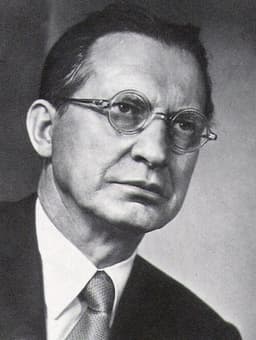
Alcide De Gasperi
Politician · Modern
55.5Total
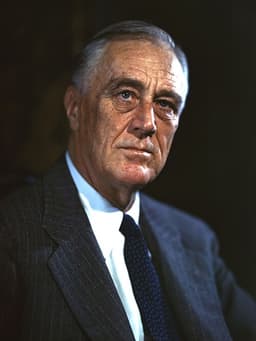
Franklin D. Roosevelt
Politician · Modern
71.0Total
Basic Information
Born
1881
1882
Died
1954
1945
Era
Modern
Modern
Nationality
Italy
United States
Occupation
Politician
Politician
Civilization
Western
Western
Score Comparison
Military (10%)
12.4
45.0
Political (20%)
85.0
85.0
Influence (20%)
65.0
75.0
Legacy (20%)
40.0
65.0
Leadership (15%)
80.7
85.0
Strategy (15%)
31.5
60.0
TOTAL
55.5
71.0
Alcide De Gasperi — Complete Timeline
1946 AD
First Prime Minister of the Italian RepublicPolitical Action
De Gasperi became the first prime minister of the newly proclaimed Italian Republic in December 1945. He led a coalition government that included Christian Democrats, Socialists, and Communists. His government oversaw the transition from monarchy to republic.
RepublicGovernmentTransition
Impact: nationalconstructive
1947 AD
Peace Treaty of ParisPolitical Action◆ Major
De Gasperi signed the Treaty of Paris, which formally ended World War II for Italy. Italy lost its colonies, ceded territory to Yugoslavia and France, and paid reparations. The treaty was unpopular but allowed Italy to regain sovereignty and join the Western alliance.
TreatyWorld War IIDiplomacy
Impact: global
Expulsion of Communists from GovernmentPolitical Action
De Gasperi expelled the Italian Communist Party and Socialist Party from his coalition government in May 1947. This move aligned Italy with the United States and the Marshall Plan, deepening the Cold War divide. It solidified Christian Democratic dominance for decades.
Cold WarMarshall PlanCoalition
Impact: global
1949 AD
Italian Membership in NATOPolitical Action◆ Major
De Gasperi led Italy into the North Atlantic Treaty Organization (NATO) as a founding member. This decision anchored Italy in the Western bloc during the Cold War and secured U.S. military and economic support. It was opposed by the Communist Party.
NATOCold WarAlliance
Impact: globalconstructive
Franklin D. Roosevelt — Complete Timeline
1933 AD
Inaugurated as 32nd PresidentOther◆ Major
Franklin D. Roosevelt was inaugurated as President of the United States on March 4, 1933, during the Great Depression. His inaugural address declared 'the only thing we have to fear is fear itself,' and he immediately called Congress into special session to address the banking crisis.
Great DepressionPresidencyInauguration
Impact: national
Enacted the New DealOther◆ Major
Roosevelt launched the New Deal in 1933, a series of federal programs including the Civilian Conservation Corps, the Agricultural Adjustment Act, and the Tennessee Valley Authority. These measures aimed to provide relief, recovery, and reform during the Great Depression, fundamentally expanding the role of the federal government.
Great DepressionEconomic PolicySocial Reform
Impact: nationalconstructive
1935 AD
Signed the Social Security ActOther◆ Major
Roosevelt signed the Social Security Act into law on August 14, 1935, establishing a federal system of old-age pensions, unemployment insurance, and aid for dependent children. This created the modern American welfare state and provided a safety net for millions of citizens.
Social WelfareLegislationNew Deal
Impact: nationalconstructive
1941 AD
Lend-Lease ActOther◆ Major
Roosevelt signed the Lend-Lease Act on March 11, 1941, authorizing the transfer of military equipment and supplies to Allied nations, particularly Britain and the Soviet Union. This program provided critical material support to countries fighting the Axis powers before U.S. entry into World War II.
World War IIForeign PolicyMilitary Aid
Impact: globalconstructive
Declaration of War on JapanPolitical Action◆ Major
Following the Japanese attack on Pearl Harbor on December 7, 1941, Roosevelt delivered his 'Day of Infamy' speech to Congress the next day, requesting a declaration of war. Congress approved the declaration, bringing the United States into World War II.
World War IIPearl HarborDeclaration of War
Impact: globaldestructive
1942 AD
Executive Order 9066Other◆ Major
Roosevelt signed Executive Order 9066 on February 19, 1942, authorizing the forced relocation and internment of Japanese Americans living on the West Coast. Over 110,000 people, mostly U.S. citizens, were incarcerated in camps for the duration of the war, a decision later widely condemned as a violation of civil rights.
World War IICivil RightsInternment
Impact: nationaldestructive
1944 AD
Elected to Fourth TermOther◆ Major
Roosevelt was elected to an unprecedented fourth term as president in November 1944, defeating Republican Thomas E. Dewey. This election occurred during the final stages of World War II, and Roosevelt's continued leadership ensured stability in the war effort and post-war planning.
PresidencyElectionWorld War II
Impact: national
1945 AD
Yalta ConferenceOther◆ Major
Roosevelt met with Winston Churchill and Joseph Stalin at the Yalta Conference in February 1945 to discuss post-war Europe. Agreements included the division of Germany, Soviet entry into the war against Japan, and the creation of the United Nations, shaping the post-war world order.
World War IIDiplomacyPost-War Planning
Impact: global
Expert Analysis
Franklin D. Roosevelt vs Alcide De Gasperi
# The Two Architects of the West
On a cold January morning in 1945, Franklin D. Roosevelt stood before the U.S. Capitol, hatless despite the bitter wind, to deliver his fourth inaugural address. His voice was thin, his face gray with exhaustion. Across the Atlantic, in the wreckage of Rome, another man was about to begin the most consequential work of his life. Alcide De Gasperi, a former librarian from the Tyrol who had spent years in Mussolini’s prisons, was piecing together a government from the rubble of fascism. One man led the world’s greatest power; the other led a defeated nation. Yet both would shape the postwar order in ways that still define Western democracy.
Origins
Franklin Delano Roosevelt was born into the American aristocracy in 1882, the only child of a wealthy Hudson Valley family. His world was one of privilege, of private tutors and European tours, of summer homes and winter estates. But polio, which struck him at age 39, transformed him utterly. The disease that paralyzed his legs also gave him something rare: empathy for the suffering of others. “If you had spent two years in bed trying to wiggle your big toe,” he once remarked, “after that, anything else seems easy.”
Alcide De Gasperi was born a year earlier, in 1881, in the Alpine village of Pieve Tesino, then part of the Austro-Hungarian Empire. His father was a tax collector, his mother a devout Catholic. The young De Gasperi grew up speaking Italian and German, navigating two cultures, two loyalties. This dual identity would prove essential. He understood that nations are not eternal; they are built, negotiated, and defended with patience, not force.
Rise to Power
Roosevelt’s path was swift and brilliant. He entered politics in 1910 as a New York state senator, served as Assistant Secretary of the Navy under Woodrow Wilson, and was the Democratic vice presidential nominee in 1920. Then polio struck. For seven years, he fought to walk again, and when he returned, it was as a different man—more determined, more calculating, more attuned to the human cost of economic failure. In 1932, with the Great Depression deepening, he crushed Herbert Hoover in a landslide.
De Gasperi’s rise was slower, harder, and far more dangerous. He entered the Italian Parliament in 1921 as a member of the Catholic Popular Party. When Mussolini banned all opposition parties in 1926, De Gasperi was arrested, imprisoned for sixteen months, and then forced into obscurity. For fifteen years, he worked as a librarian in the Vatican, writing catalog cards and watching fascism consume his country. When Mussolini fell in 1943, De Gasperi emerged from the shadows, a man of unimpeachable moral authority. In December 1945, he became the first prime minister of the newly proclaimed Italian Republic.
Leadership & Governance
Roosevelt governed with audacity and improvisation. The New Deal was not a coherent ideology; it was a series of experiments, often contradictory, always urgent. He created Social Security in 1935, guaranteeing a safety net for the elderly. He regulated Wall Street, insured bank deposits, and put millions to work building bridges, parks, and schools. His fireside chats—calm, intimate radio addresses—gave a terrified nation a sense of direction. “The only thing we have to fear is fear itself,” he told them, and they believed him.
De Gasperi governed with restraint and principle. Italy in 1945 was a country of hunger, inflation, and civil war. The Communist Party, flush with prestige from the Resistance, threatened to seize power. De Gasperi did not fight them with tanks; he fought them with patience. In May 1947, he expelled the Communists and Socialists from his coalition government—a decisive political act that saved Italian democracy. He then signed the Peace Treaty of Paris, accepting the loss of Italy’s colonies and territories, because he understood that only by swallowing humiliation could Italy rejoin the community of nations.
Triumph & Tragedy
Roosevelt’s greatest triumph was leading the United States through World War II. He forged the Grand Alliance with Churchill and Stalin, mobilized the American economy into an arsenal of democracy, and lived just long enough to see victory in Europe. His greatest tragedy was dying of a cerebral hemorrhage on April 12, 1945, weeks before the war ended, never seeing the peace he had helped design. The Cold War began without him.
De Gasperi’s greatest triumph was anchoring Italy in the West. In 1949, he led Italy into NATO as a founding member, a decision that aligned his Catholic, conservative country with the Atlantic democracies. His greatest tragedy was the slow erosion of his political coalition. By 1953, the Christian Democrats had grown dependent on patronage and corruption. De Gasperi, the austere librarian from the mountains, watched his party drift from its ideals. He died in 1954, disappointed but not bitter.
Character & Destiny
Roosevelt was a master of ambiguity. He told different people different things, kept his cards close, and trusted almost no one. Churchill called him “a man who had a very good idea of what he wanted to do but was not at all sure how to do it.” His polio gave him a kind of inner steel, a refusal to accept defeat that translated into national policy. He could be ruthless—interning Japanese Americans, cutting deals with Stalin—but he also understood that democracy must deliver for ordinary people.
De Gasperi was the opposite: transparent, patient, almost dull. He did not charm; he persuaded. He did not command; he convinced. His Catholicism gave him a sense of duty, not destiny. “The state is not God,” he once said, “and must not become God.” He believed in limited power, in coalition government, in the slow work of building institutions. Where Roosevelt was a storm, De Gasperi was a steady rain.
Legacy
Roosevelt’s legacy is America’s social contract. Social Security, the minimum wage, bank regulation, the very idea that government should protect citizens from economic catastrophe—these are his monuments. He also set the template for American global leadership, a role the United States has never fully relinquished. His four terms changed the presidency itself, making it the center of American political life.
De Gasperi’s legacy is Italy’s place in Europe. He turned a defeated, divided nation into a founding member of NATO and the European Coal and Steel Community, the precursor to the European Union. He proved that a country could rise from fascism not by force of arms but by force of example. His political scores—88.0 for political acumen, 84.9 for leadership—reflect a man who achieved greatness not through conquest but through construction.
Conclusion
One led a superpower; the other led a shattered nation. One commanded armies; the other built coalitions. Roosevelt died in office, a colossus; De Gasperi died in retirement, a quiet grandfather. Yet both understood something essential: that democracy is not a gift but a task, that leadership is not about glory but about responsibility. Reading their lives together, one sees that the twentieth century’s greatest achievements were not military but political—the creation of societies where ordinary people could live in freedom and dignity. Roosevelt built the machine; De Gasperi kept it running. Both were necessary. Both were great.
Rankings
🥇
Franklin D. RooseveltLeader
Mil: 45.0Pol: 85.0Inf: 75.0
71.0
🥈
Alcide De Gasperi
Mil: 12.4Pol: 85.0Inf: 65.0
55.5
+15.5 behind
How This Comparison Works
Algorithm
Each figure is scored on 6 dimensions (0—100 scale) based on structured historical data: Military (10%), Political (20%), Influence (20%), Legacy (20%), Leadership (15%), Strategy (15%). The weighted total produces the final ranking.
Data Sources
Scores are computed from structured sub-indicators in the database. Scale factors adjust for era (Ancient ×0.85, Modern ×1.0) and civilization size (Eastern ×1.05, Other ×0.80) to account for differences in population and military scale.
Maximum 3 Figures
Comparisons are limited to 2—3 figures to ensure readability and statistical meaningfulness.
Error Margins
±5 points per dimension — Sub-scores are derived from historical records with inherent uncertainty. Two figures within 5 points on a dimension should be considered roughly equivalent in that area.
Total Score Accuracy
±3 points overall — The weighted combination of 6 dimensions produces a total score with approximately ±3 points of uncertainty. Differences of less than 3 points are not statistically significant— the figures are effectively tied.
Known Limitations
- Historical records are incomplete and uneven across civilizations
- Figures from oral-tradition societies may be underrepresented
- Occupation labels can misclassify multi-role figures
- Scores measure capability and impact, not moral character
- Quantitative scoring is a comparison tool, not absolute truth
Capability Radar
Military (10%) — Battles & Warfare
Battles
11
10
Win Rate
15
10
Expansion
17
10
Political (20%) — Governance & Reform
Reform
85
95
Diplomacy
80
90
Economy
70
95
Influence (20%) — Cultural & Global Reach
Cultural
60
80
Global
65
90
Legacy (20%) — Historical Impact
Historical
70
90
Longevity
65
85
Leadership (15%) — Power & Stability
Tenure
75
90
Stability
75
75
Strategy (15%) — Tactics & Innovation
Strategy
21
65
Tactics
23
10
Reform
27
70
Similar Comparisons
Comments & Discussion
ValorVsVision6/16/2026
People fetishize De Gasperi's "humble librarian" background but ignore he ran a Catholic party that literally suppressed communists with U.S. funding. Roosevelt was the real architect: he birthed the New Deal, killed the Gold Standard, and dragged isolationist America into WWII. De Gasperi rebuilt Italy on American Marshall Plan life support. Give me FDR’s polio-driven empathy over a clerical anticommunist any day.
历史铁粉6/16/2026
罗斯福和德加斯佩里根本不是一个量级的。罗斯福带着美国走出大萧条,打赢二战,建立联合国,德加斯佩里不过是美国扶植的傀儡,唯一成就是让意大利加入北约。别拿图书馆员人设来碰瓷轮椅上的巨人,德加斯佩里连国际声望都靠马歇尔计划堆出来的。
DeGasperiDetective6/16/2026
The "two architects" framing is romantic nonsense. De Gasperi was a pragmatic survivor who pivoted from Austro-Hungarian subject to Catholic antifascist to Cold War pawn. His 1946 concordat with the Vatican gave clerics veto power over Italian education—a theocratic stain. Meanwhile, Roosevelt’s 1941 Four Freedoms speech set universal human rights as the postwar baseline. Sorry, but a librarian’s daybook doesn’t compete with the Atlantic Charter.
冷战解码人6/16/2026
说得好像德加斯佩里多伟大多独立似的。他1947年秘密要求美国中央情报局资助天主教民主党,把意大利变成美国反苏前哨。罗斯福至少敢对抗华尔街财阀,德加斯佩里连国内工业化都靠美国贷款。要论塑造西方,罗斯福给战后世界建了个灯塔,德加斯佩里只是给灯塔刷漆的雇工。
ClassicsBrains6/16/2026
Miss me with the "both saved democracy" cliché. Roosevelt's greatest legacy was the atomic bomb project that birthed the nuclear age—and his secret Quebec Agreement cut Britain out of postwar influence. De Gasperi? He dismantled fascist institutions but kept 90% of the old bureaucracy, including Mussolini's police files. Neither was a saint: one built the Bomb, the other whitewashed authoritarians. Pick your poison.