Loading...
Alcide De Gasperi vs Elizabeth I
Elizabeth I leads by 10.2 pts · 2 figures compared
…
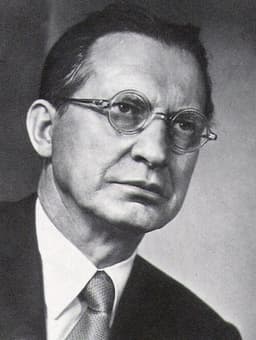
Alcide De Gasperi
Politician · Modern
55.5Total
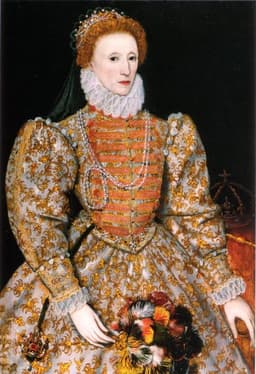
Elizabeth I
Politician · Modern
65.7Total
Basic Information
Born
1881
1533
Died
1954
1603
Era
Modern
Modern
Nationality
Italy
England
Occupation
Politician
Politician
Civilization
Western
Western
Score Comparison
Military (10%)
12.4
45.0
Political (20%)
85.0
78.0
Influence (20%)
65.0
65.0
Legacy (20%)
40.0
68.0
Leadership (15%)
80.7
75.0
Strategy (15%)
31.5
50.0
TOTAL
55.5
65.7
Alcide De Gasperi — Complete Timeline
1946 AD
First Prime Minister of the Italian RepublicPolitical Action
De Gasperi became the first prime minister of the newly proclaimed Italian Republic in December 1945. He led a coalition government that included Christian Democrats, Socialists, and Communists. His government oversaw the transition from monarchy to republic.
RepublicGovernmentTransition
Impact: nationalconstructive
1947 AD
Peace Treaty of ParisPolitical Action◆ Major
De Gasperi signed the Treaty of Paris, which formally ended World War II for Italy. Italy lost its colonies, ceded territory to Yugoslavia and France, and paid reparations. The treaty was unpopular but allowed Italy to regain sovereignty and join the Western alliance.
TreatyWorld War IIDiplomacy
Impact: global
Expulsion of Communists from GovernmentPolitical Action
De Gasperi expelled the Italian Communist Party and Socialist Party from his coalition government in May 1947. This move aligned Italy with the United States and the Marshall Plan, deepening the Cold War divide. It solidified Christian Democratic dominance for decades.
Cold WarMarshall PlanCoalition
Impact: global
1949 AD
Italian Membership in NATOPolitical Action◆ Major
De Gasperi led Italy into the North Atlantic Treaty Organization (NATO) as a founding member. This decision anchored Italy in the Western bloc during the Cold War and secured U.S. military and economic support. It was opposed by the Communist Party.
NATOCold WarAlliance
Impact: globalconstructive
Elizabeth I — Complete Timeline
1559 AD
Act of Supremacy 1559Political Action◆ Major
Elizabeth I re-established the Church of England's independence from Rome, declaring herself Supreme Governor. This act, part of the Elizabethan Religious Settlement, restored Protestantism while maintaining some Catholic traditions, creating a via media that aimed to unify the nation.
Religious SettlementProtestantismChurch of England
Impact: nationalconstructive
1587 AD
Execution of Mary, Queen of ScotsPolitical Action◆ Major
After years of imprisonment, Elizabeth I signed the death warrant for Mary, Queen of Scots, who had been implicated in the Babington Plot to assassinate Elizabeth and claim the English throne. Mary's execution removed a major Catholic rival and solidified Elizabeth's position.
ExecutionCatholic RivalPlot
Impact: nationaltragic
1588 AD
Defeat of the Spanish ArmadaWar
The English navy under Lord Howard and Sir Francis Drake defeated the Spanish Armada, a massive invasion fleet sent by Philip II. Storms and English fireships scattered the Spanish fleet, preventing the invasion and establishing England as a major naval power.
Naval BattleSpainProtestantism
Impact: globalconstructive
1600 AD
Chartering of the East India CompanyPolitical Action◆ Major
Elizabeth I granted a royal charter to the East India Company, giving it a monopoly on English trade with Asia. This company would become a powerful instrument of British imperialism, eventually controlling large parts of India and shaping global trade.
TradeColonialismCharter
Impact: globalconstructive
1601 AD
Golden SpeechPolitical Action
In her final address to Parliament, Elizabeth I delivered the 'Golden Speech,' expressing her love for her subjects and her dedication to the realm. She addressed grievances over monopolies, promising reform, and cemented her image as a beloved monarch devoted to her people.
SpeechParliamentMonarchy
Impact: nationalconstructive
Expert Analysis
Elizabeth I vs Alcide De Gasperi
# The Sovereign and the Steward: Elizabeth I and Alcide De Gasperi
The contrast could not be sharper. On one side, a queen in velvet and pearls, her red hair aflame beneath a crown, standing before her troops at Tilbury in 1588, declaring she had "the heart and stomach of a king." On the other, a soft-spoken man from the Italian Alps, working late into the night in a cramped Rome office, piecing together a shattered republic from the wreckage of fascism and war. Elizabeth I ruled by divine right; Alcide De Gasperi ruled by democratic consent. One inherited a throne; the other built one from scratch. What drove them, and what made their very different triumphs possible?
Origins
Elizabeth Tudor was born into danger. Her mother, Anne Boleyn, was executed when Elizabeth was not yet three. Declared illegitimate by her father Henry VIII, she spent her youth navigating the treacherous currents of Tudor court politics, learning to conceal her thoughts behind a mask of propriety. Her education was formidable—she read Latin, Greek, French, and Italian, studied philosophy and rhetoric—but her real schooling came in survival. When her half-sister Mary I took the throne and restored Catholicism, Elizabeth lived under constant suspicion, even imprisonment in the Tower of London. She learned early that words could kill.
Alcide De Gasperi came from a different world entirely. Born in 1881 in the small town of Pieve Tesino, in the Tyrolean region then part of the Austro-Hungarian Empire, he grew up speaking Italian and German with equal fluency. His father was a policeman of modest means; his mother ran the household. De Gasperi studied literature and philosophy, but politics called him. He entered the Austrian parliament as a young man, advocating for Italian-speaking minorities, and later served in the Italian parliament after World War I. Then came Mussolini. De Gasperi opposed fascism openly, and paid for it: arrested in 1927, he spent four years in prison and forced internal exile, emerging in the 1940s as a quiet, unassuming figure with a steel core.
Rise to Power
Elizabeth's path to power was sudden and dramatic. On November 17, 1558, Mary I died, and Elizabeth, aged 25, became queen. She inherited a kingdom torn by religious conflict, bankrupt from war with France, and regarded by much of Europe as a minor island power. Her first acts were masterful: she restored Protestantism through the Act of Supremacy in 1559, but with a moderation that avoided the extremism of her father or sister. She declared herself "Supreme Governor" of the Church of England, not "Supreme Head"—a subtle but crucial compromise that allowed Catholics to accept her authority.
De Gasperi's rise was slower, more painful. After Mussolini's fall in 1943 and the war's end, he emerged as leader of the Christian Democracy party. In December 1945, he became the first prime minister of the Italian Republic. He faced a nation physically and morally devastated: factories bombed, railways destroyed, inflation spiraling, and a population divided between former fascists, communist partisans, and ordinary people desperate for stability. His power came not from blood or birth, but from patient coalition-building and a reputation for integrity.
Leadership & Governance
Elizabeth governed through the force of her personality and the theater of monarchy. She never married, using the prospect of marriage as a diplomatic tool for decades, playing off suitors from France, Spain, and the Holy Roman Empire. Her "Virgin Queen" persona became a political weapon—she belonged to no man, only to England. She cultivated an image of maternal care for her subjects, yet she could be ruthless: in 1587, after years of hesitation, she signed the death warrant for Mary, Queen of Scots, her Catholic cousin who had plotted against her. It was a political necessity, but Elizabeth wept when she signed it.
De Gasperi governed through consensus and principle. His political genius lay in building a centrist coalition that excluded both the far-right and the far-left. In May 1947, he took the decisive step of expelling the Communist and Socialist parties from his government, a move that aligned Italy with the Western alliance and made possible the Marshall Plan aid that rebuilt the country. He signed the 1947 Peace Treaty of Paris, accepting harsh terms—loss of colonies, reparations, territorial cessions—because he understood that Italy had to atone for fascism before it could be trusted. He led Italy into NATO in 1949, anchoring the nation to the democratic West.
Triumph & Tragedy
Elizabeth's greatest triumph was the defeat of the Spanish Armada in 1588. Philip II of Spain sent the largest invasion fleet Europe had ever seen—130 ships, 30,000 men—to crush England and restore Catholicism. The English navy, smaller but more maneuverable, harried the Armada up the Channel, and storms did the rest. It was a victory that seemed almost providential. Elizabeth's legend was sealed. Yet her reign also had deep shadows: the execution of Mary, Queen of Scots haunted her; the brutal suppression of rebellions in Ireland stained her record; and the later years saw economic hardship, failed harvests, and growing discontent.
De Gasperi's triumph was quieter but no less profound: he presided over the birth of Italian democracy. He gave his country a constitution, a place in the Western alliance, and the foundation for the "economic miracle" of the 1950s and 1960s. His tragedy was that he did not live to see it fully bloom. He died in 1954, his health worn down by years of exhausting work. His last years were marked by frustration as his centrist coalition frayed and the political system he helped create began to show cracks.
Character & Destiny
Elizabeth was brilliant, vain, indecisive, and courageous. She could deliberate for months on a single decision, then act with sudden ferocity. Her caution saved her life repeatedly; her hesitation sometimes cost her opportunities. She was a master of ambiguity—her famous remark that she would not "make windows into men's souls" reflected a genuine tolerance, but also a political calculation. She understood that power required performance, and she performed magnificently.
De Gasperi was the opposite: plain, modest, almost invisible. He had no charisma, no theatrical flair. What he had was patience, integrity, and an unshakeable commitment to democratic institutions. He was a man who read Dante and St. Augustine in his spare time, who believed that politics was about building structures that would outlast any individual. His character shaped his destiny: because he was trusted, he could hold together a coalition of monarchists, liberals, and Catholic conservatives. Because he was principled, he could stand up to the Church when it demanded too much, and to the United States when it pushed too hard.
Legacy
Elizabeth left behind a legend: the golden age of Shakespeare, Drake, and the Armada; the image of Gloriana, the Virgin Queen who made England a Protestant power and a player on the world stage. Her legacy is cultural as much as political—she is remembered as much for the flourishing of English drama as for the Act of Supremacy.
De Gasperi left behind an institution: the Italian Republic. He is one of the "founding fathers" of the European Union, alongside Schuman, Adenauer, and Monnet. His legacy is less romantic but more concrete: a democratic Italy, anchored in the West, that survived the Cold War and became a major economy. He is remembered in Italy with statues and street names, but his true monument is the stability of the country he helped rebuild.
Conclusion
Elizabeth I and Alcide De Gasperi governed in different centuries, with different tools, for different ends. One was a queen who ruled by divine right and personal magnetism; the other was a prime minister who governed by democratic consent and patient negotiation. Yet both faced the same fundamental challenge: how to hold a fractured nation together and guide it toward a future its people could believe in. Elizabeth did it with spectacle and symbolism; De Gasperi did it with substance and structure. One created a legend; the other created a foundation. Neither could have succeeded in the other's world. But both understood that power, at its most lasting, is not about the person who wields it—it is about the nation that survives.
Rankings
🥇
Elizabeth ILeader
Mil: 45.0Pol: 78.0Inf: 65.0
65.7
🥈
Alcide De Gasperi
Mil: 12.4Pol: 85.0Inf: 65.0
55.5
+10.2 behind
How This Comparison Works
Algorithm
Each figure is scored on 6 dimensions (0—100 scale) based on structured historical data: Military (10%), Political (20%), Influence (20%), Legacy (20%), Leadership (15%), Strategy (15%). The weighted total produces the final ranking.
Data Sources
Scores are computed from structured sub-indicators in the database. Scale factors adjust for era (Ancient ×0.85, Modern ×1.0) and civilization size (Eastern ×1.05, Other ×0.80) to account for differences in population and military scale.
Maximum 3 Figures
Comparisons are limited to 2—3 figures to ensure readability and statistical meaningfulness.
Error Margins
±5 points per dimension — Sub-scores are derived from historical records with inherent uncertainty. Two figures within 5 points on a dimension should be considered roughly equivalent in that area.
Total Score Accuracy
±3 points overall — The weighted combination of 6 dimensions produces a total score with approximately ±3 points of uncertainty. Differences of less than 3 points are not statistically significant— the figures are effectively tied.
Known Limitations
- Historical records are incomplete and uneven across civilizations
- Figures from oral-tradition societies may be underrepresented
- Occupation labels can misclassify multi-role figures
- Scores measure capability and impact, not moral character
- Quantitative scoring is a comparison tool, not absolute truth
Capability Radar
Military (10%) — Battles & Warfare
Battles
11
45
Win Rate
15
70
Expansion
17
55
Political (20%) — Governance & Reform
Reform
85
80
Diplomacy
80
85
Economy
70
80
Influence (20%) — Cultural & Global Reach
Cultural
60
85
Global
65
80
Legacy (20%) — Historical Impact
Historical
70
85
Longevity
65
85
Leadership (15%) — Power & Stability
Tenure
75
90
Stability
75
75
Strategy (15%) — Tactics & Innovation
Strategy
21
75
Tactics
23
60
Reform
27
65
Similar Comparisons
Comments & Discussion
No comments yet. Be the first to share your thoughts!