Loading...
This comparison has not been analyzed yet.
One-time AI generation (~1 minute). Scores and timeline are already available below.
Alcide De Gasperi vs Do Muoi
Alcide De Gasperi leads by 3.9 pts · 2 figures compared
…
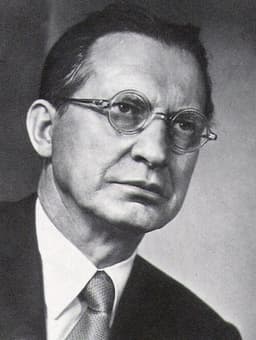
Alcide De Gasperi
Politician · Modern
55.5Total

Do Muoi
Politician · Modern
51.6Total
Basic Information
Born
1881
1917
Died
1954
2018
Era
Modern
Modern
Nationality
Italy
Vietnam
Occupation
Politician
Politician
Civilization
Western
Eastern
Score Comparison
Military (10%)
12.4
12.5
Political (20%)
85.0
68.0
Influence (20%)
65.0
52.5
Legacy (20%)
40.0
45.0
Leadership (15%)
80.7
80.0
Strategy (15%)
31.5
37.9
TOTAL
55.5
51.6
Alcide De Gasperi — Complete Timeline
1946 AD
First Prime Minister of the Italian RepublicPolitical Action
De Gasperi became the first prime minister of the newly proclaimed Italian Republic in December 1945. He led a coalition government that included Christian Democrats, Socialists, and Communists. His government oversaw the transition from monarchy to republic.
RepublicGovernmentTransition
Impact: nationalconstructive
1947 AD
Peace Treaty of ParisPolitical Action◆ Major
De Gasperi signed the Treaty of Paris, which formally ended World War II for Italy. Italy lost its colonies, ceded territory to Yugoslavia and France, and paid reparations. The treaty was unpopular but allowed Italy to regain sovereignty and join the Western alliance.
TreatyWorld War IIDiplomacy
Impact: global
Expulsion of Communists from GovernmentPolitical Action
De Gasperi expelled the Italian Communist Party and Socialist Party from his coalition government in May 1947. This move aligned Italy with the United States and the Marshall Plan, deepening the Cold War divide. It solidified Christian Democratic dominance for decades.
Cold WarMarshall PlanCoalition
Impact: global
1949 AD
Italian Membership in NATOPolitical Action◆ Major
De Gasperi led Italy into the North Atlantic Treaty Organization (NATO) as a founding member. This decision anchored Italy in the Western bloc during the Cold War and secured U.S. military and economic support. It was opposed by the Communist Party.
NATOCold WarAlliance
Impact: globalconstructive
Do Muoi — Complete Timeline
1991 AD
Appointed General Secretary of the Communist Party of VietnamPolitical Action◆ Major
Do Muoi was appointed General Secretary of the Communist Party of Vietnam in June 1991, succeeding Nguyen Van Linh. He led the party during a period of conservative retrenchment, slowing the pace of Doi Moi reforms and emphasizing ideological orthodoxy.
General SecretaryCPVVietnam
Impact: national
Oversaw 7th National Party CongressPolitical Action◆ Major
Do Muoi presided over the 7th National Party Congress in 1991, which reaffirmed the party's monopoly on power and adopted a cautious approach to economic reform. The congress emphasized stability and socialist orientation, limiting market liberalization.
Party CongressPolicyVietnam
Impact: national
1992 AD
Maintained One-Party Rule Amid ReformsPolitical Action◆ Major
Do Muoi oversaw the adoption of a new constitution in 1992 that reaffirmed the Communist Party's leading role while introducing limited economic reforms. The constitution maintained political repression and banned opposition parties, ensuring party control.
ConstitutionOne-Party RuleVietnam
Impact: national
1997 AD
Resigned as General SecretaryPolitical Action◆ Major
Do Muoi resigned as General Secretary in December 1997 at the 8th National Party Congress, handing power to Le Kha Phieu. His resignation marked the end of a conservative era, though he remained influential as an advisor.
ResignationLeadership ChangeVietnam
Impact: national
This comparison has not been analyzed yet.
One-time AI generation (~1 minute). Scores and timeline are already available below.
Rankings
🥇
Alcide De GasperiLeader
Mil: 12.4Pol: 85.0Inf: 65.0
55.5
🥈
Do Muoi
Mil: 12.5Pol: 68.0Inf: 52.5
51.6
+3.9 behind
How This Comparison Works
Algorithm
Each figure is scored on 6 dimensions (0—100 scale) based on structured historical data: Military (10%), Political (20%), Influence (20%), Legacy (20%), Leadership (15%), Strategy (15%). The weighted total produces the final ranking.
Data Sources
Scores are computed from structured sub-indicators in the database. Scale factors adjust for era (Ancient ×0.85, Modern ×1.0) and civilization size (Eastern ×1.05, Other ×0.80) to account for differences in population and military scale.
Maximum 3 Figures
Comparisons are limited to 2—3 figures to ensure readability and statistical meaningfulness.
Error Margins
±5 points per dimension — Sub-scores are derived from historical records with inherent uncertainty. Two figures within 5 points on a dimension should be considered roughly equivalent in that area.
Total Score Accuracy
±3 points overall — The weighted combination of 6 dimensions produces a total score with approximately ±3 points of uncertainty. Differences of less than 3 points are not statistically significant— the figures are effectively tied.
Known Limitations
- Historical records are incomplete and uneven across civilizations
- Figures from oral-tradition societies may be underrepresented
- Occupation labels can misclassify multi-role figures
- Scores measure capability and impact, not moral character
- Quantitative scoring is a comparison tool, not absolute truth
Capability Radar
Military (10%) — Battles & Warfare
Battles
11
15
Win Rate
15
18
Expansion
17
19
Political (20%) — Governance & Reform
Reform
85
40
Diplomacy
80
55
Economy
70
45
Influence (20%) — Cultural & Global Reach
Cultural
60
30
Global
65
25
Legacy (20%) — Historical Impact
Historical
70
40
Longevity
65
30
Leadership (15%) — Power & Stability
Tenure
75
75
Stability
75
60
Strategy (15%) — Tactics & Innovation
Strategy
21
25
Tactics
23
24
Reform
27
28
Similar Comparisons
Comments & Discussion
No comments yet. Be the first to share your thoughts!