Loading...
Alcide De Gasperi vs Charles de Gaulle
Charles de Gaulle leads by 12.7 pts · 2 figures compared
…
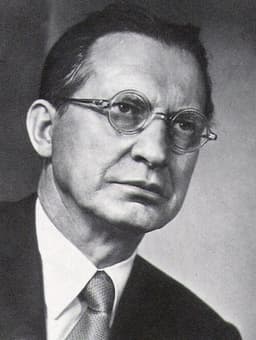
Alcide De Gasperi
Politician · Modern
55.5Total
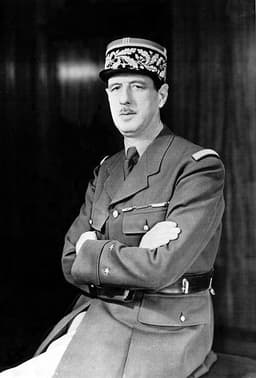
Charles de Gaulle
Politician · Modern
68.2Total
Basic Information
Born
1881
1890
Died
1954
1970
Era
Modern
Modern
Nationality
Italy
France
Occupation
Politician
Politician
Civilization
Western
Western
Score Comparison
Military (10%)
12.4
55.0
Political (20%)
85.0
75.0
Influence (20%)
65.0
65.0
Legacy (20%)
40.0
68.0
Leadership (15%)
80.7
78.0
Strategy (15%)
31.5
65.0
TOTAL
55.5
68.2
Alcide De Gasperi — Complete Timeline
1946 AD
First Prime Minister of the Italian RepublicPolitical Action
De Gasperi became the first prime minister of the newly proclaimed Italian Republic in December 1945. He led a coalition government that included Christian Democrats, Socialists, and Communists. His government oversaw the transition from monarchy to republic.
RepublicGovernmentTransition
Impact: nationalconstructive
1947 AD
Peace Treaty of ParisPolitical Action◆ Major
De Gasperi signed the Treaty of Paris, which formally ended World War II for Italy. Italy lost its colonies, ceded territory to Yugoslavia and France, and paid reparations. The treaty was unpopular but allowed Italy to regain sovereignty and join the Western alliance.
TreatyWorld War IIDiplomacy
Impact: global
Expulsion of Communists from GovernmentPolitical Action
De Gasperi expelled the Italian Communist Party and Socialist Party from his coalition government in May 1947. This move aligned Italy with the United States and the Marshall Plan, deepening the Cold War divide. It solidified Christian Democratic dominance for decades.
Cold WarMarshall PlanCoalition
Impact: global
1949 AD
Italian Membership in NATOPolitical Action◆ Major
De Gasperi led Italy into the North Atlantic Treaty Organization (NATO) as a founding member. This decision anchored Italy in the Western bloc during the Cold War and secured U.S. military and economic support. It was opposed by the Communist Party.
NATOCold WarAlliance
Impact: globalconstructive
Charles de Gaulle — Complete Timeline
1940 AD
Appeal of 18 June 1940Political Action
From London, de Gaulle broadcast a radio appeal urging French resistance against Nazi occupation. He called on French soldiers and citizens to continue the fight, founding the Free French Forces and becoming the symbol of French defiance.
World War IIResistanceLeadership
Impact: nationalconstructive
1958 AD
Founding of the Fifth RepublicPolitical Action
De Gaulle returned to power during the Algerian crisis and oversaw the drafting of a new constitution. The Fifth Republic established a strong executive presidency, replacing the unstable parliamentary system of the Fourth Republic.
ConstitutionGovernment ReformPolitical System
Impact: nationalconstructive
1962 AD
End of the Algerian WarPolitical Action◆ Major
De Gaulle negotiated the
DecolonizationPeace TreatyAlgeria
Impact: regionalconstructive
1968 AD
May 1968 CrisisPolitical Action◆ Major
Mass student protests and general strikes paralyzed France, challenging de Gaulle's government. De Gaulle briefly fled to Germany, then returned to dissolve the National Assembly and call elections, which his party won, but his authority was weakened.
ProtestPolitical CrisisSocial Unrest
Impact: nationaldestructive
1969 AD
Resignation as PresidentPolitical Action
De Gaulle resigned after losing a referendum on regional reform and Senate restructuring. The defeat marked the end of his political career, as he withdrew from public life and died the following year.
ResignationPolitical DefeatReferendum
Impact: nationaltragic
Expert Analysis
Charles de Gaulle vs Alcide De Gasperi
# The Two Founders: De Gaulle and De Gasperi
On a June evening in 1940, a tall, angular French general stepped before a microphone in a London studio and spoke words that would echo through history. "France has lost a battle," Charles de Gaulle declared, "but France has not lost the war." Six years later, across the Alps, a stocky, soft-spoken Italian from the mountain province of Trentino took the oath as his nation's first post-war prime minister. Alcide De Gasperi had spent the war years hiding in the Vatican library. Now he was tasked with rebuilding a country that had been both fascist and defeated. These two men—one the embodiment of national defiance, the other the architect of democratic reconstruction—would each reshape their shattered nations. But their paths, their methods, and their ultimate legacies could hardly have been more different.
Origins
De Gaulle was born into a devoutly Catholic, conservative family in Lille in 1890. His father, a professor of philosophy, instilled in him a sense of France's historic greatness. From childhood, de Gaulle was aloof, bookish, and convinced of his own destiny. He entered Saint-Cyr military academy and was wounded at Verdun, taken prisoner, and spent the remainder of World War I in German captivity—a formative experience that deepened his belief in the need for strong, independent leadership.
De Gasperi came from a different world entirely. Born in 1881 in the Tyrolean town of Pieve Tesino, then part of the Austro-Hungarian Empire, he grew up speaking Italian and German, navigating multiple identities. His father was a tax collector, and the family was modest. De Gasperi studied literature and philosophy, entered politics as a Catholic activist, and was elected to the Austrian parliament before World War I. After the war, when Trentino became Italian, he joined the newly formed Italian People's Party. Under Mussolini, he was arrested and spent sixteen months in prison, then lived quietly in the Vatican, working as a librarian. While de Gaulle's path was forged in military honor and exile, de Gasperi's was shaped by political survival and patient endurance.
Rise to Power
De Gaulle's rise was dramatic and improbable. In 1940, he was a little-known brigadier general. His Appeal of 18 June initially reached few French ears, but it became the rallying cry of the Free French. Over the next four years, he fought not only the Nazis but also Allied leaders who doubted his legitimacy. Churchill called him "the cross I have to bear." Roosevelt considered him a fascist. Yet de Gaulle refused to be a puppet. By 1944, he had maneuvered himself into leading liberated France, walking down the Champs-Élysées in triumph.
De Gasperi's ascent was quieter but no less significant. In December 1945, he became prime minister of a coalition government. Italy was devastated: its economy in ruins, its monarchy abolished by referendum, its international standing at zero. De Gasperi held the country together through sheer political skill. In 1947, he made the fateful decision to expel the Communists and Socialists from his coalition—a move that aligned Italy firmly with the Western bloc and the United States. Later that year, he signed the Treaty of Paris, accepting harsh terms: loss of colonies, territorial cessions, reparations. It was a bitter pill, but de Gasperi understood that only by accepting defeat could Italy begin to rebuild.
Leadership & Governance
De Gaulle governed as a monarchist without a crown. His Fifth Republic, founded in 1958 during the Algerian crisis, concentrated power in the presidency. He believed France needed a "certain idea of itself"—grand, independent, and resistant to Anglo-Saxon domination. He withdrew France from NATO's integrated command, vetoed British entry into the European Common Market, and pursued an independent nuclear deterrent. At home, he ended the Algerian War with the Évian Accords of 1962, facing down assassination attempts and a military revolt. His style was imperious; he once remarked, "I am France."
De Gasperi governed as a coalition builder. Italy's post-war constitution created a parliamentary system with weak executives and strong parties. De Gasperi worked within these constraints, forging alliances between Christian Democrats, Socialists, and Republicans. He was a master of compromise, not command. His great achievement was anchoring Italy in the West: joining NATO as a founding member in 1949, embracing the Marshall Plan, and supporting European integration. He believed that Italy's future lay not in nationalist grandeur but in European cooperation. Where de Gaulle stood alone, de Gasperi stood with others.
Triumph & Tragedy
De Gaulle's greatest triumph was his return in 1958, when he saved France from civil war over Algeria. His greatest tragedy came in May 1968, when student protests and a general strike paralyzed France. De Gaulle, stunned by the rebellion, briefly fled to Baden-Baden to consult with French generals in Germany. He returned, called elections, and won—but his aura of invincibility was shattered. He resigned in 1969 after losing a referendum on regional reform. The man who had embodied France left power not in glory, but in defeat.
De Gasperi's triumph was the creation of a stable, democratic Italy from the ruins of fascism. He led eight consecutive governments, a record that stands today. His tragedy was more personal: he died in 1954, just as the Italian economic miracle was beginning, and never saw the full fruits of his labor. His final years were marked by declining health and political marginalization as younger leaders pushed him aside.
Character & Destiny
De Gaulle's character was his destiny. His aloofness, his certainty, his refusal to compromise—these qualities saved France in 1940 and 1958, but they also isolated him. He once said, "The better I am, the less I am loved." He was a man who needed enemies to define himself: the Germans, the Allies, the Communists, the Americans. His solitude was both his strength and his weakness.
De Gasperi was the opposite: a man who needed partners. His humility, his patience, his willingness to listen—these made him the father of Italian democracy. He had no grand vision of himself, only a quiet determination to serve. "Politics," he said, "is the art of the possible." He lived that creed.
Legacy
De Gaulle's legacy is the Fifth Republic, which still governs France today. He gave France a constitution that ensures strong executive leadership, a nuclear arsenal, and a habit of independence in foreign policy. His name is everywhere: airports, aircraft carriers, squares. But his vision of a "certain idea of France" sometimes feels like a burden to later generations.
De Gasperi's legacy is more diffuse but no less profound. He is one of the founding fathers of the European Union, alongside Robert Schuman and Jean Monnet. Italy's post-war stability, its membership in NATO and the EU, its economic recovery—all trace back to his patient statecraft. He is remembered with statues and stamps, but his name lacks the thunder of de Gaulle's.
Conclusion
Two men, two nations, two paths. De Gaulle believed that France needed a hero; De Gasperi believed that Italy needed a builder. One stood tall and alone, the other worked quietly in the background. Both succeeded, and both suffered. Their stories remind us that history is not a single template for greatness. Sometimes a nation needs a voice that refuses to surrender, and sometimes it needs a hand that refuses to let go. De Gaulle gave France its pride; De Gasperi gave Italy its future. Which is more important? Perhaps only the people they served can answer.
Rankings
🥇
Charles de GaulleLeader
Mil: 55.0Pol: 75.0Inf: 65.0
68.2
🥈
Alcide De Gasperi
Mil: 12.4Pol: 85.0Inf: 65.0
55.5
+12.7 behind
How This Comparison Works
Algorithm
Each figure is scored on 6 dimensions (0—100 scale) based on structured historical data: Military (10%), Political (20%), Influence (20%), Legacy (20%), Leadership (15%), Strategy (15%). The weighted total produces the final ranking.
Data Sources
Scores are computed from structured sub-indicators in the database. Scale factors adjust for era (Ancient ×0.85, Modern ×1.0) and civilization size (Eastern ×1.05, Other ×0.80) to account for differences in population and military scale.
Maximum 3 Figures
Comparisons are limited to 2—3 figures to ensure readability and statistical meaningfulness.
Error Margins
±5 points per dimension — Sub-scores are derived from historical records with inherent uncertainty. Two figures within 5 points on a dimension should be considered roughly equivalent in that area.
Total Score Accuracy
±3 points overall — The weighted combination of 6 dimensions produces a total score with approximately ±3 points of uncertainty. Differences of less than 3 points are not statistically significant— the figures are effectively tied.
Known Limitations
- Historical records are incomplete and uneven across civilizations
- Figures from oral-tradition societies may be underrepresented
- Occupation labels can misclassify multi-role figures
- Scores measure capability and impact, not moral character
- Quantitative scoring is a comparison tool, not absolute truth
Capability Radar
Military (10%) — Battles & Warfare
Battles
11
60
Win Rate
15
55
Expansion
17
20
Political (20%) — Governance & Reform
Reform
85
95
Diplomacy
80
90
Economy
70
70
Influence (20%) — Cultural & Global Reach
Cultural
60
70
Global
65
80
Legacy (20%) — Historical Impact
Historical
70
85
Longevity
65
75
Leadership (15%) — Power & Stability
Tenure
75
85
Stability
75
75
Strategy (15%) — Tactics & Innovation
Strategy
21
85
Tactics
23
70
Reform
27
80
Similar Comparisons
Comments & Discussion
No comments yet. Be the first to share your thoughts!