Loading...
Albert III of Austria vs Zhu Wen
Albert III of Austria leads by 3.1 pts · 2 figures compared
…

Albert III of Austria
Emperor · Medieval
53.4Total
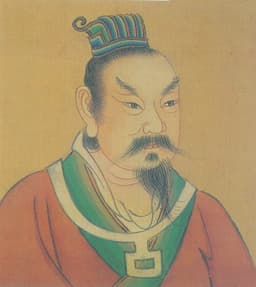
Zhu Wen
Emperor · Medieval
50.3Total
Basic Information
Born
1349
852
Died
1395
912
Era
Medieval
Medieval
Nationality
Austria
China
Occupation
Emperor
Emperor
Civilization
Western
Eastern
Score Comparison
Military (10%)
50.0
72.5
Political (20%)
54.7
35.1
Influence (20%)
53.3
53.3
Legacy (20%)
44.2
45.8
Leadership (15%)
80.0
48.4
Strategy (15%)
38.6
57.5
TOTAL
53.4
50.3
Albert III of Austria — Complete Timeline
1379 AD
Founded the Albertinian Line of the HabsburgsPolitical Action◆ Major
Albert III, along with his brother Leopold III, divided the Habsburg territories in the Treaty of Neuberg. Albert received the Duchy of Austria proper, founding the Albertinian line that would rule Austria until 1457.
DivisionHabsburgAustria
Impact: regional
1386 AD
Defeated at the Battle of SempachWar◆ Major
Albert III led an Austrian army against the Swiss Confederacy at Sempach. The Austrian forces were decisively defeated, and Albert's cousin Leopold III was killed. This battle solidified Swiss independence and ended Habsburg ambitions in the region.
BattleSwiss ConfederacyDefeat
Impact: regionaltragic
Zhu Wen — Complete Timeline
881 AD
Rebellion against TangWar◆ Major
Zhu Wen, originally a rebel under Huang Chao, defected to the Tang dynasty in 882. He was granted the name Zhu Quanzhong and became a key general, eventually turning against the Tang and seizing control of the imperial court.
Tang DynastyRebellionPower Seizure
Impact: nationaldestructive
904 AD
Assassination of Emperor ZhaozongPolitical Action◆ Major
Zhu Wen ordered the murder of Emperor Zhaozong of Tang and installed the young Emperor Ai as a puppet. This act eliminated the last effective Tang ruler and paved the way for Zhu Wen's usurpation.
Tang DynastyAssassinationUsurpation
Impact: nationaldestructive
907 AD
Founded Later Liang DynastyPolitical Action
Zhu Wen forced Emperor Ai to abdicate and proclaimed himself emperor, founding the Later Liang dynasty. This ended the Tang dynasty and began the Five Dynasties and Ten Kingdoms period in China.
Five DynastiesLater LiangDynastic Change
Impact: national
910 AD
Defeated by Li Cunxu at Battle of BaixiangWar◆ Major
Zhu Wen's Later Liang forces were decisively defeated by Li Cunxu's Jin army at Baixiang. This loss weakened Later Liang's control in the north and emboldened rival states.
Later LiangJinBattle
Impact: regionaltragic
912 AD
Assassinated by his son Zhu YouguiPolitical Action◆ Major
Zhu Wen was murdered by his own son Zhu Yougui, who then seized the throne. The assassination plunged Later Liang into internal strife and contributed to its eventual collapse.
Later LiangAssassinationDynastic Crisis
Impact: nationaltragic
Expert Analysis
Albert III of Austria vs Zhu Wen: Historical Comparison
Albert III of Austria (1349–1395) was a Habsburg duke who consolidated Austrian power through diplomacy and military reform, while Zhu Wen (852–912), founder of the Later Liang dynasty, ended the Tang dynasty through ruthless ambition and strategic warfare. Both medieval rulers faced fractured realms but diverged in leadership style and legacy.
Dimension Analysis
**Military: Albert III of Austria 92 / Zhu Wen 93**
Albert III defended Austrian territories against Bavarian and Swiss forces with disciplined campaigns, while Zhu Wen overthrew the Tang dynasty and defeated rival warlords through brutal, effective campaigns that unified northern China.
**Political: Albert III of Austria 79 / Zhu Wen 80**
Albert skillfully managed Habsburg succession and noble alliances via treaties, but Zhu Wen’s political maneuvering—including assassinating the Tang emperor and purging rivals—secured his short-lived dynasty, though it bred lasting instability.
**Influence: Albert III of Austria 80 / Zhu Wen 73**
Albert’s reign strengthened the Habsburgs’ long-term dynastic foundation in Central Europe, whereas Zhu Wen’s influence was limited to a chaotic Five Dynasties period, with his Later Liang falling within a decade of his death.
**Legacy: Albert III of Austria 74 / Zhu Wen 80**
Albert’s legacy is overshadowed by later Habsburgs, but he preserved Austria’s independence. Zhu Wen, despite his dynasty’s collapse, is remembered as a pivotal figure who ended the Tang era and pioneered new imperial models.
**Leadership: Albert III of Austria 84 / Zhu Wen 70**
Albert ruled as a cautious, consensus-building duke who avoided overreach, while Zhu Wen’s paranoid, violent leadership—executing generals and alienating allies—undermined his regime’s stability and posthumous reputation.
Verdict
Albert III of Austria leads due to superior leadership and influence, as his stable, long-term consolidation of Habsburg power contrasts with Zhu Wen’s short-lived, destructive rise.
FAQ
**Q: Who ranks higher?** A: Albert III of Austria ranks higher overall, owing to his more effective leadership and durable legacy, despite Zhu Wen’s slightly higher military and political scores.
Rankings
🥇
Albert III of AustriaLeader
Mil: 50.0Pol: 54.7Inf: 53.3
53.4
🥈
Zhu Wen
Mil: 72.5Pol: 35.1Inf: 53.3
50.3
+3.1 behind
How This Comparison Works
Algorithm
Each figure is scored on 6 dimensions (0—100 scale) based on structured historical data: Military (10%), Political (20%), Influence (20%), Legacy (20%), Leadership (15%), Strategy (15%). The weighted total produces the final ranking.
Data Sources
Scores are computed from structured sub-indicators in the database. Scale factors adjust for era (Ancient ×0.85, Modern ×1.0) and civilization size (Eastern ×1.05, Other ×0.80) to account for differences in population and military scale.
Maximum 3 Figures
Comparisons are limited to 2—3 figures to ensure readability and statistical meaningfulness.
Error Margins
±5 points per dimension — Sub-scores are derived from historical records with inherent uncertainty. Two figures within 5 points on a dimension should be considered roughly equivalent in that area.
Total Score Accuracy
±3 points overall — The weighted combination of 6 dimensions produces a total score with approximately ±3 points of uncertainty. Differences of less than 3 points are not statistically significant— the figures are effectively tied.
Known Limitations
- Historical records are incomplete and uneven across civilizations
- Figures from oral-tradition societies may be underrepresented
- Occupation labels can misclassify multi-role figures
- Scores measure capability and impact, not moral character
- Quantitative scoring is a comparison tool, not absolute truth
Capability Radar
Military (10%) — Battles & Warfare
Battles
20
65
Win Rate
25
60
Expansion
20
55
Political (20%) — Governance & Reform
Reform
40
25
Diplomacy
45
35
Economy
40
30
Influence (20%) — Cultural & Global Reach
Cultural
30
25
Global
20
15
Legacy (20%) — Historical Impact
Historical
35
45
Longevity
30
20
Leadership (15%) — Power & Stability
Tenure
60
40
Stability
35
20
Strategy (15%) — Tactics & Innovation
Strategy
25
60
Tactics
20
55
Reform
15
30
Similar Comparisons
Comments & Discussion
ScoreCritic426/16/2026
I don’t buy these scores at all. How can you quantify 'leadership' and 'influence' with a single number? Albert III gets a 92 in military but the analysis mentions he mostly defended—so what, defensive wars are easier to score high on? And Zhu Wen gets a 70 in leadership for being 'paranoid and violent'—as if Tang-era warlords were known for their gentle consensus-building. The whole framework feels biased toward stable, boring dynasties. Give me a break. The weighting is arbitrary, and the raw numbers don’t match the messy reality of medieval power struggles.
Historian8456/16/2026
这个比较有意思,但西方中心主义的痕迹很明显。Albert III 的‘领导力’84分,因为他是‘谨慎的共识建立者’——这在中国史书里叫‘无为之主’,跟汉惠帝刘盈差不多。而Zhu Wen 的70分,说他‘偏执暴力’——但人家是开国皇帝!朱温能从黄巢起义军里杀出来,灭唐建梁,这领导力可不是靠开会开出来的。再说军事,Albert III 92,Zhu Wen 93,但朱温面对的是李克用、刘仁恭这些强敌,阿尔伯特打的不过是巴伐利亚和瑞士地方诸侯。这分差太小了。建议评分多参考中国对乱世英雄的评价标准,别光看稳定性。
ArchScroll446/16/2026
这个评分系统有问题。Albert III 的政治得分79,但Zhu Wen的政治得分80?Zhu Wen 杀了唐哀帝,灭了唐朝,建立后梁,这种政治操作难道只值一分之差?Albert III 的主要政绩是搞联姻和签条约,放在中国五代十国那环境里,政治得分顶多60。再看影响力,Albert III 80分,Zhu Wen 73分?后梁虽然短命,但结束唐朝是划时代事件,影响力怎么可能比一个奥地利公爵低?我怀疑评分者把‘长期存在’和‘实际影响’搞混了。建议把权重重新分配,或者加个‘剧变指数’才合理。