Loading...
Albert III of Austria vs Pachacuti
Pachacuti leads by 16.0 pts · 2 figures compared
…
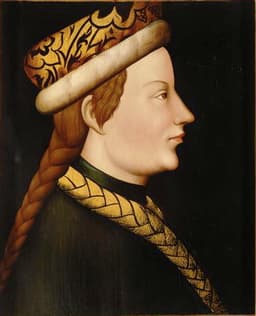
Albert III of Austria
Emperor · Medieval
53.4Total
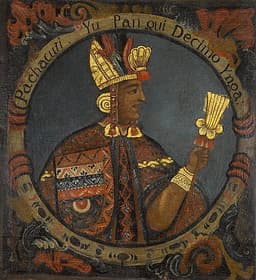
Pachacuti
Emperor · Medieval
69.4Total
Basic Information
Born
1349
1418
Died
1395
1472
Era
Medieval
Medieval
Nationality
Austria
Inca Empire
Occupation
Emperor
Emperor
Civilization
Western
Other
Score Comparison
Military (10%)
50.0
78.5
Political (20%)
54.7
58.1
Influence (20%)
53.3
65.0
Legacy (20%)
44.2
72.0
Leadership (15%)
80.0
78.0
Strategy (15%)
38.6
69.2
TOTAL
53.4
69.4
Albert III of Austria — Complete Timeline
1379 AD
Founded the Albertinian Line of the HabsburgsPolitical Action◆ Major
Albert III, along with his brother Leopold III, divided the Habsburg territories in the Treaty of Neuberg. Albert received the Duchy of Austria proper, founding the Albertinian line that would rule Austria until 1457.
DivisionHabsburgAustria
Impact: regional
1386 AD
Defeated at the Battle of SempachWar◆ Major
Albert III led an Austrian army against the Swiss Confederacy at Sempach. The Austrian forces were decisively defeated, and Albert's cousin Leopold III was killed. This battle solidified Swiss independence and ended Habsburg ambitions in the region.
BattleSwiss ConfederacyDefeat
Impact: regionaltragic
Pachacuti — Complete Timeline
1438 AD
Conquest of the Chanka KingdomWar
Pachacuti led the Inca army to defeat the Chanka, a powerful rival, in a decisive battle near Cusco. This victory secured his position as Sapa Inca and initiated a period of rapid expansion, transforming the Inca from a small kingdom into a vast empire.
ConquestInca ExpansionChanka
Impact: regional
1440 AD
Reconstruction of CuscoCultural◆ Major
Pachacuti rebuilt Cusco as the imperial capital, designing it in the shape of a puma and constructing massive stone structures like Sacsayhuam
Urban PlanningArchitectureInca Empire
Impact: regionalconstructive
1450 AD
Initiation of Machu Picchu's ConstructionCultural◆ Major
Pachacuti ordered the construction of Machu Picchu, a royal estate and ceremonial site high in the Andes. The complex featured sophisticated dry-stone masonry and terraced agriculture, serving as a symbol of Inca engineering and a retreat for the emperor.
ArchitectureRoyal EstateInca Engineering
Impact: regionalconstructive
Expert Analysis
Pachacuti vs Albert III of Austria
# The Puma and the Eagle: Two Paths to Power in a Medieval World
On a windswept plateau high in the Andes, a man who called himself "Earth-Shaker" ordered the construction of a city in the clouds. Thousands of feet below, in the damp forests of Central Europe, another ruler watched his army dissolve into the mud at Sempach, the Swiss halberds cutting down his knights like wheat. Pachacuti Inca Yupanqui and Albert III of Austria lived in the same century, yet their worlds could not have been more different. One built an empire that stretched two thousand miles; the other struggled to hold together a duchy that could be crossed in a day. What separates a name that echoes through millennia from one that survives only in footnotes? The answer lies not in talent alone, but in the raw material of history itself.
Origins
Pachacuti was born in 1418 into a world of stone and sky. The Inca were then a modest kingdom in the Cusco Valley, surrounded by hostile neighbors like the Chanka. His father, the Sapa Inca Viracocha, was a capable ruler but one who faced existential threats. Young Cusi Yupanqui—Pachacuti was a title he later assumed—grew up amid the constant tension of a small state fighting for survival. The Andes shaped him: vertical landscapes, thin air, and the knowledge that a single defeat could mean annihilation.
Albert III, born in 1349, entered a very different world. The Habsburgs were already a formidable dynasty in Central Europe, but the Holy Roman Empire was a patchwork of competing princes, free cities, and ecclesiastical lords. Albert's father, Duke Albert II, had consolidated Austrian lands, but the family faced the perennial Habsburg problem: too many sons, too little territory. Albert grew up in Vienna, a city of Gothic cathedrals and courtly intrigue, where power was measured in marriage alliances and legal claims rather than mountain passes and llama caravans.
Rise to Power
Pachacuti’s rise was forged in fire. In 1438, when he was twenty years old, the Chanka kingdom launched a massive assault on Cusco. His father fled the capital, deeming resistance hopeless. But the young prince refused to abandon the city. Gathering what warriors remained, he led a desperate counterattack that shattered the Chanka army. The victory was so complete that the Chanka never recovered. Pachacuti returned to Cusco not as a prince but as a conqueror, and his father abdicated in his favor. The name he took—Pachacuti, meaning "he who remakes the world"—was no idle boast.
Albert III’s path was more deliberate. He inherited the Duchy of Austria jointly with his brother Leopold III in 1365, following their father’s death. For fourteen years, the brothers ruled together, but tensions grew. In 1379, they signed the Treaty of Neuberg, dividing Habsburg lands into the Albertinian and Leopoldinian lines. Albert took the core Austrian territories, including Vienna. It was a pragmatic solution—a quiet partition rather than a dramatic conquest—and it set the stage for centuries of Habsburg fragmentation.
Leadership & Governance
Pachacuti governed as a visionary engineer of empire. He rebuilt Cusco in the shape of a puma, the Inca symbol of power, with massive stone walls so precisely fitted that a knife blade could not slip between them. He established a system of provincial governors, state warehouses, and a network of roads that would eventually span 25,000 miles. He ordered the construction of Machu Picchu around 1450, a royal estate that was also a sacred site, a statement in stone that the Inca could command even the highest peaks. His strategy was relentless: conquer, integrate, and transform. He did not merely defeat enemies; he absorbed their gods, their nobles, and their labor into the Inca system.
Albert III ruled as a consolidator, not a transformer. His governance focused on stabilizing Austrian finances, supporting the Church, and maintaining the Habsburg position in a crowded political landscape. He was a patron of learning—he founded the University of Vienna’s theological faculty—but his military record was grim. In 1386, he led an army against the Swiss Confederacy at Sempach. The Swiss, fighting for their independence, used the terrain to negate Austrian cavalry superiority. The result was a catastrophic defeat. Albert himself barely escaped, and the battle cemented Swiss autonomy for generations. Where Pachacuti turned military disaster into triumph, Albert turned a manageable conflict into a permanent loss.
Triumph & Tragedy
Pachacuti’s greatest triumph was not any single battle but the transformation of a kingdom into an empire. By the time of his death in 1472, the Inca realm stretched from modern Ecuador to central Chile. He had given his people a capital that awed visitors, a road system that bound the Andes together, and a imperial ideology that made conquest seem inevitable. His tragedy was personal: he outlived his chosen heir, and the succession that followed would eventually contribute to the empire’s vulnerability to Spanish conquest.
Albert III’s triumph was more modest: he preserved the Albertinian line of the Habsburgs, ensuring that his descendants would continue to rule Austria. His tragedy was the Battle of Sempach, a defeat that defined his legacy. He spent his remaining years trying to recover from that blow, but the Swiss remained independent, and the Habsburgs never fully controlled the Alpine passes. His death in 1395 came quietly, without fanfare, and his line would eventually be absorbed into the larger Habsburg dynasty.
Character & Destiny
Pachacuti possessed what the Incas called “capac”—a quality of royal authority that mixed divine favor with ruthless competence. He was a man who could plan a city, command an army, and design a religion. His decisions were bold because he believed the gods were with him, and the gods seemed to agree. Albert III was a competent administrator in an era that demanded more. He was cautious where Pachacuti was audacious, diplomatic where Pachacuti was decisive. The difference was not merely personal but structural: Pachacuti ruled a world where a single victory could reshape history, while Albert ruled a world where power was fragmented, legalistic, and slow.
Legacy
Pachacuti is remembered as the father of the Inca Empire, the man who turned a hilltop kingdom into the largest empire in the pre-Columbian Americas. Machu Picchu, the citadel he built, has become one of the most recognizable symbols of human achievement. His name is synonymous with transformation.
Albert III is remembered, if at all, as the founder of the Albertinian line—a footnote in Habsburg history. The Treaty of Neuberg and the Battle of Sempach are studied by specialists, not celebrated by the world. His legacy is the quiet persistence of a dynasty that would eventually dominate Europe, but he himself contributed little to that rise.
Conclusion
Pachacuti and Albert III were both rulers of their age, but they inhabited different kinds of history. One lived in a world where a single man could reshape geography, where will and strategy could build an empire from scratch. The other lived in a world of constraints—of treaties, rival princes, and the slow grind of European politics. The difference between them is not talent, for both were capable. It is the difference between a world where the canvas is blank and a world where every inch is already painted. Pachacuti remade the world because the world was still waiting to be made. Albert III held his ground because the ground was already crowded. In that contrast lies the measure of what history asks of its players—and what it gives them in return.
Rankings
🥇
PachacutiLeader
Mil: 78.5Pol: 58.1Inf: 65.0
69.4
🥈
Albert III of Austria
Mil: 50.0Pol: 54.7Inf: 53.3
53.4
+16.0 behind
How This Comparison Works
Algorithm
Each figure is scored on 6 dimensions (0—100 scale) based on structured historical data: Military (10%), Political (20%), Influence (20%), Legacy (20%), Leadership (15%), Strategy (15%). The weighted total produces the final ranking.
Data Sources
Scores are computed from structured sub-indicators in the database. Scale factors adjust for era (Ancient ×0.85, Modern ×1.0) and civilization size (Eastern ×1.05, Other ×0.80) to account for differences in population and military scale.
Maximum 3 Figures
Comparisons are limited to 2—3 figures to ensure readability and statistical meaningfulness.
Error Margins
±5 points per dimension — Sub-scores are derived from historical records with inherent uncertainty. Two figures within 5 points on a dimension should be considered roughly equivalent in that area.
Total Score Accuracy
±3 points overall — The weighted combination of 6 dimensions produces a total score with approximately ±3 points of uncertainty. Differences of less than 3 points are not statistically significant— the figures are effectively tied.
Known Limitations
- Historical records are incomplete and uneven across civilizations
- Figures from oral-tradition societies may be underrepresented
- Occupation labels can misclassify multi-role figures
- Scores measure capability and impact, not moral character
- Quantitative scoring is a comparison tool, not absolute truth
Capability Radar
Military (10%) — Battles & Warfare
Battles
20
85
Win Rate
25
90
Expansion
20
90
Political (20%) — Governance & Reform
Reform
40
92
Diplomacy
45
75
Economy
40
80
Influence (20%) — Cultural & Global Reach
Cultural
30
85
Global
20
65
Legacy (20%) — Historical Impact
Historical
35
80
Longevity
30
70
Leadership (15%) — Power & Stability
Tenure
60
85
Stability
35
82
Strategy (15%) — Tactics & Innovation
Strategy
25
88
Tactics
20
80
Reform
15
85
Similar Comparisons
Comments & Discussion
CUSCO_CLAIMANT6/16/2026
Pachacuti didn't just build an empire - he invented the concept of vertical integration centuries before modern business schools. While Albert III was losing Swiss pikemen in a muddy field, Pachacuti was engineering terraces, storehouses, and a 25,000-mile road network that made the Roman systems look provincial. The man literally reshaped mountains to feed his people. Albert couldn't even hold a duchy together. One created a civilization; the other became a cautionary tale for Habsburg incompet
奥地利废柴6/16/2026
拿阿尔布雷希特三世跟帕查库蒂比,就像拿乡野村夫跟参天大树比。帕查库蒂在十五世纪中期把库斯科小邦扩展成两千里帝国,开创了梯田和结绳记事系统,阿尔布雷希特三世呢?他打了场森帕赫战役,把自己的奥地利骑士全葬送在瑞士农民手里。帕查库蒂是改革家、建筑家、军事家,是个让安第斯山脉都颤抖的人物,而这个哈布斯堡公爵连个哈布斯堡领地都管不住。一个名字流传千古,一个只配当历史脚注。
STATS_SKEPTIC6/16/2026
Let's pump the brakes on the Pachacuti hype. Yes, he conquered a lot of territory, but "two thousand miles" is misleading when most of that was sparsely populated mountain passes. Albert III faced the Swiss Confederacy - arguably the most effective military innovation of the era - and the comparison ignores that Austria remained a major power for centuries while the Inca Empire collapsed in a generation. Pachacuti's "Earth-Shaker" title sounds impressive until you realize his successors couldn't