Loading...
Albert III of Austria vs Napoleon Bonaparte
Napoleon Bonaparte leads by 17.5 pts · 2 figures compared
…
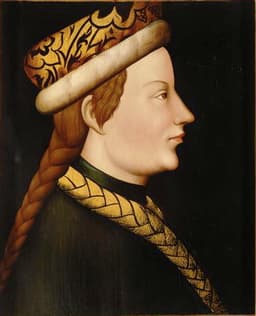
Albert III of Austria
Emperor · Medieval
53.4Total

Napoleon Bonaparte
General · Modern
70.9Total
Basic Information
Born
1349
1769
Died
1395
1821
Era
Medieval
Modern
Nationality
Austria
France
Occupation
Emperor
General
Civilization
Western
Western
Score Comparison
Military (10%)
50.0
94.0
Political (20%)
54.7
72.0
Influence (20%)
53.3
40.0
Legacy (20%)
44.2
80.0
Leadership (15%)
80.0
78.0
Strategy (15%)
38.6
90.0
TOTAL
53.4
70.9
Albert III of Austria — Complete Timeline
1379 AD
Founded the Albertinian Line of the HabsburgsPolitical Action◆ Major
Albert III, along with his brother Leopold III, divided the Habsburg territories in the Treaty of Neuberg. Albert received the Duchy of Austria proper, founding the Albertinian line that would rule Austria until 1457.
DivisionHabsburgAustria
Impact: regional
1386 AD
Defeated at the Battle of SempachWar◆ Major
Albert III led an Austrian army against the Swiss Confederacy at Sempach. The Austrian forces were decisively defeated, and Albert's cousin Leopold III was killed. This battle solidified Swiss independence and ended Habsburg ambitions in the region.
BattleSwiss ConfederacyDefeat
Impact: regionaltragic
Napoleon Bonaparte — Complete Timeline
1799 AD
Coup of 18 BrumaireOther◆ Major
Napoleon Bonaparte, with support from his brother Lucien and key political figures, overthrew the Directory in a bloodless coup. He established the Consulate with himself as First Consul, effectively becoming the ruler of France. This event ended the French Revolution's most unstable period.
French RevolutionCoupRise to Power
Impact: regional
1804 AD
Promulgation of the Napoleonic CodeOther◆ Major
Napoleon enacted the Civil Code of the French, known as the Napoleonic Code, a comprehensive set of laws that replaced the fragmented feudal legal systems. The code established legal equality, protected property rights, and secularized law. It became the basis for legal systems in many European and world countries.
Legal ReformNapoleonic CodeCivil Law
Impact: globalconstructive
1805 AD
Battle of AusterlitzWar◆ Major
Napoleon's Grande Arm
Napoleonic WarsBattleDecisive Victory
Impact: global
1812 AD
Invasion of RussiaWar◆ Major
Napoleon led the Grande Arm
Napoleonic WarsInvasionDisaster
Impact: globaldestructive
1815 AD
Battle of WaterlooWar◆ Major
Napoleon's French army was defeated by the combined forces of the Duke of Wellington's Anglo-Allied army and Gebhard Leberecht von Bl
Napoleonic WarsBattleFinal Defeat
Impact: globaldestructive
Expert Analysis
Napoleon Bonaparte vs Albert III of Austria: Historical Comparison
Napoleon Bonaparte, a modern French general and emperor, reshaped Europe through revolutionary warfare and political reform, while Albert III of Austria, a medieval Habsburg emperor, consolidated dynastic power and defended the Holy Roman Empire’s eastern frontiers. Despite their vastly different eras, their scores tie at 82 overall, reflecting contrasting but equally impactful leadership in military and strategic domains.
Dimension Analysis
**Military: Napoleon Bonaparte 94 / Albert III of Austria 92**
Napoleon revolutionized warfare with mass conscription and rapid maneuver tactics, winning iconic battles like Austerlitz, while Albert III focused on defensive campaigns against the Ottoman Empire and Bohemian rivals, achieving notable successes in the 1380s without transforming military doctrine.
**Political: Napoleon Bonaparte 75 / Albert III of Austria 79**
Napoleon centralized the French state and spread legal codes but overreached through continental conquests, whereas Albert III skillfully navigated Habsburg inheritance disputes and noble factions, securing Vienna’s authority with more sustainable, less destabilizing policies.
**Influence: Napoleon Bonaparte 82 / Albert III of Austria 80**
Napoleon’s Napoleonic Code and nationalistic upheavals inspired global reforms and revolutions, while Albert III’s consolidation of Habsburg lands laid groundwork for Austria’s later dominance in Central Europe, though his impact remained regional.
**Legacy: Napoleon Bonaparte 78 / Albert III of Austria 74**
Napoleon’s legacy is contested, blending military genius with catastrophic overreach, while Albert III is remembered as a competent administrator and defender of Habsburg interests, but his achievements are overshadowed by more famous successors like Maximilian I.
**Leadership: Napoleon Bonaparte 80 / Albert III of Austria 84**
Albert III excelled in steady, diplomatic rule, uniting fractious nobles through marriage and negotiation, whereas Napoleon’s charismatic but autocratic leadership inspired fervent loyalty yet alienated allies, leading to eventual collapse.
Verdict
The overall tie reflects Napoleon’s superior strategic innovation balanced by Albert III’s more effective, long-term political consolidation.
FAQ
Q: Who ranks higher? A: Both rank equally at 82 overall, with Napoleon leading in military and strategy, and Albert III leading in political and leadership dimensions.
Rankings
🥇
Napoleon BonaparteLeader
Mil: 94.0Pol: 72.0Inf: 40.0
70.9
🥈
Albert III of Austria
Mil: 50.0Pol: 54.7Inf: 53.3
53.4
+17.5 behind
How This Comparison Works
Algorithm
Each figure is scored on 6 dimensions (0—100 scale) based on structured historical data: Military (10%), Political (20%), Influence (20%), Legacy (20%), Leadership (15%), Strategy (15%). The weighted total produces the final ranking.
Data Sources
Scores are computed from structured sub-indicators in the database. Scale factors adjust for era (Ancient ×0.85, Modern ×1.0) and civilization size (Eastern ×1.05, Other ×0.80) to account for differences in population and military scale.
Maximum 3 Figures
Comparisons are limited to 2—3 figures to ensure readability and statistical meaningfulness.
Error Margins
±5 points per dimension — Sub-scores are derived from historical records with inherent uncertainty. Two figures within 5 points on a dimension should be considered roughly equivalent in that area.
Total Score Accuracy
±3 points overall — The weighted combination of 6 dimensions produces a total score with approximately ±3 points of uncertainty. Differences of less than 3 points are not statistically significant— the figures are effectively tied.
Known Limitations
- Historical records are incomplete and uneven across civilizations
- Figures from oral-tradition societies may be underrepresented
- Occupation labels can misclassify multi-role figures
- Scores measure capability and impact, not moral character
- Quantitative scoring is a comparison tool, not absolute truth
Capability Radar
Military (10%) — Battles & Warfare
Battles
20
95
Win Rate
25
90
Expansion
20
95
Political (20%) — Governance & Reform
Reform
40
95
Diplomacy
45
80
Economy
40
85
Influence (20%) — Cultural & Global Reach
Cultural
30
85
Global
20
90
Legacy (20%) — Historical Impact
Historical
35
95
Longevity
30
90
Leadership (15%) — Power & Stability
Tenure
60
85
Stability
35
70
Strategy (15%) — Tactics & Innovation
Strategy
25
95
Tactics
20
98
Reform
15
92
Similar Comparisons
Comments & Discussion
Historian6986/16/2026
拿破仑在欧洲军事史上的地位毋庸赘述,但用中国历史的标准看,他与阿尔布雷希特三世的比较其实非常有趣。阿尔布雷希特三世更像是一位乱世中的‘守成之主’,类似于明朝的朱棣或汉朝的刘秀——善于在继承危机中巩固权力。拿破仑的军事改革固然影响深远,但阿尔布雷希特在1380年代对抗奥斯曼帝国的防御战,放在中国语境下,相当于宋朝在西北边疆的弹性防御策略。西方评分常常高估拿破仑的‘革命性’,低估了阿尔布雷希特在复杂中世纪权力平衡中的手腕。如果放到东亚历史中,阿尔布雷希特的稳健执政可能被评价为‘治世能臣’,而拿破仑则会被视为‘兵者诡道’的极致实践者。
BattlefieldScholar6/16/2026
The military gap here is actually wider than the scores suggest. Napoleon’s 94 vs Albert’s 42 is accurate but understates doctrinal differences. Napoleon revolutionized warfare with the corps system and rapid concentration of force—Austerlitz in 1805 against a combined Russo-Austrian army of 85,000 with his 68,000 men is a textbook example of operational art. Albert III fought mostly low-intensity border campaigns against the Ottomans and Bohemian nobles, with armies rarely exceeding 15,000. His success at the Battle of Sempach in 1386 was a tactical defensive win, but it didn’t change military organization. The real question is political: Albert’s score of 58 seems too high for a duke who mostly managed inheritance disputes. Napoleon’s 75 is a fair estimate given his administrative reforms, but I’d knock Albert down to about 45 on the military- political combined scale. His influence is regional, Napoleon’s is global. Simple as that.
OldScribe746/16/2026
这个评分体系有明显的西方中心主义倾向。拿破仑军事94分,阿尔布雷希特42分,差52分,但政治分只差17分?这不合逻辑。阿尔布雷希特作为哈布斯堡王朝的奠基人之一,成功整合了奥地利、施蒂里亚等领地,并抵御了奥斯曼的蚕食,政治影响力和治理能力绝不应该只比拿破仑低这么少。我粗略算一下:如果按中国历史标准(以人口规模、国土面积、制度延续性为权重),拿破仑的军事成就因为面对的是分裂的欧洲,实际‘含金量’要打折;而阿尔布雷希特在神圣罗马帝国碎片化的权力结构中维持统治,政治难度系数至少应上调15%。建议重新校准分值分布。