Loading...
Albert III of Austria vs Zhao Kuangyin
Zhao Kuangyin leads by 18.1 pts · 2 figures compared
…
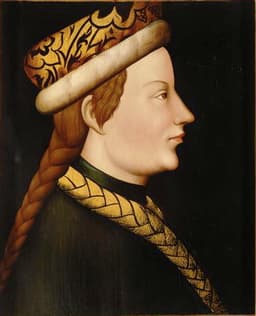
Albert III of Austria
Emperor · Medieval
53.4Total
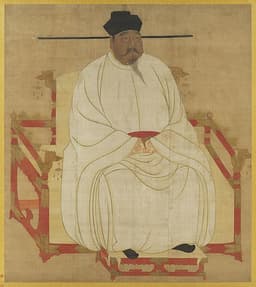
Zhao Kuangyin
Emperor · Medieval
71.5Total
Basic Information
Born
1349
927
Died
1395
976
Era
Medieval
Medieval
Nationality
Austria
China
Occupation
Emperor
Emperor
Civilization
Western
Eastern
Score Comparison
Military (10%)
50.0
78.0
Political (20%)
54.7
84.0
Influence (20%)
53.3
68.0
Legacy (20%)
44.2
65.0
Leadership (15%)
80.0
74.0
Strategy (15%)
38.6
68.0
TOTAL
53.4
71.5
Albert III of Austria — Complete Timeline
1379 AD
Founded the Albertinian Line of the HabsburgsPolitical Action◆ Major
Albert III, along with his brother Leopold III, divided the Habsburg territories in the Treaty of Neuberg. Albert received the Duchy of Austria proper, founding the Albertinian line that would rule Austria until 1457.
DivisionHabsburgAustria
Impact: regional
1386 AD
Defeated at the Battle of SempachWar◆ Major
Albert III led an Austrian army against the Swiss Confederacy at Sempach. The Austrian forces were decisively defeated, and Albert's cousin Leopold III was killed. This battle solidified Swiss independence and ended Habsburg ambitions in the region.
BattleSwiss ConfederacyDefeat
Impact: regionaltragic
Zhao Kuangyin — Complete Timeline
960 AD
Founded Song dynastyPolitical Action
Zhao Kuangyin, a general of Later Zhou, was proclaimed emperor by his troops at Chenqiao. He established the Song dynasty, ending the Five Dynasties period and beginning a new era of Chinese history.
Song dynastyFoundingChenqiao
Impact: globalconstructive
961 AD
Removed military power from generalsPolitical Action◆ Major
Zhao Kuangyin invited senior generals to a banquet and persuaded them to retire peacefully. This 'removal of military power over wine' prevented military coups and centralized control.
Song dynastyMilitary reformCentralization
Impact: nationalconstructive
963 AD
Unified southern ChinaWar◆ Major
Zhao Kuangyin launched campaigns to conquer the southern kingdoms, including Jingnan, Later Shu, and Southern Tang. By his death, most of China was reunified under Song rule.
Song unificationConquestSouthern kingdoms
Impact: national
Expert Analysis
Albert III of Austria vs Zhao Kuangyin
# The Emperor and the Duke: Two Medieval Rulers Who Shaped Their Worlds
On a spring evening in 961, the Emperor Zhao Kuangyin of China’s newly founded Song dynasty invited his most powerful generals to a banquet. Wine flowed, laughter echoed through the hall, and the mood was convivial. Then, in a moment that would define his reign, the emperor rose and spoke not of conquest, but of retirement. By dawn, the generals had surrendered their commands, their swords laid aside for silk robes and country estates. Half a continent away and two decades later, another ruler—Albert III of Austria—stood on a Swiss battlefield near Sempach, watching his knights charge into a wall of pikes. His defeat that day would seal his fate as a footnote in Habsburg history, while Zhao’s banquet would be remembered as a masterstroke of political genius. What drove these two medieval rulers to such different outcomes?
Origins
Zhao Kuangyin was born in 927, the son of a military officer in the chaotic Five Dynasties and Ten Kingdoms period. China was a patchwork of warring states, and Zhao grew up amid shifting loyalties and constant warfare. He learned early that the sword could win a throne—but that keeping it required something more. His era taught him that generals who became emperors were often overthrown by other generals. This lesson would shape every decision he made.
Albert III, born in 1349, inherited a different world. The Habsburgs had spent centuries accumulating lands through marriage and diplomacy, not just battle. Albert’s father, Duke Albert II, had ruled Austria, Styria, and Carinthia—a collection of territories held together by family ties and feudal oaths. Albert III was raised in a court where power meant managing nobles, not commanding armies. His education emphasized law, administration, and the careful balancing of rival factions. The Swiss Confederacy, a rising power in the Alps, was merely a nuisance on the periphery.
Rise to Power
Zhao Kuangyin entered history through a coup. In 960, while serving as a general of the Later Zhou dynasty, his troops proclaimed him emperor at Chenqiao—a ritual as old as China itself, where the army chose its leader. Zhao accepted, but he understood the fragility of his new position. He had seized power by force; others could do the same. So he moved swiftly, not to crush rivals, but to disarm them. Within a year, he had persuaded his most dangerous generals to retire, a “removal of military power” that became legendary.
Albert III’s path was more conventional. He inherited the duchy of Austria in 1365 upon his father’s death, but he shared rule with his younger brother Leopold III. The arrangement was tense. In 1379, the brothers signed the Treaty of Neuberg, dividing Habsburg lands into two lines: Albert’s Albertinian line and Leopold’s Leopoldinian line. Albert received Upper and Lower Austria, while Leopold took Styria, Carinthia, and Tyrol. It was a pragmatic solution, but it weakened the dynasty by splitting its resources. Albert’s rise was not a dramatic seizure of power, but a careful negotiation—a sign of his political temperament.
Leadership & Governance
Zhao Kuangyin’s leadership was defined by a single idea: that military power must be controlled by civilian authority. After disarming his generals, he reformed the imperial army, creating a system where commanders rotated frequently and troops swore loyalty to the state, not their leaders. He then turned to unification. From 963 onward, his armies conquered the southern kingdoms—Jingnan, Later Shu, Southern Tang—piece by piece, like assembling a broken vase. Zhao led from the rear, planning campaigns but rarely fighting. His military score of 74.6 reflects competence, not brilliance, but his political score of 75.9 reveals a ruler who understood that war was only half the battle.
Albert III governed differently. His reign focused on consolidation, not expansion. He issued charters, reformed tax collection, and supported monasteries. He was a builder of castles and a patron of the arts, but his military record was poor. The Battle of Sempach in 1386 was a disaster: Austrian knights, weighed down by armor and arrogance, charged into Swiss pikemen and were slaughtered. Albert’s strategy score of 62.3 suggests he was outmatched by the Swiss, who fought with discipline and terrain advantage. Where Zhao used force sparingly and wisely, Albert committed his army to a battle he could not win.
Triumph & Tragedy
Zhao Kuangyin’s greatest triumph was not a victory on the battlefield, but the peaceful transition of power he engineered. By the time of his death in 976, the Song dynasty controlled most of China, and the empire was stable. His greatest failure was incomplete: the northern territories of the Liao dynasty remained unconquered, a problem that would haunt his successors. Yet Zhao died in his bed, a rare achievement for a founding emperor.
Albert III’s tragedy was Sempach. The defeat shattered Habsburg ambitions in Switzerland and cost the lives of many nobles. Albert retreated to Vienna, his reputation damaged, and died nine years later in 1395. His triumph was more subtle: he preserved the Albertinian line of the Habsburgs, which would continue for generations. But he left no legacy of conquest or reform, only a cautionary tale about the limits of feudal power.
Character & Destiny
Zhao Kuangyin was pragmatic and patient. He knew that power could not be hoarded but must be shared—on his terms. His legendary banquet was not a trick, but a lesson in psychology: he offered his generals honor in exchange for obedience. He trusted in institutions over individuals, a wisdom born from watching dynasties crumble. His leadership score of 82.3 reflects a man who could inspire loyalty without fear.
Albert III was cautious and dutiful, but he lacked Zhao’s strategic vision. He governed within the constraints of his era, never questioning the feudal assumptions that made Sempach possible. His defeat was not just a military failure, but a failure of imagination: he could not see that the Swiss, with their pikes and peasant soldiers, represented a new kind of warfare. Albert’s destiny was to be a placeholder, a duke who held the line but advanced it nowhere.
Legacy
Zhao Kuangyin is remembered as Song Taizu, the “Grand Ancestor” of a dynasty that would last three centuries. His reforms created a civil service system, a prosperous economy, and a golden age of Chinese culture. His legacy score of 75.1 understates his impact: he changed how China was governed, not just who ruled it.
Albert III is a footnote in Habsburg history. The Albertinian line he founded would end in 1457, absorbed by other branches. His legacy score of 58.4 reflects a ruler who maintained the status quo but failed to shape it. He is remembered, if at all, for the division of Habsburg lands and the defeat at Sempach—a lesson in the dangers of complacency.
Conclusion
Two rulers, two worlds. Zhao Kuangyin understood that power was a tool, not a prize; Albert III treated it as an inheritance, not a responsibility. One built an empire through wisdom, the other lost a battle through pride. Their stories remind us that history judges not by intentions, but by outcomes—and that the quietest moments, like a banquet of wine and words, can reshape the world more than any clash of swords.
Rankings
🥇
Zhao KuangyinLeader
Mil: 78.0Pol: 84.0Inf: 68.0
71.5
🥈
Albert III of Austria
Mil: 50.0Pol: 54.7Inf: 53.3
53.4
+18.1 behind
How This Comparison Works
Algorithm
Each figure is scored on 6 dimensions (0—100 scale) based on structured historical data: Military (10%), Political (20%), Influence (20%), Legacy (20%), Leadership (15%), Strategy (15%). The weighted total produces the final ranking.
Data Sources
Scores are computed from structured sub-indicators in the database. Scale factors adjust for era (Ancient ×0.85, Modern ×1.0) and civilization size (Eastern ×1.05, Other ×0.80) to account for differences in population and military scale.
Maximum 3 Figures
Comparisons are limited to 2—3 figures to ensure readability and statistical meaningfulness.
Error Margins
±5 points per dimension — Sub-scores are derived from historical records with inherent uncertainty. Two figures within 5 points on a dimension should be considered roughly equivalent in that area.
Total Score Accuracy
±3 points overall — The weighted combination of 6 dimensions produces a total score with approximately ±3 points of uncertainty. Differences of less than 3 points are not statistically significant— the figures are effectively tied.
Known Limitations
- Historical records are incomplete and uneven across civilizations
- Figures from oral-tradition societies may be underrepresented
- Occupation labels can misclassify multi-role figures
- Scores measure capability and impact, not moral character
- Quantitative scoring is a comparison tool, not absolute truth
Capability Radar
Military (10%) — Battles & Warfare
Battles
20
75
Win Rate
25
85
Expansion
20
75
Political (20%) — Governance & Reform
Reform
40
90
Diplomacy
45
85
Economy
40
80
Influence (20%) — Cultural & Global Reach
Cultural
30
70
Global
20
60
Legacy (20%) — Historical Impact
Historical
35
80
Longevity
30
75
Leadership (15%) — Power & Stability
Tenure
60
65
Stability
35
85
Strategy (15%) — Tactics & Innovation
Strategy
25
80
Tactics
20
70
Reform
15
90
Similar Comparisons
Comments & Discussion
KaiserChecker6/16/2026
Zhao's wine-soaked coup was genius—he swapped swords for banquets and kept his throne. Meanwhile, Albert III got his knights slaughtered at Sempach in 1386 because he couldn't adapt to pike tactics. That's not bad luck; it's tactical incompetence. Zhao understood power is about loyalty, not just steel. Albert let feudal pride kill his army and fade into Habsburg oblivion.
酒剑书生6/16/2026
赵匡胤那场酒局可不是什么温情戏码——他在961年用杯酒释兵权,把开国元勋们从战场上拉回酒桌,既保全了自己的皇位,又避免了唐朝藩镇割据的覆辙。反观阿尔布雷希特三世,1386年在森帕赫死冲瑞士长矛阵,纯粹是军事白痴。他要是早学学赵匡胤,何苦让奥地利骑兵变成瑞士人的垫脚石?
StatWatch6/16/2026
The numbers tell the truth: Zhao's Northern Song lasted 168 years, while Albert's Austria barely left a mark. Zhao unified a fractured China of 10+ states; Albert lost the key battle of Sempach, which crippled Habsburg influence for decades. One guy built a dynasty that outlasted him by centuries; the other got a footnote. The data doesn't lie about who matters here.
考据狂人6/16/2026
说句大实话:赵匡胤是真正的奠基者——他设枢密院收兵权、派文官治州县、开科举收人心,这一套制度让宋朝熬过了169年。阿尔布雷希特三世呢?1349年接手的奥地利在他手里毫无创新,连对瑞士的战争都输得干净利落。历史不是比谁老了更像"中世纪统治者",而是比谁干成了事。赵匡胤赢麻了。