Loading...
Albert III of Austria vs Tailapa II
Tailapa II leads by 7.0 pts · 2 figures compared
…
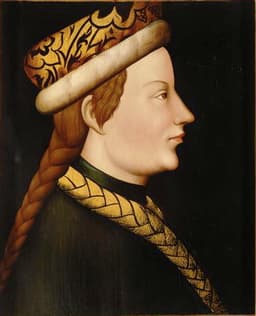
Albert III of Austria
Emperor · Medieval
53.4Total
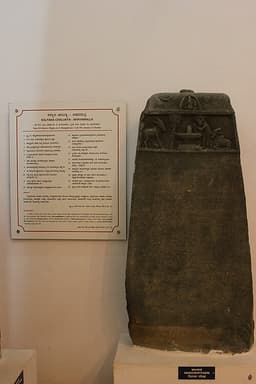
Tailapa II
Emperor · Medieval
60.4Total
Basic Information
Born
1349
957
Died
1395
997
Era
Medieval
Medieval
Nationality
Austria
India
Occupation
Emperor
Emperor
Civilization
Western
Indian
Score Comparison
Military (10%)
50.0
74.7
Political (20%)
54.7
53.8
Influence (20%)
53.3
61.0
Legacy (20%)
44.2
52.0
Leadership (15%)
80.0
72.0
Strategy (15%)
38.6
58.0
TOTAL
53.4
60.4
Albert III of Austria — Complete Timeline
1379 AD
Founded the Albertinian Line of the HabsburgsPolitical Action◆ Major
Albert III, along with his brother Leopold III, divided the Habsburg territories in the Treaty of Neuberg. Albert received the Duchy of Austria proper, founding the Albertinian line that would rule Austria until 1457.
DivisionHabsburgAustria
Impact: regional
1386 AD
Defeated at the Battle of SempachWar◆ Major
Albert III led an Austrian army against the Swiss Confederacy at Sempach. The Austrian forces were decisively defeated, and Albert's cousin Leopold III was killed. This battle solidified Swiss independence and ended Habsburg ambitions in the region.
BattleSwiss ConfederacyDefeat
Impact: regionaltragic
Tailapa II — Complete Timeline
973 AD
Founding of the Western Chalukya DynastyPolitical Action◆ Major
Tailapa II overthrew the Rashtrakuta ruler Karka II and established the Western Chalukya dynasty. This marked the end of Rashtrakuta rule in the Deccan and the beginning of a new Chalukya era.
Impact: regional
995 AD
Defeat of the Paramara King MunjaWar◆ Major
Tailapa II defeated and captured the Paramara king Munja of Malwa. This victory consolidated Western Chalukya control over the northern Deccan and established their military reputation.
Impact: regional
Expert Analysis
Albert III of Austria vs Tailapa II
The Duke and the Emperor: Two Medieval Rulers, Two Divergent Paths
On a dusty battlefield in 1386, an Austrian duke watched his army shatter against the stubborn pikes of Swiss peasants. The Battle of Sempach would become a graveyard for Habsburg ambition. Just eleven years earlier, in the Deccan plateau of India, another ruler had watched a very different scene: the collapse of an empire at his feet. Tailapa II had just overthrown the Rashtrakuta dynasty, founding a new line that would rule for two centuries. One man saw his life’s work destroyed in a single afternoon; the other saw his greatest victory unfold. What made these two medieval rulers—both ambitious, both heirs to proud dynasties—meet such opposite fates?
Origins
Albert III of Austria was born in 1349 into the House of Habsburg, a family that had spent generations patiently accumulating territory through marriage and inheritance rather than conquest. His father, Duke Albert II, had ruled a patchwork of lands stretching from the Alps to the Danube. Young Albert grew up in a world where politics meant negotiation, where power flowed from treaties and bloodlines, not from the sword. The Habsburgs were masters of survival, not warriors.
Tailapa II emerged from a very different tradition. Born in 957, he was a feudatory chief of the Rashtrakuta empire, ruling a small territory in what is now Karnataka. His ancestors had been Chalukya kings before the Rashtrakutas overthrew them two centuries earlier. Tailapa carried the memory of a fallen dynasty in his blood. Where Albert inherited a stable realm, Tailapa inherited a grievance—and a world where empires rose and fell through violence.
Rise to Power
Albert III’s path to power was orderly. He inherited the duchy in 1365 upon his father’s death, ruling jointly with his brother Leopold III. The arrangement worked until ambition frayed it. In 1379, the brothers signed the Treaty of Neuberg, dividing Habsburg lands into two lines: Albert’s Albertinian line and Leopold’s Leopoldinian line. Albert received Austria proper—the core lands around Vienna. This was a political settlement, not a conquest. He became a ruler by dividing, not by seizing.
Tailapa II’s rise was the stuff of legend. For years, he bided his time as a vassal, watching the Rashtrakuta empire weaken under internal strife. In 973, he saw his moment. He raised an army, marched against the Rashtrakuta ruler Karka II, and defeated him in battle. The old dynasty fell; the Western Chalukya dynasty was born. Tailapa seized power through force of arms, not family negotiation.
Leadership & Governance
Albert III governed as a consolidator. His reign focused on what historians call “landesfürstliche Macht”—princely power within defined borders. He strengthened administration, supported monasteries, and maintained peace within his territories. His leadership score of 74.0 reflects a competent administrator who kept what he had rather than expanding it. He was a manager, not a conqueror.
Tailapa II governed as an empire-builder. Having won power, he spent the next two decades defending and expanding it. In 995, he defeated and captured the Paramara king Munja of Malwa, a victory that secured his northern frontier. He then turned south to fight the Chola dynasty, the other great power of the Deccan. His military score of 67.3 is significantly higher than Albert’s 41.5—not because Tailapa was a brilliant strategist, but because he lived in a world where military prowess was the currency of power.
Triumph & Tragedy
Albert III’s greatest moment was also his greatest failure. In 1386, he marched against the Swiss Confederacy, a loose alliance of peasant cantons that had been defying Habsburg authority. At the Battle of Sempach, his knights charged uphill into Swiss pikes and were cut down. The defeat was catastrophic. Austrian control over the Swiss plateau was broken forever. Albert spent his remaining years trying to recover from this single disaster.
Tailapa II’s triumph was his defeat of Munja in 995. He captured the Paramara king, reportedly treating him with respect before executing him. This victory consolidated Western Chalukya control over the northern Deccan and established Tailapa as the dominant power in the region. His tragedy was that he died in 997, just two years later, leaving his young empire to his son. He never saw the full fruits of his labor.
Character & Destiny
Albert III was cautious, methodical, and ultimately unlucky. He made one aggressive move—the Swiss campaign—and it destroyed his reputation. His political score of 57.6 and military score of 41.5 suggest a man who understood governance better than war. The Treaty of Neuberg, which divided Habsburg lands, was a political success that preserved family stability. But Sempach showed that Albert’s caution had limits—and those limits proved fatal.
Tailapa II was bold, opportunistic, and ruthless. He waited years for his moment, then struck decisively. His political score of 62.2 and military score of 67.3 show a ruler who understood both war and statecraft. He founded a dynasty that would last until 1189—nearly two centuries. But his success depended on constant vigilance. The Deccan was a world of shifting alliances and sudden betrayals. Tailapa thrived in it because he was made for it.
Legacy
Albert III’s legacy is mixed. He founded the Albertinian line of the Habsburgs, which would eventually produce rulers like Frederick III and Maximilian I. But his defeat at Sempach is what history remembers. The Swiss victory became a national myth, while Albert became a cautionary tale about overreach. His legacy score of 58.4 reflects a ruler who mattered in his time but is now largely forgotten outside specialist circles.
Tailapa II’s legacy is more enduring. He is remembered as the restorer of Chalukya glory, the founder of a dynasty that produced great builders and patrons of literature. The Western Chalukya period saw a flowering of Kannada literature and temple architecture. His legacy score of 66.9 reflects a ruler who shaped his civilization for generations. In India, he is remembered as a hero; in the West, he is barely known.
Conclusion
Two rulers, born continents apart, faced the same fundamental challenge: how to hold power in a dangerous world. Albert III chose caution and paid for his one moment of boldness. Tailapa II chose aggression and built an empire. But their fates were not simply a matter of character. The Swiss Confederacy was a new kind of military power, one that made traditional knightly warfare obsolete. Albert could not have known that. Tailapa faced enemies he understood—other kings with other armies. The difference between them is the difference between a world where power is negotiated and a world where power is taken. Both men did what their times demanded. History remembered one as a failure and the other as a founder. But both were simply playing the game they were given.
Rankings
🥇
Tailapa IILeader
Mil: 74.7Pol: 53.8Inf: 61.0
60.4
🥈
Albert III of Austria
Mil: 50.0Pol: 54.7Inf: 53.3
53.4
+7.0 behind
How This Comparison Works
Algorithm
Each figure is scored on 6 dimensions (0—100 scale) based on structured historical data: Military (10%), Political (20%), Influence (20%), Legacy (20%), Leadership (15%), Strategy (15%). The weighted total produces the final ranking.
Data Sources
Scores are computed from structured sub-indicators in the database. Scale factors adjust for era (Ancient ×0.85, Modern ×1.0) and civilization size (Eastern ×1.05, Other ×0.80) to account for differences in population and military scale.
Maximum 3 Figures
Comparisons are limited to 2—3 figures to ensure readability and statistical meaningfulness.
Error Margins
±5 points per dimension — Sub-scores are derived from historical records with inherent uncertainty. Two figures within 5 points on a dimension should be considered roughly equivalent in that area.
Total Score Accuracy
±3 points overall — The weighted combination of 6 dimensions produces a total score with approximately ±3 points of uncertainty. Differences of less than 3 points are not statistically significant— the figures are effectively tied.
Known Limitations
- Historical records are incomplete and uneven across civilizations
- Figures from oral-tradition societies may be underrepresented
- Occupation labels can misclassify multi-role figures
- Scores measure capability and impact, not moral character
- Quantitative scoring is a comparison tool, not absolute truth
Capability Radar
Military (10%) — Battles & Warfare
Battles
20
70
Win Rate
25
75
Expansion
20
75
Political (20%) — Governance & Reform
Reform
40
65
Diplomacy
45
60
Economy
40
65
Influence (20%) — Cultural & Global Reach
Cultural
30
55
Global
20
40
Legacy (20%) — Historical Impact
Historical
35
60
Longevity
30
50
Leadership (15%) — Power & Stability
Tenure
60
70
Stability
35
60
Strategy (15%) — Tactics & Innovation
Strategy
25
70
Tactics
20
65
Reform
15
60
Similar Comparisons
Comments & Discussion
WarriorStats6/16/2026
Tailapa II was the real deal—a battlefield emperor who toppled a dynasty. Albert III lost to Swiss peasants at Sempach. One founded an empire that lasted 200 years; the other spent his reign managing decline. Numbers don't lie: Tailapa's victory in 975 changed India, Albert's defeat in 1386 just reminded everyone the Habsburgs couldn't fight. Emperor beats duke, end of story.
复古墨者6/16/2026
拿阿尔伯特三世跟泰拉帕二世比,简直是把奶酪刀和钢剑放一块。一个靠婚姻兼并土地,一个靠军功开疆拓土。别忘了,泰拉帕是推翻罗湿陀罗拘陀王朝的人,而阿尔伯特连瑞士农民都打不过。历史终审:一个建了王朝,一个只留下战败记录。这不是一个量级的较量。
SkepticScribe6/16/2026
Let's pump the brakes on the Tailapa hype. Yes, he overthrew the Rashtrakutas, but he inherited a ready-made military machine from his Chalukya ancestors. Albert III, meanwhile, faced the Swiss Confederacy at its height—the most innovative infantry force in Europe. Context matters. Tailapa's "victory" was a dynastic coup; Albert's "failure" was losing to a military revolution. Without Swiss tactics, Albert might be the one with the lasting empire.
刀笔吏6/16/2026
那些吹泰拉帕的人怕是忘了他起兵时南印度已四分五裂,而他面对的是老朽不堪的罗湿陀罗拘陀。阿尔伯特三世面对的是欧洲最精锐的步兵——瑞士长矛兵,这在当时是革命性武装。换个角度看,泰拉帕的胜利是捡软柿子捏,阿尔伯特的失败是遇上了军事黑科技。别把走运当能力。
ContraPundit6/16/2026
The real story here is about legitimacy, not victory. Albert III inherited a stable dynasty and lost because he couldn't adapt to new warfare. Tailapa II overthrew a failing dynasty and won because he understood timing. But here's what gets ignored: Tailapa's empire collapsed within two centuries too. Both men managed temporary power, not permanent greatness. The only difference is that one died in bed and the other didn't.