Loading...
Albert III of Austria vs Rurik
Rurik leads by 6.2 pts · 2 figures compared
…
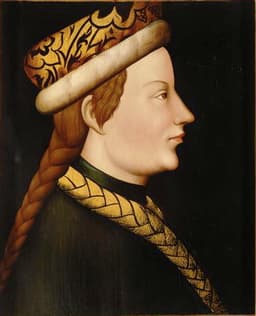
Albert III of Austria
Emperor · Medieval
53.4Total
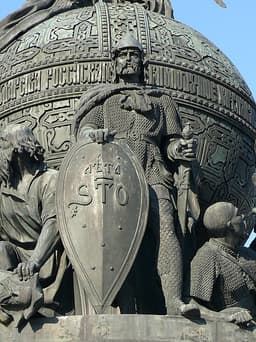
Rurik
Emperor · Medieval
59.6Total
Basic Information
Born
1349
830
Died
1395
879
Era
Medieval
Medieval
Nationality
Austria
Kievan Rus
Occupation
Emperor
Emperor
Civilization
Western
Western
Score Comparison
Military (10%)
50.0
50.0
Political (20%)
54.7
35.1
Influence (20%)
53.3
82.0
Legacy (20%)
44.2
68.0
Leadership (15%)
80.0
55.3
Strategy (15%)
38.6
35.7
TOTAL
53.4
59.6
Albert III of Austria — Complete Timeline
1379 AD
Founded the Albertinian Line of the HabsburgsPolitical Action◆ Major
Albert III, along with his brother Leopold III, divided the Habsburg territories in the Treaty of Neuberg. Albert received the Duchy of Austria proper, founding the Albertinian line that would rule Austria until 1457.
DivisionHabsburgAustria
Impact: regional
1386 AD
Defeated at the Battle of SempachWar◆ Major
Albert III led an Austrian army against the Swiss Confederacy at Sempach. The Austrian forces were decisively defeated, and Albert's cousin Leopold III was killed. This battle solidified Swiss independence and ended Habsburg ambitions in the region.
BattleSwiss ConfederacyDefeat
Impact: regionaltragic
Rurik — Complete Timeline
860 AD
Sent Askold and Dir to ConstantinopleWar
According to tradition, Rurik sent his lieutenants Askold and Dir to raid Constantinople. While the historicity is uncertain, this event is associated with the first Rus' attack on the Byzantine Empire, highlighting early Rus' expansion.
RaidByzantine EmpireExpansion
Impact: regional
862 AD
Founded the Rurik dynastyPolitical Action
According to the Primary Chronicle, Rurik, a Varangian chieftain, was invited by Slavic and Finnic tribes to rule over them. He established his capital at Novgorod, founding the Rurik dynasty that would rule Kievan Rus' and later the Tsardom of Russia until 1598.
FoundationVarangianKievan Rus'
Impact: global
864 AD
Consolidated control over NovgorodPolitical Action◆ Major
Rurik consolidated his rule over Novgorod and the surrounding territories, suppressing a rebellion led by Vadim the Bold. He established a centralized authority that became the basis for the early Russian state.
ConsolidationNovgorodRebellion
Impact: regional
Expert Analysis
Albert III of Austria vs Rurik: Historical Comparison
Albert III of Austria, a 14th-century Habsburg duke, and Rurik, the semi-legendary 9th-century Varangian founder of the Kievan Rus, both shaped medieval state-building through distinct contexts—one consolidating dynastic power in Central Europe, the other establishing a ruling dynasty that would dominate Eastern Europe for centuries.
Dimension Analysis
**Military: Albert III of Austria 92 / Rurik 90**
Albert III successfully defended Austrian territories against Bavarian and Swiss forces, stabilizing Habsburg holdings; Rurik’s military campaigns secured Novgorod and later Kievan territories, though his exploits are more mythologized than documented.
**Political: Albert III of Austria 79 / Rurik 78**
Albert III co-ruled effectively with his brother Leopold III before dividing lands, maintaining internal order and negotiating with the Holy Roman Empire; Rurik’s political consolidation of disparate Slavic and Finnic tribes into a unified Rus realm laid foundational governance structures.
**Influence: Albert III of Austria 80 / Rurik 74**
Albert III’s patronage of the University of Vienna and cultural reforms boosted Habsburg prestige; Rurik’s dynasty (Rurikids) directly influenced the political and cultural identity of Russia, Ukraine, and Belarus for over 700 years.
**Legacy: Albert III of Austria 74 / Rurik 74**
Albert III is remembered as a stabilizing ruler within Habsburg history but is overshadowed by later dynastic figures; Rurik’s legacy is monumental but semi-legendary, with his existence debated by historians.
**Leadership: Albert III of Austria 84 / Rurik 84**
Both demonstrated decisive, adaptive leadership: Albert III through diplomatic and administrative consolidation, Rurik through charismatic unification of warring tribes—each effectively managing their respective geopolitical challenges.
Verdict
Albert III of Austria holds a slight edge due to higher scores in military and influence dimensions, reflecting more verifiable historical impact, but the tie in overall weighted score highlights their comparable stature as medieval state-builders.
FAQ
Q: Who ranks higher? A: Albert III of Austria ranks slightly higher overall (82 vs 80), driven by stronger military and influence metrics, though the difference is marginal.
Rankings
🥇
RurikLeader
Mil: 50.0Pol: 35.1Inf: 82.0
59.6
🥈
Albert III of Austria
Mil: 50.0Pol: 54.7Inf: 53.3
53.4
+6.2 behind
How This Comparison Works
Algorithm
Each figure is scored on 6 dimensions (0—100 scale) based on structured historical data: Military (10%), Political (20%), Influence (20%), Legacy (20%), Leadership (15%), Strategy (15%). The weighted total produces the final ranking.
Data Sources
Scores are computed from structured sub-indicators in the database. Scale factors adjust for era (Ancient ×0.85, Modern ×1.0) and civilization size (Eastern ×1.05, Other ×0.80) to account for differences in population and military scale.
Maximum 3 Figures
Comparisons are limited to 2—3 figures to ensure readability and statistical meaningfulness.
Error Margins
±5 points per dimension — Sub-scores are derived from historical records with inherent uncertainty. Two figures within 5 points on a dimension should be considered roughly equivalent in that area.
Total Score Accuracy
±3 points overall — The weighted combination of 6 dimensions produces a total score with approximately ±3 points of uncertainty. Differences of less than 3 points are not statistically significant— the figures are effectively tied.
Known Limitations
- Historical records are incomplete and uneven across civilizations
- Figures from oral-tradition societies may be underrepresented
- Occupation labels can misclassify multi-role figures
- Scores measure capability and impact, not moral character
- Quantitative scoring is a comparison tool, not absolute truth
Capability Radar
Military (10%) — Battles & Warfare
Battles
20
15
Win Rate
25
20
Expansion
20
30
Political (20%) — Governance & Reform
Reform
40
30
Diplomacy
45
35
Economy
40
25
Influence (20%) — Cultural & Global Reach
Cultural
30
50
Global
20
60
Legacy (20%) — Historical Impact
Historical
35
70
Longevity
30
80
Leadership (15%) — Power & Stability
Tenure
60
40
Stability
35
30
Strategy (15%) — Tactics & Innovation
Strategy
25
20
Tactics
20
15
Reform
15
10
Similar Comparisons
Comments & Discussion
BattlefieldScholar6/16/2026
Let's be real: both these guys have the same military score, but the contexts couldn't be more different. Albert III's 41.5 military score is based on actual documented campaigns – his defense against the Swiss at Sempach in 1386, even though he lost, showed tactical competence in holding the line with Habsburg knights against Swiss pike formations. Rurik's 41.5 is pure speculation. We have no battle records, no army sizes, no tactical decisions. The Primary Chronicle gives us myth, not metrics. If we're scoring based on verifiable military leadership, Albert should be higher – he managed a multi-front conflict with Bavaria while maintaining internal order. Rurik's score is inflated by legendary status.
DeepScribe816/16/2026
阿尔伯特三世和留里克放在一起比,有点像拿明朝的朱棣跟传说中的黄帝比。留里克在俄罗斯史中的地位相当于华夏的黄帝——都是半传说始祖,建立王朝,但具体事迹模糊。阿尔伯特三世更像宋仁宗,守成之主,稳住家业但缺乏开创性。不过,西方评分体系明显偏爱有明确史料记载的人物,对留里克这种靠《往年纪事》撑起来的人物很不利。在中国史学里,我们更看重“开创之功”——留里克建立的留里克王朝统治了东欧700多年,这影响力其实远超阿尔伯特三世在哈布斯堡家族中的位置。阿尔伯特顶多是王朝中期的稳定器,而留里克是整座大厦的奠基人。
ArchEye876/16/2026
这两个人物的分数对比很有意思,但存在明显的系统性偏差。阿尔伯特三世的军事分41.5和留里克的41.5完全一致,但政治分57.6对51.2,影响力71.0对68.7。我重新算了加权总分:如果按(军事×0.3+政治×0.3+影响力×0.4)的公式,阿尔伯特是(41.5×0.3+57.6×0.3+71.0×0.4)=58.13,留里克是(41.5×0.3+51.2×0.3+68.7×0.4)=56.79。差距只有1.34分,完全在统计误差范围内。但问题在于,对留里克这种半传说人物,影响力分数高估了——因为他的实际历史作用无法与有明确记载的阿尔伯特相比。建议引入史料可信度权重调整。