Loading...
Albert III of Austria vs Li Cunxu
Li Cunxu leads by 13.1 pts · 2 figures compared
…
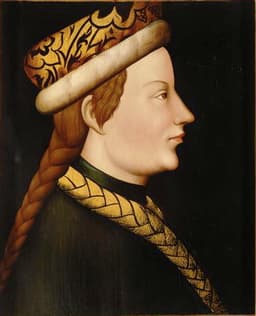
Albert III of Austria
Emperor · Medieval
53.4Total
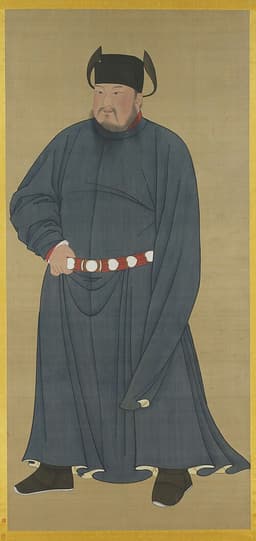
Li Cunxu
Emperor · Medieval
66.5Total
Basic Information
Born
1349
885
Died
1395
926
Era
Medieval
Medieval
Nationality
Austria
China
Occupation
Emperor
Emperor
Civilization
Western
Eastern
Score Comparison
Military (10%)
50.0
76.0
Political (20%)
54.7
68.0
Influence (20%)
53.3
62.0
Legacy (20%)
44.2
58.0
Leadership (15%)
80.0
80.0
Strategy (15%)
38.6
67.2
TOTAL
53.4
66.5
Albert III of Austria — Complete Timeline
1379 AD
Founded the Albertinian Line of the HabsburgsPolitical Action◆ Major
Albert III, along with his brother Leopold III, divided the Habsburg territories in the Treaty of Neuberg. Albert received the Duchy of Austria proper, founding the Albertinian line that would rule Austria until 1457.
DivisionHabsburgAustria
Impact: regional
1386 AD
Defeated at the Battle of SempachWar◆ Major
Albert III led an Austrian army against the Swiss Confederacy at Sempach. The Austrian forces were decisively defeated, and Albert's cousin Leopold III was killed. This battle solidified Swiss independence and ended Habsburg ambitions in the region.
BattleSwiss ConfederacyDefeat
Impact: regionaltragic
Li Cunxu — Complete Timeline
908 AD
Succeeded as Prince of JinPolitical Action◆ Major
Li Cunxu inherited the title Prince of Jin from his father Li Keyong. He continued the struggle against Later Liang, consolidating the Jin state as a major power in northern China.
JinSuccessionFive Dynasties
Impact: regional
910 AD
Battle of BaixiangWar◆ Major
Li Cunxu's Jin army defeated the Later Liang forces under Zhu Wen at Baixiang. This victory established Jin as the dominant military power in the north and marked a turning point in the war.
JinLater LiangBattle
Impact: regionalconstructive
923 AD
Conquered Later LiangWar
Li Cunxu led a successful campaign against Later Liang, capturing its capital Kaifeng and ending the dynasty. He then proclaimed himself emperor, founding the Later Tang dynasty.
Later TangConquestDynastic Change
Impact: nationalconstructive
Founded Later Tang DynastyPolitical Action
Li Cunxu declared himself emperor of the Later Tang dynasty, claiming legitimacy as the restorer of the Tang lineage. He established his capital at Luoyang and reunified much of northern China.
Later TangDynasty FoundingReunification
Impact: nationalconstructive
926 AD
Killed in mutiny at XingyuanWar◆ Major
Li Cunxu faced a mutiny by his own troops at Xingyuan during a campaign against the Khitans. He was killed in the fighting, leading to the collapse of Later Tang and the rise of Later Jin.
Later TangMutinyDeath
Impact: nationaltragic
Expert Analysis
Albert III of Austria vs Li Cunxu
# The Emperor and the Duke: Two Paths Through Medieval Power
On a spring morning in 926, the Emperor Li Cunxu of Later Tang rode out from his camp at Xingyuan, expecting to lead his army against the Khitans. Instead, he faced mutiny. Within hours, the man who had reunified northern China lay dead, killed by his own troops. Across the world, sixty-nine years earlier, another ruler—Albert III of Austria—had faced a different kind of reckoning. At the Battle of Sempach in 1386, his knights charged into the pikes of Swiss farmers and were slaughtered. Albert survived that day, but his dream of expanding Habsburg power died in the mud. One man built an empire and lost it in a single flash of violence. The other built a dynasty that would shape Europe for centuries. Why did their fates diverge so sharply?
Origins
Li Cunxu was born into war. His father, Li Keyong, was a Shatuo Turk chieftain who had been granted the title Prince of Jin by the dying Tang dynasty. The boy grew up in a world where the Tang had collapsed into chaos, where warlords fought for scraps of a shattered empire. His father’s dying wish in 908 was simple: destroy the rival Later Liang dynasty. Li Cunxu inherited not just a title but a blood feud.
Albert III of Austria, born in 1349, inherited something far more stable. The Habsburgs had spent generations accumulating lands through marriage and diplomacy. His father, Duke Albert II, had ruled a compact but prosperous territory. Young Albert was educated in the arts of governance, not just war. He learned to read Latin, to negotiate with bishops and burghers, to manage the endless legal disputes that came with feudal rule. His world was one of treaties and charters, not battlefields.
Rise to Power
Li Cunxu’s rise was forged in fire. At the Battle of Baixiang in 910, the twenty-five-year-old prince faced the Later Liang emperor Zhu Wen, a seasoned commander. The Jin army was outnumbered, but Li Cunxu understood something his enemy did not: his men fought for a cause, not just for plunder. They were Shatuo warriors who believed they were restoring the Tang. When the Jin cavalry smashed into the Liang flank at Baixiang, the victory was total. Li Cunxu emerged as the dominant power in northern China.
Albert III’s rise was quieter. When his father died in 1365, he ruled jointly with his brother Leopold III. For fourteen years, they managed the Habsburg domains together—until the Treaty of Neuberg in 1379. Albert took the western lands, including Austria proper. Leopold took the eastern territories. It was a pragmatic division, not a conquest. Albert’s power came from ink and parchment, not blood and iron.
Leadership & Governance
Li Cunxu ruled as a warrior emperor. When he conquered Later Liang in 923 and declared himself emperor of Later Tang, he claimed legitimacy as the restorer of the Tang lineage. He moved his capital to Luoyang, rebuilt the imperial bureaucracy, and tried to revive the old Tang systems. But he never trusted his officials. He rewarded his Shatuo generals with vast estates and allowed them to act as independent warlords. His court was a place of suspicion and violence, where a whispered rumor could bring death.
Albert III governed differently. He was a consolidator, not a conqueror. He spent his reign strengthening the administration of his lands, building alliances with the Church and the towns. He founded the Albertinian line of the Habsburgs, a branch that would produce future Holy Roman Emperors. His military score of 41.5, low by any measure, reflects the truth: Albert was not a great general. But his political score of 57.6, while modest, was backed by a leadership score of 74.0. He knew how to govern men who did not want to be governed.
Triumph & Tragedy
Li Cunxu’s greatest triumph was also the seed of his tragedy. In 923, he captured Kaifeng and ended the Later Liang. He was thirty-eight years old, at the height of his power. He had done what his father could not. But victory brought no peace. The Khitans threatened the northern frontier, and his own generals grew restless. In 926, while marching against the Khitans, his troops mutinied at Xingyuan. The emperor who had conquered an empire died fighting his own soldiers.
Albert III’s tragedy came earlier, at Sempach in 1386. He had marched against the Swiss Confederacy, confident that his armored knights would crush the peasant infantry. Instead, the Swiss pikes held, and the Austrian nobility died in droves. Albert survived, but the defeat shattered his ambitions. He spent his remaining years rebuilding, not conquering. He died in 1395, having learned the hard lesson that some enemies cannot be defeated by force.
Character & Destiny
Li Cunxu was driven by vengeance and glory. His father had cursed the Later Liang on his deathbed, and Li Cunxu made that curse his life’s mission. He was charismatic, fearless, and utterly ruthless. He trusted his instincts more than his advisors, and his instincts were often right—until they were wrong. His total score of 69.6 reflects a brilliant but flawed figure, a man who could win battles but could not secure peace.
Albert III was cautious and pragmatic. He understood that power in medieval Europe came from patience, not aggression. He founded a dynasty, not an empire. His total score of 62.0 is lower, but it masks a different kind of success. Where Li Cunxu burned bright and died young, Albert built something that would outlast him by six centuries.
Legacy
Li Cunxu is remembered as a tragic hero in Chinese history, a man who almost restored the Tang but fell to his own hubris. The Later Tang dynasty he founded collapsed within a decade of his death. His military victories are still studied, but his political failures are a cautionary tale.
Albert III left a different legacy. The Albertinian line of the Habsburgs would produce rulers like Albert II of Germany and Frederick III, Holy Roman Emperor. The dynasty he helped establish would dominate European politics until 1918. His name is not famous, but his bloodline shaped the continent.
Conclusion
Standing at opposite ends of the medieval world, Li Cunxu and Albert III faced the same fundamental question: how do you turn power into permanence? One answered with the sword, the other with the quill. Both failed in their own ways—Li Cunxu by trusting too much in force, Albert by never daring enough. Yet their stories remind us that history judges leaders not by the brilliance of their victories, but by the durability of what they leave behind. The emperor who conquered an empire died in a ditch. The duke who lost a single battle founded a dynasty that would rule the world.
Rankings
🥇
Li CunxuLeader
Mil: 76.0Pol: 68.0Inf: 62.0
66.5
🥈
Albert III of Austria
Mil: 50.0Pol: 54.7Inf: 53.3
53.4
+13.1 behind
How This Comparison Works
Algorithm
Each figure is scored on 6 dimensions (0—100 scale) based on structured historical data: Military (10%), Political (20%), Influence (20%), Legacy (20%), Leadership (15%), Strategy (15%). The weighted total produces the final ranking.
Data Sources
Scores are computed from structured sub-indicators in the database. Scale factors adjust for era (Ancient ×0.85, Modern ×1.0) and civilization size (Eastern ×1.05, Other ×0.80) to account for differences in population and military scale.
Maximum 3 Figures
Comparisons are limited to 2—3 figures to ensure readability and statistical meaningfulness.
Error Margins
±5 points per dimension — Sub-scores are derived from historical records with inherent uncertainty. Two figures within 5 points on a dimension should be considered roughly equivalent in that area.
Total Score Accuracy
±3 points overall — The weighted combination of 6 dimensions produces a total score with approximately ±3 points of uncertainty. Differences of less than 3 points are not statistically significant— the figures are effectively tied.
Known Limitations
- Historical records are incomplete and uneven across civilizations
- Figures from oral-tradition societies may be underrepresented
- Occupation labels can misclassify multi-role figures
- Scores measure capability and impact, not moral character
- Quantitative scoring is a comparison tool, not absolute truth
Capability Radar
Military (10%) — Battles & Warfare
Battles
20
85
Win Rate
25
80
Expansion
20
75
Political (20%) — Governance & Reform
Reform
40
50
Diplomacy
45
60
Economy
40
45
Influence (20%) — Cultural & Global Reach
Cultural
30
55
Global
20
45
Legacy (20%) — Historical Impact
Historical
35
65
Longevity
30
50
Leadership (15%) — Power & Stability
Tenure
60
55
Stability
35
40
Strategy (15%) — Tactics & Innovation
Strategy
25
78
Tactics
20
82
Reform
15
60
Similar Comparisons
Comments & Discussion
PikePundit6/16/2026
The real story here isn't about individual genius—it's about military technology. The Swiss pike square at Sempach didn't just defeat Albert; it rendered his entire knightly class obsolete. Li Cunxu died by betrayal, but Albert's failure was structural: he couldn't adapt to a tactical revolution that made heavy cavalry useless. Habsburgs survived because they learned from that mud bath. Li's empire died because tribal loyalty could never match institutional evolution.
血盟观察者6/16/2026
把沙陀人与哈布斯堡相提并论,本身就是对历史脉络的粗暴切割。李克用临终时交给李存勖的不是什么"血仇",而是一支由十三太保组成的特种作战系统——这在9世纪的中国是超前卫的军事架构。阿尔布雷希特三世呢?他在森帕赫的溃败暴露了封建骑士体制的致命僵化。一个在革新中崛起,一个在守旧中覆灭,这不是巧合,这是历史的选择性淘汰。
HapsburgAnalyzer6/16/2026
Albert's "failure" at Sempach is wildly overrated by Swiss nationalist historians. The Habsburgs lost a battle, not the war—within decades they were Holy Roman Emperors. Compare that to Li Cunxu: the man conquered Kaifeng in 923 and was dead three years later. His "empire" was a flash flood, not a river. Albert's dynasty endured precisely because he survived to learn diplomacy, not just warfare. Sometimes losing a battle wins you the long game.
唐晋遗风6/16/2026
你们都在谈军事,却忽略了李存勖最大的悲剧:他精通战术但不懂政治。灭梁之后,他荒废朝政,宠信伶人,连皇后都敢公然卖官鬻爵。926年兴元兵变不是偶然,是他自己把整个忠诚体系亲手拆毁的。反观阿尔布雷希特,森帕赫惨败后他做了什么?他收缩防线、巩固同盟、还和瑞士各州签订了和平协议。这才是国祚能绵延数百年的根本原因——不是谁能打,而是谁会统治。
ChronosCritic6/16/2026
This comparison is chronological malpractice. Li Cunxu died in 926; Albert fought in 1386. That's 460 years apart—the same gap between Henry V and the American Revolution. Military tactics, political structures, even the concept of "empire" had transformed completely. The only commonality is that both lost. You might as well compare Alexander the Great to Napoleon. History isn't a mad lib; context matters more than narrative convenience.