Loading...
Al-Muttaqi vs Julius Caesar
Julius Caesar leads by 45.3 pts · 2 figures compared
…
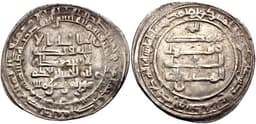
Al-Muttaqi
Emperor · Medieval
37.5Total

Julius Caesar
General · Ancient
82.8Total
Basic Information
Born
908
-100
Died
968
-44
Era
Medieval
Ancient
Nationality
Abbasid Caliphate
Roman Republic
Occupation
Emperor
General
Civilization
Middle Eastern
Western
Score Comparison
Military (10%)
20.0
88.0
Political (20%)
32.1
78.0
Influence (20%)
45.5
85.0
Legacy (20%)
35.8
82.0
Leadership (15%)
39.0
80.0
Strategy (15%)
45.0
85.0
TOTAL
37.5
82.8
Al-Muttaqi — Complete Timeline
940 AD
Accession of Al-MuttaqiPolitical Action◆ Major
Al-Muttaqi became caliph after the death of Al-Radi. His reign was dominated by the struggle between the Hamdanids and the Buyids for control of Baghdad and the caliphate.
AccessionPower StruggleHamdanids
Impact: national
944 AD
Deposition and Blinding by the BuyidsPolitical Action◆ Major
Al-Muttaqi was deposed by the Buyid emir Mu'izz al-Dawla, who had taken control of Baghdad. He was blinded and imprisoned, becoming a puppet of the Buyids. This event solidified Buyid dominance over the caliphate.
DepositionBlindingBuyid Control
Impact: nationaltragic
968 AD
Death of Al-MuttaqiPolitical Action
Al-Muttaqi died in captivity, having been blinded and imprisoned for over two decades. His long imprisonment symbolized the complete subjugation of the Abbasid caliphs to the Buyid dynasty.
DeathImprisonmentBuyid
Impact: nationaltragic
Julius Caesar — Complete Timeline
58 BC
Gallic WarsWar◆ Major
Caesar, as proconsul of Gaul, launched a series of campaigns that conquered all of Gaul (modern France, Belgium, and parts of Switzerland). He fought numerous battles, including against the Helvetii, the Belgae, and the Gallic chieftain Vercingetorix. The wars brought immense wealth and a loyal army to Caesar.
Gallic WarsConquestRoman Expansion
Impact: regional
49 BC
Crossing the RubiconPolitical Action◆ Major
Caesar led Legio XIII across the Rubicon River into Italy, defying the Roman Senate's order to disband his army. This act triggered a civil war against Pompey and the Optimates, ultimately leading to Caesar's dictatorship and the end of the Roman Republic.
Roman Civil WarEnd of RepublicPower Struggle
Impact: global
48 BC
Battle of PharsalusWar◆ Major
Caesar's outnumbered army defeated the larger forces of Pompey the Great at Pharsalus in Greece. Caesar's tactical use of a reserve line to counter Pompey's cavalry charge proved decisive. Pompey fled to Egypt, where he was assassinated, leaving Caesar as the undisputed master of the Roman world.
Roman Civil WarBattleDecisive Victory
Impact: regional
44 BC
Appointment as Dictator for LifePolitical Action◆ Major
The Roman Senate appointed Caesar dictator perpetuo (dictator for life), granting him unprecedented personal power. This move concentrated military, legislative, and judicial authority in one person, effectively ending the Roman Republic's traditional system of checks and balances and alarming many senators.
DictatorshipEnd of RepublicPower Consolidation
Impact: regionaldestructive
Assassination on the Ides of MarchPolitical Action◆ Major
A group of Roman senators, led by Marcus Junius Brutus and Gaius Cassius Longinus, stabbed Caesar to death at a meeting of the Senate in the Theatre of Pompey. The assassination was intended to restore the Republic, but instead triggered another civil war that led to the rise of the Roman Empire.
AssassinationRoman PoliticsEnd of Republic
Impact: globaldestructive
Expert Analysis
al-muttaqi-vs-julius-caesar
# The Man Who Crossed the Rubicon and the Caliph Who Lost His Sight
In the spring of 44 BCE, a Roman general lay bleeding on the floor of the Senate chamber, stabbed twenty-three times by men he had called friends. A thousand years later, in the dusty corridors of a Baghdad palace, an Abbasid caliph felt cold iron press against his eyes—blinded by the very emir who had promised him protection. Two rulers, separated by a millennium, each embodying the highest and lowest reaches of political power. One would give his name to emperors for two thousand years. The other would be forgotten by all but specialists. Why did Caesar become the father of an empire, while Al-Muttaqi became the blind prisoner of his own capital?
Origins
Julius Caesar was born into the patrician Julian clan, a family with a storied past but diminished fortunes. The Rome of 100 BCE was a republic tearing itself apart—senatorial corruption, street violence, and slave revolts had become routine. Young Caesar watched his uncle Marius and his rival Sulla wage civil wars, learning early that in Rome, politics was war by other means. He fled Sulla’s proscriptions, lost his inheritance, and began climbing the ladder of honor with nothing but his wits and a borrowed sword.
Al-Muttaqi was born in 908 CE, into an Abbasid dynasty that had once ruled from Spain to India but was now a ghost haunting its own throne. His predecessors had been murdered, blinded, or reduced to puppets by Turkish slave soldiers and Persian warlords. The caliphate’s treasure was empty, its army a collection of mercenaries, and Baghdad itself was a battlefield between rival factions. Al-Muttaqi inherited not an empire but a title—a crown that weighed heavier than any sword.
The difference in their origins was not merely personal but civilizational. Caesar came of age when Rome was expanding, hungry, and violent—a world where a man could still seize destiny. Al-Muttaqi entered a world where the caliphate was contracting, exhausted, and broken—a world where survival meant submission.
Rise to Power
Caesar’s ascent was a masterclass in calculated audacity. He borrowed fortunes to bribe voters, married into power, and spent years in Gaul building an army that loved him more than Rome. When the Senate ordered him to disband his legions, he paused at the Rubicon River—a provincial boundary that no general could cross with armed men. “The die is cast,” he reportedly said, and marched on Rome. In a single stroke, he broke the Republic’s ancient laws and became its master.
Al-Muttaqi’s rise was not a choice but a sentence. When Caliph Al-Radi died in 940 CE, the powerful Hamdanid and Buyid warlords needed a figurehead. They chose Al-Muttaqi because he was pliable, because he had no army, because he would not resist. He became caliph not by conquest or election, but by the grace of men who saw him as a rubber stamp. His reign began not with a declaration of war, but with a prayer for mercy.
The contrast is stark: Caesar seized power by breaking the rules; Al-Muttaqi accepted power because he had no rules left to break.
Leadership & Governance
Caesar governed as he fought—decisively, ruthlessly, and with an eye on history. He reformed the calendar, granted citizenship to Gauls, launched public works, and centralized tax collection. He pardoned his enemies, promoted talent regardless of birth, and filled the Senate with his supporters. His military genius was legendary: at Alesia, he besieged a Gallic army while simultaneously fighting off a relief force, building fortifications that still impress modern engineers. He was a politician who could fight, a general who could govern, and a reformer who understood that power required legitimacy.
Al-Muttaqi governed as he survived—cautiously, weakly, and with an eye on the door. His four-year reign from 940 to 944 CE was a desperate balancing act between the Hamdanids of Mosul and the Buyids of Persia. He appointed governors he could not control, collected taxes he could not spend, and issued decrees no one obeyed. When the Buyid emir Mu'izz al-Dawla marched on Baghdad, Al-Muttaqi fled to the Hamdanids, then returned under false promises of protection. His only military action was a failed attempt to rally support among Arab tribes—a gesture so pathetic that it ended with his own guards selling him to the Buyids.
Caesar built an empire; Al-Muttaqi could not hold a palace.
Triumph & Tragedy
Caesar’s greatest triumph was the conquest of Gaul—eight years of war that added a province larger than Italy to Rome’s domain. His Commentaries on the Gallic Wars remain a masterpiece of military writing and self-promotion. His greatest tragedy was his assassination on the Ides of March, 44 BCE, when senators who owed him everything decided that freedom meant killing their benefactor. His death plunged Rome into another civil war, but his adopted heir Octavian would fulfill what Caesar began.
Al-Muttaqi’s only triumph was survival—he lasted four years when others had lasted months. His tragedy came in 944 CE, when Mu'izz al-Dawla deposed him, blinded him with a hot needle, and threw him into a dungeon. For twenty-four years, the caliph who had once presided over Baghdad lived in darkness, forgotten by the world he had ruled. He died in 968 CE, not in battle or in bed, but in a cell, his eyes empty sockets, his name erased from the records of power.
Character & Destiny
Caesar was driven by an insatiable ambition that he called “the desire to be first.” He took risks that would have destroyed lesser men—crossing the Rubicon, pardoning assassins, dismissing his bodyguard—because he believed his luck would hold. His fatal flaw was not arrogance but trust: he assumed that his clemency would earn loyalty. Instead, it earned him daggers.
Al-Muttaqi was driven by fear. He trusted no one because everyone had betrayed him. His flaw was not weakness but realism: he knew he could not win, so he tried only to survive. In a world where power belonged to those who seized it, his caution was a death sentence.
Their characters shaped their destinies. Caesar died because he dared too much. Al-Muttaqi lived too long because he dared too little.
Legacy
Caesar’s legacy is written in the DNA of Western civilization. His name became a title—Kaiser, Tsar, Caesar—and his calendar governs our days. He transformed a republic into an empire, and that empire shaped law, language, and religion for two millennia. He is remembered as a genius, a tyrant, and a martyr—a man who changed the world by breaking it.
Al-Muttaqi’s legacy is a footnote in a footnote. He is remembered, if at all, as a symbol of the Abbasid caliphate’s decline—a blind man ruling over a blind institution. His story teaches not how to build, but how to fall. He left no reforms, no monuments, no words that anyone quotes.
Conclusion
Standing at the Rubicon, Caesar gambled everything on a single throw. Sitting in his dungeon, Al-Muttaqi had nothing left to gamble. One became the father of an empire; the other became the son of a collapse. Their lives ask a question that haunts every age: is greatness a matter of character, or of circumstance? Caesar was a genius who found a world ready to be conquered. Al-Muttaqi was a man who found a world already conquered. Perhaps the difference between them is not the size of their ambition, but the shape of their age. One crossed a river. The other was simply swept away.
Rankings
🥇
Julius CaesarLeader
Mil: 88.0Pol: 78.0Inf: 85.0
82.8
🥈
Al-Muttaqi
Mil: 20.0Pol: 32.1Inf: 45.5
37.5
+45.3 behind
How This Comparison Works
Algorithm
Each figure is scored on 6 dimensions (0—100 scale) based on structured historical data: Military (10%), Political (20%), Influence (20%), Legacy (20%), Leadership (15%), Strategy (15%). The weighted total produces the final ranking.
Data Sources
Scores are computed from structured sub-indicators in the database. Scale factors adjust for era (Ancient ×0.85, Modern ×1.0) and civilization size (Eastern ×1.05, Other ×0.80) to account for differences in population and military scale.
Maximum 3 Figures
Comparisons are limited to 2—3 figures to ensure readability and statistical meaningfulness.
Error Margins
±5 points per dimension — Sub-scores are derived from historical records with inherent uncertainty. Two figures within 5 points on a dimension should be considered roughly equivalent in that area.
Total Score Accuracy
±3 points overall — The weighted combination of 6 dimensions produces a total score with approximately ±3 points of uncertainty. Differences of less than 3 points are not statistically significant— the figures are effectively tied.
Known Limitations
- Historical records are incomplete and uneven across civilizations
- Figures from oral-tradition societies may be underrepresented
- Occupation labels can misclassify multi-role figures
- Scores measure capability and impact, not moral character
- Quantitative scoring is a comparison tool, not absolute truth
Capability Radar
Military (10%) — Battles & Warfare
Battles
5
95
Win Rate
5
92
Expansion
5
97
Political (20%) — Governance & Reform
Reform
10
90
Diplomacy
10
85
Economy
10
82
Influence (20%) — Cultural & Global Reach
Cultural
5
88
Global
5
94
Legacy (20%) — Historical Impact
Historical
10
95
Longevity
5
96
Leadership (15%) — Power & Stability
Tenure
20
75
Stability
5
60
Strategy (15%) — Tactics & Innovation
Strategy
5
94
Tactics
5
96
Reform
5
88
Similar Comparisons
Comments & Discussion
No comments yet. Be the first to share your thoughts!