Loading...
Al-Muttaqi vs Napoleon Bonaparte
Napoleon Bonaparte leads by 33.4 pts · 2 figures compared
…
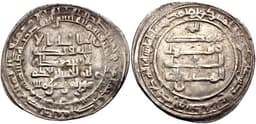
Al-Muttaqi
Emperor · Medieval
37.5Total

Napoleon Bonaparte
General · Modern
70.9Total
Basic Information
Born
908
1769
Died
968
1821
Era
Medieval
Modern
Nationality
Abbasid Caliphate
France
Occupation
Emperor
General
Civilization
Middle Eastern
Western
Score Comparison
Military (10%)
20.0
94.0
Political (20%)
32.1
72.0
Influence (20%)
45.5
40.0
Legacy (20%)
35.8
80.0
Leadership (15%)
39.0
78.0
Strategy (15%)
45.0
90.0
TOTAL
37.5
70.9
Al-Muttaqi — Complete Timeline
940 AD
Accession of Al-MuttaqiPolitical Action◆ Major
Al-Muttaqi became caliph after the death of Al-Radi. His reign was dominated by the struggle between the Hamdanids and the Buyids for control of Baghdad and the caliphate.
AccessionPower StruggleHamdanids
Impact: national
944 AD
Deposition and Blinding by the BuyidsPolitical Action◆ Major
Al-Muttaqi was deposed by the Buyid emir Mu'izz al-Dawla, who had taken control of Baghdad. He was blinded and imprisoned, becoming a puppet of the Buyids. This event solidified Buyid dominance over the caliphate.
DepositionBlindingBuyid Control
Impact: nationaltragic
968 AD
Death of Al-MuttaqiPolitical Action
Al-Muttaqi died in captivity, having been blinded and imprisoned for over two decades. His long imprisonment symbolized the complete subjugation of the Abbasid caliphs to the Buyid dynasty.
DeathImprisonmentBuyid
Impact: nationaltragic
Napoleon Bonaparte — Complete Timeline
1799 AD
Coup of 18 BrumaireOther◆ Major
Napoleon Bonaparte, with support from his brother Lucien and key political figures, overthrew the Directory in a bloodless coup. He established the Consulate with himself as First Consul, effectively becoming the ruler of France. This event ended the French Revolution's most unstable period.
French RevolutionCoupRise to Power
Impact: regional
1804 AD
Promulgation of the Napoleonic CodeOther◆ Major
Napoleon enacted the Civil Code of the French, known as the Napoleonic Code, a comprehensive set of laws that replaced the fragmented feudal legal systems. The code established legal equality, protected property rights, and secularized law. It became the basis for legal systems in many European and world countries.
Legal ReformNapoleonic CodeCivil Law
Impact: globalconstructive
1805 AD
Battle of AusterlitzWar◆ Major
Napoleon's Grande Arm
Napoleonic WarsBattleDecisive Victory
Impact: global
1812 AD
Invasion of RussiaWar◆ Major
Napoleon led the Grande Arm
Napoleonic WarsInvasionDisaster
Impact: globaldestructive
1815 AD
Battle of WaterlooWar◆ Major
Napoleon's French army was defeated by the combined forces of the Duke of Wellington's Anglo-Allied army and Gebhard Leberecht von Bl
Napoleonic WarsBattleFinal Defeat
Impact: globaldestructive
Expert Analysis
al-muttaqi-vs-napoleon-bonaparte
# The Conqueror and the Captive
On a June morning in 1815, Napoleon Bonaparte watched his Imperial Guard march toward the ridge of Mont-Saint-Jean, their bearskin caps silhouetted against the Belgian sky. Thirty years earlier, on the opposite end of the world, a blind man named Al-Muttaqi sat in a Baghdad prison, his eyesockets empty, his caliphate nothing but a memory. Both men wore crowns—one of gold, one of thorns. Both ruled in times of upheaval. But where Napoleon remade the world in his image, Al-Muttaqi was remade by forces he could not control. The question is not why they differed, but why history gave one a sword and the other a chain.
Origins
Napoleon Bonaparte was born in 1769 on Corsica, an island that had just passed from Genoese to French control. His family were minor nobility, but his father’s political maneuvering won him a scholarship to French military schools. There, the awkward, accented boy devoured artillery manuals and Plutarch’s *Lives*. He was shaped by the Enlightenment—its faith in reason, its suspicion of tradition—and by the chaos of revolution. The old order crumbled as he came of age, and he learned early that talent, not birth, could seize a throne.
Al-Muttaqi was born in 908 into the Abbasid caliphate, a dynasty that had once ruled from Spain to India but now governed little more than Baghdad and its suburbs. His father, al-Muqtadir, had been a puppet of court factions; his uncles had been murdered or deposed. The caliphate was a ghost—its armies hired Turkic mercenaries, its treasury looted by viziers, its spiritual authority challenged by upstart dynasties. Al-Muttaqi inherited not an empire but a title, and the title was a target.
The difference in their worlds is stark. Napoleon entered a Europe in revolution, where institutions were molten and could be recast. Al-Muttaqi entered a Middle East in fragmentation, where the caliphate was a ruin and the real power lay with Buyid emirs from Persia. One man was born into possibility; the other, into decay.
Rise to Power
Napoleon’s ascent was meteoric. At twenty-four, he recaptured Toulon from British forces, earning promotion to brigadier general. At twenty-six, he crushed a royalist uprising in Paris with a “whiff of grapeshot,” cementing his reputation as the Republic’s savior. Then came Italy—a campaign in 1796 that turned a ragtag army into a legend. He crossed the Alps, won six battles in a month, and forced Austria to sue for peace. By thirty, he was First Consul; by thirty-five, Emperor.
Each step was a gamble he controlled. He chose his battles, his alliances, his timing. When he invaded Egypt in 1798, he was outmaneuvering his political rivals as much as the Mamluks. When he staged the coup of 18 Brumaire in 1799, he was not seizing power—he was filling a vacuum.
Al-Muttaqi became caliph in 940, after the death of his brother al-Radi. He did not fight for the throne; it was handed to him by the same court factions that had destroyed his predecessors. His rise was not a conquest but a survival. The real power in Baghdad belonged to the Hamdanids, a Bedouin dynasty from northern Syria, and to the Buyids, who were closing in from the east. Al-Muttaqi’s only weapon was his title—a sacred name that could still rally the faithful, if only he could wield it.
He tried. In 943, he fled Baghdad to seek help from the Hamdanid emir Sayf al-Dawla, hoping to use one warlord against another. For a brief moment, he seemed to have regained some autonomy. But the Buyids were patient. In 944, Mu’izz al-Dawla entered Baghdad, deposed the caliph, and ordered his eyes put out with a hot iron. Al-Muttaqi’s rise had been a stumble; his fall, a ritual humiliation.
Leadership & Governance
Napoleon governed with the same energy he brought to war. He centralized the French state, created the Bank of France, and negotiated the Concordat with the Pope. His greatest achievement, the Napoleonic Code of 1804, standardized law across Europe—abolishing feudalism, protecting property, and enshrining merit over birth. He built roads, schools, and a modern bureaucracy. He was a tyrant, yes, but a reforming one.
His military genius is beyond dispute. At Austerlitz in 1805, he lured the Austro-Russian army onto a frozen lake and then shattered it. At Jena in 1806, he destroyed the Prussian army in a single day. His campaigns were masterpieces of speed, deception, and logistics. He did not just win battles; he annihilated armies.
Al-Muttaqi never commanded a single soldier. The Abbasid caliphate had long lost its military power; its armies were Turkic slave-soldiers who owed loyalty to their commanders, not the caliph. He could issue decrees, but they carried no weight. He could perform religious ceremonies, but they had no political force. His governance was a performance—a ritual of authority without substance.
Yet the Buyids did not kill him. They blinded him—a common practice for deposed caliphs, rendering them ritually impure and unable to rule—but they let him live. His captivity lasted twenty-four years, until his death in 968. He was a symbol, not a threat. That was his tragedy: he mattered just enough to be humiliated, but not enough to be erased.
Triumph & Tragedy
Napoleon’s greatest triumph was his empire at its height in 1810—from Spain to Poland, from the Baltic to the Mediterranean. He had crowned himself Emperor, married a Habsburg princess, and placed his brothers on thrones. He had remade Europe.
His greatest tragedy was the invasion of Russia in 1812. He marched with 600,000 men; he returned with fewer than 100,000. The Russian winter, the scorched-earth tactics, the vast distances—they broke his army and his legend. Exiled to Elba, he escaped, returned, and was defeated at Waterloo in 1815. He died in 1821 on Saint Helena, a British prisoner, dictating his memoirs.
Al-Muttaqi’s triumph was surviving his deposition—for a time. His tragedy was that he had no triumph. He was a caliph without a caliphate, a ruler who never ruled. His blindness was not a dramatic battlefield wound but a cold, surgical punishment. He died in captivity, forgotten, a footnote in the decline of a dynasty.
Character & Destiny
Napoleon was restless, arrogant, and endlessly ambitious. “Impossible is a word to be found only in the dictionary of fools,” he said. He believed in his own star, and for a decade, the stars obeyed. His downfall came from the same qualities that raised him: he could not stop, could not compromise, could not accept limits.
Al-Muttaqi was cautious, pious, and trapped. He had no star—only a shadow. His decisions were reactive, not proactive. He fled, he begged, he submitted. He was not a coward; he was a man without options. The Buyids did not defeat him; they inherited him.
Their destinies were written not by fate but by context. Napoleon’s Europe was a forge; Al-Muttaqi’s Baghdad was a cage. One shaped his world; the other was shaped by his.
Legacy
Napoleon’s legacy is everywhere. The Napoleonic Code underpins civil law across Europe and the Americas. His military tactics are still studied. His name is synonymous with ambition, genius, and hubris. He is remembered as a titan.
Al-Muttaqi is remembered only by specialists. His name appears in histories of the Abbasid decline, a brief entry in a long list of puppet caliphs. He left no reforms, no battles, no monuments. His legacy is a cautionary tale about power without force.
Conclusion
Standing at Waterloo, Napoleon watched his empire crumble. Sitting in his cell, Al-Muttaqi heard nothing but silence. One man conquered the world and lost it; the other never held it at all. Their stories are not a comparison of equals but a meditation on fate—how the same ambition, placed in different centuries, produces either a legend or a ghost. Napoleon shaped history; Al-Muttaqi was shaped by it. And that, perhaps, is the deepest difference of all.
Rankings
🥇
Napoleon BonaparteLeader
Mil: 94.0Pol: 72.0Inf: 40.0
70.9
🥈
Al-Muttaqi
Mil: 20.0Pol: 32.1Inf: 45.5
37.5
+33.4 behind
How This Comparison Works
Algorithm
Each figure is scored on 6 dimensions (0—100 scale) based on structured historical data: Military (10%), Political (20%), Influence (20%), Legacy (20%), Leadership (15%), Strategy (15%). The weighted total produces the final ranking.
Data Sources
Scores are computed from structured sub-indicators in the database. Scale factors adjust for era (Ancient ×0.85, Modern ×1.0) and civilization size (Eastern ×1.05, Other ×0.80) to account for differences in population and military scale.
Maximum 3 Figures
Comparisons are limited to 2—3 figures to ensure readability and statistical meaningfulness.
Error Margins
±5 points per dimension — Sub-scores are derived from historical records with inherent uncertainty. Two figures within 5 points on a dimension should be considered roughly equivalent in that area.
Total Score Accuracy
±3 points overall — The weighted combination of 6 dimensions produces a total score with approximately ±3 points of uncertainty. Differences of less than 3 points are not statistically significant— the figures are effectively tied.
Known Limitations
- Historical records are incomplete and uneven across civilizations
- Figures from oral-tradition societies may be underrepresented
- Occupation labels can misclassify multi-role figures
- Scores measure capability and impact, not moral character
- Quantitative scoring is a comparison tool, not absolute truth
Capability Radar
Military (10%) — Battles & Warfare
Battles
5
95
Win Rate
5
90
Expansion
5
95
Political (20%) — Governance & Reform
Reform
10
95
Diplomacy
10
80
Economy
10
85
Influence (20%) — Cultural & Global Reach
Cultural
5
85
Global
5
90
Legacy (20%) — Historical Impact
Historical
10
95
Longevity
5
90
Leadership (15%) — Power & Stability
Tenure
20
85
Stability
5
70
Strategy (15%) — Tactics & Innovation
Strategy
5
95
Tactics
5
98
Reform
5
92
Similar Comparisons
Comments & Discussion
Napoleon’sVictory6/17/2026
Classic misalignment. Napoleon remade military doctrine with corps and artillery; Al-Muttaqi could barely raise a battalion against his own guards. This isn’t a fair fight—it’s like comparing a ship-of-the-line to a rowboat. Waterloo was won or lost by maneuver and logistics, things that require eyes and freedom. Al-Muttaqi had neither. History gave Napoleon the sword because innovation demands agency.
盲眼古卷6/17/2026
拿过拿破仑的军帽对比阿拔斯哈里发的头巾,简直就是铁与沙的较量。拿破仑燃烧欧洲地图,重构国家边界;而穆塔基在盲眼中摸索的仅是一间牢房。一个在滑铁卢统帅六万精锐,一个被自己的突厥卫兵随意废黜。这不是文明优劣,是权力干涸到只剩名义。别拿米开朗琪罗和墙上的涂鸦比史诗。
DataSkepticDavid6/17/2026
This comparison inflates outlier micro-histories into fake profundity. Napoleon’s peak armies numbered over 600,000; Al-Muttaqi’s “army” was a few hundred palace eunuchs and mutinous Turkish slaves. Napoleon controlled 70 million subjects; Al-Muttaqi’s direct rule maybe a hundred thousand city dwellers. The only chain Al-Muttaqi had was under a vizier’s thumb. The real difference? Data scale. One governed a continental empire, the other a failing city-state.
铁血浪漫6/17/2026
拿破仑为欧洲留下《拿破仑法典》和现代军校制度,留下了横跨多国的手段和遗产。而穆塔基除了哈里发头衔和空洞的“众信士长官”外几乎什么都没留下——没有法令、没有军队改革、没有建筑。被俘虏并被处决他的前任尸体被吊在桥上?这是悲惨,但不是值得比较的输赢。拿破仑会认为被这样的对比是降格。乱世中的伟业和乱世中的消亡根本不同。
ClassicsCounterpoint6/17/2026
You’re missing the structure. Napoleon rebuilt sovereignty from revolutionary chaos; Al-Muttaqi inherited a decaying sacred throne where his own grandmother and eunuchs plotted against him. The sword versus chain dichotomy only works if you ignore political reality. Al-Muttaqi was blind and broke, but still could order the execution of rivals—and did. Napoleon’s abdication mirrors Al-Muttaqi’s deposition: both endings were written by the same hand—collapse of authority.