Loading...
Al-Mustarshid vs Orda Khan
Orda Khan leads by 2.1 pts · 2 figures compared
…
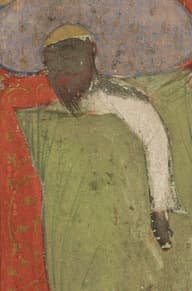
Al-Mustarshid
Emperor · Medieval
39.6Total
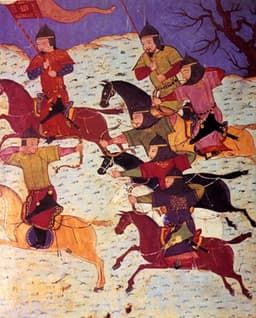
Orda Khan
Emperor · Medieval
41.7Total
Basic Information
Born
1092
1204
Died
1135
1251
Era
Medieval
Medieval
Nationality
Abbasid Caliphate
Golden Horde
Occupation
Emperor
Emperor
Civilization
Middle Eastern
Eastern
Score Comparison
Military (10%)
50.0
47.5
Political (20%)
26.4
26.4
Influence (20%)
47.9
49.4
Legacy (20%)
38.3
39.2
Leadership (15%)
34.6
45.0
Strategy (15%)
38.6
41.0
TOTAL
39.6
41.7
Al-Mustarshid — Complete Timeline
1125 AD
Rebellion Against Seljuk SultanWar
Caliph Al-Mustarshid rebelled against Seljuk Sultan Mahmud II, raising an army and fighting the Seljuks near Baghdad. The caliph was defeated and captured, then forced to pay a large ransom and recognize Seljuk authority.
RebellionSeljuk-Abbasid WarDefeat
Impact: regionaldestructive
1132 AD
Military Campaign Against SeljuksWar
Al-Mustarshid launched a military campaign against the Seljuk sultan, capturing several fortresses. This campaign temporarily expanded caliphal territory but ultimately failed to secure lasting independence.
Military CampaignTerritorial Expansion
Impact: regional
1135 AD
Assassination of Al-MustarshidPolitical Action◆ Major
Al-Mustarshid was assassinated in his tent by a group of Seljuk agents while on campaign. His death marked the first time an Abbasid caliph was killed by the Seljuks, demonstrating the fragility of caliphal power.
AssassinationSeljuk ViolenceCaliphal Death
Impact: regionaltragic
Orda Khan — Complete Timeline
1227 AD
Founded the White HordePolitical Action◆ Major
Orda Khan, as the eldest son of Jochi, inherited the eastern part of the Jochid ulus after his father's death in 1227. He established the White Horde, a semi-autonomous khanate within the Mongol Empire, ruling over the steppes of modern-day Kazakhstan.
White HordeMongol EmpireJochi
Impact: regionalconstructive
1236 AD
Participated in the Mongol Invasion of EuropeWar◆ Major
Orda Khan led his forces as part of the Mongol invasion of Europe under Batu Khan. He commanded troops in the campaigns against the Rus' principalities, Poland, and Hungary, contributing to the Mongol conquest of Eastern Europe.
Mongol InvasionEuropeBatu Khan
Impact: regionaldestructive
1242 AD
Subordinated to Batu KhanPolitical Action
After the Mongol withdrawal from Europe in 1242, Orda Khan acknowledged the supremacy of his younger brother Batu Khan, who established the Golden Horde. Orda's White Horde remained a vassal, paying tribute and providing military support.
Golden HordeVassalageBatu Khan
Impact: regional
Expert Analysis
Origins
Al-Mustarshid, born in 1092, was the 29th Abbasid caliph in Baghdad, inheriting a position long stripped of temporal power by the Seljuk Turks. His father, Caliph al-Mustazhir, had maintained a ceremonial role, but al-Mustarshid sought to revive caliphal authority. He received a traditional Islamic education and was deeply aware of the caliphate's diminished status. Orda Khan, born around 1204, was the eldest son of Jochi, the eldest son of Genghis Khan. As a Mongol prince, he grew up in the steppe traditions of warfare and leadership. His father's death in 1227 left Orda to inherit the eastern part of the Jochid ulus, which became the White Horde. Orda's early life was shaped by the Mongol Empire's expansion, and he participated in campaigns that stretched from Central Asia to Europe.
Rise to Power
Al-Mustarshid became caliph in 1118 after his father's death. He immediately sought to assert independence from the Seljuk sultan Mahmud II, who controlled Baghdad. In 1122, al-Mustarshid raised an army and rebelled, fighting the Seljuks near Baghdad. Despite initial successes, he was defeated and captured. He was later released but continued to plot against Seljuk domination. His rebellion marked a rare attempt by a caliph to reclaim military power. Orda Khan's rise was tied to his lineage. After Jochi's death, the Mongol Empire's western territories were divided among his sons. Orda, as the eldest, received the eastern portion, while Batu, his younger brother, took the west. Orda acknowledged Batu's supremacy, but his White Horde remained a semi-autonomous entity. He participated in the Mongol invasion of Europe (1236-1242), leading troops against the Rus' principalities and at the Battle of Mohi in 1241. His role in the invasion solidified his position as a major Mongol leader.
Leadership & Governance
Al-Mustarshid's leadership was characterized by a determination to restore caliphal authority. He personally led military campaigns, a break from his predecessors who stayed in Baghdad. However, his governance was hampered by limited resources and constant pressure from the Seljuks. He attempted to form alliances with local rulers, but his efforts were largely unsuccessful. Orda Khan's leadership was more pragmatic. As the ruler of the White Horde, he maintained a stable administration that balanced Mongol traditions with local customs. He subordinated to Batu, ensuring the unity of the Jochid ulus. Orda's governance focused on consolidating control over his territory, which included parts of modern Kazakhstan and Russia. He did not attempt to centralize power but instead allowed local rulers to maintain autonomy as long as they paid tribute.
Triumph & Tragedy
Al-Mustarshid's greatest success was his rebellion against the Seljuks, which temporarily expanded caliphal territory. He captured several fortresses and demonstrated that the caliphate could still project military power. His greatest failure was his defeat and capture by the Seljuks. Ultimately, in 1135, he was assassinated in his tent by Seljuk agents during a campaign, becoming the first Abbasid caliph to be killed. His death marked a low point for the caliphate's political influence. Orda Khan's triumphs include founding the White Horde, which lasted for centuries, and participating in the Mongol invasion of Europe, which demonstrated Mongol military prowess. His decision to subordinate to Batu ensured stability within the Jochid ulus. However, Orda's failure was his relative obscurity compared to Batu and other Mongol leaders. He did not achieve the same level of fame or territorial expansion, and his White Horde eventually declined.
Character & Destiny
Al-Mustarshid was a stubborn and ambitious leader who refused to accept the caliphate's diminished role. His determination to restore power led him to take risks, but his lack of military and political support doomed his efforts. Historians describe him as a tragic figure whose rebellion was noble but futile. Orda Khan was more pragmatic and submissive, willing to defer to his younger brother for the sake of unity. He was a capable military commander but not a visionary leader. His character ensured the White Horde's survival but limited its prominence. In terms of scores, Al-Mustarshid scored 34.6 in leadership, while Orda scored 45.0, reflecting Orda's more effective governance.
Legacy
Al-Mustarshid's legacy is that of a caliph who dared to challenge Seljuk domination. His assassination set a precedent for caliphal vulnerability, and later caliphs were more cautious. He is remembered as a symbol of resistance against foreign control, but his impact on the caliphate's power was minimal. Orda Khan's legacy is more substantial. The White Horde he founded evolved into the Kazakh Khanate and influenced the region's political development. He also contributed to the Mongol Empire's expansion into Europe. His influence score of 49.4 reflects his long-term impact, while Al-Mustarshid's influence is 47.9. Orda's legacy is tied to the Golden Horde's history, while Al-Mustarshid's is confined to the Abbasid caliphate's decline.
Conclusion
While Al-Mustarshid and Orda Khan both led in challenging contexts, Orda Khan had the greater impact. His founding of the White Horde created a political entity that lasted for centuries, shaping the history of Central Asia. Al-Mustarshid's rebellion, though dramatic, did not alter the caliphate's trajectory. Orda's total score of 41.7 surpasses Al-Mustarshid's 39.6, reflecting his stronger military (47.5 vs 50.0), leadership (45.0 vs 34.6), and legacy (39.2 vs 38.3). Orda's role in the Mongol invasion of Europe and his contribution to the Mongol Empire's structure give him a broader historical significance. Al-Mustarshid, despite his bravery, remains a footnote in Abbasid history. Therefore, Orda Khan is the more historically significant figure.
Rankings
🥇
Orda KhanLeader
Mil: 47.5Pol: 26.4Inf: 49.4
41.7
🥈
Al-Mustarshid
Mil: 50.0Pol: 26.4Inf: 47.9
39.6
+2.1 behind
How This Comparison Works
Algorithm
Each figure is scored on 6 dimensions (0—100 scale) based on structured historical data: Military (10%), Political (20%), Influence (20%), Legacy (20%), Leadership (15%), Strategy (15%). The weighted total produces the final ranking.
Data Sources
Scores are computed from structured sub-indicators in the database. Scale factors adjust for era (Ancient ×0.85, Modern ×1.0) and civilization size (Eastern ×1.05, Other ×0.80) to account for differences in population and military scale.
Maximum 3 Figures
Comparisons are limited to 2—3 figures to ensure readability and statistical meaningfulness.
Error Margins
±5 points per dimension — Sub-scores are derived from historical records with inherent uncertainty. Two figures within 5 points on a dimension should be considered roughly equivalent in that area.
Total Score Accuracy
±3 points overall — The weighted combination of 6 dimensions produces a total score with approximately ±3 points of uncertainty. Differences of less than 3 points are not statistically significant— the figures are effectively tied.
Known Limitations
- Historical records are incomplete and uneven across civilizations
- Figures from oral-tradition societies may be underrepresented
- Occupation labels can misclassify multi-role figures
- Scores measure capability and impact, not moral character
- Quantitative scoring is a comparison tool, not absolute truth
Capability Radar
Military (10%) — Battles & Warfare
Battles
25
20
Win Rate
20
25
Expansion
10
25
Political (20%) — Governance & Reform
Reform
20
15
Diplomacy
25
20
Economy
15
15
Influence (20%) — Cultural & Global Reach
Cultural
15
15
Global
10
10
Legacy (20%) — Historical Impact
Historical
20
20
Longevity
10
15
Leadership (15%) — Power & Stability
Tenure
30
30
Stability
10
25
Strategy (15%) — Tactics & Innovation
Strategy
25
20
Tactics
20
20
Reform
15
10
Similar Comparisons
Comments & Discussion
No comments yet. Be the first to share your thoughts!