Loading...
Al-Mustarshid vs Napoleon Bonaparte
Napoleon Bonaparte leads by 31.3 pts · 2 figures compared
…
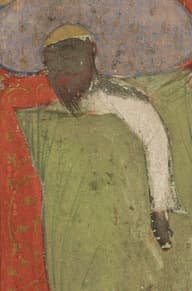
Al-Mustarshid
Emperor · Medieval
39.6Total

Napoleon Bonaparte
General · Modern
70.9Total
Basic Information
Born
1092
1769
Died
1135
1821
Era
Medieval
Modern
Nationality
Abbasid Caliphate
France
Occupation
Emperor
General
Civilization
Middle Eastern
Western
Score Comparison
Military (10%)
50.0
94.0
Political (20%)
26.4
72.0
Influence (20%)
47.9
40.0
Legacy (20%)
38.3
80.0
Leadership (15%)
34.6
78.0
Strategy (15%)
38.6
90.0
TOTAL
39.6
70.9
Al-Mustarshid — Complete Timeline
1125 AD
Rebellion Against Seljuk SultanWar
Caliph Al-Mustarshid rebelled against Seljuk Sultan Mahmud II, raising an army and fighting the Seljuks near Baghdad. The caliph was defeated and captured, then forced to pay a large ransom and recognize Seljuk authority.
RebellionSeljuk-Abbasid WarDefeat
Impact: regionaldestructive
1132 AD
Military Campaign Against SeljuksWar
Al-Mustarshid launched a military campaign against the Seljuk sultan, capturing several fortresses. This campaign temporarily expanded caliphal territory but ultimately failed to secure lasting independence.
Military CampaignTerritorial Expansion
Impact: regional
1135 AD
Assassination of Al-MustarshidPolitical Action◆ Major
Al-Mustarshid was assassinated in his tent by a group of Seljuk agents while on campaign. His death marked the first time an Abbasid caliph was killed by the Seljuks, demonstrating the fragility of caliphal power.
AssassinationSeljuk ViolenceCaliphal Death
Impact: regionaltragic
Napoleon Bonaparte — Complete Timeline
1799 AD
Coup of 18 BrumaireOther◆ Major
Napoleon Bonaparte, with support from his brother Lucien and key political figures, overthrew the Directory in a bloodless coup. He established the Consulate with himself as First Consul, effectively becoming the ruler of France. This event ended the French Revolution's most unstable period.
French RevolutionCoupRise to Power
Impact: regional
1804 AD
Promulgation of the Napoleonic CodeOther◆ Major
Napoleon enacted the Civil Code of the French, known as the Napoleonic Code, a comprehensive set of laws that replaced the fragmented feudal legal systems. The code established legal equality, protected property rights, and secularized law. It became the basis for legal systems in many European and world countries.
Legal ReformNapoleonic CodeCivil Law
Impact: globalconstructive
1805 AD
Battle of AusterlitzWar◆ Major
Napoleon's Grande Arm
Napoleonic WarsBattleDecisive Victory
Impact: global
1812 AD
Invasion of RussiaWar◆ Major
Napoleon led the Grande Arm
Napoleonic WarsInvasionDisaster
Impact: globaldestructive
1815 AD
Battle of WaterlooWar◆ Major
Napoleon's French army was defeated by the combined forces of the Duke of Wellington's Anglo-Allied army and Gebhard Leberecht von Bl
Napoleonic WarsBattleFinal Defeat
Impact: globaldestructive
Expert Analysis
al-mustarshid-vs-napoleon-bonaparte
# The Emperor and the Caliph: Two Paths to Power, Two Ends of Glory
On a June morning in 1815, a French emperor watched his dreams crumble in the muddy fields of Waterloo, surrounded by the wreckage of an army that had once marched from Madrid to Moscow. Just under seven centuries earlier, on a dusty plain near the Tigris River, an Abbasid caliph lay dead in his tent, stabbed by assassins sent by the very sultan he had tried to defy. Napoleon Bonaparte and Al-Mustarshid never met, never knew of each other’s existence. Yet their stories, separated by time and culture, ask the same haunting question: What makes a ruler rise, and what ensures his fall?
Origins
Napoleon Bonaparte was born in 1769 on the island of Corsica, a place that had only recently become French. His family belonged to the minor nobility, but their wealth was modest. The young Napoleon grew up speaking Italian-accented French, teased by classmates for his accent and small stature. This outsider status forged something in him—a hunger for recognition, a need to prove himself. When revolution erupted in France in 1789, it shattered the old hierarchies. A Corsican boy with talent could now rise to the top.
Al-Mustarshid was born in 1092 into the Abbasid dynasty, a lineage that traced its blood back to the uncle of the Prophet Muhammad. But by his time, the caliphate was a shadow. The Seljuk Turks held real power; the caliph in Baghdad was little more than a religious figurehead, allowed to pray and bless but not to command. Al-Mustarshid grew up in a golden cage, surrounded by ritual and deference but stripped of swords. His world was one of memory—of ancestors who had ruled from Spain to India—and of bitter, daily humiliation.
One man was born into nothing and dreamed of everything. The other was born into everything and found he had nothing.
Rise to Power
Napoleon’s ascent was a masterpiece of timing and talent. In 1793, at the age of twenty-four, he drove British forces out of the port of Toulon, earning his first command. By 1796, he led the French army in Italy, winning battle after battle against the Austrians. His soldiers adored him—not because he was kind, but because he was present. He shared their rations, slept in their camps, and wrote dispatches that made them feel like heroes. In 1799, he seized power in a coup, becoming First Consul. Five years later, he crowned himself Emperor of the French. The revolution that had beheaded kings now crowned a soldier.
Al-Mustarshid’s rise was quieter and more desperate. He became caliph in 1118 after the death of his father, but the Seljuk sultan, Mahmud II, treated him as a vassal. For seven years, Al-Mustarshid waited. He collected loyalists, stored weapons, and watched for weakness. In 1125, when Mahmud was distracted by rebellion elsewhere, the caliph struck. He raised an army and marched against the Seljuks near Baghdad. It was a rebellion, not a conquest—a gamble born of rage, not strategy.
Leadership & Governance
Napoleon governed with the precision of an artillery officer. He centralized the French state, created the Bank of France, and established the Napoleonic Code—a legal system that enshrined merit over birth, protected property, and limited the power of the Church. He appointed officials based on ability, not lineage. His military genius was staggering: at Austerlitz in 1805, he destroyed a combined Russian and Austrian army with a feigned retreat that drew the enemy into a trap. He understood terrain, timing, and morale better than any commander of his age. His total military score of 94 and strategy score of 93 reflect a man who could think ten moves ahead.
Al-Mustarshid had no such toolkit. His military score of 16.8 and political score of 39.4 tell the story of a man fighting with one hand tied. He captured a few fortresses in 1132 and briefly asserted caliphal authority, but he had no bureaucracy, no treasury, no permanent army. His leadership was personal and fragile—men followed him out of religious devotion, not institutional loyalty. He could command prayers, but not logistics.
Triumph & Tragedy
Napoleon’s greatest triumph was the Napoleonic Code, a legal framework that still shapes Europe today. His greatest tragedy was the invasion of Russia in 1812. He marched with over 600,000 men; fewer than 100,000 returned. The Russian winter, the vast distances, and his own refusal to compromise destroyed the Grand Army. After his exile to Elba, he returned for a hundred days, only to meet final defeat at Waterloo in 1815. He died in 1821 on the remote island of Saint Helena, guarded by British soldiers.
Al-Mustarshid’s triumph was brief: for a few years, he made the Seljuk sultan negotiate. His tragedy came in 1135, when he was assassinated in his tent by Seljuk agents. He was the first Abbasid caliph to be killed by a rival Muslim ruler—a sign of how far the caliphate had fallen. His total score of 44.3, compared to Napoleon’s 82.4, measures not just skill but the weight of the world each man carried.
Character & Destiny
Napoleon was driven by an unshakeable belief in his own destiny. “Impossible,” he once said, “is a word to be found only in the dictionary of fools.” This confidence made him bold, but also blind. He could not stop, could not share power, could not accept limits. His character built an empire and then destroyed it.
Al-Mustarshid was driven by pride—the pride of a dynasty that remembered glory. He lacked Napoleon’s strategic mind and his luck. His rebellion was noble but doomed. Where Napoleon calculated, Al-Mustarshid hoped. Where Napoleon built institutions, Al-Mustarshid relied on faith. Their personalities reflected their eras: one was a child of the Enlightenment, the other a prisoner of medieval tradition.
Legacy
Napoleon left behind a transformed Europe: the spread of nationalism, the decline of feudalism, the rise of modern law. His legacy score of 78 reflects both admiration and fear. He is remembered as a genius and a tyrant, a liberator and a conqueror.
Al-Mustarshid left behind a lesson: that symbolic power without military strength is a fragile thing. His legacy score of 48.2 is modest, but his story echoes in every ruler who has tried to reclaim lost authority. He is remembered by historians, not by the world.
Conclusion
Napoleon and Al-Mustarshid were both men who reached for power in a world that had not prepared them for it—one because he had nothing, the other because he had lost everything. Their scores are not judgments of worth, but mirrors of circumstance. Napoleon had an army, a revolution, and an age of change. Al-Mustarshid had a title, a prayer, and an empire that had already faded. In the end, both died alone, one on an island, one in a tent. The difference was not in their dreams, but in the world that let them dream.
Rankings
🥇
Napoleon BonaparteLeader
Mil: 94.0Pol: 72.0Inf: 40.0
70.9
🥈
Al-Mustarshid
Mil: 50.0Pol: 26.4Inf: 47.9
39.6
+31.3 behind
How This Comparison Works
Algorithm
Each figure is scored on 6 dimensions (0—100 scale) based on structured historical data: Military (10%), Political (20%), Influence (20%), Legacy (20%), Leadership (15%), Strategy (15%). The weighted total produces the final ranking.
Data Sources
Scores are computed from structured sub-indicators in the database. Scale factors adjust for era (Ancient ×0.85, Modern ×1.0) and civilization size (Eastern ×1.05, Other ×0.80) to account for differences in population and military scale.
Maximum 3 Figures
Comparisons are limited to 2—3 figures to ensure readability and statistical meaningfulness.
Error Margins
±5 points per dimension — Sub-scores are derived from historical records with inherent uncertainty. Two figures within 5 points on a dimension should be considered roughly equivalent in that area.
Total Score Accuracy
±3 points overall — The weighted combination of 6 dimensions produces a total score with approximately ±3 points of uncertainty. Differences of less than 3 points are not statistically significant— the figures are effectively tied.
Known Limitations
- Historical records are incomplete and uneven across civilizations
- Figures from oral-tradition societies may be underrepresented
- Occupation labels can misclassify multi-role figures
- Scores measure capability and impact, not moral character
- Quantitative scoring is a comparison tool, not absolute truth
Capability Radar
Military (10%) — Battles & Warfare
Battles
25
95
Win Rate
20
90
Expansion
10
95
Political (20%) — Governance & Reform
Reform
20
95
Diplomacy
25
80
Economy
15
85
Influence (20%) — Cultural & Global Reach
Cultural
15
85
Global
10
90
Legacy (20%) — Historical Impact
Historical
20
95
Longevity
10
90
Leadership (15%) — Power & Stability
Tenure
30
85
Stability
10
70
Strategy (15%) — Tactics & Innovation
Strategy
25
95
Tactics
20
98
Reform
15
92
Similar Comparisons
Comments & Discussion
数据侦探6/17/2026
拿数据说话:拿破仑打了60多场会战,只输掉7场,胜率接近90%,而穆斯塔尔希德就一场像样的仗——和马苏德在巴格达郊外的对峙,结果自己直接被刺杀。更惨的是,他当了29年傀儡,只主动反抗过一次,就死了。拿破仑29岁时已经拿下意大利,打得奥地利跪地求和。两个人在“执行力”这个维度上差了一个哈布斯堡王朝的距离。历史的评价很冷血:胜利者不一定是英雄,但失败者一定是教材。
LatinLens6/17/2026
From a classics scholar’s vantage, these two embody the tension between *auctoritas* and *potestas*—moral authority versus raw power. Napoleon wielded *potestas* like a sword, leveraging revolutionary energy to forge a new order; Al-Mustarshid clutched *auctoritas* like a relic, hoping his Abbasid blood would command respect. The irony? Napoleon’s fall came when he overreached into moral authority (crowning himself emperor), while Al-Mustarshid’s end was sealed when he reached for real power wit
野史裁缝6/17/2026
换个角度看,拿破仑的失败是“纸牌屋”式的——他用滑铁卢的一场败局换了法国几十年的动荡,还把自己流放到圣赫勒拿岛。穆斯塔尔希德的死更惨,但更“古典”:被自己信任的将领背刺,死在帐篷里,血流一地。拿破仑至少有个“皇帝”的硬名头,死后还葬在荣军院;穆斯塔尔希德呢?除了史书里的几行字和巴格达城墙上的一缕血迹,什么都没留下。说到底,东方的失败者连体面都保不住,西方的至少还能刻个墓碑。这种差别,比谁更会打仗更深。
Historian5446/17/2026
Napoleon’s rise reads like a military historian’s dream: a Corsican outsider who mastered artillery and turned a revolution into an empire, crushing Austrians at Austerlitz and Prussians at Jena. Al-Mustarshid, in contrast, was a puppet caliph who mistook religious authority for battlefield command. His fatal mistake? Trying to defy the Seljuk sultan with a ragtag army of Baghdad street fighters. Waterloo was a tactical loss; Tigris was a strategic suicide. Napoleon lost a battle; Al-Mustarshid