Loading...
Al-Muntasir vs Al-Mustarshid
Al-Muntasir leads by 0.0 pts · 2 figures compared
…

Al-Muntasir
Emperor · Medieval
39.6Total
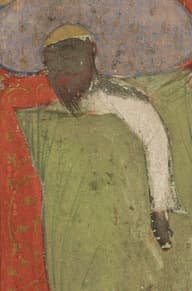
Al-Mustarshid
Emperor · Medieval
39.6Total
Basic Information
Born
837
1092
Died
862
1135
Era
Medieval
Medieval
Nationality
Abbasid Caliphate
Abbasid Caliphate
Occupation
Emperor
Emperor
Civilization
Middle Eastern
Middle Eastern
Score Comparison
Military (10%)
20.0
50.0
Political (20%)
35.0
26.4
Influence (20%)
45.5
47.9
Legacy (20%)
35.8
38.3
Leadership (15%)
49.9
34.6
Strategy (15%)
45.0
38.6
TOTAL
39.6
39.6
Al-Muntasir — Complete Timeline
861 AD
Assassination of Al-MutawakkilPolitical Action◆ Major
Al-Muntasir participated in the assassination of his father, Caliph al-Mutawakkil, by the Turkish guard. He then ascended to the caliphate, becoming the first Abbasid caliph to be installed by Turkish military power.
AssassinationSuccession
Impact: regionaldestructive
862 AD
Brief Reign and DeathPolitical Action◆ Major
Al-Muntasir's reign lasted only about six months. He died in 862, possibly poisoned by the Turkish guard, after failing to assert his authority. His death deepened the instability of the caliphate.
DeathInstability
Impact: nationaltragic
Al-Mustarshid — Complete Timeline
1125 AD
Rebellion Against Seljuk SultanWar
Caliph Al-Mustarshid rebelled against Seljuk Sultan Mahmud II, raising an army and fighting the Seljuks near Baghdad. The caliph was defeated and captured, then forced to pay a large ransom and recognize Seljuk authority.
RebellionSeljuk-Abbasid WarDefeat
Impact: regionaldestructive
1132 AD
Military Campaign Against SeljuksWar
Al-Mustarshid launched a military campaign against the Seljuk sultan, capturing several fortresses. This campaign temporarily expanded caliphal territory but ultimately failed to secure lasting independence.
Military CampaignTerritorial Expansion
Impact: regional
1135 AD
Assassination of Al-MustarshidPolitical Action◆ Major
Al-Mustarshid was assassinated in his tent by a group of Seljuk agents while on campaign. His death marked the first time an Abbasid caliph was killed by the Seljuks, demonstrating the fragility of caliphal power.
AssassinationSeljuk ViolenceCaliphal Death
Impact: regionaltragic
Expert Analysis
Origins
Al-Muntasir (born 837) was the son of Caliph al-Mutawakkil, a ruler known for his orthodox religious policies and reliance on Turkish military slaves. Al-Muntasir grew up in the opulent Abbasid court, surrounded by intrigue and the powerful Turkish guard that his father had cultivated. His mother was a Greek slave, and he was not the designated heir; al-Mutawakkil favored his younger son al-Mu'tazz. This familial tension set the stage for al-Muntasir's eventual betrayal.
Al-Mustarshid (born 1092) was born into a weakened Abbasid caliphate under Seljuk suzerainty. His father, Caliph al-Mustazhir, had maintained a ceremonial role, but al-Mustarshid was determined to restore temporal power. He was educated in Islamic law and theology, and from a young age, he resented the Seljuk sultans who controlled Baghdad and the caliph's authority.
Rise to Power
Al-Muntasir's path to power was through assassination. In 861, the Turkish guard, angry at al-Mutawakkil's attempts to reduce their influence, murdered the caliph in his palace. Al-Muntasir, who had been involved in the plot, was immediately proclaimed caliph. His reign began with the backing of the Turks, but he was never truly independent.
Al-Mustarshid became caliph in 1118 after his father's death. Unlike his predecessors, he refused to be a puppet. He built a small army from local Arab tribes and confronted the Seljuk Sultan Mahmud II. In 1122, he raised the standard of rebellion, capturing fortresses around Baghdad. However, in 1123, he was defeated near Baghdad and captured. He was later released but continued to plot against Seljuk dominance.
Leadership & Governance
Al-Muntasir's leadership was weak and short-lived. He scored 49.9 in leadership, but his reign lasted only six months (861-862). He attempted to remove pro-Turkish officials but failed to consolidate power. He reversed his father's religious policies, including the ban on the pilgrimage to the tombs of Husayn and Ali, but this did little to earn him lasting support. He was ultimately poisoned by the Turks after they deemed him unreliable.
Al-Mustarshid scored 34.6 in leadership, reflecting his inability to defeat the Seljuks militarily. However, his governance was marked by a determined effort to reassert caliphal authority. He minted coins in his own name without Seljuk approval and corresponded with other Muslim rulers, seeking alliances. His political score of 26.4 indicates his failure to navigate the complex power dynamics of his time.
Triumph & Tragedy
Al-Muntasir's only triumph was ascending to the caliphate through the assassination of his father—a morally hollow victory. His tragedy was his own assassination by the same Turkish guard that had elevated him. He died in 862, possibly poisoned, after failing to establish independent rule.
Al-Mustarshid's triumph was his bold rebellion against the Seljuks, which temporarily expanded caliphal territory and inspired later caliphs. He scored 50.0 in military, higher than al-Muntasir's 20.0, but his tragedy was his defeat and assassination in 1135 by Seljuk agents while on campaign. His death marked the first time an Abbasid caliph was killed by external forces, not palace guards.
Character & Destiny
Al-Muntasir was ambitious but lacked the political skill to control the Turkish guard. His complicity in patricide shows a ruthless streak, but his short reign and quick death reveal indecisiveness. He scored 35.0 in political acumen, indicating poor judgment.
Al-Mustarshid was defiant and principled but overly optimistic about his military strength. His rebellion was doomed from the start given the Seljuk's superior forces. His character—proud and uncompromising—led to his death, but it also preserved the ideal of caliphal independence for future generations.
Legacy
Al-Muntasir's legacy is minimal. He is remembered as the first caliph to be assassinated by the Turks, a sign of the caliphate's decline. His reign is a footnote in Abbasid history. He scored 45.5 in influence and 35.8 in legacy, but his impact was negligible.
Al-Mustarshid's legacy is more significant. His rebellion, though failed, set a precedent for later caliphs like al-Muqtafi to assert power. He scored 47.9 in influence and 38.3 in legacy. His death at the hands of the Seljuks exposed their dominance and contributed to the eventual weakening of Seljuk control over the caliphate.
Conclusion
Both caliphs scored 39.6 overall, but al-Mustarshid had a greater impact. His rebellion was a conscious attempt to restore caliphal authority, whereas al-Muntasir's rise was a product of palace intrigue. Al-Mustarshid's defiance inspired subsequent caliphs to resist Seljuk domination, ultimately leading to a resurgence of Abbasid temporal power in the late 12th century. Al-Muntasir, by contrast, left no lasting change. Therefore, al-Mustarshid, with his higher military score (50.0 vs 20.0) and more meaningful legacy, is the more significant figure.
Rankings
🥇
Al-MuntasirLeader
Mil: 20.0Pol: 35.0Inf: 45.5
39.6
🥈
Al-Mustarshid
Mil: 50.0Pol: 26.4Inf: 47.9
39.6
How This Comparison Works
Algorithm
Each figure is scored on 6 dimensions (0—100 scale) based on structured historical data: Military (10%), Political (20%), Influence (20%), Legacy (20%), Leadership (15%), Strategy (15%). The weighted total produces the final ranking.
Data Sources
Scores are computed from structured sub-indicators in the database. Scale factors adjust for era (Ancient ×0.85, Modern ×1.0) and civilization size (Eastern ×1.05, Other ×0.80) to account for differences in population and military scale.
Maximum 3 Figures
Comparisons are limited to 2—3 figures to ensure readability and statistical meaningfulness.
Error Margins
±5 points per dimension — Sub-scores are derived from historical records with inherent uncertainty. Two figures within 5 points on a dimension should be considered roughly equivalent in that area.
Total Score Accuracy
±3 points overall — The weighted combination of 6 dimensions produces a total score with approximately ±3 points of uncertainty. Differences of less than 3 points are not statistically significant— the figures are effectively tied.
Known Limitations
- Historical records are incomplete and uneven across civilizations
- Figures from oral-tradition societies may be underrepresented
- Occupation labels can misclassify multi-role figures
- Scores measure capability and impact, not moral character
- Quantitative scoring is a comparison tool, not absolute truth
Capability Radar
Military (10%) — Battles & Warfare
Battles
5
25
Win Rate
5
20
Expansion
5
10
Political (20%) — Governance & Reform
Reform
5
20
Diplomacy
5
25
Economy
5
15
Influence (20%) — Cultural & Global Reach
Cultural
5
15
Global
5
10
Legacy (20%) — Historical Impact
Historical
10
20
Longevity
5
10
Leadership (15%) — Power & Stability
Tenure
10
30
Stability
5
10
Strategy (15%) — Tactics & Innovation
Strategy
5
25
Tactics
5
20
Reform
5
15
Similar Comparisons
Comments & Discussion
No comments yet. Be the first to share your thoughts!