Loading...
Al-Mustarshid vs Julius Caesar
Julius Caesar leads by 43.2 pts · 2 figures compared
…
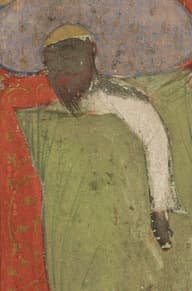
Al-Mustarshid
Emperor · Medieval
39.6Total

Julius Caesar
General · Ancient
82.8Total
Basic Information
Born
1092
-100
Died
1135
-44
Era
Medieval
Ancient
Nationality
Abbasid Caliphate
Roman Republic
Occupation
Emperor
General
Civilization
Middle Eastern
Western
Score Comparison
Military (10%)
50.0
88.0
Political (20%)
26.4
78.0
Influence (20%)
47.9
85.0
Legacy (20%)
38.3
82.0
Leadership (15%)
34.6
80.0
Strategy (15%)
38.6
85.0
TOTAL
39.6
82.8
Al-Mustarshid — Complete Timeline
1125 AD
Rebellion Against Seljuk SultanWar
Caliph Al-Mustarshid rebelled against Seljuk Sultan Mahmud II, raising an army and fighting the Seljuks near Baghdad. The caliph was defeated and captured, then forced to pay a large ransom and recognize Seljuk authority.
RebellionSeljuk-Abbasid WarDefeat
Impact: regionaldestructive
1132 AD
Military Campaign Against SeljuksWar
Al-Mustarshid launched a military campaign against the Seljuk sultan, capturing several fortresses. This campaign temporarily expanded caliphal territory but ultimately failed to secure lasting independence.
Military CampaignTerritorial Expansion
Impact: regional
1135 AD
Assassination of Al-MustarshidPolitical Action◆ Major
Al-Mustarshid was assassinated in his tent by a group of Seljuk agents while on campaign. His death marked the first time an Abbasid caliph was killed by the Seljuks, demonstrating the fragility of caliphal power.
AssassinationSeljuk ViolenceCaliphal Death
Impact: regionaltragic
Julius Caesar — Complete Timeline
58 BC
Gallic WarsWar◆ Major
Caesar, as proconsul of Gaul, launched a series of campaigns that conquered all of Gaul (modern France, Belgium, and parts of Switzerland). He fought numerous battles, including against the Helvetii, the Belgae, and the Gallic chieftain Vercingetorix. The wars brought immense wealth and a loyal army to Caesar.
Gallic WarsConquestRoman Expansion
Impact: regional
49 BC
Crossing the RubiconPolitical Action◆ Major
Caesar led Legio XIII across the Rubicon River into Italy, defying the Roman Senate's order to disband his army. This act triggered a civil war against Pompey and the Optimates, ultimately leading to Caesar's dictatorship and the end of the Roman Republic.
Roman Civil WarEnd of RepublicPower Struggle
Impact: global
48 BC
Battle of PharsalusWar◆ Major
Caesar's outnumbered army defeated the larger forces of Pompey the Great at Pharsalus in Greece. Caesar's tactical use of a reserve line to counter Pompey's cavalry charge proved decisive. Pompey fled to Egypt, where he was assassinated, leaving Caesar as the undisputed master of the Roman world.
Roman Civil WarBattleDecisive Victory
Impact: regional
44 BC
Appointment as Dictator for LifePolitical Action◆ Major
The Roman Senate appointed Caesar dictator perpetuo (dictator for life), granting him unprecedented personal power. This move concentrated military, legislative, and judicial authority in one person, effectively ending the Roman Republic's traditional system of checks and balances and alarming many senators.
DictatorshipEnd of RepublicPower Consolidation
Impact: regionaldestructive
Assassination on the Ides of MarchPolitical Action◆ Major
A group of Roman senators, led by Marcus Junius Brutus and Gaius Cassius Longinus, stabbed Caesar to death at a meeting of the Senate in the Theatre of Pompey. The assassination was intended to restore the Republic, but instead triggered another civil war that led to the rise of the Roman Empire.
AssassinationRoman PoliticsEnd of Republic
Impact: globaldestructive
Expert Analysis
al-mustarshid-vs-julius-caesar
# The Dictator and the Caliph: Two Paths of Power in Antiquity and the Middle Ages
On a spring morning in 44 BCE, Rome's most powerful man fell beneath the daggers of sixty conspirators in the Senate chamber. Nearly twelve centuries later, on a cold night in 1135, a caliph lay dead in his tent, killed by agents of the very empire he had sought to overthrow. Both Julius Caesar and Al-Mustarshid reached for supreme authority, yet their stories could hardly have diverged more dramatically—one reshaping the Western world forever, the other vanishing into obscurity. What explains the gulf between these two rulers? The answer lies not merely in their talents, but in the worlds that shaped them.
Origins
Caesar was born into the twilight of the Roman Republic, a world of fierce aristocratic competition and crumbling traditions. His family, the Julii, claimed descent from the goddess Venus, but their political influence had waned. From childhood, Caesar absorbed the Roman obsession with glory—*gloria*, the public recognition of extraordinary achievement that could elevate a man above his peers. His uncle Marius had been a populist reformer; his aunt married the dictator Sulla. These opposing models taught Caesar that in Rome, power belonged to those bold enough to seize it.
Al-Mustarshid inherited a far different legacy. By 1092, the Abbasid Caliphate had been a hollow shell for centuries. The caliphs of Baghdad once ruled an empire stretching from Spain to India, but by the twelfth century, real power lay with the Seljuk sultans, Turkish warlords who kept the caliph as a religious figurehead. Al-Mustarshid grew up in the shadow of this humiliation, a prince in a gilded cage. His world offered no model of triumphant generals or conquering statesmen—only the memory of lost grandeur and the daily reality of subservience.
Rise to Power
Caesar’s ascent was a masterpiece of calculated risk. He climbed the Roman political ladder—the *cursus honorum*—through a combination of military success, lavish spending, and strategic alliances. His conquest of Gaul between 58 and 50 BCE gave him a veteran army, immense wealth, and a reputation that made the Senate tremble. When ordered to disband his forces, Caesar instead crossed the Rubicon River in 49 BCE, triggering a civil war that ended with him as dictator. His path was unconventional but followed the logic of Roman ambition: win battles, buy loyalty, break rules.
Al-Mustarshid became caliph in 1118 through the accident of birth, not the force of will. The Abbasid succession was a family affair, and his elevation owed more to Seljuk approval than popular support. For seven years, he sat on a throne that commanded prayers but not armies, a puppet in silk robes. His rebellion against Sultan Mahmud II in 1125 was less a calculated power play than an act of desperation—a man who had never known real authority trying to grasp it.
Leadership & Governance
Caesar governed as a revolutionary reformer. He extended Roman citizenship to Gauls, reformed the calendar, launched massive construction projects, and centralized authority in his own hands. His military genius was undeniable: at Alesia in 52 BCE, he besieged a Gallic stronghold while simultaneously fighting off a relief army, a feat of strategic audacity that still stuns military historians. Yet his political wisdom was flawed—he pardoned enemies who would later kill him, and his accumulation of honors alienated the Senate beyond repair. The dictator’s score of 78.0 in political acumen reflects this paradox: brilliant at winning power, less skilled at institutionalizing it.
Al-Mustarshid’s governance was defined by limitation. His military campaign of 1132 captured several fortresses from the Seljuks, a brief flicker of success. But his score of 16.8 in military ability and 34.0 in leadership tells the story of a ruler who could neither command armies nor inspire lasting loyalty. The caliph had no administrative machinery of his own, no loyal bureaucracy, no treasury independent of his overlords. Where Caesar built, Al-Mustarshid could only resist.
Triumph & Tragedy
Caesar’s greatest moment came in 46 BCE when he returned to Rome after defeating his last rivals, celebrating four triumphs in a single month. He had conquered Gaul, defeated Pompey, and crushed the remnants of senatorial opposition. The tragedy followed swiftly: on the Ides of March in 44 BCE, his fear of appearing monarchical led him to dismiss his bodyguards, and the Republic’s most successful general died defenseless.
Al-Mustarshid’s tragedy was more complete. His rebellion of 1125 ended in a negotiated peace that left him weaker than before. His campaign of 1132 briefly raised hopes, but in 1135, while marching against the Seljuks, agents slipped into his tent and ended his life. His death marked the first time an Abbasid caliph had been assassinated—a sign of how low the office had fallen. Where Caesar’s death sparked a second civil war and the birth of empire, Al-Mustarshid’s assassination changed nothing.
Character & Destiny
Caesar was audacity personified. “The die is cast,” he reportedly said at the Rubicon, and that willingness to gamble defined his life. He was ruthless yet magnanimous, ambitious yet capable of genuine reform. His character drove him to push boundaries until they broke—and in breaking them, he created a new world.
Al-Mustarshid seems to have been a man of pride without power, courage without capacity. His rebellion was noble in intention but foolish in execution. The caliph’s score of 44.3 overall reflects not a failure of spirit but a failure of circumstance. He was born into a system that had already decided his irrelevance.
Legacy
Caesar’s legacy is immeasurable. His name became synonymous with imperial rule—*Kaiser* in German, *Tsar* in Russian. The Julian calendar lasted 1600 years. His writings on Gaul remain classics of military literature. His assassination did not restore the Republic but accelerated its transformation into the Roman Empire. His score of 82.0 for legacy is almost too low.
Al-Mustarshid left little. A few lines in chronicles, a cautionary tale about the limits of religious authority against military power. His score of 48.2 in legacy is generous. He is remembered primarily because he tried to resist—a footnote in the long decline of the Abbasid Caliphate.
Conclusion
The comparison between Caesar and Al-Mustarshid is not a contest of equals but a lesson in historical possibility. Caesar succeeded because he operated in a system that rewarded individual genius, where a man could rise through talent and ruthlessness. Al-Mustarshid failed because the world he inherited had already closed such paths. One man’s story became the foundation of Western civilization; the other’s became a reminder that history does not give everyone the same stage. In the end, both sought the same thing—power, independence, glory—but the difference between them was not merely personal. It was the difference between a world that could be remade and a world already made.
Rankings
🥇
Julius CaesarLeader
Mil: 88.0Pol: 78.0Inf: 85.0
82.8
🥈
Al-Mustarshid
Mil: 50.0Pol: 26.4Inf: 47.9
39.6
+43.2 behind
How This Comparison Works
Algorithm
Each figure is scored on 6 dimensions (0—100 scale) based on structured historical data: Military (10%), Political (20%), Influence (20%), Legacy (20%), Leadership (15%), Strategy (15%). The weighted total produces the final ranking.
Data Sources
Scores are computed from structured sub-indicators in the database. Scale factors adjust for era (Ancient ×0.85, Modern ×1.0) and civilization size (Eastern ×1.05, Other ×0.80) to account for differences in population and military scale.
Maximum 3 Figures
Comparisons are limited to 2—3 figures to ensure readability and statistical meaningfulness.
Error Margins
±5 points per dimension — Sub-scores are derived from historical records with inherent uncertainty. Two figures within 5 points on a dimension should be considered roughly equivalent in that area.
Total Score Accuracy
±3 points overall — The weighted combination of 6 dimensions produces a total score with approximately ±3 points of uncertainty. Differences of less than 3 points are not statistically significant— the figures are effectively tied.
Known Limitations
- Historical records are incomplete and uneven across civilizations
- Figures from oral-tradition societies may be underrepresented
- Occupation labels can misclassify multi-role figures
- Scores measure capability and impact, not moral character
- Quantitative scoring is a comparison tool, not absolute truth
Capability Radar
Military (10%) — Battles & Warfare
Battles
25
95
Win Rate
20
92
Expansion
10
97
Political (20%) — Governance & Reform
Reform
20
90
Diplomacy
25
85
Economy
15
82
Influence (20%) — Cultural & Global Reach
Cultural
15
88
Global
10
94
Legacy (20%) — Historical Impact
Historical
20
95
Longevity
10
96
Leadership (15%) — Power & Stability
Tenure
30
75
Stability
10
60
Strategy (15%) — Tactics & Innovation
Strategy
25
94
Tactics
20
96
Reform
15
88
Similar Comparisons
Comments & Discussion
Gloria Avenger6/17/2026
Caesar understood something that Al-Mustarshid never could: *gloria* isn't just fame—it's a weapon. The Abbasid Caliph inherited a ceremonial title while his Seljuk handlers held the real power. Caesar raised his own legions, bribed armies from Gaul to Egypt, and turned military loyalty into political authority. Al-Mustarshid waited for God and his soldiers to deliver him victory, but a caliph without an army is just a prayer. That's the difference between a dictator who makes himself and one wh
赛弗之锤6/17/2026
拿凯撒跟穆斯塔尔西德比简直是侮辱历史。凯撒在公元前49年渡过卢比孔河时,赌上的是他精心打造的军团和罗马法律——他明知叛逆的代价。可这位阿拔斯哈里发在1135年做了什么?他试图用宗教权威去对抗塞尔柱人的弩箭,指望真主的奇迹替他打仗。凯撒用剑书写命运;穆斯塔尔西德却用诅咒写墓志铭。这两人唯一的共同点,就是都死在了背叛的刀锋下。但凯撒的遗产改变了世界,而穆斯塔尔西德的遗产连开罗的旧书摊都找不到。
Numismatic Sphinx6/17/2026
Let's talk coinage. Caesar's portrait on Roman denarii was a revolutionary propaganda move—living rulers didn't appear on coins until he broke that taboo. Compare that to Al-Mustarshid's dinars: they're indistinguishable from his predecessors, still bearing generic caliphal titles with barely his name. This isn't a trivial detail. Coinage is the fingerprint of power. Caesar minted his identity into the empire's economy; Al-Mustarshid just stamped another Abbasid placeholder. The man who controls
自由之镰6/17/2026
数据爱好者必须指出:凯撒在公元前49年跨过卢比孔河时,全世界只有三个主要帝国(罗马、帕提亚、孔雀王朝的部分残存)。而到1135年,伊斯兰世界分裂成了至少十二个互相敌对的王朝——塞尔柱、法蒂玛、赞吉、十字军王国等都在这位"哈里发"面前互相厮杀。凯撒面对的是一张可以一统的政治棋盘;穆斯塔尔西德面对的却是拼图碎成渣的地狱模式。但你猜怎么着?他玩得太差,连手里的哈里发头衔都被塞尔柱人当厕纸用。不是所有挑战都有资格叫"逆境"。
Caliph's Shadow6/17/2026
The revisionist view: we romanticize Caesar because he wrote his own history. Al-Mustarshid's failure wasn't survival—it's that no one bothered to record his story with art. The Abbasid had his own ambitions: he tried to