Loading...
Al-Mustarshid vs Kirtivarman II
Al-Mustarshid leads by 3.2 pts · 2 figures compared
…
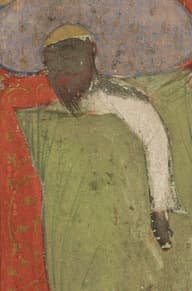
Al-Mustarshid
Emperor · Medieval
39.6Total

Kirtivarman II
Emperor · Medieval
36.4Total
Basic Information
Born
1092
746
Died
1135
757
Era
Medieval
Medieval
Nationality
Abbasid Caliphate
India
Occupation
Emperor
Emperor
Civilization
Middle Eastern
Indian
Score Comparison
Military (10%)
50.0
21.2
Political (20%)
26.4
30.7
Influence (20%)
47.9
46.3
Legacy (20%)
38.3
37.5
Leadership (15%)
34.6
33.6
Strategy (15%)
38.6
36.8
TOTAL
39.6
36.4
Al-Mustarshid — Complete Timeline
1125 AD
Rebellion Against Seljuk SultanWar
Caliph Al-Mustarshid rebelled against Seljuk Sultan Mahmud II, raising an army and fighting the Seljuks near Baghdad. The caliph was defeated and captured, then forced to pay a large ransom and recognize Seljuk authority.
RebellionSeljuk-Abbasid WarDefeat
Impact: regionaldestructive
1132 AD
Military Campaign Against SeljuksWar
Al-Mustarshid launched a military campaign against the Seljuk sultan, capturing several fortresses. This campaign temporarily expanded caliphal territory but ultimately failed to secure lasting independence.
Military CampaignTerritorial Expansion
Impact: regional
1135 AD
Assassination of Al-MustarshidPolitical Action◆ Major
Al-Mustarshid was assassinated in his tent by a group of Seljuk agents while on campaign. His death marked the first time an Abbasid caliph was killed by the Seljuks, demonstrating the fragility of caliphal power.
AssassinationSeljuk ViolenceCaliphal Death
Impact: regionaltragic
Kirtivarman II — Complete Timeline
753 AD
Defeat by DantidurgaWar◆ Major
Kirtivarman II, the last Badami Chalukya king, was defeated by the Rashtrakuta chief Dantidurga. This battle ended the Badami Chalukya dynasty and established Rashtrakuta rule over the Deccan region.
Impact: regionaldestructive
Expert Analysis
Origins
Al-Mustarshid (born 1092) was an Abbasid caliph in Baghdad, the son of Caliph al-Mustazhir. He grew up in a period of severe Seljuk domination over the caliphate, where the caliphs were largely figureheads. His education included Islamic theology and jurisprudence, but little military training. He inherited a weakened position, with real power held by the Seljuk sultans.
Kirtivarman II (reigned c. 746–753) was a Badami Chalukya king of the Chalukya dynasty of Vatapi (modern Badami, Karnataka). He was the son of Vikramaditya II, a strong ruler who had defeated the Pallavas. Kirtivarman II inherited a stable but challenged kingdom, with the rising Rashtrakuta power to the north. He was a Hindu king, likely trained in administration and warfare from youth.
Rise to Power
Al-Mustarshid became caliph in 1118 upon his father's death. His reign was immediately overshadowed by the Seljuk sultan Mahmud II, who controlled Baghdad and the caliph's actions. Al-Mustarshid sought to assert independence, a rare attempt for an Abbasid caliph. His turning point came in 1125 when he openly rebelled against Mahmud II, raising an army from Baghdad and the surrounding regions.
Kirtivarman II ascended the throne around 746 after his father's death. He faced no immediate internal opposition but had to contend with the growing power of Dantidurga, a Rashtrakuta chief who was a former feudatory of the Chalukyas. Dantidurga had already begun expanding his territory. Kirtivarman II's rise was peaceful, but the threat from the north was imminent.
Leadership & Governance
Al-Mustarshid's leadership style was confrontational and ideological. He believed in restoring the caliph's temporal authority and refused to accept Seljuk dominance. He personally led his army against the Seljuks, a departure from his predecessors. However, his governance was hampered by lack of resources and a strong bureaucracy. He relied on the support of Baghdad's populace and some local governors. His political score of 26.4 reflects his inability to build lasting alliances.
Kirtivarman II's governance continued the Chalukya tradition of centralized administration, patronage of temples, and support for literature. He maintained the administrative system of his father, but his military leadership was weak. He failed to recognize the threat from Dantidurga and did not prepare adequately for war. His political score of 30.7 is slightly higher than Al-Mustarshid's, but his military score of 21.2 is low, indicating poor strategic decisions.
Triumph & Tragedy
Al-Mustarshid's greatest triumph was his rebellion against the Seljuks. He managed to raise an army and briefly capture some fortresses, expanding caliphal territory. This was a symbolic victory for the caliphate's independence. His tragedy was his defeat near Baghdad in 1125, followed by his assassination in 1135 by Seljuk agents while on campaign. He was the first Abbasid caliph to be killed, marking the low point of caliphal authority.
Kirtivarman II's only notable triumph was perhaps his peaceful succession and maintenance of the Chalukya realm for a few years. His tragedy was his defeat by Dantidurga around 753, which ended the Badami Chalukya dynasty. He was likely killed or deposed. The defeat was decisive, and the Rashtrakutas took over the Deccan. Kirtivarman II's failure to defend his kingdom ended a dynasty that had lasted over 200 years.
Character & Destiny
Al-Mustarshid was ambitious and stubborn, unwilling to compromise with the Seljuks. His character drove him to rebellion, but his lack of military skill and political acumen led to his downfall. Historians note his courage but also his naivety in trusting his army and allies. His destiny was sealed by the Seljuk sultan's power and his own overestimation of his capabilities.
Kirtivarman II appears to have been a passive ruler, perhaps overconfident due to his father's successes. He did not actively seek conflict, but he also did not prepare for the inevitable confrontation with the Rashtrakutas. His character was one of complacency, and his destiny was to be the last of his line. Both leaders were victims of larger forces, but Kirtivarman II's failure was more a result of inaction.
Legacy
Al-Mustarshid's legacy is mixed. He is remembered as a caliph who tried to restore independence but failed. His death weakened the caliphate further, but his rebellion set a precedent for later caliphs like al-Muqtafi. His influence score of 47.9 is moderate, as his actions inspired future resistance. However, his legacy is overshadowed by the Seljuk dominance that continued for decades.
Kirtivarman II's legacy is that of the last Chalukya king. He is a footnote in Indian history, marking the end of a dynasty that had built the famous cave temples of Badami. The Rashtrakutas, who defeated him, went on to become a major power. His defeat allowed the Rashtrakutas to rise, but he himself contributed little positive. His influence score of 46.3 is similar to Al-Mustarshid's, but his legacy is more negative as a symbol of decline.
Conclusion
Al-Mustarshid, with a total score of 39.6, slightly edges out Kirtivarman II's 36.4. While both were ultimately failures, Al-Mustarshid at least attempted to change his situation. His rebellion, though unsuccessful, demonstrated agency and had a lasting impact on the caliphate's relationship with the Seljuks. Kirtivarman II, by contrast, passively allowed his dynasty to fall. Al-Mustarshid had greater impact because his actions, even in defeat, influenced the course of Abbasid history, whereas Kirtivarman II's reign was merely the end of a line. The 3.2-point gap reflects this difference in initiative and consequence.
Rankings
🥇
Al-MustarshidLeader
Mil: 50.0Pol: 26.4Inf: 47.9
39.6
🥈
Kirtivarman II
Mil: 21.2Pol: 30.7Inf: 46.3
36.4
+3.2 behind
How This Comparison Works
Algorithm
Each figure is scored on 6 dimensions (0—100 scale) based on structured historical data: Military (10%), Political (20%), Influence (20%), Legacy (20%), Leadership (15%), Strategy (15%). The weighted total produces the final ranking.
Data Sources
Scores are computed from structured sub-indicators in the database. Scale factors adjust for era (Ancient ×0.85, Modern ×1.0) and civilization size (Eastern ×1.05, Other ×0.80) to account for differences in population and military scale.
Maximum 3 Figures
Comparisons are limited to 2—3 figures to ensure readability and statistical meaningfulness.
Error Margins
±5 points per dimension — Sub-scores are derived from historical records with inherent uncertainty. Two figures within 5 points on a dimension should be considered roughly equivalent in that area.
Total Score Accuracy
±3 points overall — The weighted combination of 6 dimensions produces a total score with approximately ±3 points of uncertainty. Differences of less than 3 points are not statistically significant— the figures are effectively tied.
Known Limitations
- Historical records are incomplete and uneven across civilizations
- Figures from oral-tradition societies may be underrepresented
- Occupation labels can misclassify multi-role figures
- Scores measure capability and impact, not moral character
- Quantitative scoring is a comparison tool, not absolute truth
Capability Radar
Military (10%) — Battles & Warfare
Battles
25
15
Win Rate
20
10
Expansion
10
5
Political (20%) — Governance & Reform
Reform
20
10
Diplomacy
25
10
Economy
15
15
Influence (20%) — Cultural & Global Reach
Cultural
15
10
Global
10
5
Legacy (20%) — Historical Impact
Historical
20
15
Longevity
10
10
Leadership (15%) — Power & Stability
Tenure
30
20
Stability
10
10
Strategy (15%) — Tactics & Innovation
Strategy
25
10
Tactics
20
15
Reform
15
5
Similar Comparisons
Comments & Discussion
No comments yet. Be the first to share your thoughts!